📘 Module 1️⃣: Introduction to Public Health Systems
Introduction
Pay attention.
Before you function as a Public Health Officer, you must understand the system you are entering.
Public Health is not random activity.
It is not scattered efforts.
It is a structured system.
If you do not understand the system, you will misplace your role within it.
This module lays your foundation.
🌍 What Is a Public Health System?
A Public Health System is the organized network of institutions, policies, professionals, and programs that work together to protect and improve the health of a population.
It includes:
Government health agencies.
Local health departments.
Hospitals and primary healthcare centers.
Surveillance units.
Laboratories.
Community health programs.
Policy and regulatory bodies.
You are not working alone.
You are part of a coordinated structure.
🧠 Why This Matters
Public Health success depends on coordination.
Vaccination programs require logistics.
Surveillance requires data flow.
Outbreak response requires communication.
Environmental control requires regulation.
If one part fails, the entire system weakens.
You must understand where you fit — and how your actions affect the whole network.
🏛 Levels of the Public Health System
Most systems operate at multiple levels:
Local or community level – Frontline detection and response.
State or regional level – Coordination and supervision.
National level – Policy, funding, and strategic direction.
Each level has defined responsibilities.
Competent officers respect hierarchy and collaboration.
🔄 Core Functions of Public Health Systems
Public Health systems typically perform three major functions:
Assessment – Monitoring health status and identifying risks.
Policy Development – Creating guidelines and regulations.
Assurance – Ensuring services are delivered effectively.
Every activity you perform connects to one of these functions.
⚖ Accountability and Structure
Public Health systems depend on:
Clear reporting lines.
Defined roles.
Legal frameworks.
Standard operating procedures.
You cannot operate independently of the system.
Professional discipline means following structure.
🎯 Competency Focus
By the end of Module 1, you must be able to:
Explain how Public Health systems are structured.
Identify key stakeholders in health protection.
Understand your reporting pathway.
Recognize how surveillance, policy, and service delivery connect.
Operate within system protocols confidently.
You are not just learning theory.
You are entering a system that protects communities.
Understand the structure.
Respect the hierarchy.
Function with clarity.
That is your starting point as a Public Health professional.
📌 Definition and Scope of Public Health
Listen carefully.
Public Health is not theory.
It is not classroom noise.
It is not certificate decoration.
Public Health is the protection of communities before sickness happens.
If clinical medicine treats the individual, Public Health protects the population.
When one person falls sick, a hospital reacts.
When a disease threatens a community, Public Health must prevent, control, and stop it.
That is the difference.
That is the responsibility you are stepping into.
🔎 What Is Public Health?
Public Health is the science and practice of:
➤ Preventing disease
➤ Promoting healthy behaviors
➤ Protecting communities
➤ Controlling outbreaks
➤ Reducing health inequalities
It focuses on groups of people, not just one patient on a hospital bed.
You are not just helping individuals.
You are protecting systems, environments, and entire populations.
🌍 The Scope of Public Health
Understand this clearly — Public Health is broad. Very broad.
If you don’t understand the scope, you will never function competently.
Public Health covers:
➤ Disease prevention and vaccination programs
➤ Infection prevention and control
➤ Environmental health and sanitation
➤ Food safety and hygiene monitoring
➤ Health education and community awareness
➤ Epidemiology (tracking disease patterns)
➤ Emergency preparedness and outbreak response
➤ Health policy and reporting
➤ Maternal and child health programs
When there is cholera in a community — Public Health steps in.
When there is Lassa fever — Public Health leads containment.
When COVID-19 spread globally — Public Health systems activated.
This is not small work.
🎯 Competency Focus – What This Means for You
By the end of this program, you must not just “know” Public Health.
You must be able to:
➤ Identify health risks in a community
➤ Conduct basic health awareness sessions
➤ Recognize early outbreak signs
➤ Implement infection prevention protocols correctly
➤ Report cases properly
➤ Understand referral pathways
➤ Support disease surveillance systems
If you cannot perform these tasks, then you are not yet competent.
And this program is about competency, not attendance.
⚠ Reality Check
Public Health Officers are the first line of defense.
If you miss early warning signs, outbreaks spread.
If you ignore sanitation failures, diseases multiply.
If you fail to report correctly, systems collapse.
Competence saves lives.
Incompetence costs lives.
🔥 Your Mindset From Today
Stop thinking like a passive learner.
Start thinking like a community health defender.
Public Health is proactive.
It moves before crisis explodes.
It sees patterns others ignore.
It acts before hospitals are overwhelmed.
That is the scope.
That is the responsibility.
That is the standard you are being trained to meet.
⚖ Difference Between Clinical Care and Public Health
Pay attention.
If you don’t understand this difference, you will confuse your role in the field.
This is foundational.
🏥 Clinical Care
Clinical care focuses on one patient at a time.
A person is sick.
They go to a hospital.
A doctor diagnoses.
Treatment is given.
That is clinical care.
It is reactive.
It waits for illness to appear.
Clinical care deals with:
➤ Diagnosis
➤ Treatment
➤ Prescriptions
➤ Surgeries
➤ Individual patient management
The focus is the individual.
If one person has malaria, clinical care treats that one person.
🌍 Public Health
Public Health focuses on entire populations.
It asks:
Why are so many people getting malaria?
Is there stagnant water?
Are mosquito nets being used?
Is there a sanitation failure?
Public Health is preventive and proactive.
It deals with:
➤ Disease prevention
➤ Health promotion
➤ Community education
➤ Vaccination programs
➤ Environmental sanitation
➤ Outbreak surveillance
➤ Policy implementation
The focus is the community.
If 200 people are at risk of malaria, Public Health acts to prevent 200 infections — not just treat one.
🔎 The Core Difference
Clinical Care = Treat the sick individual.
Public Health = Prevent sickness in the population.
Clinical care saves the person in front of you.
Public health prevents 1,000 people from becoming that patient.
Both are important.
But they are not the same.
🎯 Competency Focus — Where You Stand
As trainees in this program, you are not being trained to prescribe drugs.
You are being trained to:
➤ Identify risk factors in communities
➤ Recognize patterns of disease spread
➤ Implement infection prevention measures
➤ Conduct awareness campaigns
➤ Report cases accurately
➤ Support surveillance systems
If you start thinking like a clinician, you will fail in public health.
Public Health requires systems thinking.
Pattern recognition.
Prevention mindset.
⚠ Reality Check
Hospitals get overwhelmed when Public Health fails.
Outbreaks explode when early warnings are ignored.
Communities suffer when prevention is weak.
Clinical care reacts to damage.
Public health prevents the damage.
Know your lane.
Master your role.
Operate with clarity.
🎯 Roles and Responsibilities of a Public Health Officer
Listen carefully.
This is not a title for social media.
It is not a certificate to hang on your wall.
A Public Health Officer is a community protector, risk assessor, and disease prevention strategist.
If you do not understand your responsibility, you will underperform in the field. And in Public Health, underperformance affects real lives.
🌍 1. Disease Prevention and Control
Your first responsibility is prevention.
You must identify risks before they become outbreaks. That means understanding environmental conditions, sanitation gaps, vaccination coverage levels, and behavioral risk factors in communities.
When there is an unusual rise in fever cases, you don’t ignore it.
When sanitation breaks down, you don’t wait for cholera to appear.
You intervene early.
Prevention is not optional — it is your primary duty.
📊 2. Surveillance and Reporting
A competent Public Health Officer understands data.
You must observe patterns, document cases accurately, and report findings through proper channels. If reporting is delayed or inaccurate, response systems fail.
Public health systems depend on information flow.
No guessing. No assumptions. Proper documentation.
If you cannot report correctly, you cannot function effectively in this field.
🧼 3. Infection Prevention and Control
You are expected to understand and enforce infection prevention measures in healthcare settings and communities.
This includes:
➤ Hand hygiene standards
➤ Proper waste disposal
➤ Use of personal protective equipment
➤ Isolation procedures when necessary
You must model correct practice and correct others when standards are breached.
Infection spreads fast. Competence slows it down.
📢 4. Health Education and Community Awareness
A Public Health Officer must be able to stand before a group and communicate clearly.
You educate communities about hygiene, nutrition, vaccination, reproductive health, environmental safety, and disease prevention.
If people do not understand health risks, they cannot change behavior.
Your ability to educate determines how well prevention works.
🏘 5. Environmental Health Monitoring
Public health is not only about hospitals. It includes:
➤ Water quality
➤ Food hygiene
➤ Waste management
➤ Market sanitation
➤ Housing conditions
You assess environments and recommend corrective actions. Unsafe environments create predictable diseases.
Your job is to reduce those risks.
🚨 6. Emergency Preparedness and Response
During outbreaks or public health emergencies, you are part of the response system.
You assist in:
➤ Contact tracing
➤ Community risk communication
➤ Quarantine monitoring
➤ Supporting vaccination campaigns
➤ Coordinating with other health teams
Calm, organized action during crisis is a core competency.
⚖ Professional Responsibility and Ethics
Confidentiality matters. Accuracy matters. Integrity matters.
You must handle sensitive health information responsibly. You must avoid spreading fear or misinformation. You must act professionally at all times.
Public trust is fragile. Once broken, it is difficult to rebuild.
🔥 Competency Reminder
By the end of this program, you should be able to:
Recognize health risks.
Communicate effectively.
Report accurately.
Support prevention programs.
Assist in outbreak control.
If you cannot perform these functions confidently, you are not yet competent.
Public Health Officers do not wait for crisis.
They anticipate, prevent, monitor, and respond.
That is your standard.
🎯 Levels of Prevention (Primary, Secondary, Tertiary)
Pay attention.
If you misunderstand prevention levels, you will respond at the wrong time — and timing in Public Health is everything.
Prevention is not one action.
It is staged.
It is strategic.
It is deliberate.
A competent Public Health Officer must know when and how to intervene.
🟢 1. Primary Prevention — Stop It Before It Starts
This is your strongest weapon.
Primary prevention happens before disease occurs.
You are not treating.
You are preventing exposure.
You are reducing risk factors.
This includes:
➤ Immunization programs
➤ Health education campaigns
➤ Environmental sanitation
➤ Safe water initiatives
➤ Mosquito control programs
➤ Promoting healthy lifestyles
If malaria never happens because breeding sites were eliminated, that is primary prevention.
If a child never contracts measles because of vaccination, that is primary prevention.
This is proactive work.
This is system protection.
The best Public Health Officers operate strongly at this level.
🟡 2. Secondary Prevention — Catch It Early
Now the disease has started — but it is still early.
Secondary prevention focuses on early detection and prompt intervention.
At this level, you are trying to stop progression.
This includes:
➤ Screening programs (blood pressure, diabetes, cancers)
➤ Early diagnosis initiatives
➤ Contact tracing
➤ Routine health checks
➤ Community testing campaigns
If hypertension is detected early and managed before stroke occurs — that is secondary prevention.
If tuberculosis is identified quickly and treatment begins before it spreads widely — that is secondary prevention.
Timing matters here.
Delay turns secondary into tertiary.
🔴 3. Tertiary Prevention — Reduce Damage
At this stage, disease has already caused harm.
You cannot reverse everything.
But you can prevent complications, disability, or death.
Tertiary prevention focuses on limiting damage and restoring function.
This includes:
➤ Rehabilitation services
➤ Chronic disease management
➤ Support for disability
➤ Long-term treatment programs
➤ Psychological support
If a stroke patient receives rehabilitation to regain mobility — that is tertiary prevention.
If a diabetic patient is managed properly to prevent amputation — that is tertiary prevention.
It is damage control.
It is recovery support.
⚖ The Core Difference
Primary = Prevent disease from happening.
Secondary = Detect and treat early.
Tertiary = Reduce complications and disability.
Each level has its place.
But the earlier you intervene, the greater the impact.
🔥 Competency Reminder
As trainees, you must be able to:
Identify which level of prevention applies in a situation.
Design simple prevention strategies.
Support screening programs.
Understand referral systems for long-term management.
If you cannot distinguish these levels in real-life scenarios, you are not yet thinking like a Public Health Officer.
Prevention is layered.
Competence is knowing where you stand in the chain.
Master this.
🎯 Professional Ethics and Reporting Structure
Listen carefully.
Skills without ethics are dangerous.
Knowledge without structure is chaos.
As a Public Health Officer, your competence is measured not only by what you know — but by how you conduct yourself and who you report to.
If you violate ethics or bypass reporting lines, you damage the system.
Public Health runs on trust and structure.
🧭 Professional Ethics
Ethics is not theory. It is daily discipline.
You will handle sensitive information.
You will enter communities during crises.
You will have access to data that can cause panic if mishandled.
If you lack integrity, you cannot function in this field.
🔒 1. Confidentiality
Health information is private.
You do not share:
➤ Patient names
➤ Test results
➤ HIV status
➤ Medical history
➤ Investigation details
You do not gossip.
You do not post on social media.
You do not discuss cases casually.
Breaking confidentiality destroys public trust — and once trust is gone, cooperation disappears.
⚖ 2. Professional Integrity
You must be accurate.
No exaggeration.
No false reporting.
No altering data to “look good.”
Public health decisions are made based on reports.
If your data is wrong, response strategies will fail.
Integrity is non-negotiable.
🧑🤝🧑 3. Respect and Non-Discrimination
You will work with people from different backgrounds, beliefs, and lifestyles.
You do not judge.
You do not stigmatize.
You do not discriminate.
Public Health must serve everyone — regardless of status, gender, religion, or economic level.
Professionalism means emotional control and cultural sensitivity.
🧠 4. Accountability
If you make a mistake, you report it.
You do not hide errors.
You do not shift blame.
Accountability protects systems from collapse.
Weak officers hide problems.
Competent officers escalate them properly.
🏢 Reporting Structure
Now understand this clearly:
Public Health does not operate randomly.
There is a chain of command.
If you bypass structure, confusion follows.
📊 1. Immediate Supervisor
Your first reporting line is your direct supervisor.
When you detect:
➤ An unusual cluster of symptoms
➤ Sanitation failure
➤ Suspected outbreak
➤ Breach in infection control
You report immediately to your assigned superior.
No delays.
No assumptions.
📑 2. Documentation and Formal Reporting
Verbal communication is not enough.
You must:
➤ Complete required forms
➤ Document observations accurately
➤ Submit reports within required timelines
➤ Follow official channels
Documentation protects you and the institution.
If it is not documented, it did not happen.
🚨 3. Escalation During Emergencies
During outbreaks or urgent public health threats, reporting timelines shorten.
Information moves faster.
You must know:
Who to notify.
How to notify.
What format to use.
Panic does not replace structure.
Even in crisis, you follow protocol.
🔥 Competency Reminder
By the end of this program, you must:
Understand ethical boundaries clearly.
Maintain confidentiality at all times.
Report accurately and promptly.
Respect the chain of command.
Operate with integrity under pressure.
Public Health systems collapse when ethics are weak.
Outbreaks spread when reporting is delayed.
Competence is not just skill —
It is discipline, structure, and responsibility.
Operate like a professional.
📘 Module 2️⃣: Determinants of Health & Disease Prevention
Introduction
Pay attention.
If you do not understand what determines health, you will fight disease blindly.
People do not get sick randomly.
Health outcomes are influenced by conditions, behaviors, environments, and systems.
As a Public Health Officer, your job is not just to respond to disease — it is to understand why it happens in the first place.
This module builds that foundation.
🌍 What Are Determinants of Health?
Determinants of health are the factors that influence whether individuals and communities stay healthy or become sick.
Health is not controlled by hospitals alone.
It is shaped by:
➤ Living conditions
➤ Income level
➤ Education
➤ Environment
➤ Access to clean water
➤ Nutrition
➤ Social stability
➤ Access to healthcare services
If a community lacks clean water, diarrheal diseases will increase.
If education levels are low, health awareness drops.
If poverty is high, malnutrition rises.
Disease patterns follow social conditions.
You must learn to see these connections.
🧠 Why This Module Matters
If you only treat symptoms, you miss the root cause.
A competent Public Health Officer asks:
Why is this disease common here?
What environmental factor is contributing?
Is it behavioral? Social? Economic? Structural?
Without understanding determinants, prevention strategies will fail.
Prevention must target the cause — not just the outcome.
🛡 Disease Prevention as Strategy
Disease prevention is not guesswork.
It is planned, structured, and evidence-based.
In this module, you will learn how to:
Identify risk factors in communities.
Classify levels of prevention correctly.
Design simple community-based interventions.
Recognize vulnerable populations.
Support sustainable prevention programs.
Prevention is the backbone of Public Health.
🎯 Competency Focus for This Module
By the end of Module 2, you must be able to:
Analyze health problems beyond the surface.
Link disease patterns to social and environmental determinants.
Suggest realistic prevention strategies.
Differentiate between risk factors and protective factors.
Apply prevention principles in real-life scenarios.
If you cannot identify the root causes of health problems, you cannot design effective solutions.
🔥 Mindset Shift
Stop seeing disease as isolated events.
Start seeing patterns.
Start seeing systems.
Start seeing determinants.
Public Health is strategic thinking.
This module will sharpen your ability to think beyond symptoms and operate like a prevention-focused professional.
Stay alert.
This is where your analytical competency begins.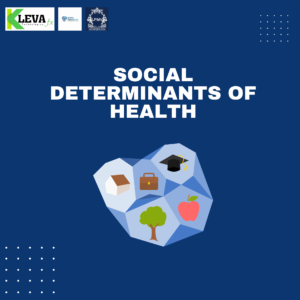
➤ Social Determinants of Health
Listen carefully.
Most diseases do not begin in the hospital.
They begin in homes, schools, workplaces, and communities.
If you ignore social conditions, you will misunderstand disease patterns.
Social determinants of health are the non-medical factors that influence health outcomes. They shape how people live, work, grow, and age.
As a Public Health Officer, you must learn to look beyond symptoms and examine the social environment.
🌍 What Do Social Determinants Include?
They include conditions such as:
➤ Income and employment status
➤ Education level
➤ Housing quality
➤ Access to clean water and sanitation
➤ Food security
➤ Social support systems
➤ Access to healthcare services
➤ Community safety
These factors either protect health or increase vulnerability.
🧠 Why This Matters in Practice
If a community has:
Poor housing → respiratory diseases increase.
Low income → poor nutrition and limited healthcare access.
Low education → weak health awareness.
Unemployment → mental health stressors rise.
You cannot solve these problems with medication alone.
You must understand the social context before designing interventions.
Disease follows disadvantage.
⚖ Inequality and Health Outcomes
Health is not distributed equally.
Communities with fewer resources experience:
Higher maternal mortality.
Higher child mortality.
Higher infectious disease rates.
More chronic illnesses.
This is not coincidence.
It is structural.
As a Public Health Officer, you must recognize vulnerable groups and prioritize preventive action.
🎯 Competency Focus
By the end of this section, you must be able to:
Identify key social determinants in a case scenario.
Link social conditions to specific health outcomes.
Recommend realistic, community-based prevention strategies.
Recognize vulnerable and high-risk populations.
If you only see disease and not the social drivers behind it, you are not yet functioning at a professional level.
Public Health requires systems thinking.
Health is shaped long before a patient enters a clinic.
Understand the environment.
Understand the society.
Then you understand the disease.
➤ Environmental Influences on Health
Stay focused.
Diseases do not just spread because people are careless.
They spread because environments allow them to.
If you ignore environmental conditions, you will keep reacting instead of preventing.
Environment shapes exposure.
Exposure shapes disease.
As a Public Health Officer, you must train your eyes to see environmental risks before they become outbreaks.
🌍 What Do We Mean by Environmental Influences?
Environmental influences are physical, chemical, and biological factors around people that affect health.
This includes:
➤ Air quality
➤ Water quality
➤ Waste disposal systems
➤ Housing conditions
➤ Food storage practices
➤ Climate and weather patterns
➤ Workplace safety conditions
If the environment is unsafe, disease is predictable.
💧 Water and Sanitation
Contaminated water leads to:
Cholera
Typhoid
Diarrheal diseases
Poor drainage leads to mosquito breeding.
Mosquito breeding leads to malaria outbreaks.
This is not coincidence.
It is environmental causation.
If you see stagnant water and say nothing, you are failing in prevention.
🌫 Air and Pollution
Indoor smoke from cooking fuels increases respiratory illness.
Industrial pollution increases asthma and chronic lung disease.
Poor ventilation spreads airborne infections faster.
Environment determines exposure.
Exposure determines risk.
🏠 Housing and Infrastructure
Overcrowded housing increases:
Tuberculosis transmission
Respiratory infections
Skin infections
Poor building structures increase injury risk.
Unsafe markets increase food contamination.
Every physical structure affects health outcomes.
You must assess surroundings — not just symptoms.
🌡 Climate and Disease Patterns
Flooding increases waterborne diseases.
Heatwaves increase dehydration and heatstroke.
Climate shifts alter mosquito patterns.
Public Health officers must think seasonally and geographically.
Disease trends follow environmental patterns.
🎯 Competency Focus
By the end of this section, you must be able to:
Identify environmental risk factors in community assessments.
Link environmental conditions to specific diseases.
Recommend practical environmental control measures.
Report environmental hazards through proper channels.
If you cannot assess a community’s physical environment and detect risk, you are not functioning at prevention level.
Public Health is not only about people.
It is about the spaces they live in.
Control the environment —
Reduce the disease.
➤ Behavioral and Biological Risk Factors
Focus.
Not all diseases come from the environment.
Some come from choices.
Some come from biology.
As a Public Health Officer, you must know the difference — and know how both interact.
Risk factors increase the likelihood of disease.
Your job is to identify them early and intervene before damage occurs.
🧠 Behavioral Risk Factors
Behavioral risk factors are habits and lifestyle choices that increase disease risk.
These are modifiable — which means they can be changed.
Examples include:
➤ Smoking
➤ Excessive alcohol consumption
➤ Poor diet
➤ Physical inactivity
➤ Unsafe sexual practices
➤ Poor hand hygiene
➤ Substance abuse
➤ Non-adherence to medication
These behaviors contribute to:
Hypertension
Diabetes
HIV transmission
Liver disease
Obesity
Respiratory illnesses
When you see rising cases of lifestyle-related diseases, look at behavior patterns.
Prevention at this level requires education, awareness campaigns, and community engagement.
You are not condemning people.
You are guiding behavior change.
🧬 Biological Risk Factors
Biological risk factors are internal characteristics that increase disease vulnerability.
These are often non-modifiable — but they can be managed.
Examples include:
➤ Age
➤ Sex
➤ Genetic predisposition
➤ Family history
➤ Pre-existing medical conditions
➤ Weakened immune system
An elderly person has higher risk for certain infections.
Someone with a family history of hypertension has increased risk.
Immunocompromised individuals are more vulnerable to severe infections.
You may not change biology — but you can identify high-risk individuals and recommend early screening or preventive support.
⚖ Understanding the Interaction
Most diseases are not caused by one factor alone.
Behavior + biology often combine.
Example:
A person genetically predisposed to diabetes who consumes high-sugar diets increases their risk significantly.
A smoker with a family history of lung disease faces compounded danger.
Risk multiplies when factors overlap.
You must assess the full picture — not isolated variables.
🎯 Competency Focus
By the end of this section, you must be able to:
Identify behavioral risk factors in case scenarios.
Recognize biological vulnerability in populations.
Differentiate between modifiable and non-modifiable risks.
Recommend targeted prevention strategies.
Prioritize high-risk groups for screening and intervention.
If you treat everyone the same, you miss vulnerability patterns.
Public Health requires risk stratification.
See the behavior.
Understand the biology.
Design the intervention.
That is professional competency.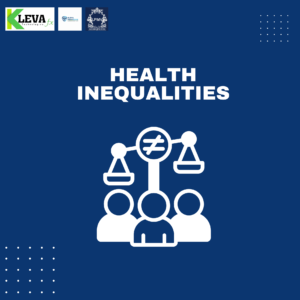
➤ Health Inequalities
Pay attention.
Not everyone has the same chance to live a healthy life.
And that is not accidental.
Health inequalities are the unfair and avoidable differences in health status between different groups of people.
This is not just about who gets sick.
It is about who is more likely to get sick, who gets treated late, and who dies earlier.
As a Public Health Officer, you must be able to see inequality clearly — and respond professionally.
🌍 What Do Health Inequalities Look Like?
They appear when certain groups experience:
Higher maternal mortality.
Higher infant mortality.
Higher rates of infectious diseases.
More chronic illnesses.
Lower life expectancy.
Often, these groups are:
➤ Low-income communities
➤ Rural populations
➤ Marginalized groups
➤ People with limited education
➤ Individuals in unsafe housing conditions
This is not random.
It is structural.
🧠 Why Health Inequalities Exist
Health inequalities are driven by:
➤ Poverty
➤ Limited access to healthcare
➤ Poor education
➤ Unemployment
➤ Poor sanitation
➤ Discrimination
➤ Weak health infrastructure
When resources are unevenly distributed, health outcomes follow that same pattern.
Where there is disadvantage, disease increases.
⚖ Equality vs Equity
Understand this clearly.
Equality means giving everyone the same thing.
Equity means giving people what they need based on their situation.
In Public Health, equity is critical.
A rural community with no clean water needs more intervention than an urban area with functioning infrastructure.
Competent Public Health Officers allocate resources based on risk and vulnerability — not convenience.
📊 Why This Matters in Practice
If you ignore inequalities:
Outbreaks will persist.
Chronic diseases will cluster in poor communities.
Health systems will remain overwhelmed.
Targeted prevention reduces inequality.
Your job is not just to implement programs — it is to ensure programs reach those who need them most.
If you treat all populations as identical, you miss the risk concentration.
Public Health is not neutral.
It prioritizes the vulnerable.
See the gaps.
Address the gaps.
Reduce the gaps.
That is professional Public Health practice.
➤ Community Risk Identification
Focus.
If you cannot identify risk early, you will always be late.
Community risk identification is the process of detecting conditions, behaviors, and patterns that increase the likelihood of disease or public health emergencies in a population.
This is not guesswork.
This is structured observation and assessment.
A competent Public Health Officer does not wait for an outbreak.
They recognize warning signs before the outbreak begins.
🌍 What Is Community Risk?
Community risk refers to any factor within a population that increases vulnerability to disease, injury, or health crisis.
Risk may be:
Environmental — poor drainage, unsafe water, overcrowding.
Behavioral — low vaccination uptake, unsafe practices, poor hygiene.
Social — poverty, low literacy, unemployment.
Biological — high elderly population, high chronic disease prevalence.
You must assess communities holistically — not in fragments.
🧠 How to Identify Risk Professionally
Risk identification requires:
Observation.
Data collection.
Community engagement.
Pattern recognition.
You look for:
Unusual increases in symptoms.
Repeated health complaints.
Seasonal disease patterns.
Sanitation breakdowns.
Vulnerable population clusters.
You ask questions.
You review records.
You analyze trends.
You do not assume.
📊 Early Warning Signs
A competent officer recognizes red flags such as:
➤ Increase in fever cases in one area
➤ Rising absenteeism in schools
➤ Complaints of contaminated water
➤ Sudden livestock deaths
➤ Clusters of respiratory symptoms
➤ Decline in vaccination coverage
Small signals often precede major outbreaks.
Miss the signal — face the crisis.
⚖ Risk vs Hazard
Understand the difference.
A hazard is a potential source of harm.
Risk is the likelihood that harm will occur.
Stagnant water is a hazard.
High mosquito population during rainy season increases risk.
Your job is to measure likelihood and impact — not just notice hazards.
🎯 Competency Focus
By the end of this section, you must be able to:
Conduct basic community risk assessments.
Identify environmental, behavioral, and social risk factors.
Differentiate between hazard and actual risk level.
Prioritize risks based on severity and probability.
Report findings accurately and promptly.
Community risk identification is frontline Public Health work.
If you detect risk early, you prevent outbreaks.
If you ignore early signs, you create emergencies.
Train your eyes.
Train your analysis.
Think ahead.
That is professional Public Health competency.
📘 Module 3️⃣: Infection Prevention & Control (IPC)
Introduction
Listen carefully.
Infection spreads silently.
It does not announce itself.
It does not wait for you to prepare.
One careless act can infect five people.
Five can become fifty.
Fifty can overwhelm a system.
This module is not optional knowledge.
It is operational survival.
Infection Prevention & Control (IPC) is the structured approach used to prevent the transmission of infectious diseases in healthcare settings and communities.
If IPC fails, outbreaks escalate.
If IPC is strong, transmission slows.
You are being trained to strengthen that barrier.
🦠 What Is Infection Prevention & Control?
IPC is a set of evidence-based practices designed to:
Reduce the spread of infections.
Protect patients and communities.
Protect healthcare workers.
Break the chain of infection.
Infections move through predictable pathways.
Your job is to interrupt those pathways.
🔗 Understanding the Chain of Infection
Every infection requires:
A source (infectious agent).
A reservoir.
A mode of transmission.
A susceptible host.
Break one link — transmission stops.
Fail to break it — infection spreads.
IPC is about understanding this chain and disrupting it deliberately.
🧼 Why This Module Matters
Poor IPC leads to:
Healthcare-associated infections.
Workplace exposure.
Outbreak amplification.
Public panic.
System overload.
Competent Public Health Officers must not only understand IPC — they must enforce it.
Hand hygiene is not decoration.
PPE is not fashion.
Isolation is not punishment.
These are control measures.
🛡 What You Will Master in This Module
You will learn to:
Identify infection transmission routes.
Apply standard precautions correctly.
Implement hand hygiene protocols.
Use personal protective equipment properly.
Support isolation and quarantine procedures.
Recognize IPC breaches and report them.
This is hands-on competency.
🎯 Competency Expectation
By the end of Module 3, you must be able to:
Demonstrate correct IPC practices confidently.
Identify weak infection control points in real scenarios.
Recommend corrective measures.
Educate others on infection prevention standards.
If you cannot apply IPC under pressure, knowledge alone is useless.
Infection control is discipline.
It is vigilance.
It is consistency.
One lapse can create an outbreak.
This module sharpens your defensive skills.
Stay alert.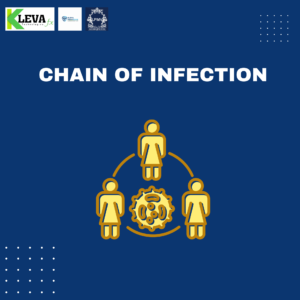
➤ Chain of Infection
Focus.
Infection does not spread randomly.
It follows a pattern.
If you understand the pattern, you can break it.
If you ignore the pattern, transmission continues.
The Chain of Infection explains how infectious diseases move from one person to another.
Your job in Infection Prevention & Control is simple:
Break the chain.
🔗 The 6 Links in the Chain
Every infection requires six connected links. Remove one — the chain collapses.
1️⃣ Infectious Agent
This is the microorganism that causes disease.
It may be:
➤ Bacteria
➤ Viruses
➤ Fungi
➤ Parasites
Without a pathogen, there is no infection.
But presence alone is not enough — it must move.
2️⃣ Reservoir
This is where the infectious agent lives and multiplies.
Reservoirs can be:
➤ Humans
➤ Animals
➤ Water
➤ Soil
➤ Contaminated surfaces
If the organism has nowhere to survive, transmission stops.
3️⃣ Portal of Exit
The pathogen must leave the reservoir.
Common portals of exit include:
➤ Respiratory droplets
➤ Blood
➤ Bodily fluids
➤ Feces
➤ Skin lesions
No exit — no spread.
4️⃣ Mode of Transmission
This is how the infection travels.
Transmission can occur through:
➤ Direct contact
➤ Indirect contact (contaminated objects)
➤ Droplet spread
➤ Airborne spread
➤ Vector-borne transmission (mosquitoes)
Understanding the mode tells you what control measure to apply.
5️⃣ Portal of Entry
The pathogen must enter a new host.
Common entry points:
➤ Nose
➤ Mouth
➤ Eyes
➤ Broken skin
➤ Respiratory tract
Block entry — stop infection.
6️⃣ Susceptible Host
The final link is a person vulnerable to infection.
High-risk individuals include:
➤ Elderly persons
➤ Infants
➤ Immunocompromised individuals
➤ People with chronic illnesses
If the host is protected, infection struggles to take hold.
🛡 Breaking the Chain
Now understand your responsibility.
Hand hygiene breaks contact transmission.
PPE blocks entry and exit.
Vaccination strengthens the host.
Disinfection removes reservoirs.
Isolation controls spread.
IPC measures are not random — they target specific links.
Competence means knowing which link you are interrupting.
🎯 Competency Focus
By the end of this section, you must be able to:
Identify all six links without hesitation.
Explain how infections move through each link.
Match IPC measures to specific links.
Recognize weak points in real-life scenarios.
If you cannot analyze infection using the chain model, you are operating blindly.
Public Health is strategic.
Understand the chain.
Break the chain.
Protect the community.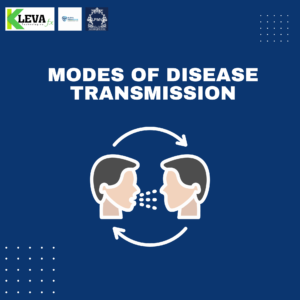
➤ Modes of Disease Transmission
Stay alert.
If you don’t understand how disease spreads, you will apply the wrong control measures.
You cannot stop what you don’t understand.
Modes of transmission explain how infectious agents move from one host to another.
Different diseases spread in different ways.
Your job is to identify the mode — and respond correctly.
🦠 1️⃣ Contact Transmission
This is one of the most common modes.
It happens through physical touch.
It can be:
Direct contact – person-to-person touch (handshakes, caregiving, skin contact).
Indirect contact – touching contaminated objects (door handles, bed rails, phones, equipment).
Poor hand hygiene makes this worse.
If you skip handwashing, you become part of the transmission chain.
Control measures include:
Hand hygiene.
Surface disinfection.
Glove use when appropriate.
💧 2️⃣ Droplet Transmission
Droplets are large respiratory particles released when someone coughs, sneezes, talks, or laughs.
They travel short distances — usually within 1–2 meters.
Examples include:
Influenza.
Certain respiratory infections.
Droplets fall quickly. They do not stay suspended long.
Control measures:
Masks.
Respiratory etiquette.
Physical distancing.
🌫 3️⃣ Airborne Transmission
Airborne particles are smaller and lighter.
They can remain suspended in the air for long periods and travel farther distances.
Examples include:
Tuberculosis.
Certain viral infections.
Airborne spread requires stronger control measures:
Proper ventilation.
Respirators (not just surgical masks).
Isolation rooms when available.
This mode spreads faster in enclosed, poorly ventilated spaces.
🦟 4️⃣ Vector-Borne Transmission
Here, disease spreads through living organisms — usually insects.
Common vectors include:
Mosquitoes.
Ticks.
Flies.
The vector carries the pathogen from one host to another.
Control requires environmental management:
Eliminating breeding sites.
Using insecticide-treated nets.
Community awareness campaigns.
🍽 5️⃣ Food and Water-Borne Transmission
Disease spreads through contaminated food or water.
This often results from:
Poor sanitation.
Improper food handling.
Contaminated water sources.
Outbreaks can affect large groups quickly.
Control measures include:
Safe food storage.
Water treatment.
Hygiene monitoring.
🩸 6️⃣ Blood and Body Fluid Transmission
This occurs when infected blood or bodily fluids enter another person’s bloodstream.
Examples include:
Unsafe injections.
Needle sharing.
Unprotected exposure to blood.
Control measures:
Safe injection practices.
Proper disposal of sharps.
Use of protective barriers.
⚖ Why Understanding Modes Matters
If you treat airborne infection like contact transmission, you will fail.
If you ignore vector control in a malaria-prone area, cases will rise.
Correct identification determines correct intervention.
Public Health is not guesswork.
It is precision.
🎯 Competency Focus
By the end of this section, you must be able to:
Identify the correct transmission mode in a scenario.
Differentiate between droplet and airborne spread.
Recommend appropriate control measures for each mode.
Recognize high-risk environments for transmission.
Transmission follows patterns.
See the pattern.
Choose the right control.
Interrupt the spread.
That is operational competence in Infection Prevention & Control.
➤ Standard Precautions
Pay attention.
Standard precautions are not optional.
They are not applied “when it looks serious.”
They are applied to every person, every time.
Why?
Because you cannot always see infection.
You cannot always identify who is infectious.
Standard precautions assume that any person may carry a pathogen.
That mindset protects you — and protects others.
🛡 What Are Standard Precautions?
Standard precautions are the minimum infection prevention practices used in healthcare and community health settings to prevent transmission of infectious agents.
They apply regardless of diagnosis.
No exceptions.
🧼 1️⃣ Hand Hygiene
This is the foundation.
Before touching a patient.
After touching a patient.
After contact with bodily fluids.
After touching surfaces.
If hand hygiene fails, everything else fails.
Soap and water when visibly soiled.
Alcohol-based hand rub when appropriate.
Hand hygiene breaks contact transmission immediately.
🧤 2️⃣ Use of Personal Protective Equipment (PPE)
PPE is barrier protection.
It includes:
➤ Gloves
➤ Masks
➤ Gowns
➤ Eye protection
You use PPE based on risk assessment.
Not overuse.
Not underuse.
Correct use.
Incorrect PPE use creates false confidence — and exposure.
🩸 3️⃣ Safe Handling of Blood and Body Fluids
Treat all blood and body fluids as potentially infectious.
Avoid direct contact.
Use protective barriers.
Clean spills immediately using proper disinfectants.
Exposure incidents must be reported immediately.
Delay increases risk.
🗑 4️⃣ Safe Waste Disposal
Medical waste is not regular waste.
Sharps must go into puncture-proof containers.
Contaminated materials must be disposed of safely.
Improper disposal leads to accidental injuries and infections.
Waste management is infection control.
🧴 5️⃣ Cleaning and Disinfection
Surfaces can act as reservoirs.
Regular cleaning reduces pathogen survival.
High-touch surfaces require special attention.
If you ignore environmental cleaning, indirect transmission increases.
🫁 6️⃣ Respiratory Hygiene
Encourage:
Covering coughs and sneezes.
Proper mask use when symptomatic.
Immediate disposal of tissues.
Respiratory etiquette reduces droplet spread.
⚖ Why Standard Precautions Matter
Standard precautions protect:
Healthcare workers.
Patients.
Communities.
They reduce healthcare-associated infections.
They prevent occupational exposure.
They interrupt multiple links in the chain of infection.
Consistency is the key.
One lapse is enough.
🎯 Competency Focus
By the end of this section, you must be able to:
Explain standard precautions clearly.
Demonstrate proper hand hygiene technique.
Select appropriate PPE based on exposure risk.
Identify breaches in infection control practice.
Respond appropriately to exposure incidents.
Standard precautions are your daily shield.
Not sometimes.
Not selectively.
Every patient.
Every contact.
Every time.
That is professional IPC competence.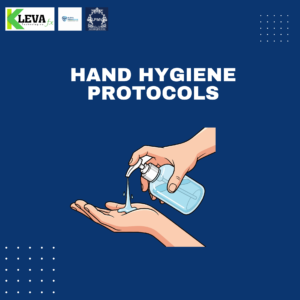
➤ Hand Hygiene Protocols
Focus.
If hand hygiene fails, Infection Prevention & Control fails.
No technology, no PPE, no policy can compensate for poor hand hygiene.
Most infections spread through hands.
Your hands can heal — or they can transmit disease.
Competence starts here.
🧼 Why Hand Hygiene Is Critical
Hands move constantly.
From surfaces.
To equipment.
To patients.
To your own face.
If contaminated hands are not cleaned properly, transmission becomes automatic.
Hand hygiene breaks the contact link in the chain of infection immediately.
This is frontline prevention.
⏱ The 5 Key Moments for Hand Hygiene
You must clean your hands:
➤ Before touching a patient
➤ Before a clean or aseptic procedure
➤ After exposure to bodily fluids
➤ After touching a patient
➤ After touching patient surroundings
Miss one moment — you create a risk window.
These are not suggestions.
They are protocol.
🫧 Handwashing with Soap and Water
Use soap and water when:
Hands are visibly dirty.
After contact with bodily fluids.
After using the toilet.
During outbreaks of certain infections.
Proper technique includes:
Wet hands.
Apply soap.
Rub all surfaces — palms, back of hands, between fingers, thumbs, fingertips.
Scrub for at least 20 seconds.
Rinse thoroughly.
Dry with a clean towel.
Rushed washing is ineffective washing.
🧴 Alcohol-Based Hand Rub (ABHR)
Use alcohol-based hand rub when hands are not visibly soiled.
Apply enough product to cover all surfaces.
Rub until completely dry.
Do not wipe off before drying.
Do not use insufficient quantity.
If hands are dry in 5 seconds, you did not use enough.
⚠ Common Mistakes
Skipping hand hygiene because “I wore gloves.”
Touching phones after cleaning hands.
Not cleaning thumbs and fingertips.
Removing gloves and not washing hands afterward.
Gloves do not replace hand hygiene.
Hand hygiene must occur before and after glove use.
🛡 Protecting Yourself and Others
Good hand hygiene protects:
Patients.
Colleagues.
Your family.
Yourself.
One missed hand hygiene moment can lead to outbreak spread.
Consistency saves lives.
🎯 Competency Focus
By the end of this section, you must be able to:
Demonstrate correct handwashing technique.
Explain when to use soap and water vs. alcohol-based rub.
Identify the 5 moments without hesitation.
Recognize poor practice in real scenarios.
Correct breaches confidently and professionally.
Hand hygiene is not basic.
It is foundational.
Master it.
Apply it.
Model it.
Every contact.
Every time.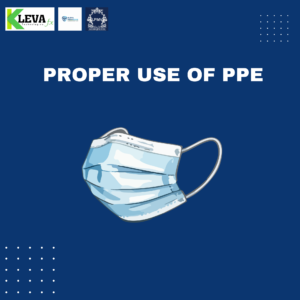
➤ Proper Use of Personal Protective Equipment (PPE)
Listen carefully.
PPE is not decoration.
It is not a fashion accessory.
It is not for show.
It is a barrier between you and infection.
Used correctly, it protects you.
Used incorrectly, it gives you false confidence — and exposes you.
Competence in IPC means knowing when to use PPE, what to use, and how to remove it safely.
🛡 What Is PPE?
Personal Protective Equipment includes:
➤ Gloves
➤ Surgical masks
➤ Respirators (e.g., N95-type)
➤ Gowns or aprons
➤ Eye protection (goggles or face shields)
Each item protects against specific exposure risks.
You must perform a risk assessment before selecting PPE.
Overuse wastes resources.
Underuse increases exposure.
🧠 Risk-Based Selection
Ask yourself:
Will I be exposed to blood or body fluids? → Gloves.
Risk of splash? → Gloves + gown + eye protection.
Respiratory droplets? → Surgical mask.
Airborne risk? → Respirator + proper ventilation.
Correct PPE matches the mode of transmission.
If you mismatch protection, you create vulnerability.
🧤 Proper Donning (Putting On PPE)
Order matters.
Generally:
- Perform hand hygiene.
- Put on gown.
- Put on mask or respirator.
- Put on eye protection.
- Put on gloves last.
Gloves should cover gown cuffs.
If you contaminate yourself while putting PPE on, you’ve already failed.
Move carefully and deliberately.
🧼 Proper Doffing (Removing PPE)
Removal is the highest-risk moment.
Most contamination happens here.
General order:
- Remove gloves first (most contaminated).
- Perform hand hygiene.
- Remove gown.
- Remove eye protection.
- Remove mask or respirator last.
- Perform hand hygiene again.
Never touch the front surfaces.
Remove slowly and intentionally.
If removal is careless, contamination transfers to your hands, face, or clothing.
⚠ Common PPE Mistakes
Wearing gloves and touching phones.
Reusing disposable PPE improperly.
Wearing masks below the nose.
Touching the front of the mask repeatedly.
Removing PPE in the wrong order.
PPE misuse creates more risk than no PPE.
Discipline matters.
🛑 PPE Does Not Replace Hand Hygiene
Gloves tear.
Masks shift.
Gowns can be contaminated.
Hand hygiene must occur:
Before donning PPE.
After removing PPE.
Always.
🎯 Competency Focus
By the end of this section, you must be able to:
Select appropriate PPE based on risk assessment.
Demonstrate correct donning and doffing sequence.
Identify improper PPE use in real scenarios.
Explain why removal order matters.
Maintain infection control discipline under pressure.
PPE is your shield.
But a shield only works when used correctly.
Think before wearing it.
Move carefully when removing it.
Stay disciplined.
That is professional IPC competence.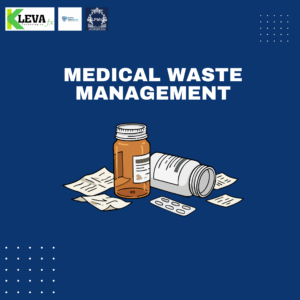
➤ Medical Waste Management
Focus.
Medical waste is not ordinary waste.
If it is handled carelessly, it becomes a source of infection, injury, and environmental contamination.
As a Public Health Officer, you are responsible for ensuring that medical waste is managed safely — from the point of generation to final disposal.
If waste control fails, infection control fails.
🗂 What Is Medical Waste?
Medical waste includes any waste generated during healthcare activities that may be infectious, hazardous, or harmful.
This includes:
➤ Used gloves, masks, and gowns
➤ Blood-soaked materials
➤ Laboratory specimens
➤ Needles and sharps
➤ Expired medicines
➤ Contaminated dressings
Not all healthcare waste is infectious — but you must treat it carefully until properly segregated.
🎨 Segregation at Source
Waste must be separated immediately at the point of generation.
This is non-negotiable.
Different categories require different containers (based on institutional or national guidelines), commonly including:
➤ Sharps containers (puncture-proof)
➤ Infectious waste bags
➤ General waste bins
Mixing infectious waste with general waste increases risk to cleaners, handlers, and the public.
If segregation fails at the beginning, the entire system collapses.
🪡 Safe Handling of Sharps
Sharps are high-risk.
This includes needles, blades, and broken glass.
Rules:
Do not recap needles.
Dispose of immediately after use.
Use puncture-proof containers.
Never overfill sharps containers.
One needle-stick injury can transmit serious infections.
Sharps safety protects staff and waste handlers.
🧴 Storage and Transportation
Medical waste should not accumulate unnecessarily.
It must be:
Stored in designated areas.
Kept away from public access.
Transported using safe methods.
Handled with PPE.
Poor storage attracts pests and increases contamination risk.
Waste areas must be secure and monitored.
🔥 Final Disposal
Proper disposal methods may include:
Incineration.
Autoclaving.
Approved landfill systems (for treated waste).
Open dumping is not acceptable.
Burning in uncontrolled areas spreads toxins and infection.
Public Health Officers must ensure compliance with regulations.
⚠ Common Failures
Mixing infectious and general waste.
Overfilled sharps containers.
Lack of labeling.
Poor PPE use by waste handlers.
Delayed disposal.
These failures increase occupational exposure and community risk.
🎯 Competency Focus
By the end of this section, you must be able to:
Identify different categories of medical waste.
Ensure proper segregation at source.
Explain safe sharps disposal procedures.
Monitor waste storage and transportation systems.
Recognize and report waste management breaches.
Medical waste is a silent risk.
If handled correctly, it is controlled.
If ignored, it becomes a source of outbreak.
Discipline in waste management is discipline in infection control.
That is professional Public Health practice.
📘 Module 4️⃣: Basic Epidemiology & Surveillance
Introduction
Pay attention.
If you cannot measure disease, you cannot control disease.
Public Health is not guesswork.
It is data-driven.
It is evidence-based.
It is systematic.
This module introduces you to Basic Epidemiology and Surveillance — the foundation of disease tracking, pattern recognition, and outbreak detection.
If Infection Prevention is your shield,
Epidemiology is your radar.
📊 What Is Epidemiology?
Epidemiology is the study of:
Who gets sick.
Where they get sick.
When they get sick.
Why they get sick.
It helps us understand disease patterns in populations — not just individuals.
Epidemiology answers key questions:
Is this an isolated case or a cluster?
Is this seasonal or unusual?
Is this outbreak growing or declining?
Who is most affected?
Without epidemiology, you are reacting blindly.
📈 What Is Surveillance?
Surveillance is continuous monitoring.
It is the ongoing collection, analysis, and interpretation of health data — followed by action.
Surveillance detects:
Unusual increases in cases.
Emerging outbreaks.
Changes in disease patterns.
Declining vaccination rates.
Surveillance allows early warning.
Early warning prevents escalation.
🔍 Why This Module Matters
If you fail to recognize trends:
Outbreaks grow silently.
Clusters become epidemics.
Epidemics become crises.
Public Health systems depend on timely reporting and accurate data interpretation.
A single delayed report can affect thousands.
Competent officers understand that documentation is prevention.
📌 What You Will Learn in This Module
You will develop the ability to:
Understand basic epidemiological terms (incidence, prevalence, mortality, etc.).
Identify patterns by time, place, and person.
Recognize outbreak signals.
Support disease surveillance systems.
Interpret simple health data.
Report findings through proper channels.
This is analytical competency.
🎯 Competency Expectation
By the end of Module 4, you must be able to:
Explain how diseases are tracked.
Identify abnormal disease patterns.
Differentiate between sporadic cases and outbreaks.
Understand your role in reporting systems.
Contribute to early detection processes.
Public Health Officers are not passive observers.
You are data interpreters.
Trend analyzers.
Early warning responders.
If you cannot read patterns, you cannot prevent escalation.
Numbers tell stories.
Your job is to understand them — and act.
This module sharpens your analytical edge.
Stay sharp.
➤ Introduction to Epidemiology
Focus.
Epidemiology is not statistics for decoration.
It is the backbone of Public Health decision-making.
If you cannot understand patterns of disease, you cannot control them.
Epidemiology is the study of how diseases are distributed in populations and the factors that influence or determine that distribution.
In simple terms:
Who is getting sick?
Where is it happening?
When is it happening?
Why is it happening?
Those four questions guide every public health action.
🧠 Epidemiology Is Population-Based
Clinical medicine focuses on one patient.
Epidemiology focuses on groups.
It looks at communities, regions, age groups, occupations, and vulnerable populations.
You are not just asking, “Why is this person sick?”
You are asking, “Why are 200 people in this area sick?”
That shift in thinking is critical.
📊 Core Components of Epidemiology
Epidemiology studies disease by:
➤ Person – Who is affected? (age, gender, occupation, risk group)
➤ Place – Where is it occurring? (community, region, school, hospital)
➤ Time – When is it happening? (seasonal, sudden spike, long-term trend)
These three elements help you detect patterns.
Patterns reveal causes.
Causes guide prevention.
🔍 Types of Epidemiology
At a basic level, you should understand that epidemiology includes:
Descriptive epidemiology – Describes what is happening.
Analytical epidemiology – Investigates why it is happening.
First, you describe the pattern.
Then, you investigate the cause.
Skipping description leads to poor analysis.
⚖ Why Epidemiology Matters in Practice
Without epidemiology:
You cannot detect outbreaks early.
You cannot allocate resources properly.
You cannot evaluate prevention programs.
You cannot measure impact.
Public Health decisions must be based on evidence — not assumptions.
Data drives intervention.
🎯 Competency Focus
By the end of this section, you must be able to:
Define epidemiology confidently.
Explain the person-place-time model.
Recognize patterns in simple case scenarios.
Differentiate between descriptive and analytical approaches.
Understand how epidemiology supports prevention and control.
Epidemiology is your investigative tool.
It turns scattered cases into meaningful patterns.
See the pattern.
Understand the cause.
Guide the intervention.
That is professional Public Health practice.
➤ Disease Patterns (Endemic, Epidemic, Pandemic)
Pay attention.
If you misclassify a disease pattern, you misjudge the response.
Public Health response depends on scale.
Scale depends on pattern.
You must be able to look at case numbers and immediately understand what level you are dealing with.
🟢 Endemic
An endemic disease is one that is consistently present in a particular area or population.
It does not disappear.
It remains at a predictable baseline level.
Examples include diseases that occur regularly in certain regions due to environmental or social factors.
Endemic does not mean harmless.
It means expected.
When a disease is endemic, your role is control and management — not panic.
You focus on:
Routine prevention measures.
Surveillance.
Community education.
Sustained intervention strategies.
Endemic = stable presence.
🟡 Epidemic
An epidemic occurs when there is a sudden increase in cases above the expected baseline in a specific area.
Something has changed.
Cases rise quickly.
Clusters form.
Transmission accelerates.
This is no longer routine.
An epidemic demands:
Rapid investigation.
Immediate reporting.
Source identification.
Control measures.
Community communication.
Delay converts epidemics into larger crises.
Epidemic = unusual surge in a defined area.
🔴 Pandemic
A pandemic is an epidemic that spreads across multiple countries or continents, affecting a large number of people.
It is widespread and crosses international boundaries.
Pandemics disrupt:
Health systems.
Economies.
Travel.
Education systems.
Response requires:
International coordination.
Large-scale surveillance.
Mass vaccination or control strategies.
Global data sharing.
Pandemic = global scale spread.
⚖ Understanding the Difference
Endemic → Expected baseline presence.
Epidemic → Sudden regional spike.
Pandemic → International/global spread.
The difference is scale and spread.
Do not confuse endemic persistence with epidemic growth.
Competence means analyzing case trends before labeling.
Public Health is about proportional response.
Misclassification leads to either complacency or unnecessary panic.
Understand the pattern.
Assess the scale.
Respond appropriately.
That is operational epidemiology.
➤ Basic Data Collection Methods
Focus.
If your data is weak, your decisions will be weak.
Public Health runs on information.
Not assumptions.
Not rumors.
Not social media noise.
Basic data collection is the foundation of surveillance, outbreak detection, and intervention planning.
If you collect poorly, you analyze poorly.
If you analyze poorly, you respond poorly.
📋 What Is Data Collection?
Data collection is the systematic gathering of health-related information for analysis and action.
It answers:
How many cases?
Where are they occurring?
Who is affected?
When did symptoms begin?
What risk factors are present?
Without structured data, you are operating blindly.
🧾 1️⃣ Routine Reporting
This is ongoing data collection from healthcare facilities and community health posts.
Examples include:
Daily case reports.
Immunization records.
Maternal and child health statistics.
Laboratory confirmations.
Routine reporting helps track trends over time.
Consistency is key.
If reports are delayed or incomplete, surveillance weakens.
🧑🤝🧑 2️⃣ Surveys and Questionnaires
Surveys collect information directly from individuals or households.
They can assess:
Health behaviors.
Vaccination status.
Sanitation practices.
Knowledge levels.
Risk exposures.
Questions must be clear, neutral, and structured.
Poorly designed questions produce unreliable data.
🏥 3️⃣ Health Facility Records
Medical records provide valuable epidemiological data.
You analyze:
Diagnosis patterns.
Age distribution.
Gender distribution.
Frequency of symptoms.
Records help identify clusters and abnormal increases.
Documentation accuracy matters.
If records are incomplete, analysis becomes distorted.
🔍 4️⃣ Observation and Field Assessment
Sometimes data comes from direct observation.
You assess:
Environmental conditions.
Overcrowding.
Water sources.
Waste disposal practices.
Vector breeding sites.
Field assessment strengthens surveillance.
You must train your eyes to detect risk patterns.
🧪 5️⃣ Laboratory Data
Laboratory confirmation validates suspected cases.
It helps:
Confirm outbreaks.
Identify specific pathogens.
Track resistance patterns.
Without lab confirmation, assumptions may mislead response strategies.
⚖ Principles of Good Data Collection
Good data must be:
Accurate.
Timely.
Complete.
Relevant.
Confidential.
If any of these fail, decision-making weakens.
Public Health decisions are only as strong as the data behind them.
🎯 Competency Focus
By the end of this section, you must be able to:
Identify appropriate data sources in different scenarios.
Differentiate between routine and outbreak data collection.
Design simple survey questions appropriately.
Recognize incomplete or unreliable data.
Report findings clearly and accurately.
Data is not paperwork.
It is the backbone of surveillance.
Collect carefully.
Record accurately.
Report promptly.
That is professional epidemiological practice.
➤ Case Definitions
Focus.
If you cannot define a case properly, you cannot count cases properly.
If you cannot count cases properly, you cannot detect an outbreak.
Everything in epidemiology begins with a clear case definition.
A case definition is a set of standard criteria used to decide whether a person should be classified as having a particular disease for surveillance or investigation purposes.
It ensures everyone is speaking the same language.
No confusion.
No guesswork.
No inconsistent classification.
📌 Why Case Definitions Matter
Without a case definition:
You overcount.
You undercount.
You misclassify.
You delay response.
During outbreaks, precision is critical.
A clear case definition allows:
Consistent reporting.
Accurate surveillance.
Reliable data comparison.
Effective intervention planning.
🧾 Components of a Case Definition
A standard case definition usually includes:
Clinical criteria – Signs and symptoms (fever, cough, rash, etc.).
Laboratory criteria – Test confirmation where applicable.
Time criteria – Onset within a specific period.
Place criteria – Linked to a specific area or facility.
Person criteria – Linked to a specific group or exposure.
The more specific the definition, the more accurate your surveillance.
🟢 Types of Case Classifications
In surveillance, cases are often classified as:
Suspected – Based on symptoms only.
Probable – Meets clinical criteria with some supporting evidence.
Confirmed – Laboratory verified.
Understanding classification levels is critical.
Not every suspected case is confirmed — but suspected cases still require monitoring.
⚖ Sensitivity vs Specificity
A broad case definition captures more potential cases (high sensitivity).
A narrow case definition captures fewer but more accurate cases (high specificity).
During early outbreak detection, sensitivity may be prioritized.
During confirmation and control, specificity becomes important.
You must understand when to widen and when to narrow.
🧠 Practical Example
If a community reports:
“Anyone with fever” — too broad.
But:
“Anyone with fever above 38°C, cough, and symptom onset within the last 7 days in Community X” — structured and useful.
Structure improves response.
➤ Disease Reporting Principles
Listen carefully.
Disease reporting is not paperwork.
It is protection.
If you delay reporting, outbreaks grow.
If you distort data, response fails.
If you ignore procedure, systems collapse.
Public Health depends on timely, accurate, and structured reporting.
This is a professional responsibility — not an administrative burden.
📌 What Is Disease Reporting?
Disease reporting is the formal process of notifying appropriate health authorities about specific health events, conditions, or unusual patterns.
Not all diseases are reported the same way.
Some are routine.
Some are urgent.
Some require immediate notification.
You must know the difference.
🧭 Core Principles of Disease Reporting
1️⃣ Timeliness
Report promptly.
Delays weaken response.
Some conditions require immediate reporting (same day).
Others follow routine schedules.
If you wait until “it becomes serious,” you have already failed.
2️⃣ Accuracy
Report facts — not assumptions.
Correct case classification.
Correct dates.
Correct patient information.
Correct location details.
Inaccurate data leads to incorrect decisions.
Precision protects communities.
3️⃣ Completeness
Incomplete reports are dangerous.
Missing:
Onset date.
Age.
Address.
Exposure history.
These gaps weaken epidemiological analysis.
If it is not complete, it is not reliable.
4️⃣ Confidentiality
Protect patient identity.
Use official channels.
Avoid public disclosure.
Never share sensitive details casually.
Confidentiality builds trust.
Trust improves cooperation.
5️⃣ Proper Chain of Command
You report through designated channels.
Immediate supervisor first.
Then district or local authority as structured.
Do not bypass the system.
Do not self-announce publicly.
Structure prevents chaos.
6️⃣ Verification
Ensure the case meets the case definition before reporting.
Confirm classification.
Avoid panic from misclassification.
Reporting must be responsible — not emotional.
🚨 Notifiable Diseases
Some diseases require mandatory reporting due to public health risk.
Examples may include:
Cholera.
Measles.
Tuberculosis.
Viral hemorrhagic fevers.
You must be familiar with local notifiable disease lists.
Ignorance is not an excuse.
⚖ Why Reporting Matters
Reporting enables:
Early outbreak detection.
Rapid response.
Resource allocation.
Contact tracing.
Prevention strategies.
One accurate report can prevent hundreds of infections.
One missed report can trigger crisis.
🎯 Competency Focus
By the end of this section, you must be able to:
Identify reportable conditions.
Complete reporting forms accurately.
Escalate urgent cases appropriately.
Maintain confidentiality.
Respect the reporting hierarchy.
Disease reporting is discipline.
It is structured communication under pressure.
Report early.
Report accurately.
Report responsibly.
That is professional Public Health practice.
DAY 2
📘 Module 5️⃣: Health Promotion & Community Engagement
Listen carefully.
Public health is not just about identifying disease.
It is about changing behaviour before disease happens.
If you cannot influence behaviour, you cannot protect communities.
A Public Health Officer who only understands theory but cannot engage people is ineffective in the field. Knowledge is important — but influence saves lives.
Today, we focus on what separates average officers from impactful ones: Health Promotion and Community Engagement.
🔹 What is Health Promotion?
Health promotion is not posting flyers on WhatsApp.
It is the structured process of helping people:
➤ Understand health risks
➤ Make informed decisions
➤ Change harmful behaviours
➤ Adopt healthier lifestyles
It is prevention through education, strategy, and trust.
If hypertension is rising in a community, you don’t just record statistics.
You educate on salt reduction, physical activity, stress control.
You explain consequences clearly.
You guide change.
Prevention is proactive — not reactive.
🔹 Your Role as a Public Health Officer
At Level 1 and 2, you are not expected to be a consultant.
But you must be competent to:
➤ Deliver simple, clear health talks
➤ Translate medical terms into everyday language
➤ Identify harmful cultural practices
➤ Address myths and misinformation
➤ Encourage vaccination and hygiene practices
➤ Promote screening and early detection
If people cannot understand you, they cannot act.
Communication is a professional skill — not a talent you are born with.
🔹 Community Engagement: This is Where Many Fail
You cannot promote health from a distance.
Communities do not respond to authority.
They respond to trust.
Community engagement means:
➤ Listening before speaking
➤ Understanding local beliefs
➤ Working with community leaders
➤ Involving religious heads and youth groups
➤ Respecting cultural sensitivity
You do not insult tradition.
You educate within it.
If a community believes malaria is caused by spiritual forces, you do not laugh.
You educate patiently on mosquito breeding and prevention.
Engagement is strategy.
🔹 Methods of Health Promotion
As entry-level officers, you must know practical methods:
➤ One-on-one counselling
➤ Small group discussions
➤ School health education sessions
➤ Community outreach campaigns
➤ Market sensitization
➤ Radio awareness talks
➤ Social media awareness campaigns
Every setting requires a different approach.
The message is the same.
The delivery changes.
🔹 Behaviour Change is Not Immediate
Do not expect applause after one talk.
Behaviour change takes:
➤ Repetition
➤ Consistency
➤ Reinforcement
➤ Community role models
➤ Follow-up
Public health is not a one-day event.
It is a sustained intervention.
🔹 Common Mistakes You Must Avoid
As trainees, understand this clearly:
❌ Using fear without education
❌ Speaking in medical jargon
❌ Ignoring community feedback
❌ Being confrontational
❌ Making promises you cannot fulfill
❌ Delivering information without verifying facts
Credibility is your currency.
Lose it once — and your message will be ignored.
🔹 Measuring Impact
Health promotion is not complete without evaluation.
You must ask:
➤ Did vaccination uptake increase?
➤ Did handwashing improve?
➤ Did school absenteeism reduce?
➤ Did clinic attendance improve?
If behaviour did not change, your strategy must improve.
Data validates your intervention.
🔹 Professional Mindset
Let me be clear:
Public health is influence without coercion.
You do not force behaviour.
You guide it.
You educate it.
You model it.
When you enter a community, you are not just a trainee.
You represent a system.
You represent safety.
You represent prevention.
Your voice must carry clarity.
Your message must carry evidence.
Your attitude must carry respect.
That is competence.
🎯 End Result of This Module
By the end of this module, you must be able to:
➤ Plan a simple health promotion activity
➤ Deliver a 5–10 minute health talk confidently
➤ Engage a small community group professionally
➤ Address myths respectfully
➤ Evaluate basic outcomes
If you cannot communicate, you cannot prevent disease.
And prevention is the foundation of public health.
Take this module seriously.
📘 Principles of Health Education
This is not theory.
This is discipline.
If you ignore these principles, your health talk becomes noise.
Health education is not about speaking.
It is about impact.
If people do not understand you, trust you, or act on what you teach — you have failed operationally.
Today, we deal with the non-negotiable principles of health education.
🔹 1️⃣ Clarity and Simplicity
If you speak like a textbook, you will lose the room.
At Level 1 and 2, your responsibility is to:
➤ Break complex health issues into simple language
➤ Avoid medical jargon
➤ Use relatable examples
➤ Speak in the language the community understands
“Hypertension” becomes “high blood pressure.”
“Vector-borne disease” becomes “illness spread by mosquitoes.”
If a market woman cannot understand you, you are not communicating.
Simplicity is strength.
🔹 2️⃣ Relevance
Health education must be connected to real life.
Do not deliver a lecture on obesity in a community battling cholera.
You must:
➤ Assess the community’s priority problems
➤ Address current risks
➤ Use real local examples
➤ Focus on practical solutions
Relevance creates attention.
Irrelevance creates distraction.
🔹 3️⃣ Participation
Health education is not a sermon.
It is interaction.
Encourage:
➤ Questions
➤ Discussions
➤ Feedback
➤ Experience sharing
When people participate, they own the message.
When they own the message, they change behaviour.
Silence in the room does not mean understanding.
Sometimes it means confusion.
🔹 4️⃣ Cultural Sensitivity
If you disrespect culture, you lose access.
You must:
➤ Understand local beliefs
➤ Respect traditions
➤ Avoid confrontation
➤ Correct misinformation tactfully
You do not attack practices.
You guide improvement.
Professional health educators build bridges — not battles.
🔹 5️⃣ Accuracy and Evidence
Never guess.
Never exaggerate.
Never spread unverified information.
As a Public Health Officer, your credibility depends on:
➤ Accurate data
➤ Evidence-based information
➤ Proper referencing when needed
➤ Staying within your level of competence
If you are unsure — say so.
Then verify.
Confidence without knowledge is dangerous.
🔹 6️⃣ Consistency and Reinforcement
One health talk is not enough.
Behaviour change requires:
➤ Repeated messaging
➤ Follow-up visits
➤ Reinforcement through community leaders
➤ Visual reminders (posters, demonstrations)
Repetition builds memory.
Memory builds habit.
Habit builds health.
🔹 7️⃣ Practical Application
Do not just tell people what to do — show them.
Demonstrate:
➤ Proper handwashing
➤ Safe food storage
➤ Mosquito net use
➤ Basic hygiene practices
People remember what they see more than what they hear.
Demonstration increases retention.
🔹 8️⃣ Evaluation
Every health education activity must be assessed.
Ask yourself:
➤ Did they understand the message?
➤ Can they repeat key points?
➤ Has behaviour changed?
➤ What barriers remain?
Without evaluation, you are operating blindly.
Professional public health practice is measurable.
🔹 Let Me Be Direct With You
At Level 1 and 2, you are entry-level officers.
But entry-level does not mean careless.
If you violate these principles:
❌ Your message will be ignored
❌ Misinformation will continue
❌ Trust will be lost
❌ Disease risk will remain
Health education is strategic communication.
It requires preparation.
It requires discipline.
It requires awareness.
This is what separates trained personnel from social media commentators.
You are not here to make noise.
You are here to influence behaviour safely, professionally, and responsibly.
That is public health.
📘 Behavior Change Communication (BCC)
This is where public health becomes real.
You can educate.
You can talk.
You can distribute flyers.
But if behaviour does not change — disease will not reduce.
Behavior Change Communication is not random talking.
It is strategic, intentional communication designed to move people from awareness to action.
If you cannot influence behaviour, you cannot function effectively as a Public Health Officer.
🔹 What Is Behavior Change Communication?
Behavior Change Communication (BCC) is the structured use of communication to:
➤ Influence attitudes
➤ Shift beliefs
➤ Reduce harmful practices
➤ Promote healthy behaviours
➤ Sustain positive habits
It goes beyond information.
Information says: “Wash your hands.”
BCC asks:
Why are they not washing?
Is water available?
Do they believe it prevents disease?
Are there cultural barriers?
BCC investigates before it instructs.
🔹 Awareness Is Not Change
Many trainees make this mistake.
They think:
“I’ve told them smoking causes cancer, so they will stop.”
No.
Awareness does not automatically lead to behaviour change.
People may:
➤ Know the risk
➤ Understand the danger
➤ Still continue the behaviour
Because behaviour is influenced by:
➤ Habits
➤ Social norms
➤ Peer pressure
➤ Economic factors
➤ Accessibility
➤ Beliefs
Your job is to address these factors — not just repeat information.
🔹 The Stages of Behavior Change
Not everyone is ready to change immediately.
You must recognize stages:
➤ Not aware
➤ Aware but not concerned
➤ Considering change
➤ Preparing to change
➤ Taking action
➤ Maintaining behaviour
If you speak to someone in the wrong stage with the wrong message, you will fail.
A smoker who is not ready to quit does not need threats.
They need motivation and gradual guidance.
Professional communication adapts.
🔹 Core Principles of BCC
At Level 1 and 2, understand these fundamentals:
➤ Audience-centered approach
➤ Clear, simple messaging
➤ Repetition and reinforcement
➤ Use of trusted influencers
➤ Practical demonstrations
➤ Monitoring and feedback
BCC is planned.
It is not improvised.
🔹 Tools You Can Use
As entry-level officers, you may apply:
➤ Community dialogues
➤ School health sessions
➤ Peer education programs
➤ Religious gathering talks
➤ Market sensitization
➤ Radio jingles
➤ Social media awareness campaigns
➤ Visual posters and demonstrations
Different audiences require different strategies.
Youth respond to peers.
Elders respond to respected leaders.
Parents respond to child-focused messaging.
Know your audience.
🔹 Emotional Intelligence in BCC
Do not shame people.
Do not mock behaviour.
Do not embarrass individuals publicly.
Change happens when people feel respected — not attacked.
If you shame a community about open defecation, they may resist you.
If you educate respectfully and show alternatives, they may cooperate.
Tone determines impact.
🔹 Barriers to Behavior Change
You must assess barriers such as:
➤ Poverty
➤ Lack of access
➤ Cultural beliefs
➤ Fear
➤ Misinformation
➤ Low literacy
➤ Gender roles
If mosquito nets are expensive, education alone is insufficient.
If vaccines are feared, reassurance and trusted voices are necessary.
Solutions must match barriers.
🔹 Measuring Success
Behavior Change Communication must be evaluated.
Ask:
➤ Has clinic attendance improved?
➤ Has vaccination uptake increased?
➤ Has handwashing practice improved?
➤ Has risky behaviour reduced?
If no measurable change occurs, adjust your strategy.
Public health is data-driven — not assumption-driven.
🔹 Hard Truth
As Public Health trainees:
If you cannot influence behaviour:
➤ Outbreaks will continue
➤ Preventable diseases will persist
➤ Community trust will decline
Behavior change is not magic.
It requires:
➤ Patience
➤ Strategy
➤ Cultural awareness
➤ Consistency
➤ Follow-up
You are not entertainers.
You are behaviour influencers for health protection.
🎯 Competency Expectation
After this session, you must be able to:
➤ Identify risky behaviours in a community
➤ Analyze barriers to change
➤ Develop a simple BCC plan
➤ Deliver targeted, respectful messaging
➤ Evaluate whether behaviour has shifted
Public health is not about talking.
It is about transforming behaviour safely, ethically, and sustainably.
That is your responsibility.
📘 Community Sensitization Techniques
Let me be clear.
Community sensitization is not noise-making.
It is not shouting with a megaphone and leaving.
It is structured, strategic awareness designed to prepare a community for action.
If sensitization is done poorly:
➤ People resist interventions
➤ Rumors spread
➤ Programs fail
➤ Trust collapses
If done correctly:
➤ Communities cooperate
➤ Participation increases
➤ Misinformation reduces
➤ Health outcomes improve
As Public Health Level 1 and 2 trainees, you must know how to do this professionally.
🔹 What Is Community Sensitization?
Community sensitization is the process of:
➤ Informing people about a health issue
➤ Preparing them for an intervention
➤ Explaining benefits and risks clearly
➤ Addressing fears and misconceptions
➤ Encouraging participation
It happens before implementation.
Vaccination campaign?
Sensitize first.
Sanitation enforcement?
Sensitize first.
Screening program?
Sensitize first.
No preparation = resistance.
🔹 1️⃣ Stakeholder Engagement
You do not enter a community alone.
You identify:
➤ Community leaders
➤ Religious heads
➤ Youth leaders
➤ Women leaders
➤ School authorities
➤ Market association heads
If leaders are not informed, the community will question your legitimacy.
Engage influencers early.
Respect protocol.
Build trust.
🔹 2️⃣ Door-to-Door Outreach
Personal contact builds credibility.
This method allows you to:
➤ Explain issues clearly
➤ Answer questions directly
➤ Observe environmental conditions
➤ Identify vulnerable households
It is slow — but powerful.
When people see you face-to-face, resistance reduces.
🔹 3️⃣ Community Meetings (Town Halls)
Gather people physically and speak clearly.
During meetings:
➤ Use simple language
➤ Allow questions
➤ Correct myths respectfully
➤ Provide practical steps
Do not dominate the discussion.
Facilitate it.
When people feel heard, they cooperate.
🔹 4️⃣ Use of Local Influencers
Messages delivered by trusted voices travel faster.
Examples:
➤ Religious sermons
➤ School announcements
➤ Traditional ruler endorsements
➤ Youth ambassador programs
When respected figures repeat your message, credibility multiplies.
Never underestimate influence.
🔹 5️⃣ Demonstrations
Do not just talk — show.
Demonstrate:
➤ Proper handwashing
➤ Mosquito net installation
➤ Safe food handling
➤ Waste disposal methods
Visual learning increases retention.
People believe what they see.
🔹 6️⃣ Media and Communication Channels
Modern sensitization includes:
➤ Local radio programs
➤ Community WhatsApp groups
➤ Posters and banners
➤ Social media campaigns
➤ SMS reminders
But remember:
Digital messages cannot replace human engagement.
They support it.
🔹 7️⃣ Culturally Sensitive Messaging
Never attack cultural practices aggressively.
Instead:
➤ Acknowledge beliefs
➤ Provide scientific explanation
➤ Offer safer alternatives
➤ Avoid confrontation
Public health works best with partnership — not opposition.
🔹 Common Mistakes You Must Avoid
As trainees, avoid:
❌ Delivering information without preparation
❌ Ignoring local power structures
❌ Using technical language
❌ Threatening communities
❌ Dismissing fears
❌ Leaving without follow-up
Sensitization is not a one-time event.
It requires reinforcement.
🔹 Measuring Effectiveness
After sensitization, ask:
➤ Did attendance increase?
➤ Did rumors reduce?
➤ Are people asking informed questions?
➤ Is participation improving?
If the answer is no — adjust your approach.
Public health is adaptive.
🔹 Professional Standard
You are not activists.
You are structured health communicators.
Community sensitization requires:
➤ Planning
➤ Coordination
➤ Respect
➤ Clarity
➤ Monitoring
At Level 1 and 2, you must be able to:
➤ Plan a basic sensitization strategy
➤ Identify key stakeholders
➤ Deliver clear messaging
➤ Handle resistance professionally
➤ Evaluate community response
Preparation prevents rejection.
Effective sensitization opens the door for successful intervention.
This is operational public health.
Master it.
📘 Risk Communication Strategies
Listen carefully.
When there is an outbreak, panic spreads faster than disease.
If communication is delayed, unclear, or dishonest:
➤ Rumors multiply
➤ Fear escalates
➤ Trust collapses
➤ Compliance drops
Risk communication is not optional in public health.
It is a core survival tool during emergencies.
🔹 What Is Risk Communication?
Risk communication is the timely, accurate exchange of information during:
➤ Disease outbreaks
➤ Environmental hazards
➤ Food contamination
➤ Public health emergencies
Its purpose is simple:
➤ Inform clearly
➤ Reduce fear
➤ Prevent misinformation
➤ Guide protective action
Silence creates speculation.
Speculation creates chaos.
🔹 1️⃣ Be Early and Transparent
Delay destroys credibility.
Even if all details are not available:
➤ Share what is known
➤ Admit what is unknown
➤ Explain what is being done
Never hide information.
Once trust is lost, compliance drops.
🔹 2️⃣ Use Clear, Simple Language
During emergencies, people are anxious.
Avoid:
❌ Medical jargon
❌ Complex statistics
❌ Technical explanations
Instead:
➤ State the risk clearly
➤ Explain who is affected
➤ Give practical steps
Example:
“Boil your water before drinking.”
“Wash hands regularly.”
“Avoid crowded places.”
Clarity saves time — and lives.
🔹 3️⃣ Acknowledge Fear
Do not dismiss concerns.
If people are afraid, say:
➤ “We understand your concern.”
➤ “Here is what you can do to stay safe.”
Empathy builds cooperation.
Cold, robotic messaging creates resistance.
🔹 4️⃣ Counter Misinformation Quickly
Rumors spread fast — especially on social media.
As a Public Health Officer, you must:
➤ Monitor false information
➤ Correct it respectfully
➤ Provide verified facts
➤ Use trusted community voices
Do not argue emotionally.
Correct calmly — with evidence.
🔹 5️⃣ Provide Actionable Guidance
Never leave people with fear alone.
Always include:
➤ What the risk is
➤ Who is vulnerable
➤ What protective action to take
➤ Where to get help
Risk without guidance creates panic.
Risk with guidance creates control.
🔹 6️⃣ Use Trusted Channels
Messages are stronger when delivered through:
➤ Community leaders
➤ Religious institutions
➤ Schools
➤ Local radio
➤ Official government platforms
Trust determines compliance.
🔹 Competency Expectation
At Level 1 and 2, you must be able to:
➤ Communicate risk calmly
➤ Avoid exaggeration
➤ Provide accurate, simple guidance
➤ Handle public fear professionally
➤ Maintain credibility under pressure
Risk communication is leadership under uncertainty.
In emergencies, your voice must carry clarity — not confusion.
That is professional public health.
📘 Cultural Sensitivity in Public Health
Let me be direct with you.
Public health does not operate in a vacuum.
It operates inside culture.
If you ignore culture:
➤ Communities resist
➤ Programs fail
➤ Trust collapses
➤ Disease persists
Cultural sensitivity is not political correctness.
It is operational intelligence.
If you cannot work within cultural realities, you cannot function effectively as a Public Health Officer.
🔹 What Is Cultural Sensitivity?
Cultural sensitivity means:
➤ Understanding community beliefs
➤ Respecting traditions
➤ Avoiding judgment
➤ Communicating without disrespect
➤ Adapting interventions to local context
It does NOT mean agreeing with harmful practices.
It means correcting them strategically — not aggressively.
🔹 Why It Matters
Health behaviours are shaped by:
➤ Religion
➤ Tradition
➤ Family structure
➤ Gender roles
➤ Social hierarchy
➤ Local myths
If you promote vaccination in a community that fears infertility rumors without addressing that fear — you will fail.
If you discuss reproductive health without understanding religious boundaries — you will face resistance.
Knowledge without cultural awareness is ineffective.
🔹 Professional Approach
As Level 1 and 2 trainees, you must:
➤ Listen before speaking
➤ Ask respectful questions
➤ Identify influential leaders
➤ Use culturally appropriate examples
➤ Translate health messages into local language
Do not mock beliefs.
Do not insult traditions.
Do not appear superior.
Respect opens doors.
🔹 Handling Harmful Practices
Some cultural practices increase health risks.
Examples may include:
➤ Unsafe traditional treatments
➤ Resistance to vaccination
➤ Stigma around mental health
➤ Gender-based health restrictions
Your approach must be:
➤ Calm
➤ Evidence-based
➤ Patient
➤ Non-confrontational
Replace confrontation with education.
Replace accusation with explanation.
🔹 Gender and Power Dynamics
In some communities:
➤ Men make health decisions
➤ Elders hold authority
➤ Women have limited voice
➤ Youth influence peers
You must understand who influences decisions before designing interventions.
Engage decision-makers strategically.
Public health is not just science — it is social navigation.
🔹 Language and Communication
Never assume understanding.
Use:
➤ Clear, simple terms
➤ Local dialect where possible
➤ Stories and relatable examples
➤ Visual demonstrations
If your audience does not understand you, behaviour will not change.
Communication must fit the culture.
🔹 Common Mistakes to Avoid
As trainees, avoid:
❌ Imposing personal beliefs
❌ Criticizing religious views
❌ Forcing immediate compliance
❌ Using disrespectful tone
❌ Ignoring community structure
Once trust is damaged, recovery is difficult.
🔹 Competency Expectation
After this session, you must be able to:
➤ Identify cultural factors affecting health behaviour
➤ Adapt messaging appropriately
➤ Engage community leaders respectfully
➤ Address harmful beliefs professionally
➤ Build trust without compromising public health standards
Cultural sensitivity is strength — not weakness.
You are not just health workers.
You are ambassadors of prevention inside diverse communities.
If you respect culture wisely, communities will respect your message.
That is effective public health practice.
📘 Module 6️⃣: Environmental Health & Sanitation
(Overview – Read This Carefully)
This is not just about dirt.
Environmental Health is about survival.
Most communicable diseases in low- and middle-income settings are linked to poor sanitation, unsafe water, improper waste disposal, overcrowding, and unhealthy living conditions.
If the environment is unsafe, disease will thrive.
As a Public Health Level 1 and 2 trainee, you must understand this clearly:
Treatment manages illness.
Environmental health prevents it.
🔹 What Is Environmental Health?
Environmental Health focuses on how physical surroundings affect human health.
It includes:
➤ Water safety
➤ Waste management
➤ Food hygiene
➤ Vector control
➤ Housing conditions
➤ Drainage systems
➤ Air quality
➤ Sanitation practices
If these systems fail, outbreaks follow.
Cholera.
Typhoid.
Malaria.
Food poisoning.
Respiratory infections.
These are not accidents.
They are environmental failures.
🔹 Why Sanitation Matters
Sanitation is the foundation of disease prevention.
Poor sanitation leads to:
➤ Contaminated water
➤ Open defecation
➤ Blocked drainage
➤ Pest infestation
➤ Foul air and unsafe surroundings
When sanitation breaks down, public health systems become overwhelmed.
Prevention through sanitation is cheaper and more effective than managing outbreaks.
🔹 Your Role at Level 1 & 2
You are not environmental engineers.
But you must be competent to:
➤ Identify environmental risk factors
➤ Recognize sanitation hazards
➤ Educate communities on hygiene practices
➤ Promote safe waste disposal
➤ Support environmental inspections
➤ Report environmental health risks appropriately
Observation is a skill.
A blocked drainage is not just dirty — it is a mosquito breeding site.
Overflowing waste is not just unpleasant — it is a disease risk.
You must see beyond the surface.
🔹 Prevention Is Environmental
Vaccines help. Medication helps.
But without clean water and proper sanitation, disease will return.
Environmental health is long-term prevention.
It protects entire populations — not just individuals.
🎯 What This Module Will Build
In this module, you will develop:
➤ Hazard identification skills
➤ Basic sanitation assessment competence
➤ Community hygiene education strategies
➤ Understanding of environmental risk prevention
➤ Reporting and referral awareness
Environmental health is not glamorous.
But it is powerful.
When the environment is safe, communities are healthier.
And that is the core of public health.
📘 Water Safety and Sanitation
Pay attention.
Water can give life.
Water can also spread disease.
If water safety fails, entire communities suffer.
Cholera does not appear by magic.
Typhoid does not fall from the sky.
Diarrheal diseases are often water-related failures.
As a Public Health Level 1 and 2 trainee, you must understand this:
Safe water and proper sanitation are the backbone of disease prevention.
🔹 What Is Water Safety?
Water safety means ensuring that water used for:
➤ Drinking
➤ Cooking
➤ Bathing
➤ Cleaning
➤ Food preparation
Is free from harmful microorganisms, chemicals, and contaminants.
Unsafe water can contain:
➤ Bacteria
➤ Viruses
➤ Parasites
➤ Chemical pollutants
You cannot judge water safety by appearance alone.
Clear water is not always clean water.
🔹 Common Sources of Contamination
Water becomes unsafe through:
➤ Open defecation
➤ Leaking septic systems
➤ Poorly protected wells
➤ Flooding
➤ Waste dumping near water sources
➤ Dirty storage containers
Contamination often happens after collection — during storage.
A clean source does not guarantee safe consumption.
Handling matters.
🔹 Sanitation and Its Link to Water
Sanitation refers to the safe management of:
➤ Human waste
➤ Wastewater
➤ Solid waste
➤ Drainage systems
If sanitation fails:
➤ Water sources become polluted
➤ Flies spread pathogens
➤ Flooding increases contamination
➤ Disease outbreaks occur
Water and sanitation are connected.
You cannot fix one and ignore the other.
🔹 Basic Prevention Measures
As entry-level officers, you must promote:
➤ Handwashing with soap
➤ Safe toilet use
➤ Proper waste disposal
➤ Protection of wells and boreholes
➤ Boiling or treating drinking water when necessary
➤ Safe water storage (covered containers, clean ladles)
Prevention is practical — not theoretical.
🔹 Community Education Focus
When educating communities, emphasize:
➤ Why contaminated water causes illness
➤ How germs spread through fecal contamination
➤ The importance of separating waste from water sources
➤ Safe household water handling
If people understand the “why,” compliance improves.
🔹 Warning Signs of Water-Related Risk
You must be alert to:
➤ Sudden increase in diarrhea cases
➤ Reports of vomiting in clusters
➤ Flooded latrines
➤ Blocked drainage
➤ Overflowing septic tanks
These are early warning signs.
Public health officers intervene early — not after fatalities.
🎯 Competency Expectation
After this session, you must be able to:
➤ Identify unsafe water practices
➤ Recognize sanitation-related risks
➤ Educate households on safe water handling
➤ Link poor sanitation to disease transmission
➤ Report environmental risks appropriately
Water safety is not optional.
When water is unsafe, health systems become overwhelmed.
Protecting water protects life.
That is your responsibility in public health.
📘 Food Hygiene Fundamentals
Let me be clear.
Food can nourish.
Food can kill.
Food poisoning is not an accident.
It is usually a hygiene failure.
As a Public Health Level 1 and 2 trainee, you must understand this:
If food safety breaks down, outbreaks follow.
Diarrhea.
Vomiting.
Typhoid.
Cholera.
Parasitic infections.
These are often preventable.
🔹 What Is Food Hygiene?
Food hygiene is the practice of handling, preparing, cooking, and storing food in ways that prevent contamination and illness.
It covers:
➤ Personal hygiene of food handlers
➤ Clean preparation surfaces
➤ Safe cooking temperatures
➤ Proper storage
➤ Protection from pests
➤ Prevention of cross-contamination
Food hygiene is not optional.
It is a public health requirement.
🔹 The Four Core Principles
At Level 1 and 2, you must master these basics:
1️⃣ Clean
➤ Wash hands before handling food
➤ Clean utensils and surfaces
➤ Use safe water for washing
➤ Keep food preparation areas tidy
Dirty hands are one of the most common causes of foodborne illness.
2️⃣ Separate
Raw and cooked foods must not mix.
➤ Keep raw meat separate from ready-to-eat foods
➤ Use separate chopping boards if possible
➤ Avoid using the same knife without washing
Cross-contamination spreads bacteria quickly.
3️⃣ Cook
Undercooked food is dangerous.
➤ Cook meat thoroughly
➤ Reheat food properly
➤ Avoid serving partially cooked animal products
Heat kills most harmful microorganisms.
Incomplete cooking allows them to survive.
4️⃣ Store Safely
Improper storage encourages bacterial growth.
➤ Keep hot foods hot
➤ Keep cold foods cold
➤ Cover stored food
➤ Avoid leaving cooked food at room temperature for long
Time and temperature determine safety.
🔹 Personal Hygiene of Food Handlers
A food handler must:
➤ Wash hands regularly
➤ Keep nails short and clean
➤ Avoid cooking when ill
➤ Cover wounds
➤ Wear clean clothing
One infected food handler can infect many people.
🔹 Common Risk Factors in Communities
Be alert to:
➤ Street food exposed to flies
➤ Uncovered cooked meals
➤ Use of contaminated water
➤ Poor waste disposal near kitchens
➤ Reheating food multiple times
➤ Food stored overnight without refrigeration
Observation is part of your role.
See the risk before the illness happens.
🔹 Your Role as an Entry-Level Officer
You must be able to:
➤ Identify unsafe food practices
➤ Educate vendors and households
➤ Promote safe cooking and storage
➤ Recognize signs of foodborne outbreaks
➤ Report serious hygiene violations appropriately
Food hygiene is everyday prevention.
It reduces hospital visits.
It reduces outbreak investigations.
It saves lives quietly.
🎯 Competency Expectation
After this session, you should be able to:
➤ Explain the fundamentals of food hygiene clearly
➤ Identify contamination risks
➤ Demonstrate basic safe food practices
➤ Link poor hygiene to disease transmission
Public health begins in kitchens as much as in clinics.
Master the fundamentals.
Prevention starts with clean hands and safe food.
📘 Waste Management Systems
Do not underestimate this topic.
Waste is not just “dirt.”
Waste is a disease carrier.
When waste is mismanaged:
➤ Flies multiply
➤ Rodents breed
➤ Water gets contaminated
➤ Air becomes polluted
➤ Communities fall sick
Public health collapses when waste systems fail.
As a Level 1 and 2 trainee, you must understand this clearly:
Proper waste management is preventive medicine.
🔹 What Is Waste Management?
Waste management is the structured process of:
➤ Collecting waste
➤ Segregating waste
➤ Storing waste safely
➤ Transporting waste
➤ Treating or disposing of waste properly
It is not dumping.
It is not burning randomly.
It is a system.
🔹 Types of Waste You Must Recognize
You must be able to differentiate:
➤ Household waste (food scraps, plastics, paper)
➤ Medical/healthcare waste (needles, contaminated materials)
➤ Liquid waste (sewage, wastewater)
➤ Hazardous waste (chemicals, batteries)
Each category requires proper handling.
Mixing them increases risk.
🔹 Why Segregation Matters
Waste should be separated at the source.
For example:
➤ Organic waste
➤ Recyclables
➤ Non-recyclables
➤ Hazardous materials
If everything is mixed:
➤ Recycling becomes impossible
➤ Hazardous items expose handlers
➤ Disease risk increases
Segregation reduces danger and improves efficiency.
🔹 Common Public Health Risks from Poor Waste Management
Be alert to:
➤ Open dumping
➤ Overflowing waste bins
➤ Burning waste in residential areas
➤ Blocked drainage filled with refuse
➤ Exposed medical sharps
These conditions lead to:
➤ Malaria (mosquito breeding)
➤ Cholera and typhoid (contamination)
➤ Respiratory issues (toxic smoke)
➤ Injuries from sharp objects
Waste mismanagement is not cosmetic.
It is clinical.
🔹 Safe Disposal Methods
At community level, safer methods include:
➤ Controlled landfill systems
➤ Proper burial pits (where appropriate)
➤ Incineration for medical waste
➤ Composting organic waste
➤ Organized collection services
Random dumping is not acceptable.
Structure prevents outbreaks.
🔹 Your Role as a Public Health Officer
At entry level, you must be able to:
➤ Identify unsafe waste practices
➤ Educate households and vendors
➤ Promote waste segregation
➤ Encourage community clean-up efforts
➤ Report environmental hazards appropriately
You may not manage landfills —
but you must recognize when systems are failing.
🔹 Community Education Focus
Teach communities:
➤ Why waste attracts vectors
➤ Why drainage must remain clear
➤ Why open burning is harmful
➤ Why proper bin usage matters
➤ Why medical waste must be handled separately
When people understand the health link, compliance improves.
🎯 Competency Expectation
After this session, you must be able to:
➤ Define basic waste management systems
➤ Identify environmental health risks
➤ Promote safe disposal practices
➤ Recognize early warning signs of sanitation failure
Clean environments are not accidental.
They are organized.
And organized waste systems protect public health every single day.
📘 Vector Control Basics
Pay attention.
Vectors are not just insects.
They are disease carriers.
A mosquito is not just annoying.
A fly is not just dirty.
A rat is not just a nuisance.
They are transmission agents.
When vector control fails, outbreaks rise.
Malaria.
Dengue.
Lassa fever.
Cholera (through flies).
Yellow fever.
These diseases spread because environments allow vectors to thrive.
Vector control is prevention in action.
🔹 What Is a Vector?
A vector is a living organism that transmits disease-causing pathogens from one host to another.
Common vectors include:
➤ Mosquitoes
➤ Flies
➤ Rats
➤ Ticks
➤ Cockroaches
They carry bacteria, viruses, or parasites — and transfer them to humans.
Understanding vectors helps you break the transmission cycle.
🔹 How Vectors Thrive
Vectors multiply in:
➤ Stagnant water
➤ Open waste dumps
➤ Blocked drainage
➤ Dirty kitchens
➤ Poorly stored food
➤ Overcrowded housing
If the environment is unmanaged, vectors will increase.
Vector control begins with environmental control.
🔹 Basic Vector Control Strategies
At Level 1 and 2, focus on fundamentals:
1️⃣ Environmental Management
➤ Eliminate stagnant water
➤ Clear blocked drainage
➤ Cover water containers
➤ Dispose of waste properly
➤ Keep surroundings clean
No breeding site = fewer vectors.
2️⃣ Personal Protection
➤ Use mosquito nets
➤ Install window screens
➤ Wear protective clothing in high-risk areas
➤ Use repellents where appropriate
Protection reduces exposure.
3️⃣ Chemical Control
In some cases:
➤ Indoor residual spraying
➤ Larvicides
➤ Approved insecticides
These must be used safely and according to guidelines.
Misuse creates resistance and health risks.
4️⃣ Community Participation
Vector control fails without community involvement.
Communities must:
➤ Maintain sanitation
➤ Report infestations
➤ Participate in clean-up campaigns
➤ Follow preventive guidance
Public health is collective responsibility.
🔹 Early Warning Signs
As a trainee, be alert to:
➤ Increase in mosquito density
➤ Complaints of rodent sightings
➤ Rising fever cases
➤ Waste accumulation
➤ Flooding or poor drainage
Intervene early.
Prevention is cheaper than outbreak response.
🔹 Your Role
You must be able to:
➤ Identify common vectors
➤ Recognize breeding environments
➤ Educate communities on prevention
➤ Support vector control campaigns
➤ Report risks appropriately
You are not an entomologist.
But you must understand transmission patterns.
🎯 Competency Expectation
After this session, you should:
➤ Explain how vectors spread disease
➤ Identify environmental risk factors
➤ Promote basic preventive measures
➤ Support organized vector control activities
Vectors thrive in neglect.
When environments are managed properly, transmission reduces.
Vector control is environmental discipline.
And that discipline saves lives.
📘 ➤ Environmental Hazard Identification
This is a core public health skill.
If you cannot identify hazards early, you will always respond late.
Environmental hazards do not announce themselves politely.
They appear quietly — and grow into outbreaks.
A competent Public Health Officer does not wait for hospital admissions to rise.
You detect risks before disease spreads.
🔹 What Is an Environmental Hazard?
An environmental hazard is any physical, chemical, or biological condition in the environment that can harm health.
It may be:
➤ Contaminated water
➤ Poor sanitation
➤ Accumulated waste
➤ Air pollution
➤ Vector breeding sites
➤ Unsafe housing
➤ Chemical exposure
➤ Noise pollution
If it increases disease risk, it is a hazard.
🔹 Why Early Identification Matters
Failure to identify hazards leads to:
➤ Disease outbreaks
➤ Injury
➤ Chronic illness
➤ Community panic
➤ Overburdened health facilities
Prevention begins with observation.
Observation requires training.
🔹 What You Must Look For
When assessing a community, ask:
➤ Is water properly protected?
➤ Are waste bins overflowing?
➤ Is drainage blocked?
➤ Are there stagnant water pools?
➤ Is food exposed to flies?
➤ Is smoke trapped in indoor cooking areas?
➤ Are toilets functional and hygienic?
➤ Are chemicals stored safely?
You are not just walking through a community.
You are scanning for risk.
🔹 Categories of Environmental Hazards
1️⃣ Biological Hazards
➤ Bacteria in water
➤ Vector breeding sites
➤ Waste contamination
2️⃣ Chemical Hazards
➤ Pesticides
➤ Industrial waste
➤ Fuel spills
➤ Unsafe storage of cleaning agents
3️⃣ Physical Hazards
➤ Poor housing structures
➤ Overcrowding
➤ Noise pollution
➤ Poor ventilation
Each category affects health differently.
You must recognize patterns.
🔹 Signs of Emerging Risk
Be alert to:
➤ Sudden increase in diarrhea
➤ Unusual odor in water sources
➤ Reports of respiratory irritation
➤ Increase in mosquito complaints
➤ Frequent flooding
➤ Community complaints about waste
These are signals.
Professional officers act on signals — not assumptions.
🔹 Your Responsibility at Level 1 & 2
You are expected to:
➤ Observe systematically
➤ Document clearly
➤ Report through proper channels
➤ Educate households on immediate risk reduction
➤ Support environmental inspection efforts
You are not environmental regulators.
But you are frontline detectors.
🎯 Competency Expectation
After this session, you must be able to:
➤ Identify common environmental hazards
➤ Categorize them correctly
➤ Explain how they affect health
➤ Recommend basic preventive actions
➤ Escalate serious risks appropriately
Environmental hazard identification is proactive public health.
If you learn to see risk early, you prevent suffering later.
Train your eyes.
Train your judgment.
That is operational competence.
📘 Module 7️⃣: Public Health Reporting & Documentation
(Introduction – Read Carefully)
Let me say this clearly from the beginning:
If it is not documented, it did not happen.
Public health is not guesswork.
It is evidence-based action.
And evidence begins with proper reporting and documentation.
You can identify hazards.
You can conduct sensitization.
You can observe rising fever cases.
But if you fail to document and report correctly, the system cannot respond.
Poor documentation delays intervention.
Delayed intervention costs lives.
Public health reporting is the structured process of collecting, recording, and communicating health-related information through proper channels.
It includes:
➤ Case reporting
➤ Outbreak alerts
➤ Environmental hazard reports
➤ Surveillance data submission
➤ Incident documentation
➤ Referral records
This is how health systems function.
Without information flow, coordination collapses.
Documentation is not just writing things down.
It requires:
➤ Accuracy
➤ Clarity
➤ Timeliness
➤ Objectivity
➤ Confidentiality
You do not exaggerate.
You do not assume.
You do not fabricate.
You record facts.
Public health depends on data integrity.
At Level 1 and 2, you are entry-level officers.
But that does not reduce your responsibility.
You may be the first person to notice:
➤ An unusual rise in diarrhea
➤ A suspected measles case
➤ Unsafe water supply
➤ A sanitation breakdown
➤ A suspected outbreak cluster
If you delay reporting, containment delays.
Speed matters. Accuracy matters even more.
Documentation also protects you professionally.
Clear records show:
➤ What was observed
➤ What action was taken
➤ When it was reported
➤ Who was notified
In public health, accountability is non-negotiable.
Records protect communities.
Records protect institutions.
Records protect you.
Confidentiality is critical.
Health information is sensitive.
You must never:
❌ Share patient details publicly
❌ Discuss case information casually
❌ Post confidential data on social media
Professional reporting respects privacy.
Trust depends on discretion.
This module will strengthen your ability to:
➤ Record observations properly
➤ Identify what must be reported immediately
➤ Understand reporting channels
➤ Maintain confidentiality
➤ Support surveillance systems
Public health is not loud.
It is structured.
And structure begins with documentation.
Master reporting — and you become reliable.
Reliability builds trust.
Trust sustains public health systems.
📘 Incident Reporting Procedures
This is serious.
In public health, incidents must never be ignored.
An “incident” may seem small at first —
but small events can escalate quickly.
If you delay reporting:
➤ Outbreaks expand
➤ Hazards worsen
➤ Accountability weakens
➤ Public trust declines
Professional officers report early, not late.
🔹 What Is a Public Health Incident?
An incident is any unexpected event that poses a risk to health or safety.
Examples include:
➤ Suspected outbreak cases
➤ Food poisoning clusters
➤ Contaminated water supply
➤ Chemical spills
➤ Injury during public health activity
➤ Vaccine storage failure
➤ Unsafe sanitation breakdown
If it threatens health, it must be reported.
Do not minimize risk.
🔹 Step 1️⃣: Identify and Confirm
Before reporting:
➤ Observe carefully
➤ Gather basic facts
➤ Avoid assumptions
➤ Confirm what you directly witnessed
Report facts — not rumors.
Professional documentation is objective.
🔹 Step 2️⃣: Record Immediately
Write down:
➤ Date and time
➤ Location
➤ Nature of the incident
➤ Number of affected individuals (if known)
➤ Immediate actions taken
➤ Witnesses (if relevant)
Delay reduces accuracy.
Memory fades. Documentation preserves evidence.
🔹 Step 3️⃣: Notify Through Proper Channels
Follow official reporting structure.
At Level 1 and 2, this usually means:
➤ Informing your supervisor
➤ Escalating to the local health authority
➤ Submitting required incident forms
Do not bypass the system unless instructed.
Follow protocol.
🔹 Step 4️⃣: Take Immediate Protective Action (If Safe)
If the situation allows:
➤ Isolate suspected cases
➤ Stop unsafe food distribution
➤ Restrict access to contaminated areas
➤ Provide immediate safety advice
Never put yourself at risk.
Safety first — always.
🔹 Step 5️⃣: Maintain Confidentiality
During incident reporting:
❌ Do not share patient names publicly
❌ Do not post details on social media
❌ Do not gossip
Health incidents are sensitive.
Professional discretion builds trust.
🔹 Common Mistakes to Avoid
Avoid:
❌ Delaying because you are unsure
❌ Downplaying serious signs
❌ Reporting incomplete or exaggerated information
❌ Ignoring minor warning signals
Small clusters can become outbreaks.
Early reporting saves lives.
🎯 Competency Expectation
After this session, you must be able to:
➤ Identify a reportable incident
➤ Document key details accurately
➤ Follow proper reporting channels
➤ Act promptly and professionally
➤ Protect confidentiality
Incident reporting is not optional.
It is your responsibility as a frontline public health officer.
Timely reporting protects communities.
And prevention begins with vigilance.
📘 Documentation Standards
Listen carefully.
In public health, poor documentation is professional negligence.
You can identify a hazard.
You can respond correctly.
But if your documentation is weak, incomplete, or inaccurate — your work loses value.
Documentation is evidence.
Evidence drives action.
Action protects lives.
This is not paperwork for decoration.
This is operational responsibility.
🔹 What Are Documentation Standards?
Documentation standards are the professional rules that guide how information is:
➤ Recorded
➤ Structured
➤ Stored
➤ Shared
➤ Protected
They ensure that information is reliable, clear, and usable.
Public health systems depend on standardized documentation to function efficiently.
🔹 1️⃣ Accuracy
Record only what you observe or confirm.
➤ No assumptions
➤ No exaggeration
➤ No guesswork
If you are unsure, state: “Information pending confirmation.”
Inaccurate documentation can trigger wrong decisions.
🔹 2️⃣ Clarity
Your report must be easy to understand.
➤ Use clear language
➤ Avoid unnecessary jargon
➤ Be specific
➤ Write legibly (if handwritten)
Instead of:
“Several people were sick.”
Write:
“Five individuals reported vomiting and diarrhea within 24 hours.”
Specificity matters.
🔹 3️⃣ Completeness
Every report should include:
➤ Date
➤ Time
➤ Location
➤ Description of event
➤ Number of affected persons
➤ Immediate actions taken
➤ Your name and designation
Incomplete documentation creates confusion.
🔹 4️⃣ Timeliness
Documentation must be done promptly.
Delay leads to:
➤ Lost details
➤ Reduced accuracy
➤ Delayed response
Document as soon as possible after observation or intervention.
🔹 5️⃣ Objectivity
Keep personal opinions out of reports.
Avoid:
❌ Emotional language
❌ Blame statements
❌ Unverified accusations
Stick to facts.
Professional tone protects credibility.
🔹 6️⃣ Confidentiality
Health data is sensitive.
You must:
➤ Protect patient identity
➤ Secure documents properly
➤ Share only with authorized personnel
➤ Avoid discussing cases casually
Confidentiality is ethical and legal responsibility.
🔹 7️⃣ Consistency
Use approved formats and reporting tools.
Standardized forms ensure:
➤ Uniform data collection
➤ Easier analysis
➤ Reliable comparisons
➤ Organized record-keeping
Consistency strengthens surveillance systems.
🔹 Why This Matters at Level 1 & 2
You may be the first to document:
➤ A suspected outbreak
➤ A sanitation failure
➤ A food safety violation
➤ A cluster of illness
Your documentation becomes the foundation for higher-level decisions.
If your report is weak, the system weakens.
🎯 Competency Expectation
After this session, you must be able to:
➤ Document incidents clearly and accurately
➤ Follow structured reporting formats
➤ Maintain confidentiality
➤ Avoid bias and assumptions
➤ Submit reports promptly
Strong documentation builds strong public health systems.
If it is not written properly, it cannot be acted upon properly.
Professionalism shows in your records.
And your records speak for you.
📘 Confidentiality and Data Protection
This is not optional.
In public health, people trust you with something deeply personal —
their health information.
If that trust is broken:
➤ Individuals suffer stigma
➤ Communities lose confidence
➤ Programs collapse
➤ Legal consequences may follow
Confidentiality is not kindness.
It is professional duty.
🔹 What Is Confidentiality?
Confidentiality means:
Protecting personal and health information from unauthorized access or disclosure.
This includes:
➤ Patient names
➤ Medical conditions
➤ Test results
➤ Addresses
➤ Contact numbers
➤ Case investigation details
If it identifies a person’s health status — it must be protected.
🔹 What Is Data Protection?
Data protection refers to the safe handling, storage, and sharing of information.
It involves:
➤ Secure record keeping
➤ Password-protected digital files
➤ Locked physical documents
➤ Controlled access to reports
➤ Proper disposal of sensitive documents
Information must not be exposed carelessly.
🔹 Why It Matters in Public Health
Certain conditions carry stigma.
Examples include:
➤ HIV
➤ Tuberculosis
➤ Mental health disorders
➤ Sexually transmitted infections
If personal information is leaked:
➤ Discrimination can occur
➤ Patients may avoid seeking care
➤ Community trust erodes
Without trust, surveillance fails.
Without surveillance, outbreaks spread.
Confidentiality protects the entire system.
🔹 Professional Conduct Standards
As a Level 1 and 2 officer, you must:
➤ Discuss cases only with authorized personnel
➤ Avoid mentioning names during public discussions
➤ Use case codes where appropriate
➤ Keep files secure
➤ Avoid accessing data unnecessarily
Curiosity is not a valid reason to access records.
Access only what is required for your role.
🔹 What You Must Never Do
❌ Share patient details on WhatsApp casually
❌ Post incident information on social media
❌ Discuss cases with friends or family
❌ Leave reports exposed on desks
❌ Forward sensitive data without authorization
One careless act can damage years of trust.
🔹 Confidentiality During Reporting
When reporting incidents:
➤ Share relevant health data
➤ Limit identifying details
➤ Follow official channels
➤ Maintain discretion
Transparency does not mean exposure.
Balance is professional maturity.
🔹 Ethical Responsibility
Confidentiality is:
➤ Ethical
➤ Professional
➤ Sometimes legal
Breaking confidentiality can result in:
➤ Disciplinary action
➤ Loss of employment
➤ Legal penalties
➤ Damage to reputation
Your credibility is your career.
Protect it.
🎯 Competency Expectation
After this session, you must be able to:
➤ Define confidentiality clearly
➤ Protect sensitive information
➤ Follow data protection procedures
➤ Maintain discretion in communication
➤ Understand consequences of breaches
Public health is built on trust.
If people cannot trust you with their information, they will not cooperate with you.
And without cooperation, prevention fails.
Protect data.
Protect people.
Protect the system.
📘 Referral Pathways
Listen carefully.
As a Level 1 and 2 Public Health Officer, you are not expected to solve every problem.
But you are expected to know where to send it.
Referral pathways are the structured routes through which a case, concern, or incident is escalated to the appropriate level of care or authority.
If referral systems fail:
➤ Patients deteriorate
➤ Outbreaks expand
➤ Delays increase
➤ Accountability breaks down
Recognizing your limits is professional maturity.
🔹 What Is a Referral Pathway?
A referral pathway is the formal process of transferring responsibility for a case to:
➤ A higher-level health facility
➤ A specialist
➤ Environmental health authorities
➤ Disease surveillance units
➤ Emergency response teams
➤ Social welfare services
It ensures the right problem reaches the right professional at the right time.
🔹 When Should You Refer?
You must refer when:
➤ A condition is beyond your level of competence
➤ A patient shows severe or worsening symptoms
➤ There is a suspected outbreak
➤ Environmental hazards require regulatory intervention
➤ Mental health crises require specialist care
➤ There is risk to life or safety
Do not delay referral because of pride.
Delay can cost lives.
🔹 Basic Referral Process
At entry level, referral usually involves:
➤ Identifying the problem clearly
➤ Documenting key details
➤ Informing your supervisor
➤ Contacting the appropriate facility or authority
➤ Providing clear handover information
A referral must be:
➤ Timely
➤ Accurate
➤ Well-documented
Incomplete handovers create confusion.
🔹 Emergency vs Non-Emergency Referrals
You must differentiate:
🚨 Emergency Referral
➤ Severe dehydration
➤ Breathing difficulty
➤ Suspected meningitis
➤ Acute poisoning
➤ Mental health crisis with risk of harm
These require immediate action.
📌 Non-Emergency Referral
➤ Routine screening follow-up
➤ Chronic disease evaluation
➤ Environmental inspection requests
➤ Nutritional counseling
These require structured but non-urgent escalation.
Know the difference.
🔹 Communication During Referral
When referring:
➤ Be clear and concise
➤ Share relevant facts only
➤ Maintain confidentiality
➤ Provide contact details if follow-up is needed
Do not exaggerate.
Do not minimize.
Accuracy builds trust between departments.
🔹 Your Responsibility
As a Level 1 and 2 trainee, you must:
➤ Understand your scope of practice
➤ Recognize danger signs
➤ Escalate appropriately
➤ Follow official reporting channels
➤ Document referrals properly
You are part of a system.
Public health works through coordination.
🎯 Competency Expectation
After this session, you must be able to:
➤ Identify cases requiring referral
➤ Differentiate emergency from routine referral
➤ Follow structured referral procedures
➤ Communicate clearly during handover
➤ Maintain professional boundaries
You are not expected to know everything.
But you are expected to act responsibly.
Knowing when to refer is not weakness.
It is professional competence.
📘 Escalation Protocols
Pay attention.
Escalation is not panic.
It is structured response.
When a situation exceeds your authority, competence, or control — you escalate.
If escalation is delayed:
➤ Minor incidents become major crises
➤ Outbreaks spread
➤ Environmental hazards worsen
➤ Public trust declines
Public health systems survive because people escalate early — not late.
🔹 What Is Escalation?
Escalation is the formal process of raising a concern to a higher authority or specialized team when:
➤ The risk increases
➤ The situation becomes urgent
➤ You lack authority to resolve it
➤ The incident affects multiple people
➤ There is potential threat to life
It is structured upward communication.
🔹 When Must You Escalate?
At Level 1 and 2, escalate immediately if you observe:
➤ Sudden cluster of similar illness
➤ Rapid increase in fever cases
➤ Contaminated water source
➤ Food poisoning affecting multiple persons
➤ Chemical spill
➤ Suspected outbreak
➤ Death linked to preventable exposure
➤ Violence or security risk during fieldwork
Do not “wait and see.”
Public health does not gamble.
🔹 The Escalation Chain
Follow the proper hierarchy:
➤ Immediate supervisor
➤ Local public health authority
➤ Disease surveillance officer
➤ Emergency response unit (if applicable)
Never bypass the structure unless there is immediate danger and no access to your supervisor.
Discipline protects systems.
🔹 What to Include When Escalating
Be clear and structured:
➤ What happened
➤ When it happened
➤ Where it happened
➤ Who is affected
➤ What actions were taken
➤ Current risk level
No emotional language.
No speculation.
Just facts.
Clarity speeds response.
🔹 Escalation vs Referral
Understand the difference:
➤ Referral transfers care for an individual case.
➤ Escalation raises broader risk or system-level concern.
Example:
One dehydrated child → referral.
Ten children with sudden diarrhea → escalation.
Scale determines protocol.
🔹 Professional Conduct During Escalation
Remain:
➤ Calm
➤ Accurate
➤ Confidential
➤ Professional
Avoid:
❌ Spreading fear
❌ Posting online
❌ Informing unauthorized persons
❌ Delaying because you fear being wrong
It is better to escalate a false alarm than ignore a real crisis.
🔹 Your Responsibility
As an entry-level Public Health Officer, you are often the first observer.
You must:
➤ Recognize danger signs
➤ Understand your limits
➤ Communicate quickly
➤ Document properly
➤ Protect public safety
Escalation is leadership in action.
🎯 Competency Expectation
After this session, you must be able to:
➤ Identify situations requiring escalation
➤ Follow proper reporting hierarchy
➤ Provide structured information
➤ Act without panic
➤ Protect confidentiality
Escalation protocols prevent disasters.
Early action saves systems.
And disciplined communication saves lives.
That is operational public health.
📘 Module 8️⃣: Professional Conduct & Field Readiness
(Overview – Read This Carefully)
This module is not about theory.
It is about who you are when you step into the field.
Public health is not practiced in classrooms.
It is practiced in communities — under pressure, in uncertainty, and sometimes in uncomfortable conditions.
Your knowledge may open the door.
Your conduct will determine whether you are allowed to stay.
Professionalism is not optional in public health.
It is your identity.
When you enter a community, you represent more than yourself.
You represent:
➤ The health system
➤ Your training institution
➤ Government or partner agencies
➤ The credibility of public health practice
One careless attitude can damage community trust.
Trust takes time to build.
It can be destroyed in minutes.
Professional conduct includes:
➤ Respectful communication
➤ Punctuality
➤ Appropriate dressing
➤ Ethical behaviour
➤ Emotional control
➤ Cultural sensitivity
➤ Confidentiality
➤ Clear boundaries
You are not a social commentator.
You are not an activist.
You are a structured public health officer.
Discipline matters.
Field readiness means being prepared — mentally and practically.
The field is unpredictable.
You may encounter:
➤ Resistant community members
➤ Language barriers
➤ Environmental hazards
➤ Emotional distress
➤ Misinformation
➤ Security concerns
Preparation prevents panic.
A ready officer remains calm, observant, and solution-focused.
Professional boundaries are critical.
You must know:
➤ Your scope of practice
➤ When to refer
➤ When to escalate
➤ When to step back
➤ When to seek supervision
Overconfidence is dangerous in public health.
Confidence must match competence.
Field readiness also involves personal responsibility.
You must:
➤ Protect your own safety
➤ Use protective equipment when required
➤ Avoid unnecessary risk
➤ Maintain documentation tools
➤ Stay organized
You cannot protect communities if you are careless with your own safety.
This module will strengthen your understanding of:
➤ Ethical behaviour in real-world settings
➤ Professional image and conduct
➤ Communication discipline
➤ Personal accountability
➤ Field preparedness mindset
Public health is not just about what you know.
It is about how you behave under pressure.
Competence builds credibility.
Credibility builds trust.
Trust makes prevention possible.
This is the standard you are expected to uphold.
Not sometimes.
Always.
📘 Ethics in Public Health Practice
This is not a soft topic.
Ethics is the backbone of public health.
You may have knowledge.
You may have authority.
But without ethics, your actions can cause harm.
Public health deals with people’s lives, dignity, privacy, and rights.
If ethics fail:
➤ Trust collapses
➤ Communities resist
➤ Programs fail
➤ Legal consequences follow
Ethics protects both the public and the professional.
Public health ethics means doing the right thing — even when no one is watching.
It means balancing:
➤ Individual rights
➤ Community safety
➤ Fairness
➤ Transparency
➤ Accountability
Public health decisions often affect many people at once.
That power must be handled responsibly.
One core principle is respect for persons.
Every individual deserves:
➤ Dignity
➤ Privacy
➤ Non-discrimination
➤ Honest communication
You do not mock.
You do not shame.
You do not exploit vulnerability.
Professional respect is non-negotiable.
Another principle is beneficence — doing good and preventing harm.
Every intervention must aim to:
➤ Reduce risk
➤ Improve health outcomes
➤ Protect vulnerable populations
If your action increases harm, it is unethical — even if your intention was good.
Intent does not replace responsibility.
Justice is also central.
Public health must be fair.
➤ No favoritism
➤ No discrimination
➤ No unequal treatment based on gender, religion, ethnicity, or social status
Resources must be distributed responsibly.
Equity matters.
Transparency builds credibility.
You must:
➤ Provide accurate information
➤ Avoid exaggeration
➤ Admit limitations
➤ Communicate risks honestly
Hiding information destroys trust.
Trust sustains public health systems.
Professional boundaries are ethical boundaries.
You must:
➤ Stay within your scope of practice
➤ Refer when necessary
➤ Avoid conflicts of interest
➤ Refuse bribes or improper influence
Compromised integrity damages the entire system.
Ethics also means confidentiality.
Sensitive information must be protected.
Gossip is unethical.
Unauthorized disclosure is unethical.
Using data for personal gain is unethical.
Integrity is tested in small moments.
At Level 1 and 2, you are entry-level officers.
But ethical standards do not reduce with rank.
You are expected to:
➤ Act with integrity
➤ Report honestly
➤ Respect human rights
➤ Protect vulnerable individuals
➤ Make decisions based on public good
Ethics is not an optional subject.
It is your professional compass.
Without it, knowledge becomes dangerous.
With it, public health becomes powerful — and trusted.
Choose integrity every time.
📘 Professional Boundaries
Listen carefully.
Public health work puts you in close contact with people’s lives.
You will hear personal stories.
You will see vulnerability.
You will enter homes.
You will manage sensitive information.
Without clear boundaries, professionalism collapses.
Professional boundaries protect:
➤ The community
➤ The system
➤ Your career
➤ Your integrity
They are not coldness.
They are structure.
Professional boundaries mean knowing the limits of your role.
At Level 1 and 2, you are trained to:
➤ Educate
➤ Observe
➤ Document
➤ Refer
➤ Escalate
You are NOT trained to:
➤ Diagnose complex conditions
➤ Prescribe medication
➤ Offer therapy beyond competence
➤ Promise treatment outcomes
➤ Override medical authority
When you go beyond your scope, you create risk.
Emotional boundaries are critical.
You must be compassionate — but not over-involved.
Avoid:
❌ Becoming personally attached to cases
❌ Sharing your private life unnecessarily
❌ Accepting inappropriate gifts
❌ Engaging in personal relationships with clients
Over-familiarity weakens professionalism.
Respectful distance maintains clarity.
Communication boundaries matter.
You must:
➤ Use official communication channels
➤ Avoid late-night casual messaging
➤ Keep conversations professional
➤ Avoid discussing cases socially
If communication feels informal, boundaries are weakening.
Power boundaries must be respected.
As a public health officer, you hold influence.
Never:
❌ Use your position to intimidate
❌ Demand favors
❌ Exploit vulnerable individuals
❌ Accept bribes
Authority must never become abuse.
Physical boundaries also matter.
Field work may involve close contact.
Always:
➤ Seek consent before entering homes
➤ Maintain respectful space
➤ Avoid unnecessary physical contact
➤ Follow safety protocols
Professional conduct must be visible.
Boundary violations damage trust.
They can lead to:
➤ Complaints
➤ Disciplinary action
➤ Legal consequences
➤ Loss of credibility
Your reputation is built slowly — and destroyed quickly.
🎯 Competency Expectation
After this session, you must be able to:
➤ Define your scope clearly
➤ Maintain emotional and professional distance
➤ Recognize boundary violations
➤ Communicate appropriately
➤ Protect your integrity
Professional boundaries are not barriers.
They are protection.
They protect the community.
And they protect you.
Maintain them at all times.
📘 Handling Complaints and Resistance
Let’s be realistic.
Not everyone will welcome you.
Some people will question you.
Some will resist you.
Some will complain loudly.
If you cannot handle resistance professionally, you cannot function in public health.
Fieldwork is not applause.
It is influence under pressure.
Complaints are not always attacks.
Sometimes they are:
➤ Fear
➤ Misinformation
➤ Previous bad experiences
➤ Cultural concerns
➤ Lack of understanding
Your job is not to react emotionally.
Your job is to respond professionally.
The first rule: Stay calm.
Never:
❌ Raise your voice
❌ Argue aggressively
❌ Mock beliefs
❌ Show frustration
Emotional reactions damage credibility.
Control builds authority.
Second: Listen before responding.
Allow the person to explain.
Listening:
➤ Reduces tension
➤ Builds trust
➤ Reveals the real concern
➤ Prevents misunderstanding
Sometimes people resist because they feel unheard.
Respect diffuses conflict.
Third: Acknowledge concerns.
You can say:
➤ “I understand your concern.”
➤ “Thank you for raising that.”
➤ “Let me clarify this.”
Acknowledgment is not agreement.
It is professional maturity.
Fourth: Provide clear information.
Correct misinformation calmly.
Use:
➤ Simple language
➤ Evidence-based explanations
➤ Practical examples
➤ Reassurance where appropriate
Do not overload with technical terms.
Clarity reduces fear.
Fifth: Know when to escalate.
If resistance becomes:
➤ Aggressive
➤ Threatening
➤ Unsafe
➤ Politically sensitive
Follow escalation protocols.
Your safety comes first.
You are not expected to handle hostility alone.
Sixth: Document serious complaints.
If a complaint involves:
➤ Allegations of misconduct
➤ Public health risk
➤ Service failure
Record details clearly and report through proper channels.
Documentation protects everyone.
Understand this clearly:
Resistance does not mean failure.
It means there is a gap between perception and understanding.
Your role is to close that gap professionally.
🎯 Competency Expectation
After this session, you must be able to:
➤ Manage complaints calmly
➤ Respond to resistance respectfully
➤ Correct misinformation
➤ Maintain professional composure
➤ Escalate when necessary
Public health requires emotional discipline.
When pressure rises, your professionalism must rise higher.
That is field readiness.
And that is leadership in practice.
📘 Inter-Agency Collaboration
Understand this clearly:
Public health does not work in isolation.
No single department can control disease alone.
No single officer can manage an outbreak alone.
No single agency can solve environmental risk alone.
Public health succeeds through coordination.
Inter-agency collaboration is not optional.
It is operational necessity.
In real-world settings, public health interacts with:
➤ Hospitals and clinics
➤ Environmental health departments
➤ Water and sanitation authorities
➤ Education sector (schools)
➤ Social welfare services
➤ Emergency response teams
➤ Law enforcement (when required)
➤ NGOs and community organizations
Each has a role.
If communication breaks down between agencies, response slows down.
And when response slows, risk increases.
Collaboration means:
➤ Sharing accurate information
➤ Respecting each agency’s role
➤ Avoiding duplication of effort
➤ Supporting coordinated action
➤ Following structured reporting lines
It is not competition.
It is partnership.
During outbreaks, collaboration becomes critical.
For example:
➤ Surveillance teams identify cases
➤ Laboratories confirm diagnosis
➤ Environmental officers inspect risk sources
➤ Communication teams manage public messaging
➤ Healthcare facilities manage treatment
➤ Local authorities enforce safety measures
One weak link disrupts the entire chain.
Public health is a system.
At Level 1 and 2, your responsibility includes:
➤ Knowing your position within the system
➤ Communicating clearly with supervisors
➤ Referring appropriately
➤ Escalating through correct channels
➤ Maintaining professionalism when working with other teams
You must understand that collaboration requires humility.
You will not lead every response.
Sometimes your role is to observe.
Sometimes to document.
Sometimes to support.
Every role matters.
Professional conduct during collaboration requires:
➤ Respect for other professionals
➤ Clear, factual communication
➤ Confidentiality
➤ Accountability
➤ Punctual information sharing
Blame weakens systems.
Coordination strengthens them.
Failure in collaboration can lead to:
➤ Conflicting public messages
➤ Delayed outbreak response
➤ Resource wastage
➤ Public confusion
➤ Loss of trust
Unity builds credibility.
🎯 Competency Expectation
After this session, you must be able to:
➤ Explain the importance of inter-agency coordination
➤ Identify key partners in public health response
➤ Communicate within structured systems
➤ Respect professional roles
➤ Support coordinated interventions
Public health is teamwork at scale.
When agencies work together, communities are protected.
When agencies compete or disconnect, risk increases.
Collaboration is strength.
And disciplined coordination saves lives.
📘 Personal Safety During Fieldwork
Let me say this clearly.
You cannot protect communities if you do not protect yourself.
Public health fieldwork is not always comfortable.
It may involve:
➤ High-risk environments
➤ Disease exposure
➤ Unstable structures
➤ Aggressive individuals
➤ Environmental hazards
➤ Chemical exposure
Personal safety is not fear.
It is professional responsibility.
Field readiness begins with risk awareness.
Before entering any environment, ask:
➤ Is the area secure?
➤ Are there visible hazards?
➤ Is there active disease transmission?
➤ Is protective equipment required?
➤ Do I have supervisor awareness of my location?
Preparation prevents avoidable harm.
Use appropriate Personal Protective Equipment (PPE) when required:
➤ Gloves
➤ Masks
➤ Protective clothing
➤ Closed footwear
➤ Hand sanitizers
Never underestimate exposure risk.
Infection does not discriminate.
Environmental safety matters.
Be alert to:
➤ Flooded areas
➤ Broken flooring
➤ Exposed wires
➤ Chemical containers
➤ Unsafe water sources
➤ Animal infestation
Observation protects you.
Do not enter unsafe spaces unnecessarily.
Community interaction safety is also important.
During field visits:
➤ Inform your supervisor of your location
➤ Avoid isolated areas alone
➤ Maintain professional boundaries
➤ Remain calm in tense situations
➤ Withdraw if hostility escalates
You are not expected to confront aggression.
Safety first. Always.
Emotional safety is part of professional readiness.
Fieldwork can involve:
➤ Distressing cases
➤ Community suffering
➤ Conflict situations
Maintain:
➤ Emotional discipline
➤ Clear thinking
➤ Professional boundaries
Seek supervision when needed.
Burnout reduces judgment.
Travel safety must not be ignored.
Ensure:
➤ Safe transport arrangements
➤ Awareness of local security conditions
➤ Clear communication channels
➤ Emergency contact access
Never assume an area is safe without assessment.
Documentation supports safety.
If you observe:
➤ Violence risk
➤ Severe environmental hazard
➤ Public unrest
Escalate immediately.
Do not handle security threats alone.
🎯 Competency Expectation
After this session, you must be able to:
➤ Identify field safety risks
➤ Use appropriate protective measures
➤ Maintain situational awareness
➤ Protect your physical and emotional well-being
➤ Escalate unsafe conditions appropriately
Professional public health officers are disciplined.
You are responsible for communities.
But you are also responsible for yourself.
Safety is not optional.
It is operational intelligence.