1. WELCOME & INTRODUCTION TO MEDICAL SOCIAL WORK
A patient can receive the right medication, the right surgery, and the right medical advice—and still go home to a situation that destroys their recovery.
Imagine treating a patient for weeks, only to discover that they cannot afford their medication.
Or discharging someone who has nowhere safe to sleep.
Or telling a patient to return for treatment when they cannot even afford transportation back to the hospital.
This is where Medical Social Work becomes important.
Healthcare is not only about what is happening inside the patient’s body. You must also understand what is happening in their home, family, finances, relationships, emotions, work, and community.
As a Medical Social Worker, you may meet people at some of the most difficult moments of their lives—after a frightening diagnosis, an accident, disability, family crisis, financial hardship, or major change in their independence.
Your job is not to become their doctor.
Your job is to make sure the human problems surrounding illness are not ignored.
Because sometimes, treating the disease is only half the battle.
2. WHAT IS MEDICAL SOCIAL WORK?
When someone becomes seriously ill, the illness does not affect the body alone.
It can affect their income, family, relationships, emotions, employment, housing, independence, and ability to cope with everyday life.
This is where Medical Social Work comes in.
Medical Social Work is a specialised area of social work that helps patients and their families deal with the social, emotional, financial, psychological, and practical challenges that may come with illness, injury, disability, hospitalisation, or long-term healthcare needs.
Think about this.
A doctor successfully treats a patient, prescribes medication and schedules follow-up appointments.
But the patient cannot afford the medication.
They live far from the hospital and cannot afford transportation.
They have stopped working because of their illness and their family depends on their income.
At home, there is nobody available to provide the support they now need.
The medical treatment may be correct, but the patient’s situation can still make recovery difficult.
That is why healthcare cannot focus only on disease and treatment. Someone must also look at the person living with that disease.
Medical Social Workers may assess patients’ needs, provide emotional support, advocate for them, work with families, coordinate referrals, assist with discharge planning, and connect patients with appropriate community or social resources.
You are not there to diagnose illness or replace doctors and nurses.
Your responsibility is to understand how the patient’s life circumstances are affecting their health and help address the social barriers that could interfere with their care and recovery.
So when everyone else is asking: “What is medically wrong with this patient?”
The Medical Social Worker must also ask: “What is happening in this person’s life, and how could it affect their treatment, recovery, safety, and wellbeing?”
That is the heart of Medical Social Work.
3. WHO IS A MEDICAL SOCIAL WORKER?
A Medical Social Worker is a professional who helps patients and families deal with the human problems that come with illness, injury, disability, hospitalisation, and long-term medical conditions.
Picture a patient lying in a hospital bed.
The doctor is concerned about the disease.
The nurse is concerned about the day-to-day clinical care.
But someone also needs to ask:
“Who will care for this person when they go home?”
“Can they afford their medication?”
“Is their home safe for their condition?”
“How is this illness affecting their children, spouse, job, or income?”
“Does this patient even understand what is happening to their life?”
These are some of the areas where the Medical Social Worker becomes important.
You may assess a patient’s social and emotional situation, provide support, advocate for their needs, work with their family, coordinate services, connect them with appropriate resources, and contribute to safe discharge planning.
But understand your boundaries.
You are not the doctor.
You are not the nurse.
You are not there to make clinical decisions outside your professional role.
You work alongside healthcare professionals while focusing on the social and psychosocial factors that may affect the patient’s treatment, safety, recovery, and quality of life.
Sometimes the biggest obstacle to recovery is not the illness itself.
It is what the patient will face after leaving the hospital.
A Medical Social Worker helps make sure those realities are not ignored.
4. WHY MEDICAL SOCIAL WORK MATTERS
A hospital can save a patient’s life today and still send that patient back into circumstances that make recovery almost impossible.
That is why Medical Social Work matters.
A patient may receive excellent treatment, but what happens when they return home?
What if they cannot afford their medication?
What if illness has caused them to lose their job and income?
What if they need daily support, but live alone?
What if the family expected to care for them is already overwhelmed?
What if the patient does not understand the treatment plan, has no transport for follow-up appointments, or is returning to an unsafe home environment?
These are not small problems.
They can directly affect whether a patient continues treatment, attends appointments, takes medication correctly, recovers safely, or ends up back in hospital.
Medical Social Work helps healthcare teams understand that a patient is more than a diagnosis.
You are dealing with a human being who may be frightened, financially struggling, dependent on others, worried about their children, uncertain about the future, or trying to cope with a life that suddenly looks completely different.
Medical treatment addresses the condition.
Medical Social Work addresses many of the realities surrounding that condition.
When those realities are ignored, even excellent medical care may not be enough.
Good healthcare does not end when the patient leaves the hospital.
5. ROLES AND RESPONSIBILITIES OF A MEDICAL SOCIAL WORKER
A Medical Social Worker does not simply walk around the hospital talking to patients and comforting families.
The role is much deeper than that.
Your responsibility is to identify the social and psychosocial problems that may affect a patient’s treatment, recovery, safety, and quality of life—and help address them within your professional role.
Psychosocial Assessment: You assess the patient’s family situation, emotional wellbeing, finances, housing, employment, support system, safety, and ability to cope. Sometimes the problem you discover may be just as important as the medical diagnosis.
Patient Advocacy: Some patients are frightened, confused, vulnerable, or unable to properly express their needs. You help ensure that their concerns, rights, wishes, and circumstances are not ignored.
Emotional and Social Support: A serious diagnosis can turn someone’s life upside down. You may support patients and families dealing with fear, uncertainty, disability, major life changes, grief, or difficult healthcare decisions.
Referral and Resource Coordination: You do not solve every problem yourself. You identify appropriate services and connect patients with community resources, financial assistance, rehabilitation, social services, support programmes, or specialist professionals where available.
Working With Families: Illness affects families too. You may help families understand changing responsibilities, organise support, communicate concerns, and prepare for the patient’s needs.
Discharge Planning: A patient being medically ready to leave the hospital does not automatically mean they are socially ready to go home. You may help identify issues involving housing, home support, transportation, follow-up care, equipment, family assistance, and community services.
Working With the Healthcare Team: You work alongside doctors, nurses, therapists, psychologists, and other professionals, bringing attention to the social circumstances affecting the patient’s care.
Your responsibility is not to do everybody’s job.
Your responsibility is to make sure the patient’s social reality has a voice in their healthcare.
6. WHERE MEDICAL SOCIAL WORKERS WORK
Medical Social Workers are needed anywhere health problems collide with real-life problems.
You will find them in different healthcare and community settings because patients do not experience illness in hospitals alone.
Hospitals: This is one of the major settings for Medical Social Work. You may work with patients and families dealing with serious illness, accidents, disability, financial difficulties, family problems, discharge concerns, and major changes in their lives.
Primary Healthcare Centres and Clinics: Patients may need help accessing services, managing long-term conditions, understanding available support, or dealing with social problems affecting their health.
Mental Health Services: Medical Social Workers may support people experiencing mental health difficulties and help address issues involving family support, housing, employment, relationships, social isolation, and access to services.
Rehabilitation Centres: After an accident, stroke, serious illness, or disability, recovery may mean learning to live differently. Social workers can help patients and families adjust to changes in independence, employment, relationships, and everyday life.
Hospice and Palliative Care Services: Here, the focus may include supporting patients and families living with serious or life-limiting illness, helping them cope with difficult changes and practical concerns.
Community Health and Social Services: Not every problem can be solved inside a hospital. Medical Social Workers may work with community organisations, government services, charities, NGOs, and support programmes to help patients access appropriate assistance.
Specialist Healthcare Services: Medical Social Workers may also work in areas such as oncology, paediatrics, maternity services, HIV care, renal services, disability services, elderly care, and other specialist settings.
The building may change. The patient population may change.
But the responsibility remains: Understand how illness is affecting the person’s life and help ensure those social needs are not ignored.
7. UNDERSTANDING THE PATIENT BEYOND THE DIAGNOSIS
A patient walks into the hospital and receives a diagnosis.
Diabetes. Cancer. Stroke. Kidney disease.
To the healthcare system, that diagnosis may explain what is happening medically.
But it does not tell you what is happening to the person.
Two patients can have the same diagnosis and face completely different realities.
One may have money, supportive family members, stable housing, transportation, and someone available to provide care.
Another may be unemployed, living alone, struggling to buy food, unable to afford medication, and wondering who will look after their children while they receive treatment.
Same diagnosis. Different lives. Different challenges.
As a Medical Social Worker, you must learn to look beyond the medical condition.
Ask yourself: What has this illness changed in this person’s life?
Has the patient lost their income? Can they manage daily activities? Do they have someone supporting them? Is their home environment safe? Are family relationships becoming strained? Are financial problems affecting treatment? Are they emotionally coping with what has happened?
The diagnosis tells you what the patient has.
Understanding their life helps you see what the patient is actually facing.
Never reduce someone to “the cancer patient in Bed 4” or “the stroke patient in Ward B.”
Behind that diagnosis is a person with responsibilities, fears, relationships, financial pressures, hopes, and a life that may have changed overnight.
Treat the patient as a person, not a medical condition.
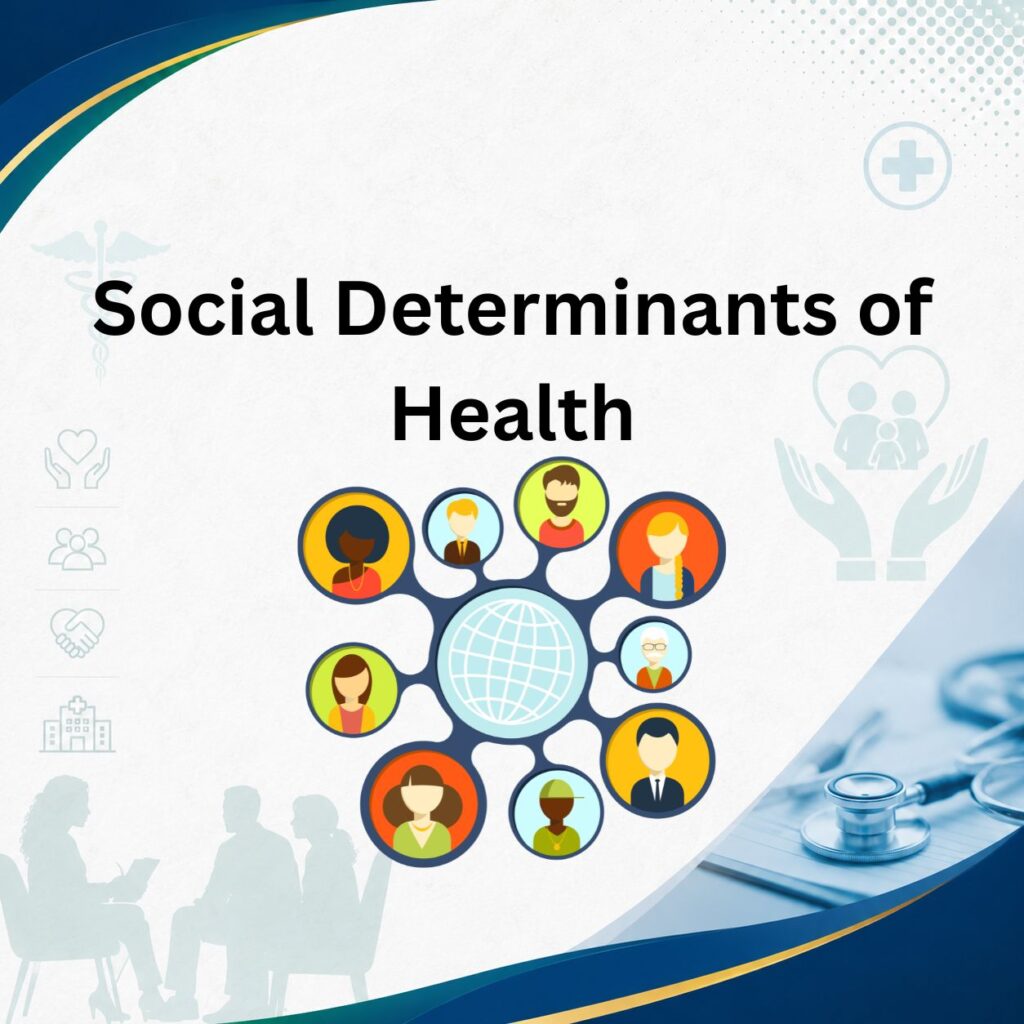
8. SOCIAL DETERMINANTS OF HEALTH
Your patient’s health is not determined by medicine alone.
Where they live, how much they earn, the food they can access, their education, employment, family support, and ability to reach healthcare can all influence their health.
These conditions are known as Social Determinants of Health.
Think about a patient with diabetes.
The doctor says, “Eat healthier food, take your medication, and attend regular appointments.”
Sounds simple.
But what if that patient cannot consistently afford healthy food?
What if they must choose between buying medication and feeding their family?
What if they live far from the clinic and transportation is expensive?
What if missing one day of work means losing the money their family needs to survive?
Suddenly, following medical advice becomes much harder.
Important social determinants include:
Income and Financial Stability – Can the patient afford food, medication, transport, housing, and other basic needs?
Housing and Environment – Is the patient living somewhere safe, stable, and suitable for their health condition?
Employment – Has illness affected their ability to work or earn an income?
Education and Health Literacy – Can they understand health information, instructions, and available services?
Family and Social Support – Does the patient have people who can provide practical or emotional support?
Access to Healthcare – Can they actually reach and use the healthcare services they need?
As a Medical Social Worker, you must see these realities.
Telling someone what they should do is not enough.
You must also understand what may be preventing them from doing it.
Because sometimes the biggest barrier to recovery is not the treatment.
It is the patient’s circumstances.
9. INTRODUCTION TO PSYCHOSOCIAL ASSESSMENT
Before you can properly support a patient, you need to understand what is actually happening in their life.
That is the purpose of a Psychosocial Assessment.
A psychosocial assessment is a structured way of understanding the psychological, emotional, social, family, financial, and practical factors affecting a patient’s health, treatment, recovery, and wellbeing.
Imagine a patient keeps missing hospital appointments.
It is easy to write: “Patient is not cooperating with treatment.”
But have you asked why?
Maybe they cannot afford transportation. Maybe they lost their job after becoming ill. Maybe they are caring for young children and have nobody to leave them with. Maybe they are frightened of the diagnosis. Maybe they do not fully understand the treatment plan.
Never assume when you can assess.
During a psychosocial assessment, you may explore areas such as:
Family and Support System – Who does the patient live with? Who can realistically support them?
Financial Situation – Is money affecting medication, food, transport, treatment, or other basic needs?
Housing and Living Conditions – Is the patient’s home safe and suitable for their current condition?
Emotional Wellbeing – How is the patient coping with the illness and changes in their life?
Employment and Responsibilities – Has illness affected their work, income, children, or other responsibilities?
Safety and Vulnerability – Are there concerns about neglect, abuse, exploitation, or an unsafe environment?
A good psychosocial assessment helps you move from guessing what the patient needs to understanding what support may actually help.
Do not look only at what happened to the patient’s body.
Find out what happened to their life.
10. WHAT DO WE ASSESS?
A psychosocial assessment is not just asking a patient, “Are you okay?” and moving on.
You are trying to understand what could help or hinder this person’s treatment, recovery, safety, and wellbeing.
So what should you be looking at?
Family and Support System: Who does the patient live with? Who supports them? Is that support actually reliable? Do not assume that because someone has relatives, they have support.
Financial Situation: Can the patient afford medication, food, transportation, treatment, and other basic needs? A prescription is useless if the patient cannot afford to fill it.
Housing and Living Conditions: Where will the patient return to? Is the environment safe, stable, accessible, and suitable for their condition?
Emotional Wellbeing and Coping: How is the patient responding to the illness? Are they frightened, overwhelmed, confused, angry, withdrawn, or struggling to adjust to major changes?
Employment and Daily Responsibilities: Has the illness affected their ability to work? Who is caring for their children or dependants while they are receiving treatment?
Access to Healthcare: Can they attend appointments, obtain medication, understand instructions, and access the services they need?
Safety and Vulnerability: Are there concerns about abuse, neglect, exploitation, unsafe living conditions, or inadequate support?
Strengths and Available Resources: Assessment is not only about problems. What can the patient still do? What support already exists? What personal, family, community, or professional resources can be built upon?
You are not collecting information because you are curious.
You are collecting relevant information so you can understand the patient’s situation and determine what support, referral, advocacy, or intervention may be needed.
Good support begins with good assessment.
11. COMMUNICATION SKILLS IN MEDICAL SOCIAL WORK
You can have all the knowledge in the world, but if you cannot communicate properly with a patient, you may never discover what they truly need.
Patients will not always tell you everything immediately.
A patient may say, “I’m fine,” while worrying about how to pay for treatment.
Another may become angry when what they are actually feeling is fear.
Another may remain silent because they are embarrassed, confused, or afraid of being judged.
Good communication helps you hear what is being said—and notice what is not being said.
Active Listening: Give the patient your attention. Do not spend the conversation preparing your next response while they are still speaking. Sometimes the most important information comes after you allow the patient time to talk.
Ask the Right Questions: Instead of only asking questions that produce “yes” or “no” answers, use open questions where appropriate. Rather than “Do you have support at home?” you might ask, “Who is available to help you when you return home?”
Show Empathy: Empathy does not mean pretending you understand everything the patient feels. It means recognising their experience and responding with respect, patience, and humanity.
Observe: Pay attention to changes in behaviour, hesitation, distress, confusion, and other relevant signs during the conversation.
Use Simple Language: Healthcare can already be frightening and confusing. Do not make it worse by filling conversations with professional terms the patient does not understand.
Check Understanding: Do not assume that because you explained something, the patient understood it. Clarify important information and allow them to ask questions.
And most importantly: Do not judge.
A patient who feels judged may stop talking.
A patient who stops talking may stop giving you the information you need to help them.
Communication is not simply talking to patients.
It is creating enough trust for them to tell you what is really happening.
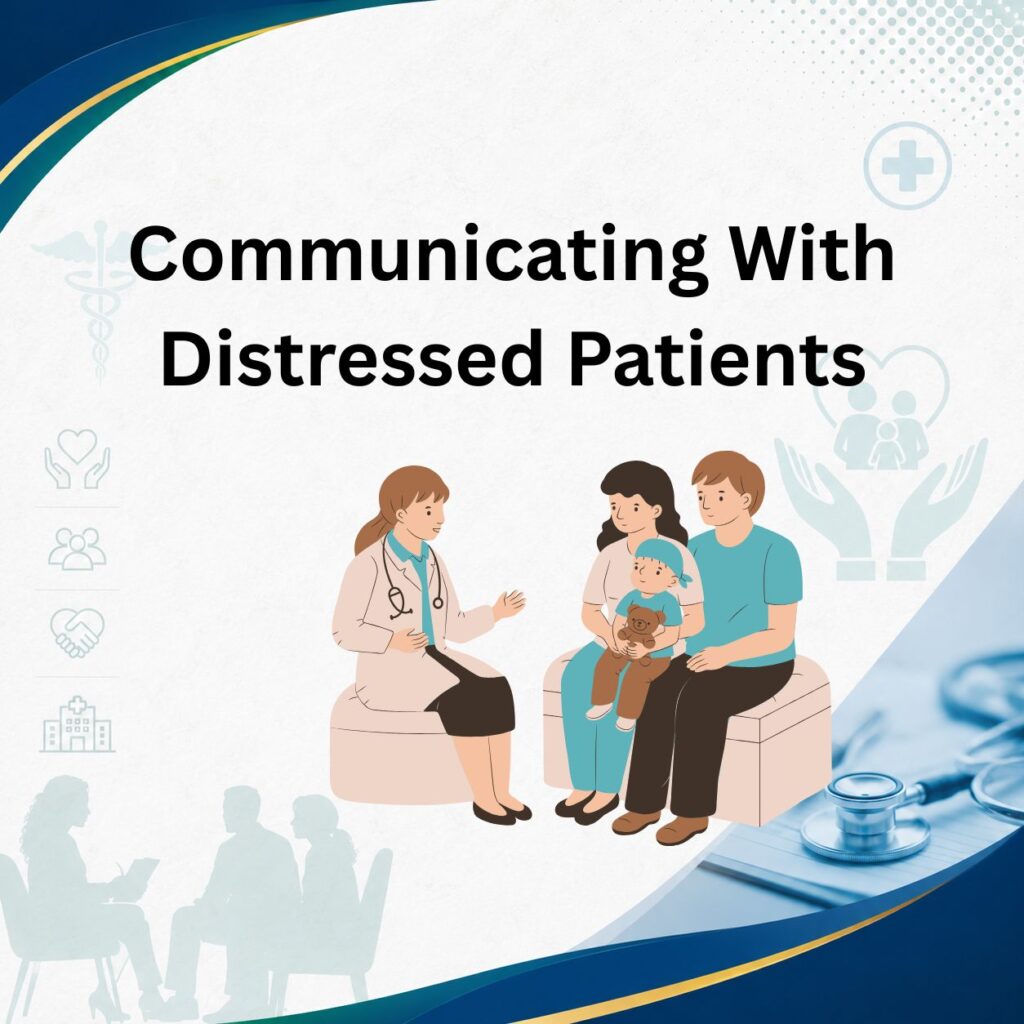
12. COMMUNICATING WITH DISTRESSED PATIENTS
Not every patient will speak to you calmly.
Some will be angry. Some will cry. Some will become withdrawn, confused, frightened, or frustrated.
And sometimes, the anger directed at you has very little to do with you.
A patient may have just received a frightening diagnosis.
They may be worried about their children, treatment costs, their job, or what their life will look like after leaving the hospital.
Your job is not to match their emotion. Your job is to respond professionally.
Stay Calm: If a patient raises their voice, raising yours will rarely improve the situation. Speak calmly and maintain a respectful tone.
Listen Before You Fix: Do not rush into giving advice. Sometimes the patient needs to explain what is actually wrong before any solution can be discussed.
Acknowledge Their Feelings: You can say, “I can see that this situation is really upsetting you.” You are recognising their distress without making promises you cannot keep.
Do Not Take Everything Personally: A frightened patient may sound rude. A frustrated relative may blame the hospital. Remain professional while still maintaining appropriate boundaries.
Give Clear Information: Distress can make information difficult to process. Keep explanations simple, check understanding, and avoid overwhelming the patient with unnecessary details.
Know When to Get Help: If the situation involves serious safety concerns, aggression, safeguarding issues, or needs beyond your role, follow the appropriate procedure and involve the relevant professionals.
Behind difficult behaviour, there may be fear, pain, confusion, loss, or uncertainty.
You do not have to absorb abuse.
But you must learn to recognise the difference between reacting to behaviour and understanding what may be driving it.
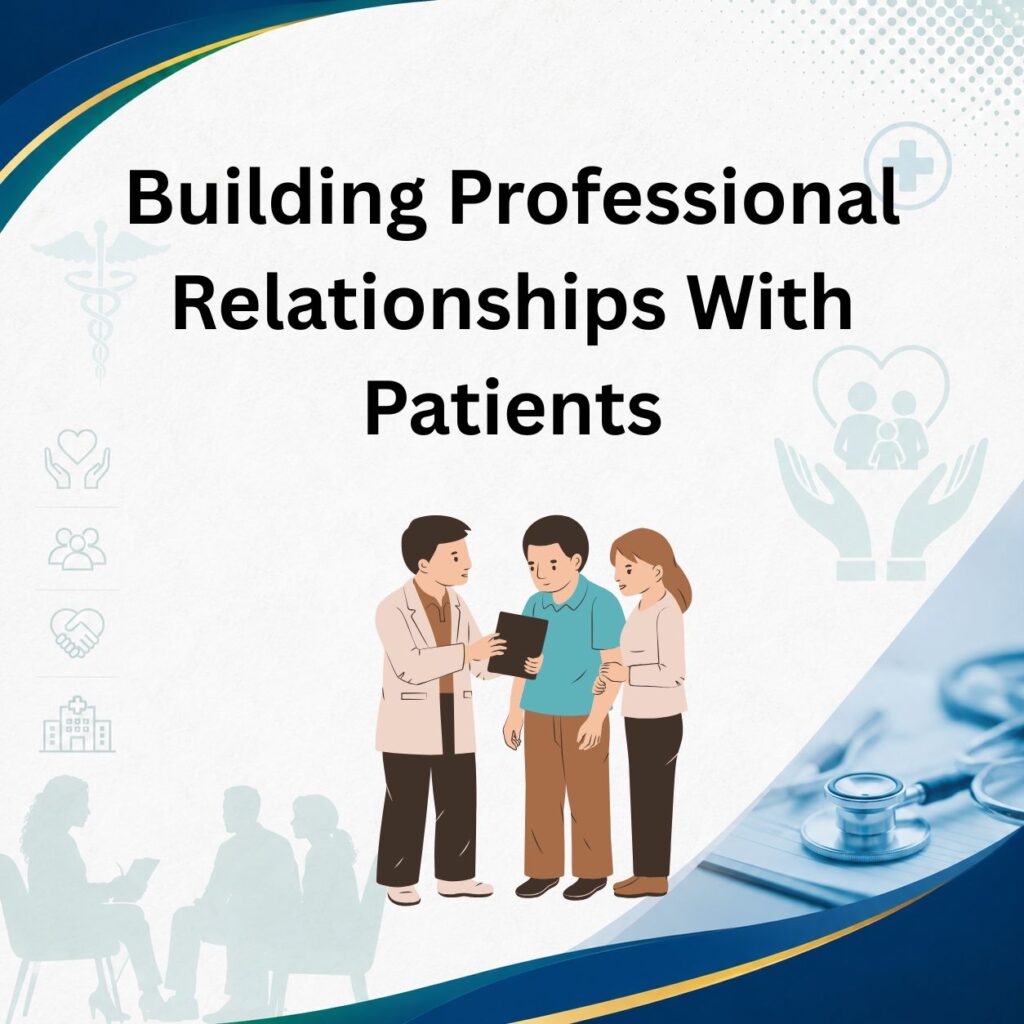
13. BUILDING PROFESSIONAL RELATIONSHIPS WITH PATIENTS
Patients may tell you things they have not told their friends, relatives, or even other healthcare professionals.
That level of trust is powerful.
Do not misuse it.
A professional relationship is built on trust, respect, empathy, honesty, confidentiality, and clear boundaries.
Build Trust: Do what you say you will do. If you promise to check something, check it. If you do not know the answer, say so. Never create false hope just because you want the patient to feel better.
Respect the Patient: Speak to patients with dignity regardless of their age, education, income, diagnosis, background, or circumstances. They are not a difficult case. They are people experiencing difficult situations.
Be Empathetic, Not Over-Involved: You can care about what happens to a patient without making their problems your personal problems. Your role is to support, not become emotionally dependent on being needed.
Maintain Professional Boundaries: A patient may become attached to you because you listened when nobody else did. They may ask for your personal number, offer gifts, seek friendship, or expect you to make decisions for them. This is where professionalism matters.
Being kind does not mean removing boundaries.
Encourage Independence: Do not make patients feel that they cannot cope without you. Where possible, help them understand their options, use available support, and participate in decisions affecting their lives.
The goal is not for the patient to say: “I cannot manage without my social worker.”
The goal is to help them reach a point where they can say: “I understand my situation, I know my options, and I know where to get appropriate support.”
The strongest professional relationship is caring enough to help—while remaining professional enough to know where your role ends.
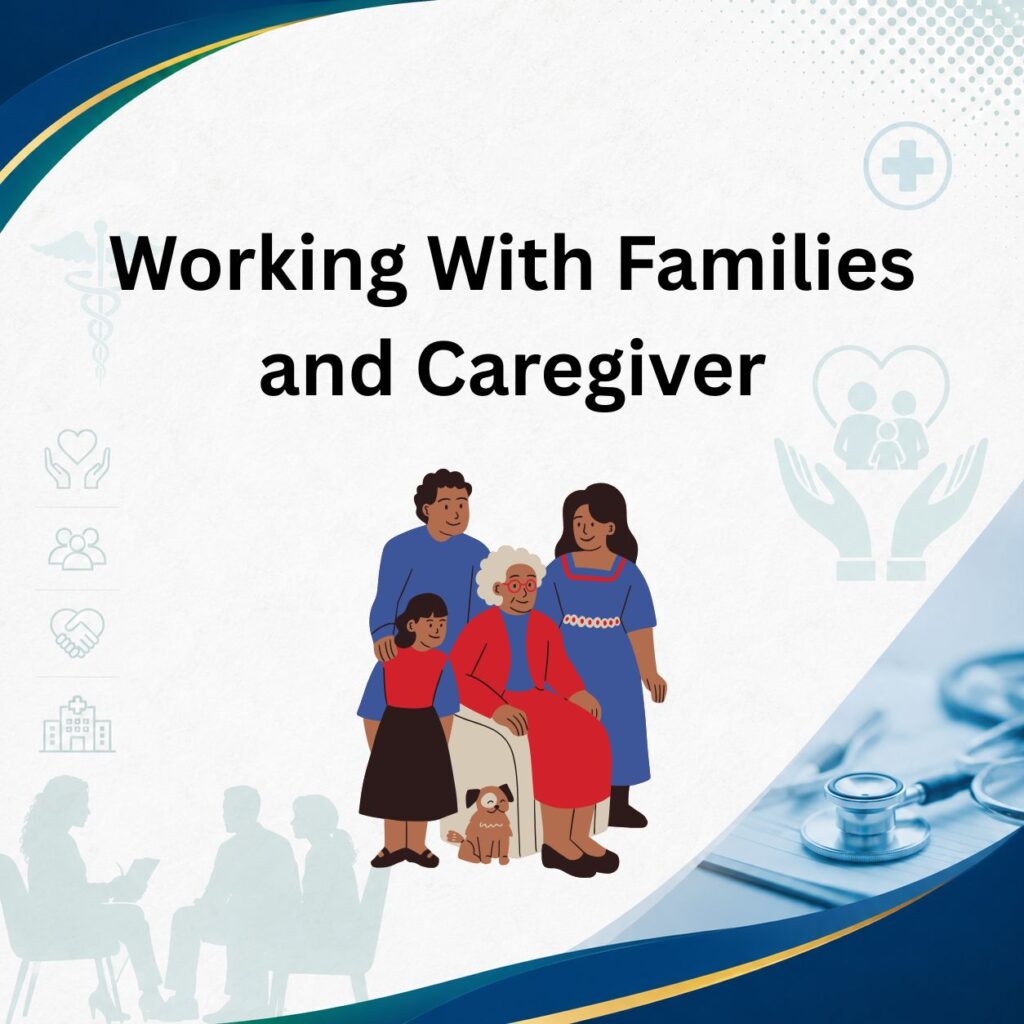
14. WORKING WITH FAMILIES AND CAREGIVERS
When one person becomes seriously ill, the whole family can feel the impact.
A spouse may suddenly become a caregiver.
An adult child may have to leave work to care for a parent.
A family that was already struggling financially may now face medication costs, transportation, hospital bills, and loss of income.
This is why Medical Social Workers do not work with patients in isolation.
Families and caregivers can be an important part of the patient’s support system.
But never assume that every family is supportive.
Some families are loving but overwhelmed. Some disagree about what should happen. Some may have difficult relationships with the patient. And sometimes, the family itself may be part of the problem.
Understand the Family Situation: Who actually supports the patient? Who lives with them? Who will provide care after discharge?
Do not write “family available” and assume the problem is solved.
Ask whether that family member is willing, able, and realistically available to provide the required support.
Listen to Caregivers Too: Caregivers can become exhausted, frightened, financially strained, and emotionally overwhelmed. Supporting the patient sometimes means recognising when the person caring for them is also struggling.
Keep the Patient at the Centre: Family opinions matter, but where the patient has the ability and right to make their own decisions, their wishes should not simply be replaced by what relatives want.
Maintain Confidentiality: Being someone’s spouse, parent, child, or sibling does not automatically mean every piece of patient information should be shared with them. Follow professional, legal, and organisational requirements around consent, confidentiality, safeguarding, and information sharing.
Do Not Take Sides: Family conflict can become intense during illness. Your role is not to become another person in the argument.
Remain professional, listen carefully, identify the issues affecting care, and involve the appropriate professionals when necessary.
A strong family can become one of a patient’s greatest sources of support.
But first, you must understand what that family can realistically provide.
15. PATIENT-CENTRED CARE
It is easy for healthcare professionals to become so focused on treatment, procedures, schedules, and diagnoses that the person receiving the care disappears behind the medical file.
Patient-centred care brings the focus back to the person.
It means providing care that respects the patient’s needs, values, preferences, circumstances, dignity, and right to participate in decisions affecting their life.
A patient is not simply: “The diabetic patient.” “The cancer case.” “The stroke patient in Bed 6.”
They are a person with fears, responsibilities, beliefs, relationships, priorities, and a life outside the hospital.
Listen to the Patient: Do not assume you know what matters most to them. A treatment plan may look perfect on paper but become unrealistic when you understand the patient’s actual circumstances.
Involve Them in Decisions: Do not talk about capable patients as though they are not in the room. Explain relevant options clearly and support them to participate in decisions about their care.
Respect Individual Differences: Two people with the same condition may need completely different forms of support. Their family situation, finances, culture, beliefs, living conditions, and support systems may be different.
Protect Their Dignity: Illness can make people feel powerless. Needing help does not remove a person’s right to respect, privacy, choice, and dignity.
Patient-centred care means asking more than: “What treatment does this patient need?”
You must also ask: “Who is this person, what matters to them, and how can their care realistically work within their life?”
Do not build care around the diagnosis alone.
Build it around the person living with the diagnosis.
16. PATIENT ADVOCACY
A patient can be surrounded by healthcare professionals and still feel like nobody is listening to them.
They may be frightened, confused, vulnerable, unable to communicate clearly, or simply afraid to question people they see as more powerful than themselves.
This is where patient advocacy matters.
Patient advocacy means helping ensure that a patient’s rights, needs, concerns, preferences, and circumstances are heard and appropriately considered.
Help the Patient Find Their Voice: Do not automatically speak for someone who can speak for themselves. Help them understand their situation, identify their concerns, and communicate those concerns appropriately.
Protect Dignity and Rights: Every patient deserves to be treated with respect and dignity regardless of their income, education, background, diagnosis, disability, or social circumstances.
Help Patients Understand Their Options: A patient cannot meaningfully participate in decisions they do not understand. Where appropriate within your role, help clarify information and connect them with the relevant healthcare professional when clinical explanations are needed.
Address Barriers to Care: A patient may need treatment but face problems involving money, transport, housing, family support, disability, communication, or access to services. Advocacy may involve bringing these barriers to the attention of the healthcare team and helping identify appropriate support.
Advocacy Does Not Mean Fighting Everyone: You are not there to argue with doctors, attack nurses, or automatically agree with everything a patient demands.
Professional advocacy means raising legitimate concerns respectfully, using appropriate channels, and keeping the patient’s welfare and rights at the centre.
Advocacy is not taking control of the patient’s life.
It is helping ensure that the patient is not ignored, silenced, dismissed, or left behind simply because they are vulnerable.
Sometimes your most important responsibility is making sure the person behind the hospital file is actually heard.
17. CONFIDENTIALITY IN MEDICAL SOCIAL WORK
A patient tells you something deeply personal because they believe you can be trusted.
What you do with that information matters.
Confidentiality means protecting a patient’s private and sensitive information and only accessing, using, recording, or sharing it appropriately.
You may learn about a patient’s medical condition, finances, family problems, housing situation, relationships, fears, or other personal circumstances.
That information is not hospital gossip.
Do Not Discuss Patients Casually: A patient’s story should not become conversation with friends, relatives, other patients, or colleagues who have no legitimate reason to know.
Even within healthcare, not everybody needs to know everything.
Share Information Appropriately: Where information needs to be shared for care, safeguarding, or another legitimate professional purpose, follow relevant law, organisational policy, consent requirements, and professional procedures.
Protect Records: Case notes, reports, electronic records, messages, and documents containing patient information must be handled securely.
Leaving sensitive information where unauthorised people can access it can be a serious breach of confidentiality.
But understand something important: Confidentiality is not always the same as absolute secrecy.
There may be situations where information needs to be shared because of serious safety or safeguarding concerns, legal requirements, or other recognised professional obligations.
Do not promise a patient: “Whatever you tell me will never leave this room.”
That is a promise you may not be able to keep.
Instead, be clear about the limits of confidentiality and follow the appropriate procedure when disclosure may be necessary.
Trust can take weeks or months to build.
A careless conversation can destroy it in seconds.
Treat every patient’s information with the same respect you would expect if your own private life were written inside that file.
18. CULTURAL SENSITIVITY IN PATIENT CARE
You will care for people who do not think like you, speak like you, worship like you, eat like you, or understand illness the same way you do.
That is healthcare.
Cultural sensitivity means recognising and respecting how a patient’s culture, religion, language, family structure, beliefs, traditions, and values may influence their experience of illness and healthcare.
Do Not Assume: Two patients may come from the same community and still have completely different beliefs.
Do not look at someone’s name, clothing, tribe, religion, nationality, or accent and decide that you already understand them.
Ask respectfully.
Understand What Matters to the Patient: A patient’s beliefs may influence their diet, family involvement, communication, treatment preferences, modesty, or how they understand illness.
Your responsibility is not to ridicule those beliefs.
Your responsibility is to understand how they may affect care and work appropriately within professional and healthcare requirements.
Use Language the Patient Understands: Do not assume everyone understands medical terminology—or even the language being used.
Where appropriate services exist, use professional interpretation or communication support rather than relying on assumptions or expecting relatives to handle every sensitive conversation.
Respect Does Not Mean Agreeing With Everything: A cultural or religious belief does not automatically override patient safety, safeguarding responsibilities, professional standards, or applicable law.
You can respect someone’s beliefs while still maintaining your professional responsibilities.
Watch Your Own Bias: Sometimes the problem is not the patient’s culture.
It is the healthcare professional who has already decided that the patient is “difficult,” “ignorant,” or “uncooperative” because they behave differently from what the professional expects.
Before judging a patient, ask yourself: “Do I understand why this matters to them?”
You do not need to share a patient’s beliefs to treat them with dignity.
You need to listen, understand, avoid assumptions, and provide care that respects the person in front of you.
19. REFERRAL AND RESOURCE COORDINATION
A patient tells you they cannot afford treatment.
Another needs rehabilitation after discharge.
Another has nowhere safe to stay.
Another needs support that you are not qualified or authorised to provide.
Your job is not to become everything to everybody.
This is where referral and resource coordination become important.
Referral means connecting a patient with the appropriate professional, service, organisation, or programme that can respond to an identified need.
Resource coordination means helping different forms of available support work together around the patient’s situation.
Identify the Actual Need: Do not refer someone simply because they have a problem. First understand the problem.
Is it financial support, housing, rehabilitation, mental health support, safeguarding, transportation, disability support, community care, or another specialist service?
Know What Resources Exist: A good Medical Social Worker should develop knowledge of relevant hospital services, government programmes, NGOs, community organisations, rehabilitation services, support groups, and specialist professionals.
You cannot connect patients to resources you do not know exist.
Make Appropriate Referrals: Referral is not dumping a difficult case on somebody else.
Provide relevant information through the proper channels, explain the referral to the patient where appropriate, and ensure the service actually matches the identified need.
Coordinate Support: One patient may need several services at the same time.
For example, someone recovering from a stroke may require medical follow-up, rehabilitation, family support, mobility assistance, transportation, and changes to their home environment.
These needs may involve different professionals and organisations.
Follow Up Where Appropriate: Giving a patient a phone number and saying, “Call them,” does not always mean the problem has been addressed.
Within your role, check whether the referral was received, whether the patient could access the service, and whether another barrier has appeared.
You are not expected to solve every problem yourself.
Professional practice includes knowing when to help directly, when to coordinate, and when to refer.
Sometimes the best help you can give a patient is connecting them to the right person, at the right service, at the right time.
20. LEVEL 1 REVIEW: THE MEDICAL SOCIAL WORK MINDSET
Level 1 has introduced you to something important:
You cannot understand a patient’s needs by looking at the diagnosis alone.
A patient may have received excellent medical treatment and still face serious problems with money, housing, family support, employment, transportation, emotional wellbeing, or access to continued care.
The Medical Social Work mindset requires you to look deeper.
When you meet a patient, do not only ask: “What illness does this person have?”
Also ask: “How has this illness affected their life?”
“What could prevent their treatment or recovery?”
“What support do they already have?”
“What support do they actually need?”
You have learned that your role may involve psychosocial assessment, communication, patient advocacy, family support, confidentiality, cultural sensitivity, referrals, and resource coordination.
But remember: You are not there to rescue people.
You are not there to make every decision for the patient, promise resources that do not exist, perform another professional’s job, or become personally involved in the patient’s life.
Your role is to assess carefully, listen properly, identify needs, respect patient choices, maintain boundaries, advocate appropriately, and connect people with suitable support.
Most importantly, never allow a patient to become just another file, bed number, diagnosis, or discharge.
Behind every case is a human being whose life may have changed completely.
See the illness.
But never stop seeing the person.
1. WELCOME TO MEDICAL SOCIAL WORK LEVEL 2
Level 1 taught you to see the person behind the diagnosis.
Now Level 2 asks a harder question:
What do you actually do when the situation becomes complicated?
Because real patients do not arrive with simple problems neatly arranged for you.
A patient may be medically ready for discharge but have nowhere safe to go.
A family may demand one thing while the patient wants something completely different.
A vulnerable patient may show signs that something is wrong at home.
A patient may become emotionally dependent on you and begin crossing professional boundaries.
Several professionals may be involved in the same case—and not everyone will agree on what should happen next.
This is where knowledge must become professional judgement.
In Level 2, we move deeper into case management, multidisciplinary teamwork, professional boundaries, ethics, safeguarding, crisis intervention, discharge planning, documentation, conflict management, referral, and escalation.
You will learn that being compassionate is important.
But compassion without boundaries, ethics, assessment, documentation, and professional judgement can create new problems.
You will not always have the perfect answer.
You will not always be able to solve the patient’s problem.
But you must know how to assess the situation, recognise risk, work within your role, involve the right people, document appropriately, and act in the patient’s best interests within professional standards.
Level 1 taught you how to understand the patient.
Level 2 is about learning how to handle the reality of the work.
2. LEVEL 1 RECAP
Before we move deeper into professional practice, remember what Level 1 established.
Medical Social Work is about seeing what the diagnosis does not tell you.
A medical file may tell you that a patient has diabetes, cancer, kidney disease, or has suffered a stroke.
But it may not tell you that the patient lost their income, cannot afford medication, has no reliable caregiver, lives in an unsafe environment, or is struggling emotionally with what has happened.
That is why you learned to look beyond the illness.
Psychosocial Assessment: Understand the patient’s family, finances, housing, emotional wellbeing, employment, support system, safety, strengths, and access to healthcare. Do not assume. Assess.
Communication: Listen properly, ask meaningful questions, communicate clearly, and recognise that anger, silence, or withdrawal may be hiding fear, confusion, frustration, or distress.
Patient-Centred Care and Advocacy: Do not reduce people to diagnoses. Respect their dignity, choices, rights, values, and individual circumstances while helping ensure legitimate concerns are heard.
Families and Caregivers: Families can provide powerful support—but they can also be overwhelmed, unavailable, conflicted, or sometimes part of the concern. Understand the actual situation.
Confidentiality and Cultural Sensitivity: Protect patient information, understand the limits of confidentiality, respect differences, and never allow personal assumptions or bias to replace professional judgement.
Referral and Resource Coordination: You are not expected to solve everything yourself. Know when to support, refer, coordinate, advocate, or involve another professional.
Level 1 gave you the foundation: See the person. Understand the situation. Identify what is affecting their care.
Now Level 2 takes you into what happens when the situation becomes more complex.
3. MEDICAL SOCIAL WORK CASE MANAGEMENT
A patient may have five different problems at the same time.
They need treatment. They cannot afford medication. Their job is at risk. There is nobody reliable to care for them at home. And they need follow-up services after discharge.
You cannot handle a case like this by solving one problem and forgetting the rest.
That is where case management comes in.
Case management is the organised process of assessing a patient’s needs, developing a plan, coordinating support, monitoring progress, and reviewing outcomes.
Assessment: First, understand the situation. What are the patient’s medical-related social needs, family circumstances, finances, living conditions, emotional concerns, risks, strengths, and available support?
Do not start solving problems you have not properly assessed.
Planning: Once the needs are clear, determine what needs attention, what should come first, and who needs to be involved.
Not every problem can be handled at once. Urgent and serious needs must be prioritised.
Intervention and Coordination: This may involve advocacy, family meetings, referrals, connecting the patient with resources, discharge planning, or working with other healthcare professionals.
Your job is often to make sure the different pieces of support connect.
Monitoring: A referral does not automatically mean the problem is solved. Did the patient access the service? Has the situation changed? Has another problem appeared?
Review and Closure: Review whether the goals of the case have been achieved and whether further support is required.
Cases should not remain open simply because nobody checked what happened next.
Good case management is not running around trying to rescue everyone.
It is organised, purposeful, coordinated professional support from assessment to an appropriate outcome.
Understand the problem. Plan the response. Coordinate the support. Monitor what happens.
4. ASSESSMENT, PLANNING AND INTERVENTION
A patient tells you: “I need help.”
Your first responsibility is not to immediately start making calls, promising assistance, or referring them everywhere.
First, understand what is actually happening.
That is why effective Medical Social Work moves through assessment, planning, and intervention.
Assessment – Understand the Situation: Assessment means gathering relevant information about the patient’s needs, risks, strengths, family situation, finances, housing, emotional wellbeing, support system, and barriers to care.
Do not assume that the first problem mentioned is the only problem.
A patient asking for financial help may also be facing job loss, family pressure, transport difficulties, or an unsafe discharge situation.
Planning – Decide What Needs to Happen: Once you understand the situation, develop a realistic plan.
Ask: What needs immediate attention? What can the patient or family manage themselves? Which professionals or services need to be involved?
A good plan should be realistic, patient-centred, and based on actual needs and available resources.
Intervention – Take Appropriate Action: This is where the plan becomes action.
Intervention may include advocacy, referrals, family support, resource coordination, discharge planning, communication with the healthcare team, or connecting the patient with appropriate services.
But remember: Doing something is not the same as doing the right thing.
Do not rush into intervention because you want to feel useful.
Assess first. Plan properly. Then act.
Professional support is not about doing everything quickly.
It is about doing the right thing, for the right reason, at the right time.
5. WORKING WITH THE MULTIDISCIPLINARY TEAM
A patient does not belong to one professional.
Complex healthcare needs often require different professionals working together.
This is called a Multidisciplinary Team, or MDT.
Depending on the patient’s needs, the team may include doctors, nurses, Medical Social Workers, psychologists, physiotherapists, occupational therapists, pharmacists, dietitians, and other specialists.
Each professional sees the patient from a different angle.
The doctor may focus on diagnosis and medical treatment.
The nurse may observe the patient’s day-to-day clinical condition and care needs.
The physiotherapist may focus on movement and physical rehabilitation.
And you, as the Medical Social Worker, may identify that the patient lives alone, has no income, cannot afford transport, and has nobody available to support them after discharge.
All of that information matters.
Know Your Role: Working in a team does not mean doing everybody’s job. Do not give medical advice because the patient asked you. Do not make clinical decisions outside your competence. Know your role and respect the roles of others.
Share Relevant Information Appropriately: If a social issue could seriously affect treatment, safety, or discharge planning, the appropriate members of the team may need to know.
Share information according to professional standards, confidentiality requirements, and organisational procedures.
Communicate Clearly: Do not simply say, “The patient has family problems.” Explain the relevant issue clearly.
For example: “The patient currently lives alone and no reliable caregiver has been identified for discharge.”
That information can influence planning.
Professional Disagreement Can Happen: Team members will not always agree.
Disagree respectfully, present relevant information, listen to other professional perspectives, and keep the focus on safe, appropriate, patient-centred care.
The strongest healthcare teams are not made up of professionals competing to prove who knows more.
They are made up of professionals who understand that no single profession sees the entire patient.

6. UNDERSTANDING YOUR ROLE WITHIN THE HEALTHCARE TEAM
Working in a hospital does not mean every patient problem is your responsibility to solve.
A good Medical Social Worker knows exactly where their role begins, where it ends, and when another professional needs to step in.
Your focus is mainly on the social and psychosocial factors affecting the patient’s health, treatment, recovery, safety, and quality of life.
You may assess problems involving family support, finances, housing, employment, emotional coping, access to services, safeguarding concerns, and discharge needs.
But understand this clearly.
You are not the doctor.
Do not diagnose medical conditions, prescribe medication, change treatment, or give clinical advice outside your professional competence.
You are not the nurse.
Do not take over nursing responsibilities simply because you work closely with patients.
You are not the psychologist, physiotherapist, pharmacist, or legal adviser.
When a patient’s needs go beyond your role, involve or refer to the appropriate professional.
Your Role Is Still Important.
You may discover something the rest of the team has not seen.
The patient everyone believes is ready for discharge may tell you: “There is nobody at home to help me.”
That information could completely change the discharge plan.
Your responsibility is to bring the patient’s social reality into the healthcare conversation.
Work with the team. Respect professional boundaries. Speak up when relevant social concerns are being overlooked.
And know when to say: “This requires another professional’s expertise.”
Knowing your limits does not make you less competent.
Knowing your limits is part of being competent.
7. PROFESSIONAL BOUNDARIES
Being caring does not mean becoming personally involved in a patient’s life.
As a Medical Social Worker, patients may trust you with their fears, family problems, financial struggles, and deeply personal information.
Some may begin to see you as the only person who understands them.
That is where professional boundaries become important.
Professional boundaries are the limits that keep your relationship with patients safe, ethical, respectful, and focused on their needs.
Be Supportive, But Remain Professional: You can listen, show empathy, advocate, and provide support without becoming the patient’s friend, family member, or personal adviser.
Do Not Encourage Dependency: A patient should not reach the point where they believe, “I cannot make any decision unless my social worker tells me what to do.”
Your role is to support appropriate independence, not create dependence.
Be Careful With Personal Contact: Sharing personal phone numbers, communicating unnecessarily outside professional channels, or developing private relationships with patients can blur boundaries.
Follow your organisation’s policies and professional standards.
Gifts and Favouritism: A grateful patient may offer you money, expensive gifts, or special favours.
Before accepting anything, consider professional ethics, organisational policy, possible conflicts of interest, and how it could affect the relationship.
Do Not Use Patients to Meet Your Own Emotional Needs: You should never need a patient to admire you, depend on you, or make you feel important.
The relationship exists for the patient’s benefit, not yours.
Sometimes saying “No, I cannot do that” is not being uncaring.
It is being professional.
You can care deeply about a patient without crossing the line between professional support and personal involvement.
8. ETHICS IN MEDICAL SOCIAL WORK
Sooner or later, you will face a situation where knowing your job description is not enough.
A patient may refuse something their family desperately wants.
A relative may ask you to hide information from the patient.
Someone may offer you money or an expensive gift because you helped them.
You may know private information that could affect someone’s safety.
What do you do?
This is where ethics becomes critical.
Ethics in Medical Social Work means following professional principles that guide you to act responsibly, fairly, respectfully, and in the patient’s best interests while respecting their rights.
Respect for Dignity: Every patient deserves respect regardless of their health condition, income, education, disability, background, behaviour, or social status.
Respect for Autonomy: Where a patient has the ability and legal right to make their own decisions, your personal opinion does not replace their choice.
Your role is to support informed decision-making, not control the patient.
Confidentiality: Protect private information and share it only when there is an appropriate professional, safeguarding, or legal basis to do so.
Professional Integrity: Do not lie to patients, manipulate them, exploit their vulnerability, accept inappropriate benefits, falsify records, or misuse your position.
Fairness: Do not provide better treatment because one patient is wealthy, influential, related to someone important, or personally liked by you.
Professional Competence: Know what you can do and what you cannot.
When a situation is beyond your competence, seek supervision, escalate appropriately, or involve the right professional.
Ethics becomes most important when the easy choice and the right choice are not the same.
Your patient may never know every decision you made behind the scenes.
But professionalism means doing what is ethically appropriate even when nobody is watching.
9. ETHICAL DECISION-MAKING
Ethical problems rarely arrive with a sign saying: “This is an ethical dilemma.”
They appear when a patient wants one thing, the family wants another, the healthcare team has concerns, and you are expected to respond professionally.
Ethical decision-making means carefully deciding what action is appropriate when rights, responsibilities, values, safety, and professional duties may conflict.
Identify the Real Problem: Do not react only to the loudest person in the room.
Ask: What exactly is the ethical issue here? Is it about consent, confidentiality, patient choice, safety, fairness, boundaries, or professional responsibility?
Understand the Patient’s Wishes: Do not assume the family speaks for the patient.
Where the patient can make their own decisions, their voice matters.
Consider Safety and Risk: Respecting patient choice is important, but you must also recognise situations involving safeguarding concerns, serious risks, or legal and professional obligations.
Check Professional Standards and Procedures: Ethical decisions should not be based only on, “This is what I personally think is right.”
Consider professional ethics, organisational policy, applicable law, and established procedures.
Seek Guidance When Necessary: Some cases are too complex to handle alone.
Consult appropriate supervisors or members of the multidisciplinary team when the situation requires it.
Document Your Actions: Record relevant concerns, decisions, consultations, actions, and reasons accurately.
Because months later, saying “I thought it was the right thing to do” may not be enough.
Ethical decision-making is not about finding the easiest answer.
Sometimes there is no perfect answer.
Your responsibility is to make a decision that is reasoned, professional, defensible, and centred on the patient’s rights, welfare, and safety.
10. SAFEGUARDING VULNERABLE PATIENTS
Some patients cannot easily protect themselves from abuse, neglect, exploitation, or unsafe situations.
They may be children, older adults, people with disabilities, people with serious illnesses, or individuals who depend heavily on others for care.
Safeguarding means protecting vulnerable people from harm while respecting their rights, dignity, and individual circumstances.
As a Medical Social Worker, you may notice things other people miss.
An older patient repeatedly arrives at the hospital poorly cared for.
A vulnerable patient becomes frightened whenever a particular relative enters the room.
A caregiver controls every conversation and refuses to allow the patient to speak privately.
A patient tells you something concerning and immediately says: “Please don’t tell anyone.”
Do Not Ignore Warning Signs: You are not expected to prove that abuse or neglect has occurred before raising a legitimate concern.
Your responsibility is to recognise concerns, assess within your role, document appropriately, and follow safeguarding procedures.
Do Not Investigate Beyond Your Role: Do not confront suspected individuals recklessly, interrogate the patient, or attempt to become a detective.
Poor handling can increase risk, compromise proper investigation, or frighten the patient into silence.
Listen Carefully: If a patient shares a concern, take them seriously.
Remain calm, avoid judgement, and do not make promises you cannot keep.
Report and Escalate Appropriately: Follow your organisation’s safeguarding procedures and involve the appropriate professionals or authorities when required.
Document Facts, Not Assumptions: Record what you observed, what was reported, and what action you took.
Do not turn suspicion into fact.
Safeguarding requires professional judgement, courage, and responsibility.
Because sometimes the person sitting quietly in front of you may be depending on someone in that healthcare team to notice that something is wrong.
11. RECOGNISING ABUSE, NEGLECT AND EXPLOITATION
Abuse does not always arrive with obvious signs.
Sometimes it appears as fear.
Sometimes as silence.
Sometimes as a patient who suddenly becomes uncomfortable when a particular person enters the room.
As a Medical Social Worker, you must learn to notice concerns without jumping to conclusions.
Physical Abuse: This involves intentionally causing physical harm to another person.
You may become concerned because of repeated unexplained injuries, fearful behaviour, or explanations that do not seem consistent.
Emotional or Psychological Abuse: Humiliation, intimidation, threats, controlling behaviour, isolation, and constant verbal mistreatment can seriously affect a person’s wellbeing.
The damage may not always be visible.
Neglect: Neglect occurs when necessary care or support is not provided.
A dependent patient may repeatedly arrive without adequate food, hygiene, medication, supervision, or appropriate care.
Financial Exploitation: A vulnerable person’s money, property, benefits, or resources may be taken or controlled unfairly.
A patient may suddenly have no access to their own money while someone else appears to control everything.
Sexual Abuse: Any sexual activity or contact without valid consent is a serious safeguarding concern.
Respond professionally and follow safeguarding procedures.
Do Not Become an Investigator: One warning sign does not automatically prove abuse.
Your responsibility is to observe, listen, document facts, assess within your role, and report or escalate concerns appropriately.
Do not ignore something because you are afraid of being wrong.
But do not accuse someone simply because you are suspicious.
Recognise the signs. Record the facts. Follow procedure. Protect the patient.
Sometimes noticing that something does not look right is the first step toward getting a vulnerable patient the protection they need.
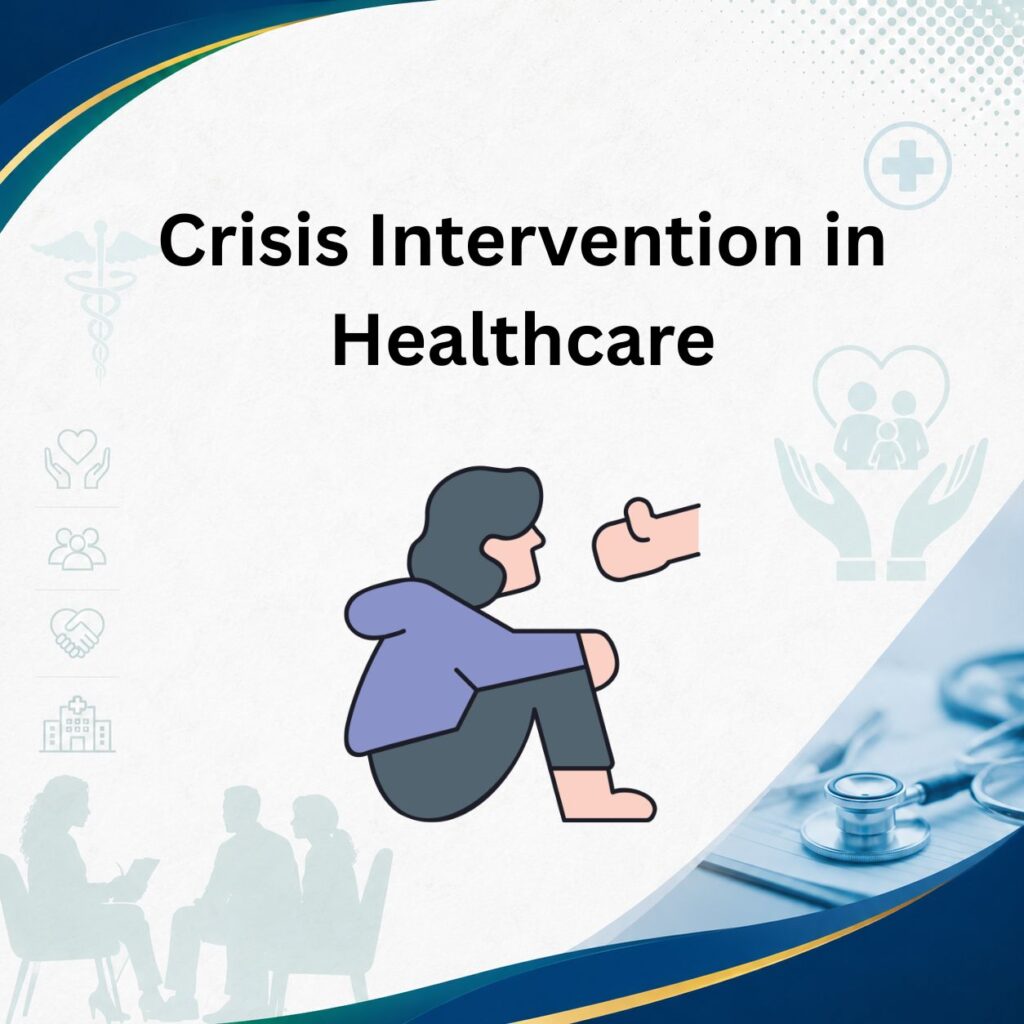
12. CRISIS INTERVENTION IN HEALTHCARE
A crisis can change a patient’s life in a matter of minutes.
An accident. A sudden diagnosis. A serious medical emergency. Permanent disability. The unexpected loss of independence.
For the patient and family, everything that felt normal yesterday may suddenly feel uncertain today.
Crisis intervention is the immediate, short-term professional support provided to help a patient or family cope with an overwhelming situation and move toward safety, stability, and appropriate support.
Stay Calm: When everyone around you is frightened or overwhelmed, your response should not add more confusion.
Remain calm, listen carefully, and focus on what needs attention now.
Assess Immediate Needs: What is happening? Is the patient safe? Are there urgent social, emotional, safeguarding, family, or practical concerns?
Do not try to solve the patient’s entire life during the crisis.
Listen and Acknowledge: Sometimes people in crisis need space to process what has happened.
Listen without judgement and acknowledge the reality of their distress.
Provide Clear Information: A person who is overwhelmed may struggle to process complicated information.
Keep communication simple, relevant, and realistic.
Mobilise Appropriate Support: Depending on the situation, involve family, the healthcare team, specialist services, safeguarding professionals, community resources, or other appropriate support.
Know When to Escalate: Some situations require immediate involvement from senior staff or specialist services.
Do not attempt to manage serious situations beyond your competence.
In a crisis, patients may not remember every word you said.
But they may remember whether someone remained calm, listened, treated them with dignity, and helped them understand what happens next.
Crisis intervention is not about having every answer.
It is about helping bring structure and support into a moment that feels completely out of control.
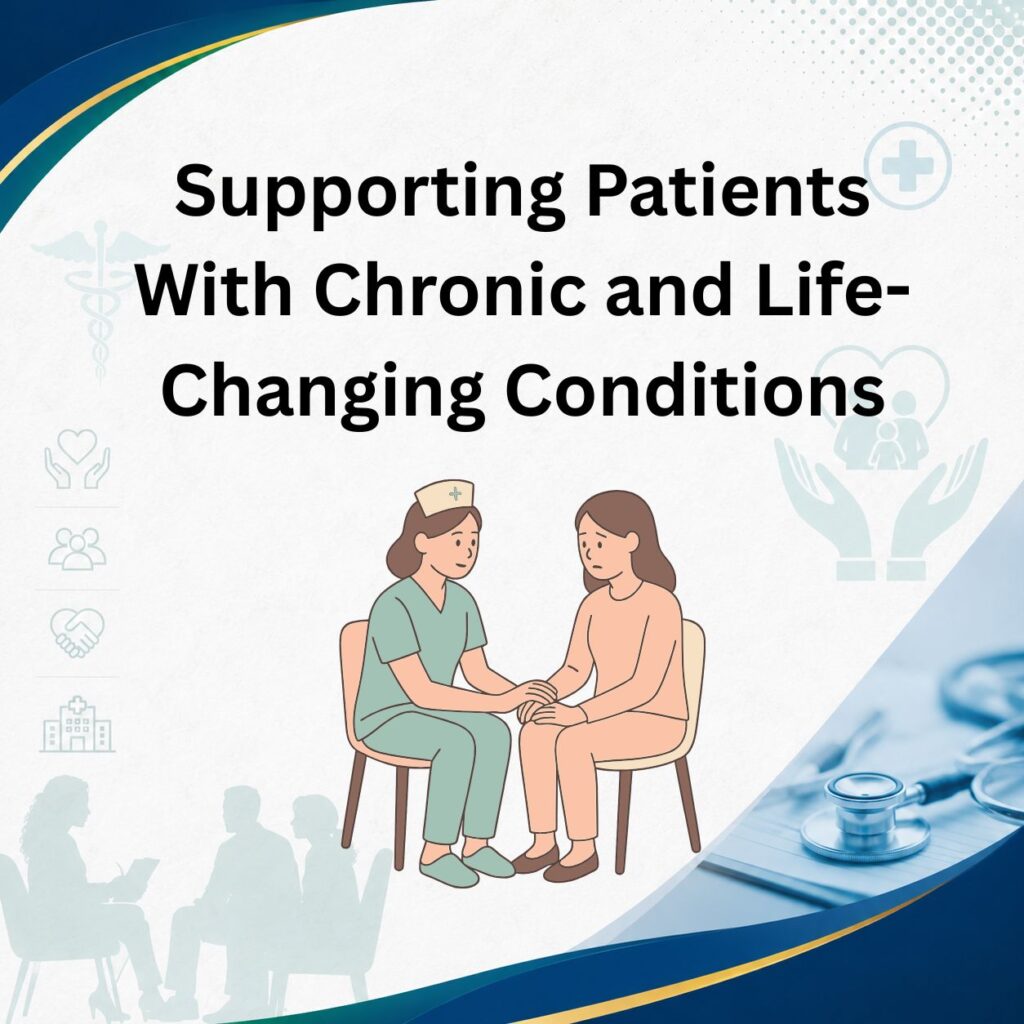
13. SUPPORTING PATIENTS WITH CHRONIC AND LIFE-CHANGING CONDITIONS
Some patients come to the hospital, receive treatment, recover, and return to life as they knew it.
Others receive news that means life may never be exactly the same again.
A stroke may affect someone’s independence.
A serious injury may prevent someone from returning to their previous job.
A chronic illness may require years of treatment, medication, appointments, and lifestyle changes.
For these patients, the challenge is not only: “How do I get better?”
It may become: “How do I live with this?”
Understand the Impact: Look beyond the medical condition.
How has it affected the patient’s work, income, family responsibilities, relationships, independence, daily activities, and future plans?
Support Adjustment: Patients may experience fear, frustration, uncertainty, or difficulty accepting major changes.
Do not pressure them to “stay positive” or act as though adjustment should happen immediately.
Listen, provide appropriate support, and recognise when specialist help may be needed.
Focus on Ability, Not Only Limitation: A life-changing condition may affect what someone can do, but it does not remove their dignity, choices, strengths, or value.
Support realistic independence wherever possible.
Work With Families: Families may suddenly become caregivers and may themselves feel overwhelmed.
Help identify what support is realistically available and where additional services may be needed.
Connect Patients With Appropriate Resources: Depending on the situation, this may include rehabilitation, financial assistance, community services, disability support, counselling, support groups, or other specialist services.
A diagnosis may change someone’s life.
Your role is not to pretend that nothing has changed.
Your role is to help the patient face that change with dignity, appropriate support, realistic options, and as much independence as possible.
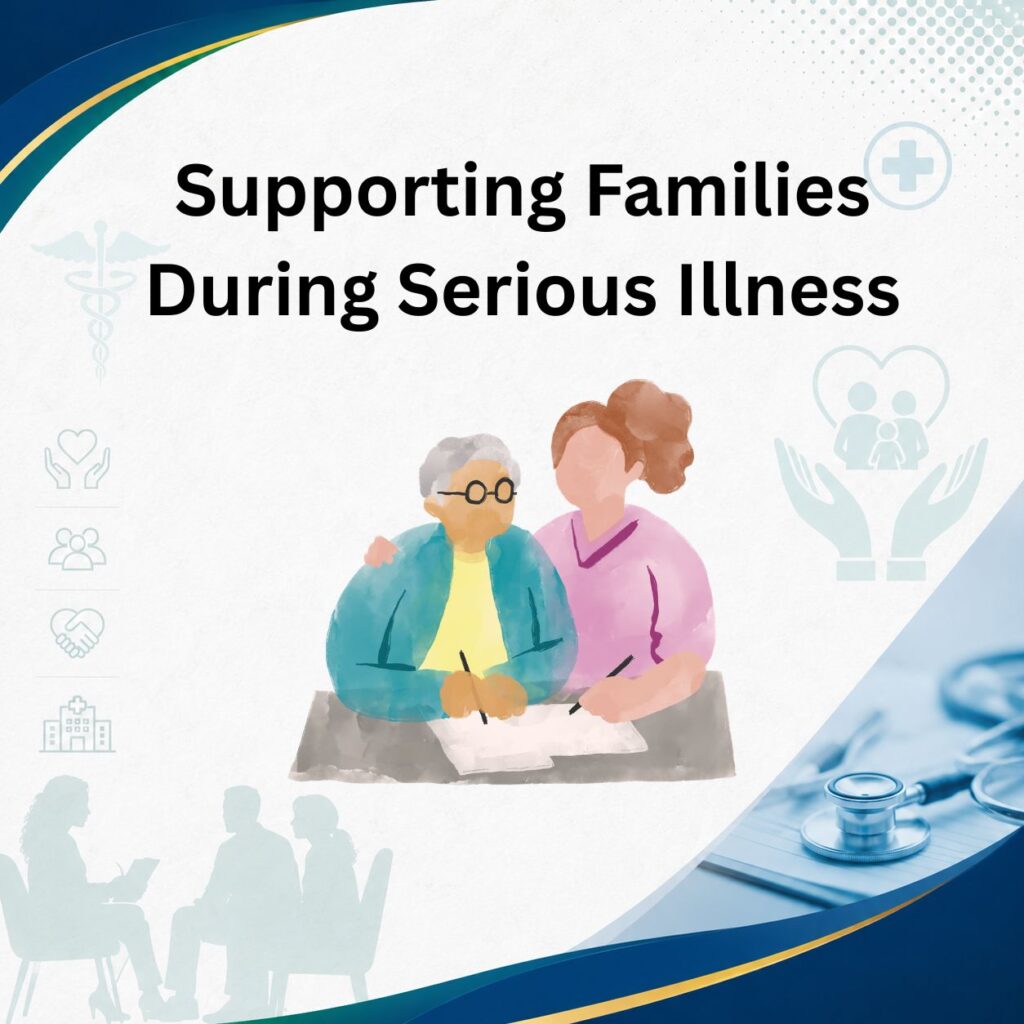
14. SUPPORTING FAMILIES DURING SERIOUS ILLNESS
Serious illness does not affect only the person lying in the hospital bed.
It can shake an entire family.
A spouse may suddenly become a full-time caregiver.
Children may become frightened because they do not understand what is happening.
Someone may have to stop working to provide care.
Savings may disappear into treatment, medication, transportation, and daily expenses.
And while everyone is asking about the patient, the family may be falling apart quietly.
Understand What the Family Is Facing: Do not assume that because relatives are present, they are coping well.
They may be dealing with fear, exhaustion, financial pressure, uncertainty, guilt, or disagreement about what should happen next.
Communicate Clearly: Families may be overwhelmed by information.
Within your role, help them understand available support and connect them with the appropriate healthcare professional when clinical explanations are needed.
Recognise Caregiver Strain: A caregiver can love someone deeply and still become exhausted.
Watch for situations where the responsibility of caring for the patient is becoming unrealistic or overwhelming.
Manage Family Conflict Professionally: Serious illness can expose old disagreements.
Relatives may argue about money, treatment, caregiving responsibilities, or decisions.
Do not become part of the family argument.
Keep the patient’s needs, rights, and wishes at the centre.
Connect Families With Support: Where appropriate, link families with community resources, financial assistance, counselling, support services, rehabilitation, or other relevant help.
Sometimes the patient is not the only person who needs support.
A family struggling to cope can affect the patient’s recovery, safety, and quality of life.
Support the patient. But do not forget the people carrying the weight beside them.
15. DISCHARGE PLANNING
A doctor says: “The patient is medically fit for discharge.”
That does not automatically mean the patient is ready to go home.
Imagine discharging an older patient who can barely move independently to a house where they live alone.
Or sending home a patient who needs continued care when nobody has agreed to provide it.
Or telling someone to return for follow-up appointments when they cannot afford transportation.
Discharge planning is about making the transition from hospital to home or another care setting as safe and organised as possible.
Start Planning Early: Do not wait until the patient is dressed and ready to leave before asking, “So, who is taking care of you at home?”
Discharge needs should be identified as early as possible.
Assess the Home Situation: Where is the patient going? Is the environment safe and suitable? Can the patient manage daily activities? Is there reliable support available?
Identify Continuing Care Needs: The patient may require medication, follow-up appointments, rehabilitation, mobility support, home care, community services, or other assistance.
Work with the healthcare team to identify what is needed.
Involve the Patient and Family: Do not simply create a plan around people without understanding what they can realistically manage.
A daughter who works full-time cannot automatically become a 24-hour caregiver because the family says she is available.
Coordinate Referrals and Resources: Where necessary, connect the patient with appropriate community services, rehabilitation, social support, equipment, financial assistance, or specialist care.
Do Not Ignore an Unsafe Discharge: If serious social concerns could make discharge unsafe, raise them through the appropriate professional channels.
Getting someone out of a hospital bed is not the same as successfully discharging them.
A good discharge plan asks one important question: “What happens to this patient after they walk out of this hospital?”
16. DOCUMENTATION AND CASE NOTES
You may remember exactly what happened today.
Six months from now, you may not.
That is why documentation matters.
Case notes are the professional record of what you observed, what the patient reported, what you assessed, what action was taken, and what happened next.
If it was important enough to influence the patient’s care, it may be important enough to document properly.
Write Facts, Not Personal Judgements.
Do not write: “The patient’s daughter is selfish and does not care about him.”
Write what actually happened: “The daughter stated that she is unable to provide daily care after discharge due to work responsibilities.”
One is judgement. The other is professional documentation.
Be Accurate: Record relevant information correctly.
Do not exaggerate, guess, change facts, or document something you did not observe or confirm.
Be Clear and Relevant: Case notes are not storytelling competitions.
Include information that is relevant to the patient’s needs, risks, assessment, intervention, referral, care, or outcome.
Document Actions Taken: If you referred the patient, contacted another professional, raised a safeguarding concern, discussed discharge arrangements, or provided support, record the relevant action appropriately.
Document in a Timely Manner: Do not wait several days and rely entirely on memory. Important details can be forgotten.
Protect Confidentiality: Case notes contain sensitive information.
Access, store, and share records according to professional standards, organisational procedures, and applicable requirements.
Your case note may later be read by another professional, management, or someone reviewing how the case was handled.
Write every entry as though one day you may need to explain: “This is what I knew. This is what I observed. And this is why I acted the way I did.”
Good documentation protects the patient, supports continuity of care, and demonstrates professional accountability.
17. MANAGING CONFLICT AND DIFFICULT CONVERSATIONS
Healthcare can be emotional.
Patients are frightened. Families are exhausted. Money may be running out.
People may disagree about treatment, discharge, caregiving, or what should happen next.
Sometimes, you will be standing in the middle of that tension.
Your responsibility is not to win the argument.
Your responsibility is to manage the situation professionally.
Stay Calm: If someone raises their voice, you do not need to raise yours.
Responding emotionally can turn a difficult conversation into a bigger conflict.
Listen Before Responding: An angry relative may actually be frightened. A frustrated patient may feel ignored.
Listen carefully enough to understand what the real concern is.
Acknowledge Without Automatically Agreeing: You can say, “I understand that this situation has been frustrating for you.”
That acknowledges their experience without accepting accusations or making promises you cannot keep.
Keep the Conversation Focused: Do not allow the discussion to become a battle over every problem that has happened since admission.
Bring the conversation back to the issue that needs to be addressed.
Maintain Boundaries: Being professional does not mean accepting threats, intimidation, discrimination, or abusive behaviour.
Where behaviour creates a safety concern, follow organisational procedures and involve appropriate support.
Do Not Take Sides: Family members may pressure you to agree with them. Patients may be angry with another professional.
Listen, identify the relevant concern, and remain focused on the patient’s rights, safety, needs, and appropriate care.
Know When to Escalate: Some conflicts cannot be resolved by one conversation.
When necessary, involve a supervisor, senior colleague, multidisciplinary team member, or other appropriate professional.
You cannot control how everyone speaks to you.
But you can control whether your response reduces the conflict or adds fuel to it.
18. KNOWING YOUR LIMITS: REFERRAL, ESCALATION & SUPERVISION
One of the most dangerous things a professional can believe is: “I can handle everything myself.”
You cannot. And you are not supposed to.
Medical Social Work involves complex situations. Some problems will require another professional, a senior colleague, specialist support, or immediate escalation.
Knowing when to seek help is not weakness.
It is professional judgement.
Referral: Refer when the patient needs support outside your role or expertise.
This may involve mental health services, rehabilitation, safeguarding teams, financial support, legal services, community organisations, or other specialist professionals.
Do not pretend to have expertise you do not have.
Escalation: Some situations cannot wait for normal referral processes.
Serious safeguarding concerns, immediate safety risks, major ethical concerns, or situations requiring urgent senior attention may need to be escalated through the appropriate channels.
Do not ignore a serious concern because: “I don’t want to cause trouble.”
Supervision: There will be cases where you are simply unsure.
Speak with an appropriate supervisor or experienced professional.
Supervision allows you to review difficult cases, question your judgement, identify mistakes, manage professional pressures, and make better decisions.
Know Your Competence: Do not diagnose conditions you are not qualified to diagnose.
Do not give clinical advice outside your role.
Do not promise resources you cannot guarantee.
Do not attempt to manage serious situations alone simply because you want to appear competent.
Sometimes the most professional sentence you can say is: “This situation is beyond my role. I need to involve the appropriate person.”
Competence is not knowing everything.
Competence is knowing what you can handle, recognising what you cannot, and knowing what to do next.
19. LEVEL 2 REVIEW: FROM SUPPORT WORKER TO PROFESSIONAL PRACTICE
Level 2 has taken you beyond simply understanding patients and offering support.
You have now seen that Medical Social Work requires judgement, boundaries, ethics, coordination, documentation, and accountability.
A caring heart is important.
But caring alone does not make someone a competent professional.
You must know how to assess a situation before acting.
You must know when to support, refer, escalate, document, consult, or step back.
You must work with doctors, nurses, therapists, and other professionals without trying to become all of them.
You must respect patient choices while recognising safety, safeguarding, ethical, and professional responsibilities.
You must maintain boundaries even when a patient becomes attached to you.
You must recognise abuse, neglect, exploitation, caregiver strain, unsafe discharge situations, and other concerns that may not appear on a medical chart.
You must document what happened accurately because professional practice requires more than saying:
“I did what I thought was best.”
Your decisions should be reasoned, ethical, documented, and within your professional role.
And when you do not know what to do?
Do not guess.
Seek supervision, consult appropriately, refer, or escalate.
The difference between simply wanting to help and practising professionally is understanding that good intentions are not enough.
Patients may trust you during some of the most difficult moments of their lives.
Treat that trust as a responsibility.
See the person behind the diagnosis.
Protect their dignity.
Respect their voice.
Know your boundaries.
Work with others.
Document properly.
And never become so comfortable with the job that you forget there is a human being behind every case.