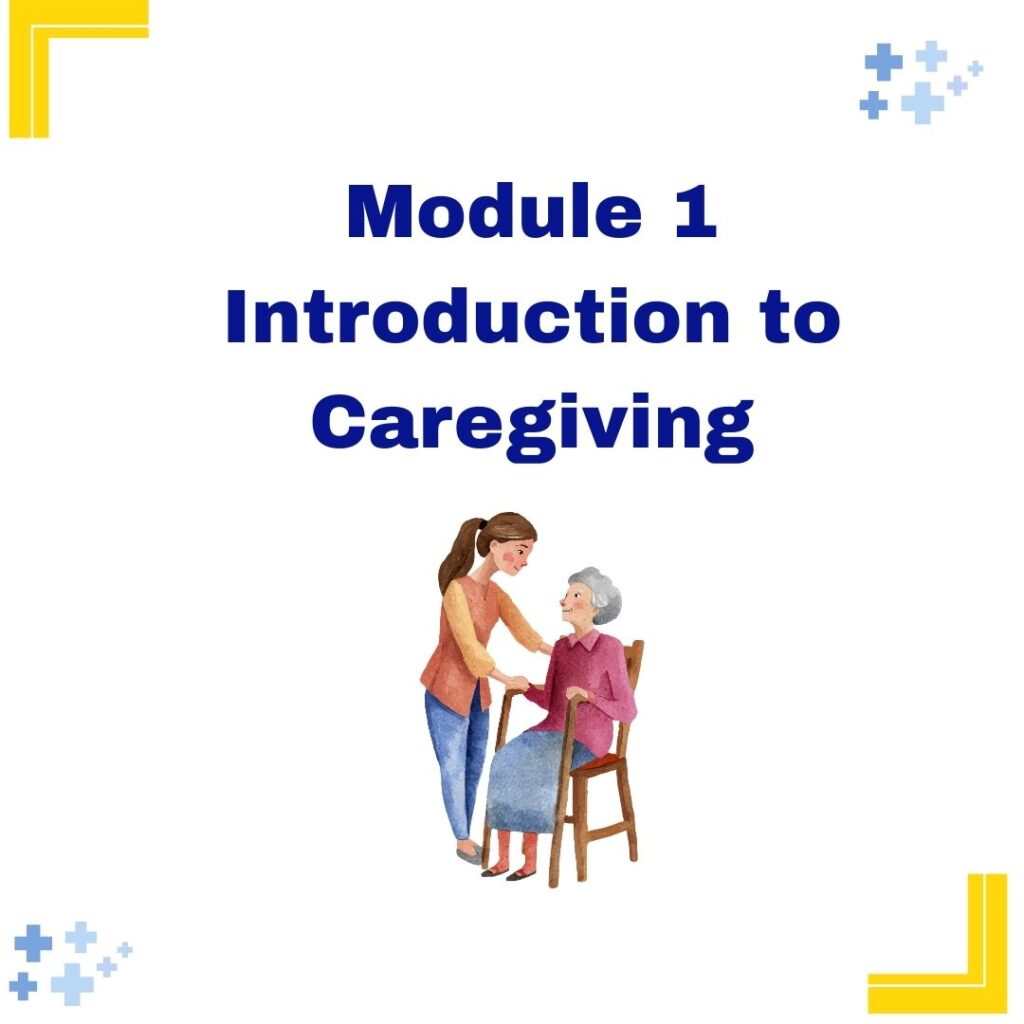
Module 1 – Introduction to Caregiving
Welcome to Module 1.
In this first module, you will begin to understand what caregiving truly means.
Many people think caregiving is simply helping someone with daily tasks. But in reality, caregiving is about supporting the health, dignity, safety, and wellbeing of another human being.
In this module, you will learn:
→ What caregiving is
→ Who caregivers support
→ The responsibilities of a caregiver
→ The qualities that make an excellent caregiver
→ Why caregivers are essential in healthcare and community support
As we move through this module, you will begin to see that caregiving is not just a job.
It is a professional responsibility that requires patience, awareness, compassion, and respect.
By the end of this module, you should have a clear understanding of the foundation of caregiving and what will be expected of you as a caregiver.

At 5:30 AM, the alarm rings in a small apartment in Manchester, United Kingdom.
Adeola Funmilayo Ogunleye slowly wakes up. Like many Nigerians working abroad, she moved overseas with a dream — to build a better future for herself and support her family back home.
Today is another shift at the residential care home where she works as a caregiver.
After preparing for the day, Adeola leaves her apartment and heads to work. The morning air is cold, very different from the warm weather she grew up with in Nigeria. But over time she has adjusted, just like she has adjusted to the responsibilities of caregiving.
By 6:45 AM she arrives at the care home.
At 7:00 AM the morning shift officially begins.
The first task is the shift handover meeting. The night staff explain what happened during the night and highlight residents who may require special attention today.
One resident had trouble sleeping.
Another resident experienced mild confusion during the night.
A third resident needs careful assistance with mobility due to weakness in the legs.
Adeola listens carefully. These details are important because caregiving requires attention and responsibility.
After the handover, the morning routine begins.
The first resident Adeola attends to is Mrs. Eleanor Harris, an 82-year-old woman who needs help getting out of bed. Adeola greets her gently and introduces herself even though they have met many times before.
This is part of maintaining professional respect and dignity.
Instead of rushing, Adeola speaks calmly.
“Good morning Mrs. Harris. How did you sleep?”
Mrs. Harris smiles faintly and says she slept well but feels a little stiff.
Adeola assists her carefully, helping her sit up slowly before supporting her as she stands.
Mobility support is one of the most important responsibilities of a caregiver. A simple mistake can lead to a fall, and falls can cause serious injuries in elderly patients.
Adeola ensures Mrs. Harris has her walking frame before helping her move toward the bathroom.
Inside the bathroom, Adeola assists with bathing and personal hygiene. Even though Mrs. Harris requires help, Adeola allows her to do as much as she comfortably can herself.
This approach supports independence and dignity.
After bathing, Adeola helps her get dressed.
Mrs. Harris insists on choosing her own sweater for the day. Some caregivers might rush the process, but Adeola understands something important — small choices help elderly residents maintain a sense of control in their lives.
Once Mrs. Harris is ready, Adeola helps her walk slowly to the dining area for breakfast.
But the morning is just beginning.
Several other residents require assistance.
Mr. George Wallace needs help transferring from his wheelchair to a chair.
Mr. Ibrahim Khan requires supervision while walking due to balance problems.
Another resident prefers to remain in bed longer but must still be checked to ensure everything is okay.
Throughout the morning, Adeola performs many responsibilities:
→ assisting residents with personal hygiene
→ supporting safe mobility and transfers
→ preparing residents for breakfast
→ observing changes in physical or emotional condition
→ documenting important observations for the care team
While helping Mr. Khan walk toward the dining hall, Adeola notices that his steps appear slower than usual.
He pauses frequently and seems slightly unsteady.
Adeola immediately becomes more attentive.
Instead of rushing him forward, she slows down and asks if he feels alright.
Observation is a critical skill in caregiving. Small changes in behaviour, mood, or movement can signal a developing health problem.
Adeola makes a mental note to report this observation to the supervising nurse later.
After the residents have eaten breakfast, there are still many responsibilities.
Some residents need help taking short walks to maintain mobility.
Others prefer conversation and social interaction.
Loneliness can affect elderly individuals deeply, so sometimes the most valuable care a caregiver provides is simply being present and listening.
Later in the morning, Adeola completes documentation of the care activities performed during the shift.
Proper reporting is an essential part of professional caregiving. Other members of the healthcare team rely on accurate information to make decisions about residents’ health and wellbeing.
By midday, Adeola feels tired but also fulfilled.
Working as a caregiver abroad is not easy.
The job requires:
→ physical strength
→ emotional patience
→ attention to detail
→ compassion for vulnerable individuals
Many Nigerian caregivers working overseas carry an additional responsibility — supporting their families back home.
Despite the challenges, the work is meaningful.
Each day caregivers help vulnerable individuals live with dignity, safety, and comfort.
And this is the true meaning of caregiving.
Not just performing tasks.
But protecting the wellbeing and dignity of another human being.
Understanding the Role of a Caregiver
As a caregiver, your role goes far beyond simply helping someone with a few daily tasks.
You are responsible for supporting the comfort, safety, and wellbeing of individuals who may not be able to fully care for themselves.
The people you support may include:
→ Elderly individuals
→ People living with disabilities
→ Patients recovering from illness or surgery
→ Individuals living with chronic health conditions
Your role as a caregiver may involve assisting with:
→ Personal hygiene and grooming
→ Feeding and nutrition support
→ Mobility and movement assistance
→ Medication reminders
→ Emotional support and companionship
→ Observing changes in health or behaviour
One of the most important parts of caregiving is treating every person with dignity and respect.
Even when someone needs assistance, they should never feel embarrassed, ignored, or disrespected.
As a caregiver, you become a trusted support system in someone’s daily life.
Your presence, patience, and professionalism can make a significant difference in how safe, comfortable, and valued the person feels.
Responsibilities and Limits of a Caregiver
As a caregiver, you are stepping into a role that carries real responsibility.
Someone’s safety, comfort, and daily wellbeing may depend on the way you perform your duties.
This is not just about helping.
It is about protecting human dignity and supporting vulnerable individuals.
Your responsibilities as a caregiver often include:
→ Assisting with personal hygiene such as bathing, grooming, and dressing
→ Helping with feeding and ensuring proper nutrition
→ Supporting mobility such as walking or transferring safely
→ Providing emotional support and companionship
→ Observing changes in health, mood, or behaviour
→ Reporting concerns to supervisors or healthcare professionals
Sometimes you may be the first person to notice that something is wrong.
A sudden change in appetite.
Confusion.
Unusual weakness.
Restlessness or distress.
Your ability to observe and report early can make a serious difference in someone’s health outcome.
But while your responsibilities are important, it is equally critical that you understand your limits.
A caregiver is not a doctor.
A caregiver is not a nurse.
And a caregiver must never attempt to perform medical tasks they are not trained or authorized to do.
You must never:
→ Diagnose illnesses
→ Prescribe medications
→ Change treatment plans
→ Perform complex medical procedures
If something appears medically wrong, your role is clear:
Observe. Report. Escalate.
Trying to go beyond your role can place the person you are caring for at serious risk.
Professional caregiving also requires strong boundaries.
You must respect:
→ Privacy
→ Confidentiality
→ Personal dignity
You are there to support, not to control, judge, or interfere with a person’s personal affairs.
The most effective caregivers understand something very important.
Good care is not about doing everything.
It is about doing your role properly, safely, and responsibly.
When you understand both your responsibilities and your limits, you protect:
→ The person receiving care
→ Yourself as a professional
→ The entire healthcare support system

Professional Behaviour and Ethics
As a caregiver, the way you behave is just as important as the tasks you perform.
People who receive care are often in vulnerable situations.
They may be sick, weak, frightened, or dependent on others for support.
Because of this, caregivers must always demonstrate professional behaviour and strong ethical conduct.
Professional behaviour begins with respect.
Every person you care for must be treated with dignity regardless of:
→ Their age
→ Their health condition
→ Their background or beliefs
→ Their personality or behaviour
Even when someone is difficult, confused, or frustrated, your response must remain calm, respectful, and professional.
Another critical part of professional behaviour is confidentiality.
During caregiving, you may learn personal information about the person you support.
This may include:
→ Medical conditions
→ Family matters
→ Emotional struggles
→ Personal habits
This information is private.
It must never be discussed casually with friends, neighbours, or people who are not involved in the person’s care.
Respecting confidentiality builds trust and professionalism.
Professional caregivers must also maintain clear boundaries.
You are there to provide care and support, not to become involved in personal conflicts, financial matters, or inappropriate relationships.
Maintaining boundaries protects both you and the person receiving care.
Ethics also requires honesty and accountability.
If something goes wrong, it must be reported.
If you make a mistake, it must be acknowledged.
Hiding problems can place someone’s health or safety in danger.
Professional caregivers understand that their behaviour reflects not only on themselves, but on the entire caregiving profession.
Simple actions such as:
→ Speaking politely
→ Listening carefully
→ Being punctual
→ Following instructions correctly
are signs of a caregiver who takes their role seriously.
In caregiving, professional behaviour and ethics are not optional.
They are the foundation of safe, respectful, and responsible care.
Qualities of a Good Caregiver
Not everyone is suited for caregiving.
Supporting people who may be sick, elderly, or vulnerable requires more than just basic skills.
It requires character, patience, and emotional strength.
One of the most important qualities of a good caregiver is patience.
Some individuals you support may move slowly, forget things, repeat themselves, or become easily frustrated.
In those moments, losing your temper or showing irritation can damage trust.
A good caregiver remains calm, patient, and understanding.
Another essential quality is empathy.
Empathy means being able to understand what another person may be feeling.
When someone is sick or struggling physically, they may feel:
→ Embarrassed
→ Frustrated
→ Lonely
→ Afraid
A caregiver who shows empathy helps the person feel respected and understood.
Reliability is also critical.
People who depend on caregivers rely on consistency.
They need to know that the caregiver will:
→ Arrive on time
→ Perform tasks properly
→ Follow instructions carefully
A caregiver who is unreliable creates stress and insecurity for the person receiving care.
Good caregivers must also have strong observation skills.
Small changes in behaviour or physical condition may signal that something is wrong.
A caregiver who pays attention may notice:
→ Sudden weakness
→ Loss of appetite
→ Confusion or unusual behaviour
→ Signs of pain or discomfort
Early observation and reporting can help prevent serious health complications.
Finally, a good caregiver must always show respect.
Every individual deserves dignity, regardless of their condition.
The way you speak, assist, and interact with someone should always protect their self-worth and confidence.
When these qualities come together — patience, empathy, reliability, awareness, and respect — a caregiver becomes more than just someone who helps.
They become a trusted support system in someone’s life.
Tunde Adewale Bakare had always dreamed of travelling abroad.
When an opportunity came to work as a caregiver in the United Kingdom, he quickly accepted the offer.
Friends congratulated him. Family members celebrated.
To them, it looked like a good job with good pay.
But Tunde had never truly worked in caregiving before.
He had never assisted an elderly person with bathing.
He had never supported someone struggling with memory loss.
He had never spent long hours caring for someone who depended on him for basic daily needs.
He simply believed caregiving was “easy work.”
Helping people eat.
Helping them walk.
Cleaning the house.
That was how he imagined it.
THE FIRST SIGNS OF TROUBLE
Tunde was assigned to care for Mrs. Margaret Lawson, an 82-year-old woman living with arthritis and early stage dementia.
Mrs. Lawson moved slowly.
Sometimes she repeated the same questions again and again.
Sometimes she forgot where she placed things.
And sometimes she became anxious or confused.
During the first week, Mrs. Lawson asked Tunde several times:
“Did my daughter call today?”
At first he answered politely.
But after hearing the same question again and again, he became irritated.
He responded sharply:
“I already told you. Why do you keep asking the same thing?”
LOSS OF PATIENCE
Mrs. Lawson also needed assistance when walking.
Her joints were painful and stiff.
Instead of patiently supporting her, Tunde often rushed her.
“Madam, walk faster. We don’t have all day.”
When she struggled to stand, he sighed loudly and showed frustration.
The elderly woman began to feel embarrassed and uncomfortable around him.
LACK OF EMPATHY
One morning, Mrs. Lawson refused to eat breakfast.
She looked sad and withdrawn.
Instead of trying to understand what she was feeling, Tunde simply said:
“If you don’t want to eat, that’s your problem.”
He cleared the table and left the room.
What Tunde did not realize was that Mrs. Lawson had been feeling lonely and anxious since her daughter had travelled abroad.
A caregiver with empathy would have noticed her emotional distress.
UNRELIABILITY
Tunde also struggled with punctuality.
Some mornings he arrived late.
Other days he rushed through tasks just to finish quickly.
Mrs. Lawson’s daily routine became inconsistent.
Meals were delayed.
Medication reminders were forgotten.
Personal care was sometimes incomplete.
For an elderly person who depended on routine, this created confusion and stress.
POOR OBSERVATION
One evening, Mrs. Lawson appeared unusually quiet.
She moved more slowly than normal.
She complained of pain in her hip after a minor fall earlier in the day.
Tunde ignored it.
He assumed she was “just complaining.”
He did not report the fall.
He did not inform the supervisor.
He did not document the incident.
Two days later, Mrs. Lawson was taken to the hospital.
Doctors discovered she had a small fracture in her hip that had worsened because it was not reported early.
THE CONSEQUENCE
The care agency launched an investigation.
They discovered several problems:
* failure to report incidents
* poor attitude toward the client
* lack of patience and empathy
* inconsistent care delivery
Tunde was removed from the caregiving assignment.
For the agency, the issue was clear.
Caregiving is not just about doing tasks.
It requires:
* patience
* emotional understanding
* reliability
* careful observation
* respect for vulnerable people
Without these qualities, a person may hold the title of caregiver —
but they are not truly providing care.
Working Under Supervision
As a caregiver, you are part of a larger care team.
You do not work alone.
In many caregiving environments, you will work under the guidance of professionals such as:
→ Nurses
→ Doctors
→ Senior caregivers
→ Healthcare supervisors
→ Facility managers
These professionals provide instructions, care plans, and medical direction that guide the support you provide.
Your responsibility is to follow these instructions carefully and accurately.
This ensures that the person receiving care is supported in a safe, consistent, and professional manner.
Working under supervision also means understanding that some decisions are not yours to make.
For example, if you notice a serious health concern, your role is not to diagnose or treat the condition.
Your role is to:
→ Observe the situation
→ Report it immediately
→ Follow the guidance given by your supervisor
Good caregivers know when to seek guidance rather than guess.
Another important part of working under supervision is communication.
Supervisors rely on caregivers to report important information such as:
→ Changes in the person’s health or behaviour
→ Concerns about safety
→ Difficulties during caregiving tasks
Clear communication helps the entire care team respond quickly and effectively.
Working under supervision is not a weakness.
It is a professional system designed to protect the caregiver and the person receiving care.
The best caregivers understand that strong teamwork, proper reporting, and respect for supervision lead to safer and better care outcomes.
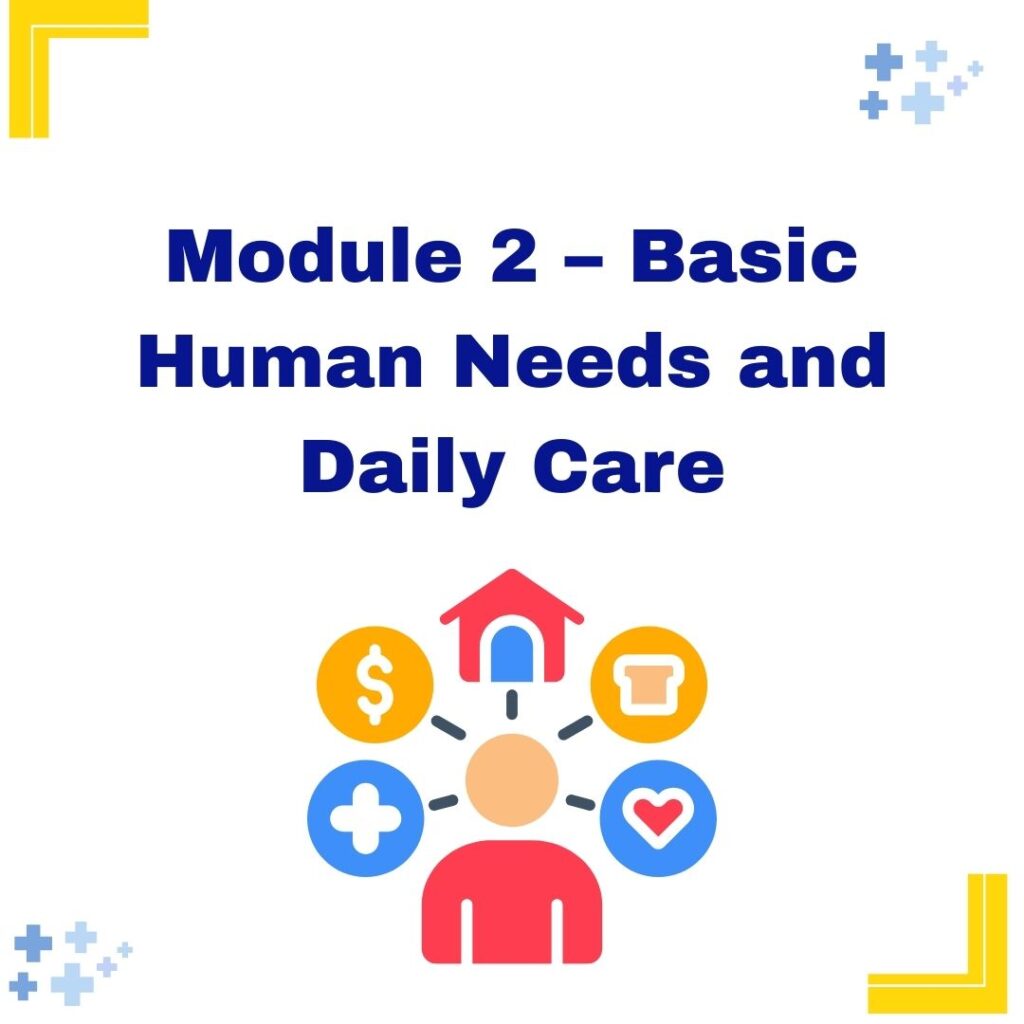
Module 2 – Basic Human Needs and Daily Care
In caregiving, one of your most important responsibilities is helping people meet their basic human needs.
Many individuals who require care are unable to fully manage their daily activities because of:
→ Illness
→ Age-related weakness
→ Physical disability
→ Recovery from surgery
→ Mental or cognitive challenges
As a caregiver, your role is to help ensure these essential needs are met safely, respectfully, and consistently.
In this module, you will learn how caregivers support daily living in practical ways.
This includes understanding how to assist with:
→ Personal hygiene and cleanliness
→ Eating and proper nutrition
→ Hydration and fluid intake
→ Safe mobility and movement
→ Rest and comfort
These daily activities may seem simple, but for someone who is weak, injured, or elderly, they can become major challenges.
The way you assist with these tasks must always protect the person’s:
→ Safety
→ Comfort
→ Dignity
You will also learn why small details in daily care matter.
For example:
A missed meal can weaken someone’s body.
Poor hygiene can lead to infections.
Unsafe movement can result in serious falls or injuries.
This is why caregivers must approach daily care with attention, patience, and professionalism.
By the end of this module, you will understand how to support basic human needs in a way that promotes health, independence, and quality of life.
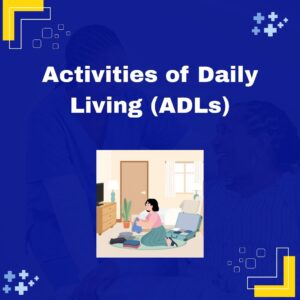
Activities of Daily Living (ADLs)
One of the most important parts of caregiving is assisting individuals with what are known as Activities of Daily Living, often called ADLs.
ADLs are the basic everyday activities that people normally perform on their own in order to live independently.
When someone becomes ill, elderly, injured, or disabled, these simple activities may suddenly become difficult or impossible to perform without help.
This is where the caregiver plays a critical role.
Common Activities of Daily Living include:
→ Bathing and personal hygiene
→ Dressing
→ Eating and drinking
→ Using the toilet
→ Moving or walking safely
→ Getting in and out of bed or chairs
For someone who is healthy, these actions happen almost automatically.
But for a person who is weak or recovering from illness, even standing up or lifting a spoon can require significant effort.
As a caregiver, your role is to support these activities while preserving the person’s dignity and independence.
This means helping where assistance is needed, but also encouraging the person to do as much as they safely can on their own.
Why is this important?
Because maintaining independence helps protect a person’s:
→ Confidence
→ Physical strength
→ Emotional wellbeing
ADLs form the foundation of daily care.
When caregivers understand how to assist with these basic activities properly, they help individuals maintain comfort, safety, and quality of life.
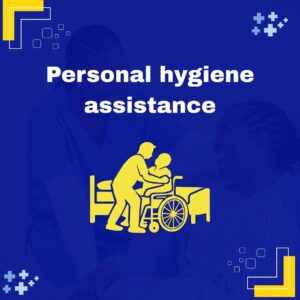
Personal Hygiene Assistance
Personal hygiene is one of the most basic and important aspects of daily care.
Cleanliness helps protect a person from infections, skin problems, and discomfort.
For many individuals receiving care, simple hygiene tasks can become very difficult because of:
→ Weakness
→ Limited mobility
→ Illness or injury
→ Age-related conditions
As a caregiver, part of your role is to assist with these activities while always protecting the person’s privacy and dignity.
Personal hygiene assistance may include helping with:
→ Bathing or sponge bathing
→ Washing hands and face
→ Brushing teeth and oral care
→ Grooming hair
→ Changing clothes
→ Toileting and continence care
When assisting with hygiene, your approach matters greatly.
You must always be:
→ Respectful
→ Gentle
→ Patient
Remember that some individuals may feel embarrassed or uncomfortable receiving help with personal care.
Your professionalism and calm attitude can help make the person feel safe and respected.
It is also important to maintain proper hygiene practices as a caregiver.
This includes washing your hands regularly, using clean materials, and ensuring the environment is sanitary.
Good hygiene care does more than keep someone clean.
It protects their health, comfort, confidence, and dignity.

*Feeding and Nutrition Support*
Food is one of the most important basic human needs.
Proper nutrition gives the body the *energy, strength, and nutrients* it needs to heal, function, and stay healthy.
However, many people who require care may struggle with eating because of:
→ Weakness or fatigue
→ Difficulty swallowing
→ Limited hand coordination
→ Illness or recovery after surgery
→ Cognitive conditions such as dementia
As a caregiver, part of your responsibility is to ensure the person receives *adequate food and proper nutrition.*
This may involve:
→ Helping prepare meals
→ Assisting the person while they eat
→ Encouraging regular meals
→ Ensuring the person drinks enough fluids
→ Observing appetite and eating patterns
When assisting someone with feeding, patience is extremely important.
Some individuals may eat slowly or require help with small portions.
Rushing the person can cause *discomfort or even choking.*
A caregiver should always ensure the person is sitting in a *safe, upright position* while eating.
This reduces the risk of choking and helps digestion.
You should also observe for warning signs such as:
→ Difficulty swallowing
→ Coughing while eating
→ Sudden loss of appetite
→ Refusing food or fluids
These may indicate a health issue that should be *reported to a supervisor or healthcare professional.*
Supporting proper nutrition is not just about feeding someone.
It is about protecting their *strength, recovery, and overall health.*
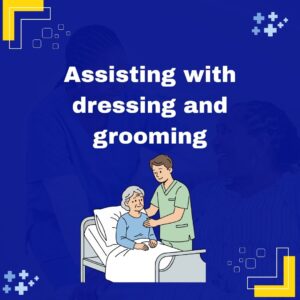
*Assisting with Dressing and Grooming*
Dressing and grooming are important parts of daily life.
They help people feel *clean, comfortable, confident, and respected.*
However, individuals who are elderly, injured, or living with certain health conditions may struggle with these tasks because of:
→ Limited mobility
→ Weakness
→ Pain or stiffness
→ Difficulty using their hands
→ Confusion or memory problems
As a caregiver, your role is to assist with dressing and grooming while protecting the person’s *dignity and independence.*
Dressing assistance may involve:
→ Helping select appropriate clothing
→ Assisting with putting on shirts, trousers, or undergarments
→ Helping with socks and shoes
→ Ensuring clothing is comfortable and suitable for the weather
Grooming assistance may include:
→ Brushing or combing hair
→ Shaving when required
→ Nail care
→ Basic skin care
While assisting with these tasks, it is important to encourage the person to do *as much as they safely can on their own.*
This helps maintain their:
→ Confidence
→ Physical ability
→ Sense of independence
You must also remain *respectful and patient.*
Many individuals may feel embarrassed needing help with personal appearance.
Your calm and professional attitude can help them feel *comfortable and respected.*
Good dressing and grooming support does more than improve appearance.
It helps preserve a person’s *self-esteem, dignity, and overall wellbeing.*
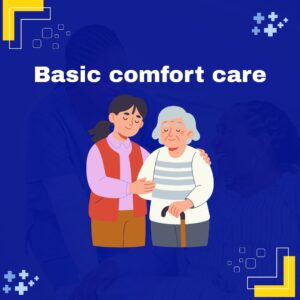
*Basic Comfort Care*
One of the most important roles of a caregiver is ensuring the person you support feels *comfortable and safe.*
When someone is sick, elderly, or recovering from illness, even small discomforts can become *very distressing.*
Basic comfort care focuses on reducing discomfort and helping the person feel *physically and emotionally at ease.*
As a caregiver, this may involve simple but important actions such as:
→ Helping the person change position in bed or chair
→ Adjusting pillows and bedding for better support
→ Ensuring the room temperature is comfortable
→ Providing blankets when the person feels cold
→ Ensuring proper ventilation and fresh air
Comfort care also includes paying attention to signs that someone may be experiencing *pain or discomfort.*
These signs may include:
→ Restlessness
→ Facial expressions of pain
→ Difficulty sleeping
→ Irritability or distress
When you notice these signs, your responsibility is to *report them to the appropriate supervisor or healthcare professional.*
Comfort is not only physical.
Emotional comfort also matters.
Sometimes a person simply needs:
→ A calm presence
→ Gentle reassurance
→ Someone who listens
Small acts such as speaking kindly, responding quickly to requests, and creating a peaceful environment can greatly improve a person’s *sense of wellbeing.*
In caregiving, comfort care may seem simple, but it plays a powerful role in helping individuals feel *safe, respected, and cared for.*
*Module 3 – Basic Health and Safety in Caregiving*
Caregiving is not only about helping people with daily activities.
It is also about *protecting health and preventing harm.*
Many of the individuals you support may already be vulnerable because of illness, age, or physical limitations.
This means that even small mistakes in safety or hygiene can lead to *serious health risks.*
In this module, you will learn the basic principles of *health and safety in caregiving.*
You will understand how caregivers help prevent:
→ Infections
→ Accidents and falls
→ Injuries during movement or assistance
→ Unsafe living conditions
You will also learn the importance of *maintaining a clean and safe environment* for the person receiving care.
As a caregiver, simple actions such as proper hand hygiene, safe handling of equipment, and careful observation can make a *major difference in protecting someone’s health.*
Health and safety in caregiving is not optional.
It is a *professional responsibility.*
By the end of this module, you will understand how to provide care in a way that protects both:
→ The person receiving care
→ Yourself as a caregiver
Fatima Zainab Bello works as a caregiver in a small assisted living home where several elderly residents receive daily support.
One of the residents under her care is *Mr. Edward Thompson*, an 81-year-old retired teacher who recently had hip surgery. Because of his surgery, he walks slowly with the help of a walking frame and is at high risk of falling.
One morning, Fatima enters Mr. Thompson’s room to assist him with getting ready for breakfast.
As she looks around the room, she immediately notices several safety concerns.
A used tissue is lying on the bedside table.
A small trash bag is overflowing near the chair.
The floor beside the bathroom door is slightly wet.
Mr. Thompson is already trying to stand up from the bed so he can walk to the bathroom.
Because his balance is still weak after surgery, even a small slip could cause a serious fall.
Fatima knows that a fall at his age could lead to another injury or hospital admission.
Before assisting him to move, she calmly says,
“Please wait a moment, Mr. Thompson. Let me make the area safe first.”
She quickly wipes the wet floor to remove the slipping hazard.
She clears the trash and removes the items cluttering the walkway between the bed and the bathroom.
After making sure the environment is safe, she washes her hands properly before assisting him.
Standing beside him, she carefully supports him as he slowly rises from the bed.
Holding the walking frame steady, she guides him step by step toward the bathroom.
While assisting him, she continues observing his movement and checking that the pathway remains clear.
Fatima understands that caregiving is not only about helping someone move or complete tasks.
It is also about *preventing harm before it happens.*
By paying attention to the environment, practicing proper hygiene, and assisting safely, she protects both:
→ Mr. Thompson’s health and safety
→ her own professional responsibility as a caregiver
*Infection Prevention and Control*
In caregiving, one of your most important responsibilities is helping prevent the spread of *infection.*
Many individuals receiving care already have *weakened immune systems.*
This means they can become sick more easily if proper hygiene and safety measures are not followed.
Infections can spread through:
→ Direct contact with an infected person
→ Contaminated surfaces or equipment
→ Bodily fluids such as blood, saliva, or urine
→ Poor hygiene practices
As a caregiver, simple daily habits play a powerful role in protecting both yourself and the person you support.
One of the most important practices is *proper hand hygiene.*
Caregivers should wash their hands:
→ Before providing care
→ After assisting with personal hygiene
→ After contact with bodily fluids
→ Before handling food
→ After using the toilet
Clean hands are one of the *most effective ways to stop infections from spreading.*
Caregivers must also maintain *clean environments.*
This includes ensuring that:
→ Frequently touched surfaces are cleaned
→ Personal care items are kept hygienic
→ Bedding and clothing are clean when necessary
Another important part of infection control is *using protective barriers when needed.*
This may include items such as:
→ Gloves
→ Face masks
→ Protective clothing when appropriate
These barriers help reduce the risk of contact with infectious materials.
Caregivers must also remain *alert to signs of infection.*
These may include:
→ Fever
→ Persistent coughing
→ Unusual fatigue
→ Skin redness or swelling
→ Unusual discharge or wounds
When these signs appear, they should be *reported promptly to a supervisor or healthcare professional.*
Infection prevention is not complicated, but it requires *consistent attention and discipline.*
By practicing good hygiene and following safety procedures, caregivers play a critical role in protecting the health of those in their care.
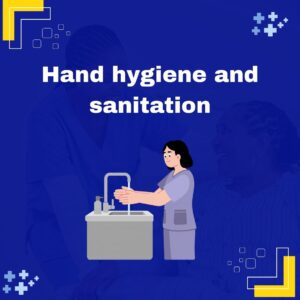
*Hand Hygiene and Sanitation*
In caregiving, *clean hands save lives.*
Many infections spread simply because germs are transferred from one surface or person to another through *unwashed hands.*
As a caregiver, your hands come into contact with:
→ The person receiving care
→ Food and utensils
→ Personal care items
→ Bedding and clothing
→ Surfaces within the environment
If proper hand hygiene is not practiced, harmful germs can easily spread and cause illness.
This is why *hand hygiene is one of the most important safety practices in caregiving.*
Caregivers should wash their hands:
→ Before touching the person receiving care
→ Before preparing or assisting with food
→ After assisting with toileting or personal hygiene
→ After contact with bodily fluids
→ After touching potentially contaminated surfaces
→ After removing gloves
Proper hand washing should include:
→ Using clean running water and soap
→ Scrubbing all parts of the hands, including between fingers and under nails
→ Washing for at least *20 seconds*
→ Rinsing thoroughly
→ Drying hands with a clean towel or tissue
In situations where soap and water are not immediately available, *alcohol-based hand sanitizers* can also help reduce germs.
Sanitation also involves keeping the environment clean.
Caregivers should ensure that:
→ Frequently touched surfaces are wiped regularly
→ Personal care tools are kept clean
→ Food preparation areas are hygienic
Good hand hygiene and sanitation may seem simple, but they are powerful tools in *preventing infection and protecting health.*

*Safe Environment for Clients*
One of the key responsibilities of a caregiver is ensuring that the environment around the person receiving care is *safe.*
Many individuals who require care may have:
→ Limited mobility
→ Poor balance
→ Weakness
→ Vision problems
→ Confusion or memory difficulties
These challenges increase the risk of *accidents and injuries.*
A caregiver must therefore always remain alert to possible hazards in the environment.
Common safety risks may include:
→ Slippery floors
→ Cluttered walkways
→ Poor lighting
→ Loose rugs or cables
→ Unstable furniture
Even small obstacles can lead to *serious falls or injuries.*
Part of your role is to help reduce these risks by keeping the environment *organized and safe.*
This may involve:
→ Ensuring walkways are clear
→ Keeping frequently used items within easy reach
→ Making sure floors are dry and clean
→ Ensuring adequate lighting in rooms and hallways
→ Checking that mobility aids such as walkers or wheelchairs are positioned properly
You must also pay attention to the person’s *individual needs.*
For example:
Someone with poor balance may need extra support when walking.
Someone with confusion may need close supervision to avoid unsafe actions.
Creating a safe environment does not require complicated equipment.
Often, it is the caregiver’s *awareness and attention to detail* that prevents accidents.
A safe environment helps protect the person receiving care from harm and allows them to feel *secure and comfortable in their surroundings.*
*Preventing Accidents and Falls*
One of the most serious risks in caregiving is *falls.*
For elderly individuals, patients recovering from illness, or people with limited mobility, a fall can cause *serious injury.*
In some cases, falls may lead to:
→ Broken bones
→ Head injuries
→ Loss of mobility
→ Long recovery periods
This is why caregivers must always stay alert and take steps to *prevent accidents before they happen.*
Many falls occur because of simple hazards in the environment, such as:
→ Wet or slippery floors
→ Cluttered walkways
→ Loose rugs or electrical cables
→ Poor lighting
→ Unstable furniture
As a caregiver, part of your role is to reduce these risks by ensuring the environment remains *clean, organized, and safe.*
You should also assist individuals who may have difficulty moving safely.
This may include helping them:
→ Stand up slowly from a chair or bed
→ Walk with support if needed
→ Use mobility aids such as walkers or canes
Encouraging individuals to *move carefully and avoid rushing* can also reduce the risk of falls.
Observation is equally important.
Some warning signs that a person may be at risk of falling include:
→ Unsteady walking
→ Sudden weakness or dizziness
→ Poor balance
→ Confusion or disorientation
When these signs appear, extra supervision may be necessary.
Preventing falls is not just about reacting to accidents.
It is about *staying alert, removing hazards, and supporting safe movement at all times.*

*Basic Hygiene Standards*
In caregiving, maintaining good hygiene is essential for protecting *health and safety.*
Poor hygiene can quickly lead to the spread of infections, skin problems, and other health complications.
As a caregiver, you are responsible for helping maintain *clean and healthy conditions* for both yourself and the person receiving care.
Basic hygiene standards include keeping:
→ The person receiving care clean and well groomed
→ Clothing and bedding clean
→ Living spaces tidy and sanitary
→ Personal care items hygienic
One of the most important hygiene practices is *regular hand washing.*
Clean hands help prevent germs from spreading between:
→ The caregiver
→ The person receiving care
→ Surfaces and objects in the environment
Caregivers should also ensure that items such as towels, washcloths, and personal hygiene tools are *clean and used appropriately.*
Food hygiene is another important area.
Meals should always be prepared and handled in a *clean environment* to prevent contamination.
Maintaining hygiene also involves proper waste disposal and ensuring that areas used for personal care are cleaned regularly.
Basic hygiene standards may seem simple, but they are a powerful way to prevent illness and protect wellbeing.
Consistent attention to cleanliness helps create an environment that is *safe, comfortable, and healthy for everyone involved in care.*
Chukwudi Emeka Okorie had recently relocated to *Manchester, United Kingdom* to work as a caregiver in a small private home.
He was assigned to support *Mrs. Helen Carter*, an 83-year-old woman who required assistance with daily activities due to limited mobility and diabetes.
During his first few weeks on the job, Chukwudi focused mainly on completing tasks quickly.
However, he paid very little attention to *basic hygiene standards.*
One morning, Mrs. Carter needed help with personal hygiene and getting dressed.
Chukwudi helped her change clothes but did not check whether her bedding was clean.
The bed sheets had not been changed for several days, even though Mrs. Carter had occasionally spilled food and tea while resting in bed.
Instead of replacing them, he simply arranged the blanket and left the room.
Later that day, Chukwudi assisted her with lunch.
Before preparing the meal, he had just finished emptying a waste bin and cleaning the bathroom area.
Without washing his hands, he went straight to the kitchen to handle food and utensils.
He assumed it was not a big issue.
Over the next few days, similar habits continued.
Used towels were left hanging for long periods without being replaced.
Personal hygiene tools such as washcloths were reused without proper cleaning.
Surfaces in Mrs. Carter’s room were rarely wiped.
Slowly, Mrs. Carter began to show signs of discomfort.
Her skin became irritated in areas where hygiene had not been properly maintained.
She also developed a mild stomach infection that doctors later suspected may have been linked to poor food hygiene.
When the supervising nurse conducted a routine inspection, several hygiene issues were discovered.
Dirty bedding.
Unclean towels.
Improper hand hygiene before food preparation.
Failure to maintain a sanitary environment.
For the care agency, the issue was serious.
They explained that caregiving is not just about assisting someone with tasks.
It also requires maintaining strict hygiene standards to protect the health of vulnerable individuals.
Because of repeated hygiene failures, Chukwudi was removed from the caregiving assignment and required to undergo additional training.
The lesson was clear.
In caregiving, ignoring basic hygiene may seem like a small mistake.
But for vulnerable individuals, it can quickly lead to *serious health consequences.*
*Module 4 – Communication and Interpersonal Skills*
Caregiving is not only about physical support.
It is also about *how you communicate with the people you care for.*
Many individuals receiving care may feel vulnerable, frustrated, or anxious because they depend on others for help.
The way you speak, listen, and respond can either make them feel *safe and respected* or *uncomfortable and ignored.*
In this module, you will learn the importance of *effective communication in caregiving.*
You will understand how caregivers build trust through:
→ Clear communication
→ Active listening
→ Respectful language
→ Patience and understanding
Good communication also helps caregivers understand the needs of the person they support.
Sometimes individuals may not clearly express their discomfort, pain, or concerns.
A caregiver who listens carefully and observes closely can identify these needs early.
You will also learn how communication helps reduce *conflict, confusion, and misunderstandings.*
Strong interpersonal skills allow caregivers to build positive relationships not only with clients but also with:
→ Family members
→ Other caregivers
→ Healthcare professionals
In caregiving, the words you use and the way you interact with others can have a powerful impact on *trust, comfort, and cooperation.*
By the end of this module, you will understand how communication and interpersonal skills help create *a respectful and supportive care environment.*
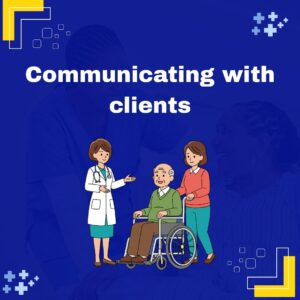
*Communicating with Clients*
Communication is one of the most powerful tools a caregiver has.
The way you speak and interact with the person receiving care can strongly influence how *safe, respected, and comfortable* they feel.
Many individuals who require care may already feel vulnerable because of illness, age, or physical limitations.
This means caregivers must communicate with *patience, respect, and clarity.*
Good communication begins with *speaking clearly and calmly.*
Avoid rushing your words or speaking in a way that may confuse the person.
Simple, clear communication helps the individual understand what is happening and what you are about to do.
Listening is just as important as speaking.
A caregiver must practice *active listening.*
This means giving the person your full attention and allowing them to express their needs, concerns, or feelings without interruption.
Sometimes clients may communicate through:
→ Words
→ Facial expressions
→ Body language
→ Changes in behaviour
A caregiver who pays attention to these signals can better understand what the person needs.
Respectful communication also means speaking in a way that protects the person’s *dignity.*
Never speak to clients in a rude, impatient, or dismissive manner.
Even when someone is confused, upset, or difficult, your response must remain *calm and professional.*
Simple actions such as making eye contact, using the person’s name, and speaking kindly can help build *trust and cooperation.*
In caregiving, effective communication creates a relationship where the person receiving care feels *heard, respected, and supported.*

*Listening Skills*
One of the most powerful skills a caregiver can develop is the ability to *listen.*
Many people receiving care may feel ignored, frustrated, or misunderstood.
Sometimes what they need most is not just physical assistance, but someone who truly *pays attention to what they are saying.*
Good listening means giving the person your *full attention.*
When a client is speaking, avoid distractions and focus on understanding their message.
Do not interrupt or rush them.
Some individuals may take longer to express themselves, especially if they are elderly, weak, or dealing with health challenges.
A caregiver must remain *patient.*
Listening also involves paying attention to more than just words.
Sometimes people communicate through:
→ Facial expressions
→ Tone of voice
→ Body language
→ Changes in behaviour
For example, a person may say they are fine, but their facial expression may show discomfort or distress.
A good caregiver learns to *observe and listen at the same time.*
When clients feel heard, they are more likely to:
→ Trust the caregiver
→ Communicate their needs clearly
→ Cooperate during care activities
Listening is not passive.
It is an active skill that requires *focus, patience, and empathy.*
In caregiving, the ability to listen carefully can help you understand problems early and provide *better, more compassionate support.*

*Respectful Communication with Families*
In caregiving, you are not only interacting with the person receiving care.
You will also communicate with *family members and loved ones.*
Families often care deeply about the wellbeing of the person you support, and they may experience emotions such as:
→ Worry
→ Stress
→ Fear
→ Frustration
Because of this, caregivers must always communicate with families in a *respectful and professional manner.*
Respectful communication begins with *listening.*
Family members may want to share concerns or ask questions about the care their loved one is receiving.
Allow them to speak and acknowledge their concerns calmly.
Caregivers should always communicate with *honesty and clarity.*
If there are observations or concerns about the person’s condition, these should be shared with the appropriate supervisor or healthcare professional according to proper procedures.
At the same time, caregivers must also respect *confidentiality and professional boundaries.*
Not all personal or medical information should be shared freely.
Information should only be communicated in accordance with the guidelines of the care team.
Maintaining a calm and respectful tone is essential, even if family members are upset or anxious.
Professional caregivers remain:
→ Patient
→ Polite
→ Clear in their communication
When caregivers communicate respectfully with families, it helps build *trust and cooperation.*
This positive relationship supports better care and ensures that everyone involved is working toward the same goal — the *wellbeing of the person receiving care.*
*Cultural Sensitivity in Caregiving*
In caregiving, you will work with people from *different cultural, religious, and social backgrounds.*
These differences may influence how individuals view:
→ Health and illness
→ Personal care
→ Food and nutrition
→ Communication styles
→ Family involvement in care
A professional caregiver must show *cultural sensitivity.*
This means respecting the beliefs, traditions, and values of the person receiving care, even if they are different from your own.
For example, some individuals may have specific cultural practices related to:
→ Modesty during personal care
→ Religious prayer times
→ Dietary restrictions
→ Family decision-making
Ignoring these cultural needs can make the person feel *disrespected or uncomfortable.*
Instead, caregivers should approach these situations with *respect and understanding.*
Cultural sensitivity also means avoiding assumptions or judgments about a person’s background.
Every individual deserves to be treated with:
→ Dignity
→ Respect
→ Fairness
A caregiver who shows cultural awareness helps create an environment where the person receiving care feels *accepted and valued.*
In caregiving, respecting cultural differences is not just good manners.
It is an important part of *providing compassionate and person-centered care.*
Funmilayo Abimbola Ogunleye had recently moved to *Dublin, Ireland* to work as a caregiver in a residential care home for older adults.
One of the residents she supported was *Mr. Harjit Singh*, a 76-year-old man originally from India who had limited mobility due to arthritis.
During her first week working with him, Funmilayo noticed that Mr. Singh had very specific habits around his meals.
At lunch one day, she served him the same meal being given to the other residents — a dish that included beef.
Mr. Singh looked uncomfortable and quietly pushed the plate aside.
Funmilayo initially thought he simply did not like the food.
But later, a colleague explained that Mr. Singh followed religious practices that prohibited him from eating beef.
Funmilayo realized she had unintentionally placed him in an uncomfortable situation.
The next day, when preparing his meal, she carefully checked the kitchen list for foods that followed his dietary restrictions.
She ensured his meal contained vegetables, rice, and other foods that were appropriate for his cultural and religious practices.
When she served the meal, Mr. Singh smiled and thanked her.
He explained that in his culture, food is closely connected to religious beliefs, and eating certain foods would make him feel he was disrespecting his faith.
From that moment, Funmilayo became more attentive to the cultural needs of the residents she cared for.
She began asking respectful questions about preferences and traditions rather than assuming that everyone followed the same routines.
This experience helped her understand an important truth about caregiving.
People receiving care come from many different cultures and traditions.
When caregivers respect those differences, the person receiving care feels *valued, respected, and understood.*
*Maintaining Dignity and Privacy*
In caregiving, one of the most important responsibilities is protecting the *dignity and privacy* of the person receiving care.
Many individuals who require support may already feel vulnerable because they depend on others for help with personal activities.
Tasks such as bathing, dressing, or toileting can make someone feel *embarrassed or uncomfortable.*
As a caregiver, your behaviour must always protect the person’s *self-respect and personal space.*
Maintaining dignity begins with the way you *speak and interact.*
Always address the person respectfully and avoid speaking about them as if they are not present.
Simple actions such as using the person’s name and explaining what you are about to do can help them feel *included and respected.*
Privacy must also be protected during personal care activities.
Caregivers should ensure that:
→ Doors or curtains are closed when assisting with personal care
→ The person’s body is covered as much as possible during hygiene tasks
→ Only necessary individuals are present during care
Another important part of privacy is *protecting personal information.*
Details about a person’s health, personal life, or medical condition must never be shared with people who are not involved in their care.
When caregivers respect dignity and privacy, the person receiving care feels *safe, valued, and respected.*
In professional caregiving, protecting dignity and privacy is not optional.
It is a *core responsibility of ethical care.*
*Module 5 – Basic Observation and Reporting*
Caregivers often spend more time with clients than any other member of the healthcare team.
Because of this, caregivers are often the *first to notice when something changes.*
These changes may involve a person’s:
→ Physical condition
→ Behaviour
→ Mood
→ Eating habits
→ Mobility
Your ability to *observe carefully and report accurately* is an important part of safe caregiving.
Small changes can sometimes be early signs of a health problem.
For example:
A person who suddenly stops eating.
A normally calm person becoming restless or confused.
A client who suddenly struggles to walk or stand.
Noticing these changes early allows healthcare professionals to *respond quickly and prevent complications.*
In this module, you will learn how caregivers perform *basic observation.*
You will also learn the correct way to *report concerns or unusual findings.*
It is important to understand that caregivers do not diagnose medical conditions.
Your role is to:
→ Observe carefully
→ Record important details
→ Report concerns to supervisors or healthcare professionals
Clear observation and proper reporting help ensure that clients receive *timely and appropriate care.*
In caregiving, paying attention to small details can make a *major difference in protecting someone’s health and safety.*
*Observing Changes in Client Condition*
One of the most important responsibilities of a caregiver is *watching for changes in a client’s condition.*
Because caregivers spend a lot of time with the people they support, they are often the *first to notice when something is not right.*
These changes may be small at first, but they can sometimes signal *serious health concerns.*
Caregivers should pay attention to changes such as:
→ Sudden weakness or fatigue
→ Loss of appetite or refusal to eat
→ Difficulty breathing
→ Unusual pain or discomfort
→ Changes in sleep patterns
→ Confusion or unusual behaviour
Emotional and behavioural changes are also important to observe.
For example, a person who is normally calm may suddenly become:
→ Irritable
→ Withdrawn
→ Anxious
→ Restless
These changes may indicate emotional distress, illness, or other health problems.
Caregivers must also observe physical signs such as:
→ Skin redness or swelling
→ Signs of infection or wounds
→ Changes in mobility or balance
When any unusual change is noticed, it should *never be ignored.*
Your role is not to diagnose the problem.
Your responsibility is to:
→ Observe carefully
→ Take note of the change
→ Report it promptly to the appropriate supervisor or healthcare professional
Early observation and reporting can help prevent complications and ensure the client receives *timely care and support.*
*Reporting Concerns to Supervisors*
As a caregiver, you are not expected to solve every problem on your own.
Your role is to *observe, document, and report* anything unusual that may affect the health or safety of the person receiving care.
When you notice changes in a client’s condition, it is important to *inform your supervisor promptly.*
Supervisors rely on caregivers to report important information such as:
→ Sudden illness or weakness
→ Changes in behaviour or mood
→ Loss of appetite or refusal to eat
→ Signs of pain or discomfort
→ Falls or accidents
→ Any situation that may threaten the client’s safety
Reporting concerns early allows the care team to *respond quickly and provide appropriate support.*
When reporting a concern, try to be *clear and accurate.*
Include important details such as:
→ What you observed
→ When it happened
→ How the client appeared or responded
Avoid guessing or making medical conclusions.
Your responsibility is simply to *describe what you observed.*
It is also important that serious concerns are reported *immediately.*
Delaying important information can place the client’s health at risk.
Professional caregivers understand that reporting concerns is not about blaming anyone.
It is about *protecting the wellbeing of the person receiving care.*
Clear communication with supervisors helps ensure that care remains *safe, coordinated, and effective.*

*Recording Simple Observations*
In caregiving, it is not enough to notice changes in a client’s condition.
Those observations must also be *recorded clearly and accurately.*
Recording observations helps the care team understand what is happening with the person receiving care.
These records provide important information that healthcare professionals may use to make *care decisions.*
As a caregiver, you may be required to record simple observations such as:
→ Changes in appetite or eating habits
→ Mood or behaviour changes
→ Sleep patterns
→ Mobility difficulties
→ Signs of pain or discomfort
When recording observations, it is important to focus only on *what you actually see or hear.*
Avoid making assumptions or medical conclusions.
For example, instead of writing that a client is sick, you should record specific observations such as:
→ The client refused breakfast
→ The client appeared weak while walking
→ The client complained of pain in the leg
Good records should always be:
→ Clear
→ Accurate
→ Simple
→ Written as soon as possible after the observation
This ensures that important information is not forgotten or misunderstood.
Accurate observation records help supervisors and healthcare professionals respond quickly when changes occur.
In caregiving, careful documentation supports *safe, organized, and effective care.*
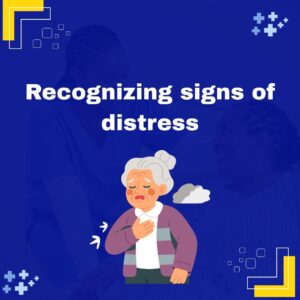
*Recognizing Signs of Distress*
People receiving care may not always clearly say when something is wrong.
Because of this, caregivers must learn to *recognize signs of distress.*
Distress can be *physical, emotional, or psychological.*
If these warning signs are noticed early, caregivers can report them quickly and help prevent the situation from becoming worse.
Some common *physical signs of distress* include:
→ Difficulty breathing
→ Sudden weakness or dizziness
→ Complaints of severe pain
→ Restlessness or inability to stay still
→ Unusual sweating
Caregivers should also watch for *emotional or behavioural distress.*
A client who is struggling emotionally may show signs such as:
→ Sudden agitation or anger
→ Withdrawal or silence
→ Crying or visible sadness
→ Fear or anxiety
In some cases, distress may appear through *changes in behaviour.*
For example:
A person who is normally calm may suddenly become confused or aggressive.
A person who usually eats well may suddenly refuse food.
When any of these warning signs appear, they should *never be ignored.*
Your role as a caregiver is to:
→ Stay calm
→ Ensure the client is safe
→ Report the situation immediately to your supervisor or healthcare professional
Recognizing distress early can make a critical difference in protecting the *health, safety, and wellbeing* of the person receiving care.
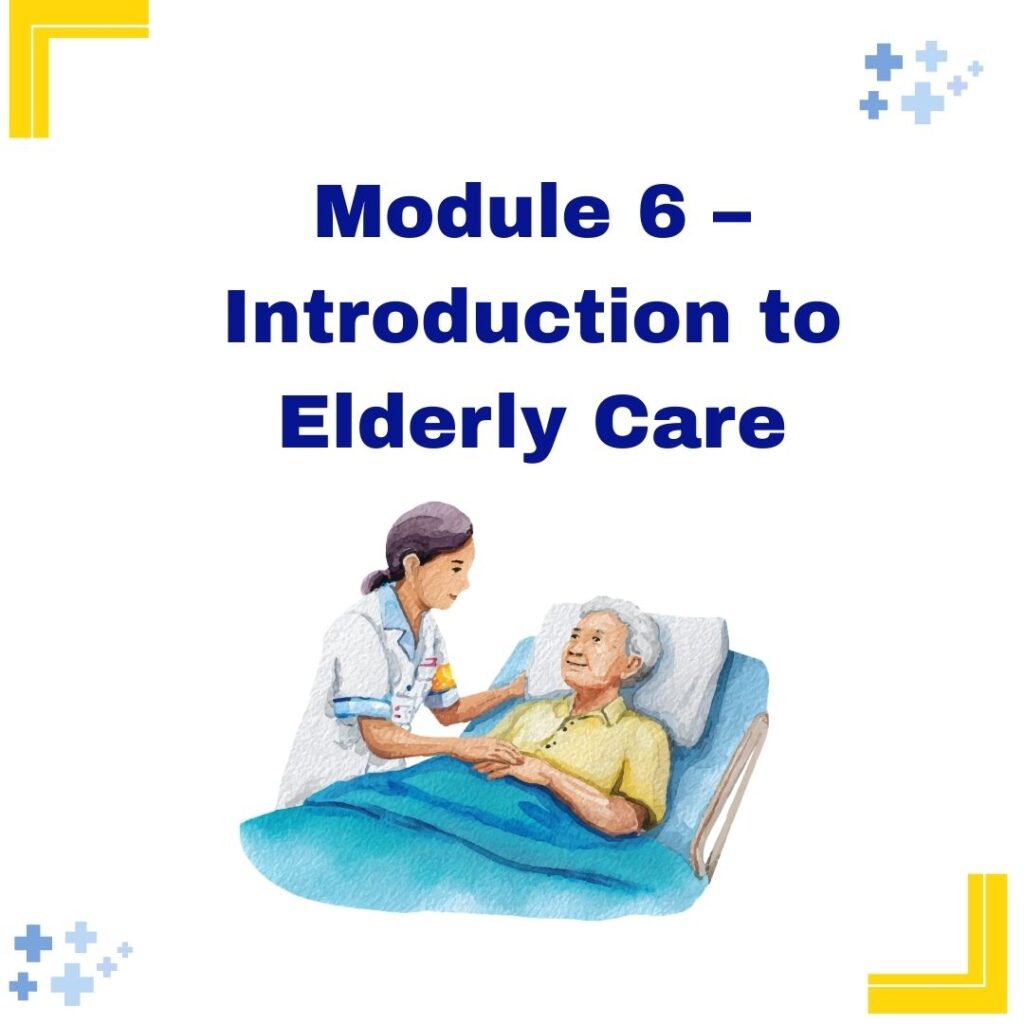
*Module 6 – Introduction to Elderly Care*
A large number of people who require caregiving support are *elderly individuals.*
As people grow older, the body naturally begins to experience changes that can affect:
→ Strength and mobility
→ Vision and hearing
→ Memory and concentration
→ Energy levels
→ Overall health
Because of these changes, many older adults may need assistance with daily activities and health management.
In this module, you will learn the *basic principles of elderly care.*
You will begin to understand the common challenges that older adults may face and how caregivers can provide support in a way that protects their:
→ Safety
→ Comfort
→ Independence
→ Dignity
Elderly care requires a special level of *patience and understanding.*
Many older individuals may move more slowly, require more time to complete tasks, or experience frustration when they cannot do things the way they used to.
A professional caregiver must approach elderly care with *respect, empathy, and awareness.*
In this module, you will also learn how caregivers help support older adults with:
→ Daily activities
→ Mobility and fall prevention
→ Emotional support and companionship
Caring for the elderly is not simply about helping with tasks.
It is about ensuring that older adults continue to feel *valued, respected, and supported in their later years.*
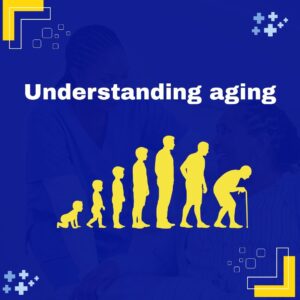
*Understanding Aging*
Aging is a natural part of life.
As people grow older, the body and mind go through *gradual changes.*
These changes do not happen the same way for everyone, but many older adults experience shifts in their *physical strength, health, and energy levels.*
For example, aging may bring changes such as:
→ Reduced muscle strength
→ Slower movement and balance challenges
→ Changes in vision or hearing
→ Increased fatigue
→ Slower recovery from illness
Some older adults may also experience changes in *memory or concentration.*
This does not mean every elderly person becomes forgetful or confused, but it does mean caregivers must be patient and understanding when these changes occur.
Aging can also affect a person *emotionally.*
Older individuals may sometimes feel:
→ Lonely
→ Frustrated about losing independence
→ Worried about their health
This is why caregivers must approach elderly care with *patience, empathy, and respect.*
It is important to remember that aging does not take away a person’s *dignity or value.*
Older adults have a lifetime of experience, knowledge, and personal history.
A professional caregiver supports them in a way that protects their *independence, comfort, and self-respect.*
Understanding aging helps caregivers provide support that is *compassionate, respectful, and appropriate for the needs of older adults.*
*Common Needs of Elderly Persons*
As people grow older, their needs may change.
Many elderly individuals may require additional support to maintain their *health, comfort, and independence.*
Understanding these needs helps caregivers provide care that is *safe, respectful, and supportive.*
One of the most common needs of elderly persons is *physical support.*
Because aging can affect strength and mobility, many older adults may need assistance with:
→ Walking safely
→ Standing up or sitting down
→ Moving around the home
Another important need is *proper nutrition and hydration.*
Older adults may sometimes eat less because of reduced appetite, dental problems, or difficulty preparing meals.
Caregivers must help ensure they receive *regular meals and enough fluids.*
*Emotional support* is also very important.
Many elderly individuals may experience loneliness, especially if they live alone or have lost close friends or family members.
Simple actions such as conversation, companionship, and kindness can greatly improve their *emotional wellbeing.*
Elderly persons also need a *safe living environment.*
Because balance and coordination may decline with age, preventing falls and accidents becomes extremely important.
Finally, older adults need to feel *respected and valued.*
Even when they require assistance, they should still be encouraged to maintain as much independence as possible.
Supporting these needs helps elderly individuals live with *comfort, dignity, and confidence.*
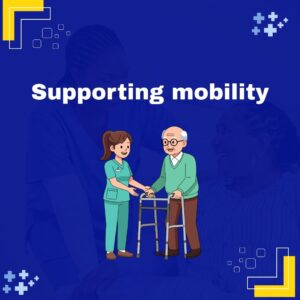
*Supporting Mobility*
Mobility refers to a person’s ability to *move safely and independently.*
As people age or experience illness, injury, or physical weakness, moving around can become *more difficult.*
Simple actions such as standing up, walking, or getting in and out of bed may require assistance.
As a caregiver, your role is to help support mobility in a way that protects the person’s *safety and confidence.*
This may include assisting the person to:
→ Stand up safely from a bed or chair
→ Walk with support if needed
→ Use mobility aids such as walkers or canes
→ Move carefully between different areas of the home
It is important to encourage the person to move *as much as they safely can.*
Movement helps maintain:
→ Muscle strength
→ Balance
→ Circulation
→ Overall health
At the same time, caregivers must remain alert to the risk of *falls.*
Always ensure the environment is clear of obstacles and that the person is supported when necessary.
Never rush someone who is moving slowly.
Safe mobility requires *patience and attention.*
By supporting safe movement, caregivers help individuals maintain *independence, physical strength, and confidence in their daily activities.*
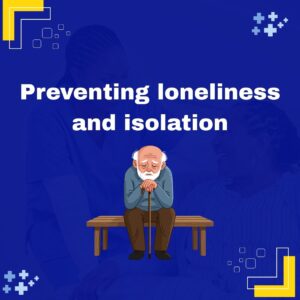
*Preventing Loneliness and Isolation*
Many elderly individuals experience *loneliness and social isolation.*
As people grow older, they may lose close friends, live far from family members, or spend long periods of time alone.
This can lead to feelings of:
→ Sadness
→ Loneliness
→ Anxiety
→ Loss of motivation
Over time, isolation can affect both *mental and physical health.*
As a caregiver, you play an important role in helping reduce these feelings.
Sometimes small actions can make a *big difference.*
This may include:
→ Spending time talking with the person
→ Listening to their stories and experiences
→ Encouraging simple social activities
→ Helping them stay connected with family or friends
Even brief daily conversations can help an elderly person feel *valued and included.*
Caregivers should also encourage activities that stimulate the mind and body, such as:
→ Light exercise
→ Reading
→ Listening to music
→ Watching programs they enjoy
Preventing loneliness is not only about keeping someone busy.
It is about helping them feel *connected, respected, and emotionally supported.*
When elderly individuals feel socially connected, their overall *wellbeing and quality of life* improves significantly.