Module 1: Introduction to Mental Health
Welcome to Mental Health Level 1.
Before we begin, take a moment to reflect on this question:
How often do we encounter people who are struggling emotionally, psychologically, or socially—and either fail to recognize it or assume they will simply “get over it”?
Mental health is not a separate part of health. It influences how people think, feel, behave, cope with stress, build relationships, make decisions, and function in daily life. Whether in homes, schools, workplaces, healthcare settings, or communities, mental health affects every aspect of human wellbeing.
The reality is that mental health challenges are more common than many people realize. They can affect anyone regardless of age, gender, culture, education, income, or social status. Mental health difficulties are often hidden behind smiles, professional success, social activities, or outward appearances of strength. As a result, many individuals suffer in silence without receiving the support they need.
Unfortunately, stigma, misinformation, fear, and lack of awareness continue to prevent people from seeking help. In many cases, well-intentioned individuals may unintentionally worsen a situation because they lack the knowledge and skills required to respond appropriately.
As a Mental Health Officer, your role is not only to recognize signs of mental distress but also to provide support, promote understanding, reduce stigma, and contribute to safer and healthier communities. This requires knowledge, compassion, professionalism, and a commitment to continuous learning.
Throughout this module, you will explore the meaning of mental health, understand the factors that influence mental wellbeing, examine common misconceptions, and appreciate the importance of mental health in everyday life. You will begin developing the awareness and skills needed to support individuals experiencing mental health challenges while respecting their dignity, rights, and individuality.
By the end of this module, you should be able to:
Define mental health and mental wellbeing.
Explain why mental health is important.
Identify factors that influence mental health.
Recognize common myths and misconceptions about mental illness.
Understand the role of a Mental Health Officer in supporting individuals and communities.
This course is more than an academic exercise. It is an opportunity to develop the knowledge and confidence needed to make a meaningful difference in the lives of others.
Approach this learning experience with an open mind, a willingness to challenge assumptions, and a commitment to understanding the realities faced by those living with mental health conditions.
Let us begin this important journey into the world of mental health.
Understanding Mental Health and Mental Illness
Let us be clear: mental health is far more than simply feeling happy or avoiding sadness. It is a fundamental part of overall health and wellbeing. Mental health influences how we think, feel, behave, cope with challenges, build relationships, and make decisions throughout our lives.
When mental health is strong, individuals are better able to manage stress, adapt to change, work productively, maintain healthy relationships, and contribute positively to their communities. When mental health is compromised, every area of life can be affected, including physical health, education, employment, family relationships, and social functioning.
Mental illness refers to a wide range of conditions that affect a person’s thinking, emotions, mood, behaviour, or ability to function effectively in daily life. These conditions are not signs of personal weakness, poor character, or lack of willpower. They are genuine health conditions that can affect anyone regardless of age, gender, culture, education, occupation, or socioeconomic status.
Common mental health conditions include anxiety disorders, depression, bipolar disorder, schizophrenia, post-traumatic stress disorder (PTSD), and substance use disorders. The severity of these conditions can vary from mild to severe, and many individuals can recover or effectively manage their symptoms when appropriate support, treatment, and interventions are available.
One of the greatest challenges in mental health care is that many people struggle silently. Fear of judgment, stigma, discrimination, lack of awareness, and limited access to services often prevent individuals from seeking help. As a result, mental health difficulties may go unnoticed until they significantly affect a person’s wellbeing, relationships, or quality of life.
For Mental Health Officers, understanding mental health and mental illness goes beyond learning definitions and terminology. It requires the ability to recognize signs of distress, listen without judgment, respond appropriately, provide support, and encourage individuals to access professional help when needed.
Every person experiencing a mental health challenge has a unique story, personal circumstances, strengths, and needs. Effective mental health care begins with empathy, respect, understanding, and a commitment to seeing the individual behind the condition.
Remember: behind every diagnosis is a human being. Behind every statistic is a life that can be supported, improved, and sometimes even transformed through timely intervention, compassion, and professional care.
Mental Health vs Mental Disorder
One of the most important concepts in mental health care is understanding the difference between mental health and mental disorder. Although the terms are often used interchangeably, they are not the same.
What is Mental Health?
Mental health refers to a person’s emotional, psychological, and social wellbeing. It influences how individuals think, feel, behave, handle stress, relate to others, and make decisions throughout their lives.
Good mental health does not mean a person is always happy or free from difficulties. Everyone experiences challenges, setbacks, stress, and emotional pain at different times. Good mental health means having the ability to cope with life’s demands, adapt to change, maintain relationships, and function effectively despite challenges.
Mental health exists on a continuum and can change over time depending on life circumstances, physical health, social support, environment, and other factors.
What is a Mental Disorder?
A mental disorder is a clinically recognized condition that affects a person’s thinking, mood, emotions, perception, behaviour, or ability to function in daily life. Mental disorders can cause significant distress and may interfere with work, education, relationships, and overall quality of life.
Examples of mental disorders include:
Depression
Anxiety disorders
Bipolar disorder
Schizophrenia
Obsessive-Compulsive Disorder (OCD)
Post-Traumatic Stress Disorder (PTSD)
Substance Use Disorders
Mental disorders are health conditions. They are not signs of weakness, lack of intelligence, poor character, or personal failure. Like physical illnesses, they can be influenced by biological, psychological, social, and environmental factors.
Understanding the Difference
A useful way to think about the distinction is that mental health refers to a person’s overall state of psychological wellbeing, while a mental disorder refers to a specific condition that affects that wellbeing.
It is possible for:
A person to generally have good mental health and still develop a mental disorder due to factors such as genetics, trauma, illness, or major life events.
A person experiencing poor mental health to be at greater risk of developing a mental disorder if difficulties are prolonged or left unaddressed.
A person living with a mental disorder to achieve positive mental wellbeing through effective treatment, support, coping strategies, and recovery-focused care.
Why This Distinction Matters
For Mental Health Officers, understanding the difference between mental health and mental disorder is essential. It affects how individuals are assessed, supported, referred, and cared for.
Confusing temporary emotional distress with a mental disorder may lead to unnecessary labeling, while failing to recognize a genuine mental disorder may delay treatment and increase the risk of serious consequences.
Effective mental health practice requires careful observation, professional judgment, empathy, and an understanding that every individual exists somewhere along the mental health continuum.
Key Message
Mental health is something that everyone has.
Mental disorders are conditions that some people experience.
Promoting good mental health and recognizing mental disorders early are both essential parts of improving wellbeing, reducing suffering, and supporting recovery.
The clearer we understand this distinction, the better equipped we are to provide safe, compassionate, and effective mental health support.
Common Myths and Misconceptions About Mental Health
One of the greatest barriers to improving mental health outcomes is not always a lack of services or treatment—it is misinformation. Myths and misconceptions influence how individuals view mental health conditions, how families respond to loved ones in distress, and how communities support or exclude those who need help.
These misunderstandings contribute to stigma, discrimination, delayed treatment, and unnecessary suffering. As Mental Health Officers, it is essential to recognize and challenge these misconceptions with accurate information, empathy, and evidence-based practice.
Myth 1: “Mental illness is a sign of weakness or poor character.”
Fact: Mental disorders are legitimate health conditions. They can result from a combination of biological, psychological, social, and environmental factors, including genetics, trauma, chronic stress, and physical illness.
Mental illness is not a sign of weakness, lack of willpower, or moral failure. Anyone can experience a mental health condition regardless of their strength, intelligence, education, or social status.
Myth 2: “People with mental disorders are violent or dangerous.”
Fact: Most people living with mental health conditions are not violent. In reality, they are more likely to experience discrimination, neglect, abuse, or victimization than to harm others.
Media portrayals often reinforce inaccurate stereotypes, creating fear and misunderstanding. These stereotypes can discourage people from seeking help and contribute to social isolation.
Myth 3: “People can simply ‘snap out of it’ if they try hard enough.”
Fact: Mental health conditions are not cured through willpower alone. While positive thinking, healthy coping strategies, and social support can be helpful, many individuals require professional treatment, therapy, medication, or other interventions.
Comments such as “just get over it” or “think positively” can invalidate a person’s experience and create additional feelings of guilt, shame, or hopelessness.
Myth 4: “Mental illness only affects adults.”
Fact: Mental health challenges can affect people of all ages, including children, adolescents, adults, and older adults.
Many mental health conditions begin during childhood or adolescence. Early identification and intervention can significantly improve outcomes and reduce the impact of mental health difficulties later in life.
Myth 5: “Talking about mental health makes problems worse.”
Fact: Open and supportive conversations about mental health often help individuals feel understood, supported, and less alone.
Creating safe opportunities for discussion can encourage help-seeking behaviour, reduce stigma, and promote early intervention. Silence and avoidance often increase feelings of isolation and distress.
Myth 6: “You can always tell when someone has a mental illness.”
Fact: Mental health conditions are not always visible. Many people continue to work, study, care for families, and participate in social activities while experiencing significant psychological distress.
A person may appear calm, successful, or happy while struggling internally. Mental Health Officers should avoid making assumptions based solely on outward appearance.
Myth 7: “Therapy and medication are signs of weakness.”
Fact: Seeking help is a sign of strength and self-awareness. Professional treatment provides individuals with tools, strategies, and support to manage symptoms and improve quality of life.
Just as people seek treatment for physical illnesses such as diabetes, asthma, or hypertension, mental health conditions may also require professional care. Accessing treatment demonstrates a commitment to health and wellbeing, not weakness.
Why Challenging Myths Matters
Misconceptions about mental health contribute to stigma. Stigma discourages people from speaking openly about their struggles, seeking support, and accessing treatment.
As Mental Health Officers, one of your responsibilities is to promote accurate information, challenge harmful beliefs, and advocate for a more supportive and inclusive society. Every conversation that reduces stigma creates an opportunity for understanding, recovery, and hope.
Key Message
Myths create fear.
Fear creates stigma.
Stigma creates silence.
Silence prevents people from getting help.
By replacing myths with knowledge and compassion, Mental Health Officers play a vital role in improving mental health outcomes and supporting individuals on their journey toward recovery and wellbeing.

Case Study: Mental Health Challenge vs Mental Disorder
Understanding the difference between a mental health challenge and a mental disorder is essential for effective mental health practice. The following case studies demonstrate how two individuals may experience emotional difficulties, but require different levels of support and intervention.
Case Study 1: Mental Health Challenge
Blessing’s Story
Blessing is a 27-year-old NYSC member serving far from her family and support network. Since arriving at her place of primary assignment, she has experienced feelings of loneliness, financial pressure, uncertainty about the future, and difficulty adjusting to a new environment.
Some evenings, she feels anxious and emotionally overwhelmed. She occasionally cries in private and worries about whether she is making the right decisions for her future.
Despite these challenges, Blessing:
✓ Reports to work regularly
✓ Maintains relationships with friends, family, and colleagues
✓ Continues to perform her daily responsibilities
✓ Uses healthy coping strategies such as prayer, journaling, exercise, and seeking social support
✓ Retains good judgment and decision-making abilities
Over time, as she becomes more familiar with her environment and develops a stronger support network, her stress levels decrease and her emotional wellbeing improves.
Key Indicators
✓ Emotional and psychological stress
✓ Temporary adjustment difficulties
✓ Effective coping mechanisms
✓ Daily functioning remains largely intact
✓ Symptoms improve with time and support
✗ No evidence of a diagnosable mental disorder
✗ No significant impairment in functioning
Professional Interpretation
Blessing is experiencing a mental health challenge associated with life stressors and adjustment difficulties.
Her emotional distress is real and deserves support, but it does not currently meet the threshold of a mental disorder because her coping abilities remain functional and her daily activities are not significantly impaired.
Conclusion
➡️ This is a mental health challenge, not a mental disorder.
Case Study 2: Mental Disorder
Samuel’s Story
Samuel is a 35-year-old businessman who has experienced persistent feelings of sadness, hopelessness, and emotional emptiness for more than three months.
Activities he once enjoyed no longer interest him. He avoids phone calls, withdraws from family and friends, struggles to eat regularly, and experiences ongoing sleep difficulties.
Samuel frequently describes himself as worthless and believes that life has lost its meaning.
Despite encouragement from family and friends, he finds himself unable to regain motivation or return to his previous level of functioning.
His business performance has declined significantly, and his symptoms continue to worsen.
Key Indicators
✗ Persistent symptoms lasting several months
✗ Significant changes in mood and behaviour
✗ Negative and rigid thinking patterns
✗ Social withdrawal and isolation
✗ Severe impairment in occupational functioning
✗ Coping mechanisms no longer effective
✓ Professional assessment and treatment required
Professional Interpretation
Samuel’s symptoms are persistent, severe, and significantly impair his ability to function in daily life.
The duration, intensity, and impact of his symptoms suggest the presence of a mental disorder, such as Major Depressive Disorder. A comprehensive professional assessment would be required for diagnosis and treatment planning.
Conclusion
➡️ This is an example of a mental disorder requiring professional intervention.
Critical Professional Insights
Mental Health Officers should remember the following:
✓ A person can experience temporary emotional distress without having a mental disorder.
✓ A person can develop a mental disorder even when they have previously maintained good mental health.
✓ Poor mental health may increase vulnerability to mental disorders if difficulties remain unaddressed.
✓ Mental disorders are medical conditions and should never be viewed as weakness, laziness, lack of faith, or poor character.
✓ Recovery often requires professional support, treatment, and appropriate interventions.
✗ Willpower alone is not a treatment for mental illness.
✗ Mental disorders should not be dismissed as ordinary stress or personal weakness.
Mental Health Officer Takeaway
Mental health is about how effectively a person is coping with life’s challenges.
Mental disorder occurs when emotional, psychological, or behavioural difficulties become persistent, severe, and significantly interfere with daily functioning.
As a Mental Health Officer, your responsibility is not to diagnose or judge. Your role is to:
✓ Recognize warning signs
✓ Listen and respond appropriately
✓ Provide support within your scope of practice
✓ Encourage early help-seeking
✓ Refer individuals to qualified mental health professionals when necessary
Remember: early recognition and timely referral can make a significant difference in a person’s recovery and wellbeing.
Importance of Mental Health in Society
Mental health is not only an individual concern—it is a critical component of healthy families, productive workplaces, safe communities, and sustainable national development. The wellbeing of a society is closely linked to the mental wellbeing of its people.
When individuals enjoy positive mental health, they are better able to cope with life’s challenges, build healthy relationships, make informed decisions, contribute productively to society, and participate fully in community life. Good mental health supports learning, employment, physical health, social cohesion, and overall quality of life.
Benefits of Good Mental Health
Individuals with positive mental wellbeing are more likely to:
✔ Manage stress effectively and adapt to change
✔ Maintain healthy relationships with family, friends, and colleagues
✔ Perform effectively in educational and workplace settings
✔ Make responsible decisions and solve problems constructively
✔ Contribute positively to their communities
✔ Demonstrate resilience during difficult circumstances
At a societal level, good mental health contributes to stronger families, safer communities, increased productivity, improved educational outcomes, and greater social stability.
Consequences of Poor Mental Health
When mental health challenges are ignored, misunderstood, or left untreated, the effects extend far beyond the individual.
Poor mental health may contribute to:
✖ Relationship difficulties and family breakdown
✖ Reduced educational achievement
✖ Decreased workplace productivity and increased absenteeism
✖ Social isolation and exclusion
✖ Increased healthcare demands
✖ Substance misuse and harmful coping behaviours
✖ Greater risk of mental health crises and long-term disability
Communities that fail to address mental health concerns may experience significant social and economic consequences, including the loss of human potential, talent, creativity, and productivity.
The Role of Mental Health in Community Wellbeing
Mental health influences how people interact with one another, respond to challenges, and contribute to society. Communities that promote mental wellbeing are often characterized by stronger social support networks, greater inclusion, reduced stigma, and improved overall health outcomes.
Investing in mental health is therefore not only a healthcare priority but also a social and economic necessity.
Schools, workplaces, healthcare institutions, religious organizations, community groups, and governments all have a role to play in promoting mental wellbeing and supporting those experiencing mental health difficulties.
The Role of the Mental Health Officer
Mental Health Officers play an important role in improving mental health outcomes within communities. Their responsibilities include:
✔ Promoting mental health awareness and education
✔ Challenging stigma and discrimination
✔ Recognizing signs of mental distress
✔ Providing support within their scope of practice
✔ Encouraging early intervention and help-seeking
✔ Referring individuals to appropriate services when necessary
✔ Advocating for compassionate and person-centred care
Through these actions, Mental Health Officers contribute to healthier individuals, stronger families, and more resilient communities.
Key Message
Mental health is not a luxury or an optional aspect of wellbeing. It is a fundamental requirement for individuals, families, communities, and societies to thrive.
When mental health is supported, people are better able to reach their potential, contribute to society, and enjoy a higher quality of life. When mental health is neglected, the consequences affect not only individuals but entire communities.
Every effort to promote mental wellbeing, reduce stigma, and support recovery strengthens the social fabric of society and creates opportunities for healthier and more productive communities.
As a Mental Health Officer, your knowledge, compassion, and actions have the potential to create positive change far beyond the individual you support. Every conversation, every intervention, and every act of understanding contributes to a healthier society for all.
Overview of Common Mental Health Conditions
Mental health conditions are among the most common health challenges worldwide. They affect people of all ages, backgrounds, cultures, occupations, and socioeconomic groups. No individual, family, or community is completely immune from the impact of mental health difficulties.
Despite their prevalence, many mental health conditions remain misunderstood, overlooked, or identified only after they have significantly affected a person’s wellbeing, relationships, education, employment, or daily functioning. As a result, many individuals experience unnecessary suffering before receiving appropriate support or treatment.
Mental health conditions are not personal choices, character flaws, or signs of weakness. They are legitimate health conditions that can affect a person’s thoughts, emotions, behaviours, perceptions, and ability to cope with everyday life.
Some of the most common mental health conditions include:
✔ Depression
✔ Anxiety Disorders
✔ Bipolar Disorder
✔ Schizophrenia
✔ Obsessive-Compulsive Disorder (OCD)
✔ Post-Traumatic Stress Disorder (PTSD)
✔ Substance Use Disorders
Each condition presents differently and may vary in severity from person to person. Some individuals may experience mild symptoms that have limited impact on daily life, while others may face significant challenges that require professional intervention and ongoing support.
Why Understanding These Conditions Matters
For Mental Health Officers, awareness of common mental health conditions is essential. Effective support begins with the ability to recognize potential warning signs and understand when additional help may be required.
Mental Health Officers should be able to:
✔ Identify common signs and symptoms of mental health conditions
✔ Recognize changes in behaviour, mood, thinking, or functioning
✔ Respond with empathy and professionalism
✔ Provide appropriate support within their scope of practice
✔ Encourage early help-seeking and intervention
✔ Refer individuals to qualified mental health professionals when necessary
Early recognition can significantly improve outcomes. Many mental health conditions respond well to treatment and support, particularly when identified and addressed before they become severe.
The Importance of Early Intervention
Mental health conditions often develop gradually. Small changes in mood, behaviour, sleep patterns, concentration, social interaction, or daily functioning may be early indicators that an individual is struggling.
When warning signs are recognized early:
✔ Individuals are more likely to receive timely support
✔ Recovery outcomes are often improved
✔ The impact on education, employment, and relationships can be reduced
✔ Serious complications may be prevented
Conversely, when symptoms are ignored or misunderstood, conditions may worsen and become more difficult to manage.
Key Message
Understanding common mental health conditions is a fundamental skill for every Mental Health Officer.
Knowledge leads to recognition.
Recognition leads to timely support.
Timely support leads to better outcomes and improved quality of life.
Every condition you learn to recognize represents an opportunity to support someone in need, reduce suffering, and contribute to healthier individuals, families, and communities.
The goal is not to diagnose, but to recognize concerns, respond appropriately, and help connect people with the support they need.
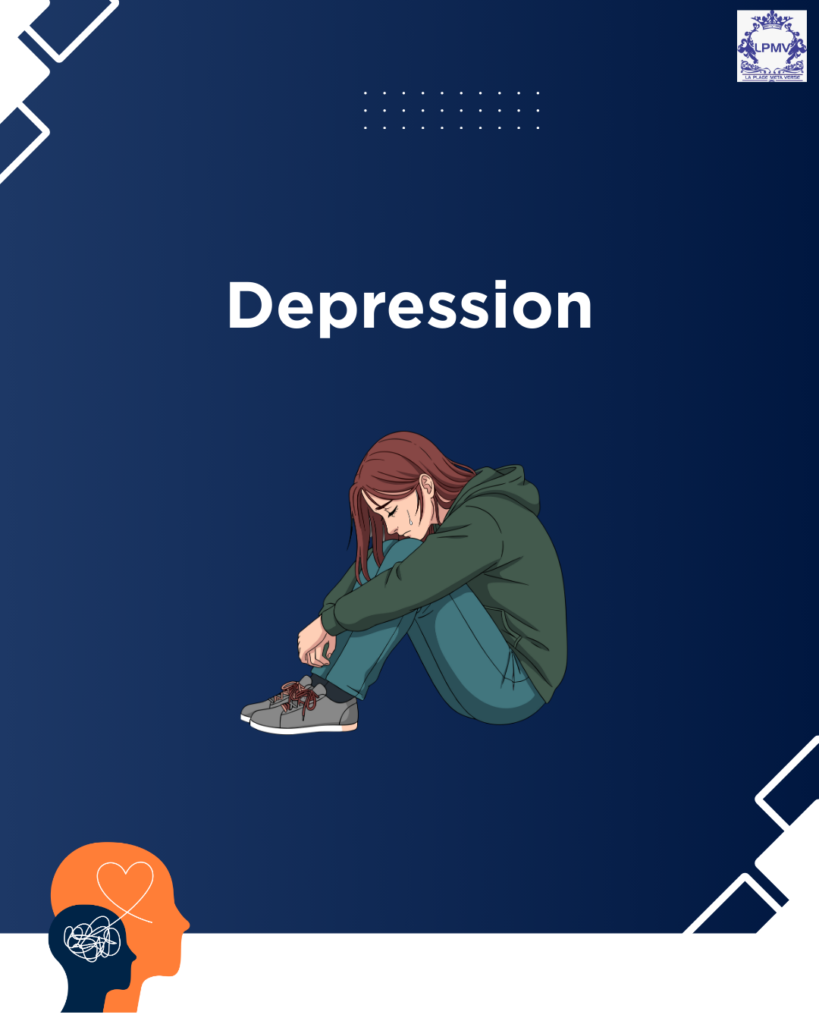
Depression
Depression is one of the most common mental health conditions worldwide. It is more than temporary sadness, disappointment, or a reaction to a difficult day. Depression is a mental health condition that affects a person’s mood, thoughts, behaviour, physical wellbeing, and ability to function in daily life.
While everyone experiences periods of sadness from time to time, depression is characterized by symptoms that are persistent, often lasting for weeks or months, and that significantly interfere with normal functioning.
Depression can affect people of any age, gender, culture, or background. It may develop gradually or appear following stressful life events, loss, trauma, illness, or significant changes in circumstances. In some cases, no obvious cause may be identified.
Common Signs and Symptoms of Depression
Individuals experiencing depression may display some or all of the following symptoms:
✔ Persistent sadness, emptiness, or feelings of hopelessness
✔ Loss of interest or pleasure in activities previously enjoyed
✔ Fatigue, low energy, or a sense of constant exhaustion
✔ Changes in sleeping patterns, including insomnia or excessive sleeping
✔ Changes in appetite or significant weight changes
✔ Difficulty concentrating, remembering information, or making decisions
✔ Feelings of worthlessness, excessive guilt, or self-criticism
✔ Social withdrawal and reduced participation in daily activities
✔ Increased irritability or frustration
✔ Reduced motivation and productivity
In more severe cases, individuals may experience thoughts about death, self-harm, or suicide. Such situations require immediate professional assessment and support.
Impact of Depression
Depression can affect every aspect of a person’s life, including:
Family relationships
Friendships and social interactions
Educational performance
Employment and productivity
Physical health and wellbeing
Overall quality of life
Without appropriate support or treatment, depression may become increasingly severe and difficult to manage.
Common Myths About Depression
As Mental Health Officers, it is important to challenge misconceptions that contribute to stigma and delayed treatment.
Myth: “People with depression should simply cheer up.”
Fact: Depression is a health condition and cannot be overcome through willpower alone.
Myth: “Depression is a sign of weakness.”
Fact: Depression can affect anyone, regardless of strength, success, intelligence, or personal character.
Myth: “Only adults experience depression.”
Fact: Depression can occur in children, adolescents, adults, and older adults.
The Role of the Mental Health Officer
Mental Health Officers are not responsible for diagnosing depression, but they play an important role in recognizing warning signs and supporting individuals who may be struggling.
Your responsibilities include:
✔ Recognizing symptoms and behavioural changes
✔ Listening without judgment
✔ Providing emotional support within your scope of practice
✔ Encouraging individuals to seek professional help
✔ Referring concerns to appropriate mental health professionals
✔ Responding appropriately to situations involving risk or crisis
Key Message
Depression is a common and treatable mental health condition.
Early recognition, compassionate support, professional intervention, and appropriate treatment can significantly improve outcomes and quality of life.
Never dismiss persistent sadness, hopelessness, or withdrawal as “just a phase” or “normal stress.” Timely support can make a profound difference in a person’s recovery and wellbeing.
Remember: behind every person experiencing depression is an individual who deserves understanding, support, hope, and access to appropriate care.
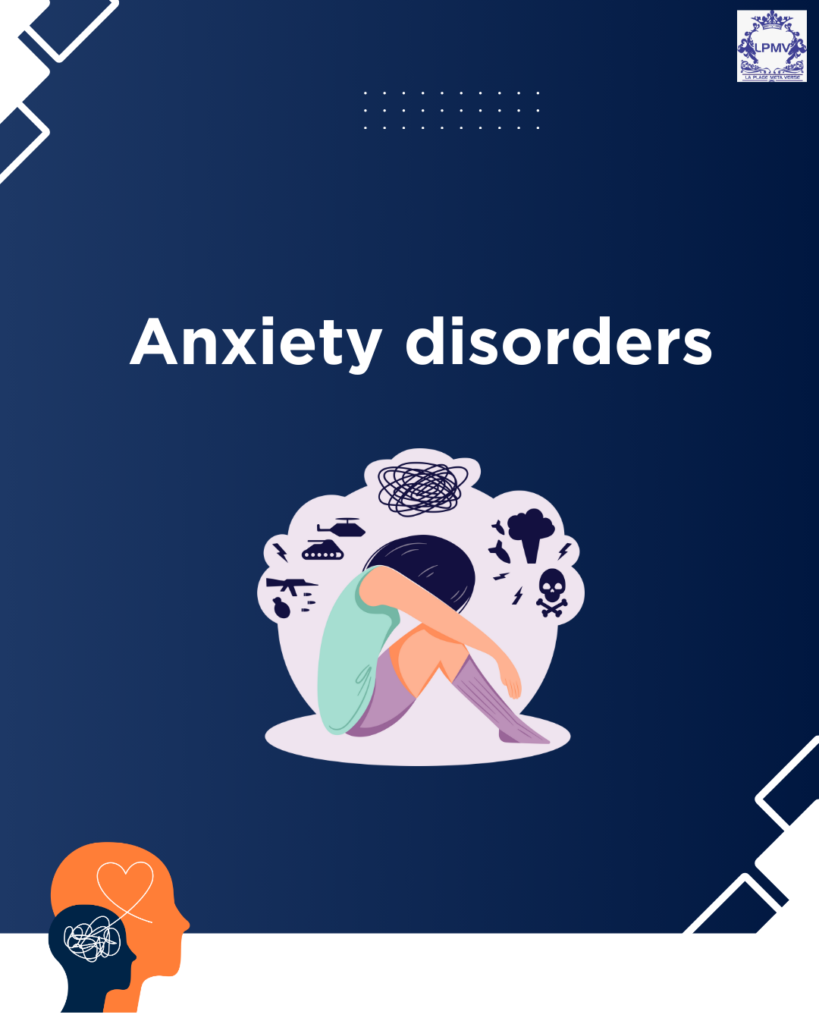
Anxiety Disorders
Anxiety is a normal human emotion that everyone experiences from time to time. Feeling nervous before an examination, job interview, presentation, or major life event is a natural response to stress and uncertainty.
However, when anxiety becomes persistent, excessive, difficult to control, and begins to interfere with daily functioning, it may indicate the presence of an anxiety disorder.
Anxiety disorders are among the most common mental health conditions worldwide. They can affect people of all ages and backgrounds and may significantly impact a person’s emotional wellbeing, relationships, education, employment, and quality of life.
Individuals living with anxiety disorders often experience intense fear, worry, or apprehension that is disproportionate to the actual situation. These feelings can be overwhelming and may persist even when there is no immediate threat or danger.
Common Signs and Symptoms of Anxiety Disorders
People experiencing anxiety disorders may display some or all of the following symptoms:
✔ Excessive and persistent worry about everyday situations
✔ Difficulty controlling anxious thoughts
✔ Feeling restless, tense, or constantly “on edge”
✔ Irritability and heightened sensitivity to stress
✔ Difficulty concentrating or focusing
✔ Racing thoughts and constant anticipation of negative outcomes
✔ Sleep disturbances, including difficulty falling or staying asleep
✔ Fatigue resulting from ongoing mental and physical tension
Physical Symptoms
Anxiety often produces physical symptoms that can sometimes be mistaken for medical conditions.
These may include:
✔ Rapid heartbeat or heart palpitations
✔ Sweating
✔ Trembling or shaking
✔ Shortness of breath
✔ Chest discomfort
✔ Dizziness or light-headedness
✔ Muscle tension
✔ Nausea or stomach discomfort
✔ Headaches
Avoidance Behaviours
Many individuals with anxiety disorders begin avoiding situations that trigger their anxiety.
Examples include:
✔ Avoiding social gatherings
✔ Avoiding public speaking
✔ Avoiding travel or unfamiliar places
✔ Avoiding work, school, or social responsibilities
Although avoidance may provide temporary relief, it often reinforces anxiety and may lead to greater difficulties over time.
Panic Attacks
Some individuals may experience panic attacks.
A panic attack is a sudden episode of intense fear or discomfort that develops rapidly and may include:
✔ Racing heart
✔ Chest pain
✔ Sweating
✔ Trembling
✔ Shortness of breath
✔ Dizziness
✔ Feelings of losing control
✔ Fear of dying or something terrible happening
While panic attacks can be frightening, they are treatable and should always be taken seriously.
Common Myths About Anxiety Disorders
Mental Health Officers should challenge misconceptions that contribute to stigma and misunderstanding.
Myth: “People with anxiety are just overreacting.”
Fact: Anxiety disorders involve genuine psychological and physical symptoms that can significantly affect daily functioning.
Myth: “Anxiety is not a real illness.”
Fact: Anxiety disorders are recognized mental health conditions that can require professional assessment and treatment.
Myth: “People should simply calm down and stop worrying.”
Fact: Anxiety disorders cannot be overcome through willpower alone. Effective management often requires support, coping strategies, therapy, and sometimes medication.
The Role of the Mental Health Officer
Mental Health Officers play an important role in recognizing anxiety-related concerns and supporting individuals appropriately.
Your responsibilities include:
✔ Recognizing signs and symptoms of anxiety
✔ Listening without judgment
✔ Providing reassurance and emotional support
✔ Encouraging healthy coping strategies
✔ Promoting stress management and wellbeing
✔ Referring individuals for professional assessment when appropriate
✔ Recognizing when symptoms are severe or significantly affecting daily functioning
Key Message
Anxiety disorders are common, real, and treatable mental health conditions.
Early recognition and intervention can prevent symptoms from worsening and help individuals regain confidence, functioning, and quality of life.
Never dismiss persistent anxiety as simply “worrying too much.” Behind excessive fear and worry may be a person struggling with a condition that deserves understanding, support, and professional care.
Remember: anxiety can be invisible to others, but it can be overwhelming for the person experiencing it. Compassionate recognition and timely support can make a significant difference in recovery and wellbeing.
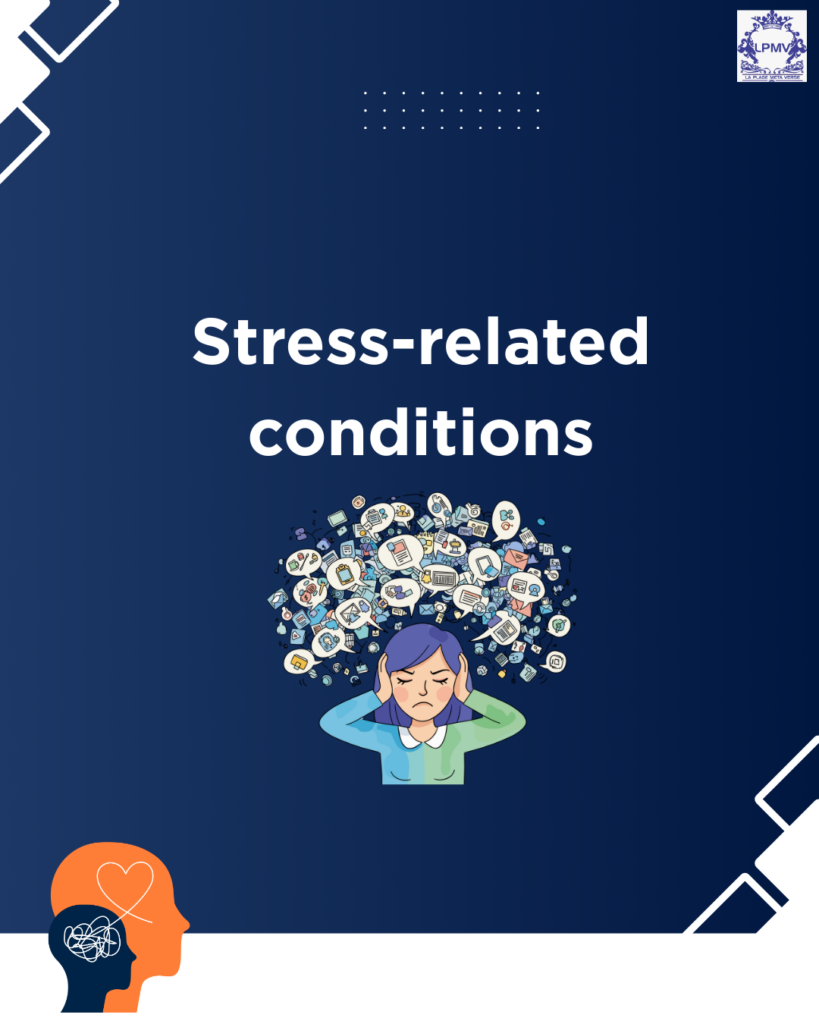
Stress-Related Conditions
Stress is a normal part of life. Everyone experiences stress at different times in response to challenges, changes, responsibilities, or unexpected events. In many situations, stress can be helpful by motivating individuals to meet deadlines, solve problems, or respond to demanding situations.
However, when stress becomes prolonged, overwhelming, or poorly managed, it can have significant effects on both mental and physical health. Chronic stress can interfere with daily functioning, reduce quality of life, and increase the risk of developing mental and physical health conditions.
Stress-related conditions occur when the body’s natural stress response remains activated for extended periods, placing strain on emotional wellbeing, cognitive functioning, and physical health.
Common Signs and Symptoms of Stress-Related Conditions
Individuals experiencing chronic stress may display a combination of emotional, physical, behavioural, and cognitive symptoms.
Emotional Symptoms
✔ Irritability and frustration
✔ Mood swings
✔ Feeling overwhelmed
✔ Increased anxiety or worry
✔ Emotional exhaustion
✔ Reduced motivation
Physical Symptoms
✔ Persistent fatigue
✔ Headaches
✔ Muscle tension and body aches
✔ Stomach discomfort or digestive problems
✔ Increased heart rate
✔ Elevated blood pressure
✔ Frequent illness due to reduced immune function
Cognitive Symptoms
✔ Difficulty concentrating
✔ Memory problems
✔ Indecisiveness
✔ Racing thoughts
✔ Reduced ability to solve problems effectively
Behavioural Symptoms
✔ Social withdrawal
✔ Reduced productivity
✔ Increased absenteeism
✔ Changes in eating habits
✔ Increased use of unhealthy coping behaviours
✔ Difficulty maintaining responsibilities
Burnout
One of the most common stress-related conditions is burnout.
Burnout is a state of physical, emotional, and mental exhaustion caused by prolonged exposure to chronic stress, particularly in work, caregiving, academic, or high-responsibility environments.
Common features of burnout include:
✔ Emotional exhaustion
✔ Feeling detached or disconnected from work or responsibilities
✔ Reduced motivation and enthusiasm
✔ Declining performance
✔ Feelings of cynicism or hopelessness
✔ Difficulty maintaining professional effectiveness
Burnout can affect students, healthcare workers, caregivers, teachers, business professionals, and anyone exposed to prolonged stress.
Common Myths About Stress
Mental Health Officers should challenge misconceptions that may prevent people from seeking support.
Myth: “Stress is just part of life, so nothing can be done about it.”
Fact: While stress is a normal part of life, chronic stress can be managed and reduced through healthy coping strategies, support, and intervention.
Myth: “People who cannot handle stress are weak.”
Fact: Anyone can become overwhelmed when exposed to prolonged or intense stress. Stress-related difficulties are not a sign of weakness.
Myth: “Stress only affects mental health.”
Fact: Chronic stress affects both the mind and body and can contribute to serious physical health problems.
Potential Consequences of Chronic Stress
When left unaddressed, chronic stress may contribute to:
✔ Anxiety disorders
✔ Depression
✔ Burnout
✔ Sleep disorders
✔ Relationship difficulties
✔ Reduced work or academic performance
✔ Substance misuse
✔ Cardiovascular disease
✔ High blood pressure
✔ Weakened immune functioning
The longer chronic stress persists, the greater the risk of long-term health consequences.
The Role of the Mental Health Officer
Mental Health Officers play an important role in recognizing stress-related difficulties and promoting healthy coping strategies.
Your responsibilities include:
✔ Identifying signs of chronic stress and burnout
✔ Encouraging healthy stress management practices
✔ Promoting self-care and wellbeing
✔ Supporting individuals experiencing emotional strain
✔ Encouraging early help-seeking
✔ Referring individuals for professional support when symptoms become severe or persistent
Key Message
Stress is a normal part of life, but chronic stress is not harmless.
When stress becomes prolonged and overwhelming, it can affect emotional wellbeing, physical health, relationships, academic performance, and workplace productivity.
Early recognition, healthy coping strategies, supportive relationships, lifestyle adjustments, and professional intervention can significantly reduce the impact of stress-related conditions.
Remember: many people suffering from chronic stress continue to function outwardly while struggling internally. Recognizing the warning signs early can prevent burnout, improve wellbeing, and support long-term mental and physical health.
Substance Use Disorders
Substance Use Disorders (SUDs) are mental health conditions characterized by the continued use of alcohol, drugs, or other substances despite harmful consequences. These disorders affect the brain, behaviour, decision-making, relationships, physical health, and overall functioning.
Substance use disorders are not simply a matter of poor choices, lack of discipline, or moral weakness. They are complex health conditions influenced by biological, psychological, social, environmental, and genetic factors.
While some individuals may begin using substances recreationally or experimentally, repeated use can alter brain function and lead to dependence, making it increasingly difficult to stop without support or treatment.
Commonly Misused Substances
Substance use disorders may involve:
✔ Alcohol
✔ Cannabis (Marijuana)
✔ Opioids
✔ Cocaine
✔ Methamphetamine and other stimulants
✔ Prescription medications used improperly
✔ Inhalants and other psychoactive substances
Different substances affect the body and brain in different ways, but all have the potential to cause significant harm when misused.
Common Signs and Symptoms
Individuals experiencing a substance use disorder may display the following:
Cravings and Loss of Control
✔ Strong urges or cravings to use a substance
✔ Difficulty reducing or stopping use
✔ Repeated unsuccessful attempts to quit
✔ Spending significant time obtaining, using, or recovering from substance use
Tolerance
✔ Needing larger amounts of the substance to achieve the desired effect
✔ Reduced effect from the same amount previously used
Withdrawal Symptoms
When substance use is reduced or stopped, individuals may experience:
✔ Anxiety or agitation
✔ Trembling
✔ Sweating
✔ Nausea or vomiting
✔ Sleep disturbances
✔ Irritability
✔ Intense cravings
✔ Physical discomfort
Withdrawal symptoms vary depending on the substance involved and may require medical supervision in some cases.
Impact on Daily Functioning
✔ Poor performance at work or school
✔ Frequent absences
✔ Neglect of responsibilities
✔ Financial difficulties
✔ Relationship problems
✔ Declining physical health
✔ Reduced personal care and hygiene
Risk-Taking Behaviours
✔ Driving while impaired
✔ Unsafe sexual practices
✔ Aggressive or impulsive behaviour
✔ Involvement in illegal activities related to substance use
Social and Emotional Changes
✔ Withdrawal from family and friends
✔ Loss of interest in hobbies and activities
✔ Increased secrecy or dishonesty
✔ Mood swings and emotional instability
✔ Isolation from supportive relationships
Common Myths About Substance Use Disorders
Mental Health Officers should actively challenge harmful misconceptions.
Myth: “Addiction is a moral failing.”
Fact: Substance use disorders are recognized health conditions that involve changes in brain function, behaviour, and decision-making.
Myth: “People can stop whenever they want if they try hard enough.”
Fact: Recovery often requires professional support, treatment, and ongoing management. Willpower alone is often insufficient.
Myth: “Substance use is only a problem when someone loses their job or education.”
Fact: Harm can occur long before major life consequences become obvious. Early intervention is essential.
Impact of Substance Use Disorders
Without treatment, substance use disorders may contribute to:
✔ Mental health problems such as anxiety and depression
✔ Relationship breakdown
✔ Family conflict
✔ Financial hardship
✔ Poor educational or occupational outcomes
✔ Physical health complications
✔ Increased risk of injury or accidents
✔ Legal difficulties
✔ Social isolation
The effects often extend beyond the individual and impact families, workplaces, and communities.
The Role of the Mental Health Officer
Mental Health Officers play a vital role in identifying concerns and supporting recovery.
Your responsibilities include:
✔ Recognizing warning signs of substance misuse
✔ Providing non-judgmental support
✔ Challenging stigma and misconceptions
✔ Encouraging help-seeking behaviour
✔ Promoting healthy coping strategies
✔ Referring individuals to appropriate treatment and support services
✔ Supporting recovery-oriented approaches
Recovery and Treatment
Recovery is possible, and many individuals successfully overcome substance use disorders with appropriate support.
Treatment may include:
✔ Counselling and psychotherapy
✔ Support groups and peer support programs
✔ Family involvement and support
✔ Rehabilitation services
✔ Relapse prevention strategies
✔ Medication-assisted treatment when appropriate
✔ Ongoing recovery planning
Key Message
Substance use disorders are treatable mental health conditions, not character flaws.
Early recognition, compassionate support, and timely intervention can significantly improve outcomes and support long-term recovery.
As a Mental Health Officer, your role is not to judge or blame, but to recognize concerns, offer support, reduce stigma, and help connect individuals with the services they need.
Remember: behind every person struggling with substance use is a human being who deserves dignity, understanding, hope, and an opportunity for recovery.
Trauma-Related Conditions
Trauma is an emotional and psychological response to an event, series of events, or circumstances that an individual experiences as physically or emotionally harmful, threatening, or overwhelming. Traumatic experiences can affect a person’s sense of safety, wellbeing, and ability to cope with everyday life.
While many people recover from traumatic experiences with time and support, others may develop trauma-related conditions that significantly affect their mental, emotional, physical, and social functioning.
Trauma can affect people of all ages, backgrounds, and cultures. The impact of a traumatic event varies from person to person, and not everyone responds to trauma in the same way.
Common Causes of Trauma
Trauma may result from:
✔ Physical, emotional, or sexual abuse
✔ Domestic violence
✔ Serious accidents or injuries
✔ Natural disasters
✔ Armed conflict or terrorism
✔ Sudden loss of a loved one
✔ Serious illness or medical emergencies
✔ Neglect or childhood adversity
✔ Witnessing violence or traumatic events
✔ Prolonged exposure to highly stressful situations
Some individuals experience a single traumatic event, while others may experience repeated or ongoing trauma over an extended period.
Common Signs and Symptoms of Trauma-Related Conditions
Individuals affected by trauma may experience symptoms in several areas.
Intrusive Experiences
✔ Distressing memories of the traumatic event
✔ Flashbacks or feeling as though the event is happening again
✔ Unwanted thoughts or images related to the trauma
✔ Emotional distress when reminded of the event
Avoidance Behaviours
✔ Avoiding people, places, or situations associated with the trauma
✔ Avoiding conversations about the event
✔ Avoiding thoughts or feelings connected to the experience
Hyperarousal and Increased Alertness
✔ Feeling constantly “on edge”
✔ Being easily startled
✔ Irritability or anger outbursts
✔ Difficulty relaxing
✔ Constant scanning for danger
Emotional and Psychological Changes
✔ Emotional numbness
✔ Feelings of detachment from others
✔ Loss of interest in previously enjoyable activities
✔ Persistent fear, sadness, guilt, or shame
✔ Difficulty trusting others
Sleep Disturbances
✔ Difficulty falling asleep
✔ Frequent waking during the night
✔ Nightmares related to the traumatic event
✔ Poor-quality sleep
Physical Symptoms
Trauma can also affect physical health.
Common symptoms may include:
✔ Headaches
✔ Muscle tension
✔ Fatigue
✔ Stomach discomfort or digestive problems
✔ Increased heart rate
✔ General physical discomfort without an obvious medical cause
Post-Traumatic Stress Disorder (PTSD)
Some individuals may develop a trauma-related condition known as Post-Traumatic Stress Disorder (PTSD).
PTSD may occur when trauma symptoms persist over time and significantly interfere with daily functioning. Symptoms often include intrusive memories, avoidance, hyperarousal, emotional distress, and difficulty functioning in everyday life.
Not everyone who experiences trauma develops PTSD, but those who do often require professional assessment and treatment.
Common Myths About Trauma
Mental Health Officers should challenge misconceptions that may prevent recovery.
Myth: “Time automatically heals all trauma.”
Fact: While many people recover naturally, some individuals continue to experience significant symptoms and may require professional support.
Myth: “If someone looks fine, they must have moved on.”
Fact: Trauma is often invisible. Individuals may appear to function normally while experiencing significant internal distress.
Myth: “Talking about trauma always makes things worse.”
Fact: Safe, supportive, and professionally guided discussions can be an important part of healing and recovery.
The Role of the Mental Health Officer
Mental Health Officers play an important role in recognizing trauma-related difficulties and providing trauma-informed support.
Your responsibilities include:
✔ Recognizing signs and symptoms of trauma
✔ Creating a safe and supportive environment
✔ Listening without judgment
✔ Respecting an individual’s pace and readiness to share
✔ Avoiding blame or criticism
✔ Encouraging access to professional support
✔ Referring individuals when symptoms significantly affect functioning
Trauma-Informed Practice
When supporting individuals affected by trauma:
✔ Prioritize safety and trust
✔ Show empathy and compassion
✔ Respect personal boundaries
✔ Empower individuals to make choices about their care
✔ Recognize that trauma responses are often survival responses
✔ Avoid actions that may re-traumatize the individual
Key Message
Trauma can have profound and lasting effects on mental health, relationships, physical wellbeing, and daily functioning.
However, recovery is possible. With understanding, support, appropriate intervention, and access to professional care, many individuals successfully heal and rebuild their lives.
As a Mental Health Officer, your ability to recognize trauma, respond compassionately, and connect individuals with appropriate support can play a significant role in their recovery journey.
Remember: trauma may be invisible to others, but its effects are real. Every trauma-informed interaction has the potential to promote healing, restore hope, and support recovery.
Module 3: Roles of a Mental Health Officer (Entry Level)
Welcome to Module 3.
As a Mental Health Officer, you play an important role in promoting mental wellbeing, recognizing mental health concerns, and supporting individuals who may be experiencing emotional, psychological, or behavioural difficulties.
Mental Health Officers are often among the first people to notice when someone is struggling. Whether working in healthcare settings, community services, educational environments, residential care, workplaces, or support programs, your actions can contribute significantly to early intervention, improved outcomes, and enhanced quality of life.
Although Mental Health Officers do not diagnose mental health conditions or provide specialist psychiatric treatment, they serve as an essential part of the mental health support system. Through observation, communication, education, and appropriate referral, they help individuals access the care and support they need.
Why Your Role Matters
Many people experiencing mental health difficulties do not immediately seek professional help. Some may be unaware that they need support, while others may avoid seeking assistance because of fear, stigma, embarrassment, or lack of knowledge.
As a Mental Health Officer, you may be in a position to:
✔ Recognize early warning signs of distress
✔ Identify changes in behaviour, mood, or functioning
✔ Provide emotional support and encouragement
✔ Promote mental health awareness
✔ Encourage help-seeking behaviour
✔ Connect individuals with appropriate services
✔ Support recovery and wellbeing
Early recognition and timely intervention can reduce suffering, prevent crises, and improve long-term outcomes.
Core Principles of the Role
Effective Mental Health Officers demonstrate:
✔ Compassion and empathy
✔ Respect for dignity and human rights
✔ Professionalism and accountability
✔ Confidentiality and ethical practice
✔ Good communication skills
✔ Cultural awareness and sensitivity
✔ Commitment to continuous learning
These principles guide every interaction and help build trust with those receiving support.
What You Will Learn in This Module
In this module, you will explore:
✔ The responsibilities of an entry-level Mental Health Officer
✔ Professional boundaries and scope of practice
✔ Observation and early identification of concerns
✔ Communication and active listening skills
✔ Mental health education and advocacy
✔ Supporting individuals and families
✔ Documentation and reporting responsibilities
✔ Referral pathways and escalation procedures
✔ Working as part of a multidisciplinary team
✔ Ethical and professional conduct
Understanding Your Impact
It is important not to underestimate the influence of your role.
A simple conversation may encourage someone to seek help.
A careful observation may identify a developing crisis.
A timely referral may prevent a condition from worsening.
A supportive presence may help someone feel understood during one of the most difficult periods of their life.
Mental Health Officers do not work alone, but they often play a crucial role in ensuring that individuals receive the right support at the right time.
Key Message
Mental Health Officers are not expected to have all the answers. Their role is to recognize concerns, provide appropriate support, promote wellbeing, and help individuals access professional care when needed.
Through awareness, observation, compassion, and action, Mental Health Officers contribute to safer environments, healthier communities, and improved mental health outcomes.
Remember: every interaction matters. Every person deserves to be treated with dignity and respect. Your ability to listen, observe, support, and respond appropriately can make a meaningful difference in the lives of those you serve.
As you progress through this module, keep one principle in mind:
Recognize. Support. Refer.
These three actions form the foundation of effective Mental Health Officer practice.
Scope of Practice (Entry-Level Mental Health Officer)
Understanding your scope of practice is a fundamental responsibility of every Mental Health Officer.
A scope of practice defines the activities, responsibilities, and duties that an individual is trained, competent, authorized, and ethically permitted to perform within their role. It also identifies the limits of that role and clarifies when additional support, supervision, or referral is required.
As an Entry-Level Mental Health Officer, your role is primarily supportive, observational, educational, and preventive. You are an important part of the mental health support system, but you are not expected to perform the functions of psychiatrists, psychologists, mental health nurses, or other licensed clinicians.
Recognizing the boundaries of your role is essential for ensuring safe, ethical, and effective practice.
What Is Within Your Scope of Practice?
As a Mental Health Officer, you are expected to:
✔ Observe and recognize early warning signs of mental health difficulties
✔ Monitor changes in behaviour, mood, functioning, and wellbeing
✔ Provide basic emotional support and psychological first aid
✔ Listen actively and communicate with empathy and respect
✔ Promote mental health awareness and education
✔ Encourage healthy coping strategies and self-care practices
✔ Support individuals in accessing appropriate services
✔ Maintain accurate records and documentation
✔ Report concerns through appropriate channels
✔ Maintain confidentiality and professional boundaries
✔ Participate in multidisciplinary care and support teams
✔ Refer individuals to qualified professionals when concerns exceed your level of competence
What Is Outside Your Scope of Practice?
Mental Health Officers must not:
✖ Diagnose mental disorders
✖ Prescribe medications
✖ Adjust, stop, or recommend changes to prescribed treatments
✖ Conduct psychological testing or formal clinical assessments beyond their training
✖ Provide specialist psychotherapy or counselling requiring professional licensure
✖ Make guarantees regarding treatment outcomes or recovery
✖ Manage complex or high-risk situations independently without appropriate supervision or referral
✖ Present themselves as psychiatrists, psychologists, therapists, or licensed clinicians when they are not
✖ Operate beyond their level of training, competence, or authorization
Why Scope of Practice Matters
Working outside your scope can have serious consequences.
Potential risks include:
✖ Delayed access to appropriate treatment
✖ Misidentification of serious mental health conditions
✖ Harm to the individual receiving support
✖ Ethical violations
✖ Legal and professional consequences
✖ Loss of trust from clients and colleagues
Maintaining professional boundaries protects everyone involved and helps ensure individuals receive the right level of care from the right professionals.
Knowing When to Refer
One of the most important skills of a Mental Health Officer is recognizing when a situation requires additional expertise.
Referral should be considered when:
✔ Symptoms are severe or worsening
✔ Functioning is significantly impaired
✔ The individual requires specialist assessment
✔ There are concerns about safety
✔ The situation exceeds your training or competence
✔ Progress is not being made with available support
Referral is not a sign of failure. It is a sign of professional responsibility.
Working as Part of a Team
Mental health care is most effective when professionals work collaboratively.
Mental Health Officers contribute valuable observations and support, while other professionals may provide:
✔ Diagnosis
✔ Psychological therapies
✔ Medication management
✔ Crisis intervention
✔ Specialist treatment planning
Your role is to support the individual and work effectively within the wider care system.
Professional Responsibility
Being a professional does not mean knowing everything. It means understanding both your capabilities and your limitations.
Effective Mental Health Officers:
✔ Work within their training
✔ Seek guidance when needed
✔ Escalate concerns appropriately
✔ Continue developing their knowledge and skills
✔ Prioritize the wellbeing and safety of the individuals they support
Mental Health Officer Takeaway
Your greatest strengths are not diagnosis or treatment.
Your greatest strengths are:
✔ Observation
✔ Communication
✔ Compassion
✔ Early recognition
✔ Appropriate support
✔ Timely referral
Remember:
You do not need to do everything.
You need to do the right things, at the right time, for the right reasons.
Understanding your scope of practice protects the individual, protects the profession, and protects you.
What a Mental Health Officer CAN and CANNOT Do (Entry Level)
One of the most important responsibilities of an Entry-Level Mental Health Officer is understanding the boundaries of their role.
Mental Health Officers provide valuable support to individuals experiencing mental health challenges, but they are not licensed clinicians and should not perform tasks that require specialist training, professional registration, or advanced clinical expertise.
Understanding what you can and cannot do helps ensure safe, ethical, and effective care while protecting both the individual and the professional.
What a Mental Health Officer CAN Do
As an Entry-Level Mental Health Officer, you are expected to:
Observation and Recognition
✔ Observe and recognize early signs of mental health difficulties
✔ Monitor changes in mood, behaviour, thinking, and functioning
✔ Identify warning signs that may require further assessment
Emotional Support
✔ Provide basic emotional support
✔ Offer psychological first aid when appropriate
✔ Listen actively, respectfully, and without judgment
✔ Create a supportive and safe environment for communication
Education and Awareness
✔ Promote mental health awareness
✔ Provide basic mental health education
✔ Encourage healthy coping strategies and self-care practices
✔ Help reduce stigma associated with mental health conditions
Communication and Advocacy
✔ Encourage individuals to seek appropriate support
✔ Support communication between individuals, families, and services
✔ Advocate for respectful and person-centred care
Documentation and Reporting
✔ Document observations accurately and objectively
✔ Report concerns through appropriate professional channels
✔ Share relevant information according to organizational policies
Referral and Support
✔ Refer individuals to qualified professionals when concerns exceed your role
✔ Support care plans developed by licensed professionals
✔ Assist individuals in accessing available services and resources
✔ Participate as part of a multidisciplinary team
What a Mental Health Officer CANNOT Do
Mental Health Officers must not perform duties that fall outside their level of training or professional authority.
Clinical Responsibilities Outside Your Role
✖ Diagnose mental health disorders
✖ Conduct formal psychiatric or psychological assessments beyond your competence
✖ Determine clinical diagnoses
Medication Responsibilities
✖ Prescribe medication
✖ Recommend specific medications
✖ Change medication dosages
✖ Instruct individuals to stop taking prescribed medication
Specialist Treatment Responsibilities
✖ Provide psychotherapy requiring specialist clinical qualifications
✖ Deliver advanced clinical interventions without appropriate training
✖ Develop independent treatment plans for complex mental health conditions
High-Risk Situations
✖ Manage serious mental health crises alone
✖ Handle situations involving significant risk without escalation
✖ Delay referral when urgent professional intervention is required
Professional Boundaries
✖ Promise recovery or guaranteed outcomes
✖ Give advice outside your competence
✖ Replace psychiatrists, psychologists, or licensed clinicians
✖ Breach confidentiality without lawful or professional justification
✖ Form inappropriate personal relationships with clients
Why These Boundaries Matter
Professional boundaries exist to protect everyone involved.
When Mental Health Officers operate outside their scope of practice, the consequences may include:
✖ Delayed diagnosis and treatment
✖ Increased risk to the individual
✖ Ethical violations
✖ Legal consequences
✖ Reduced quality of care
✖ Loss of professional credibility
Good intentions alone do not replace professional training and clinical expertise.
Recognizing your limits is not a weakness—it is a professional strength.
The Three Golden Rules
As an Entry-Level Mental Health Officer, remember:
Support, Don’t Diagnose
Your role is to recognize concerns and provide support, not to determine medical or psychiatric diagnoses.
Guide, Don’t Treat
You may provide education, encouragement, and basic support, but specialist treatment belongs to qualified clinicians.
Refer, Don’t Replace
When a person’s needs exceed your role, timely referral is one of the most important actions you can take.
Mental Health Officer Takeaway
The most effective Mental Health Officers are not those who try to do everything.
They are those who know:
✔ What they can do
✔ What they cannot do
✔ When to seek guidance
✔ When to escalate concerns
✔ When to refer appropriately
Your professional value lies in:
✔ Awareness
✔ Observation
✔ Communication
✔ Compassion
✔ Documentation
✔ Referral
Remember:
Support, don’t diagnose.
Guide, don’t treat.
Refer, don’t replace.
Following these principles helps ensure safe, ethical, and effective mental health support for every individual you serve.
Working Within Professional Boundaries
Professional boundaries are an essential part of safe, ethical, and effective mental health practice. They help define the appropriate relationship between a Mental Health Officer and the individuals they support.
Professional boundaries are not about being distant, uncaring, or unfriendly. Rather, they create a framework that protects the wellbeing of the individual, maintains professional integrity, and supports effective care.
When boundaries are clear and consistently maintained, trust, respect, safety, and professionalism are strengthened. When boundaries become blurred or are crossed, there is an increased risk of harm, ethical concerns, and compromised care.
As a Mental Health Officer, your role is to provide support, guidance, and appropriate assistance—not to become a friend, family member, rescuer, or substitute support system.
Why Professional Boundaries Matter
Professional boundaries help to:
✔ Protect the rights and wellbeing of individuals receiving support
✔ Maintain trust and professional credibility
✔ Prevent exploitation, favoritism, or dependency
✔ Support objective decision-making
✔ Reduce the risk of ethical and legal concerns
✔ Protect Mental Health Officers from emotional exhaustion and burnout
Healthy boundaries allow professionals to provide compassionate care while maintaining appropriate professional distance.
Characteristics of Healthy Professional Boundaries
Mental Health Officers should:
✔ Maintain respectful and professional relationships at all times
✔ Show empathy and compassion without becoming emotionally over-involved
✔ Communicate honestly about their role and limitations
✔ Treat all individuals fairly and professionally
✔ Respect confidentiality and privacy
✔ Follow organizational policies and professional guidelines
✔ Use appropriate communication channels
✔ Seek supervision or guidance when boundary concerns arise
✔ End professional interactions appropriately when services conclude
Healthy boundaries promote both effective support and professional accountability.
Examples of Appropriate Professional Practice
A Mental Health Officer may:
✔ Listen actively to an individual’s concerns
✔ Provide emotional support within their role
✔ Offer education about mental health and wellbeing
✔ Encourage healthy coping strategies
✔ Refer individuals to appropriate services
✔ Work collaboratively with families and professionals when appropriate
✔ Maintain professional communication and documentation
These activities support the individual’s wellbeing while maintaining professional integrity.
Boundary Violations to Avoid
Mental Health Officers must avoid behaviours that compromise professional relationships.
Examples include:
✖ Becoming emotionally dependent on a client
✖ Encouraging a client to become dependent on you
✖ Sharing excessive personal information
✖ Discussing your personal problems with clients
✖ Providing personal phone numbers or private contact information without authorization
✖ Connecting with clients through personal social media accounts
✖ Accepting gifts, money, loans, or significant favours
✖ Engaging in inappropriate physical contact
✖ Entering into personal, financial, romantic, or business relationships with clients
✖ Continuing unnecessary contact after the professional relationship has ended
Even when intentions are positive, these actions can create confusion, dependency, and ethical concerns.
Recognizing Boundary Warning Signs
Mental Health Officers should remain alert to situations that may indicate boundary concerns.
Warning signs may include:
✔ Thinking about a client excessively outside work responsibilities
✔ Feeling responsible for “saving” a client
✔ Providing special treatment unavailable to others
✔ Keeping secrets about professional interactions
✔ Feeling uncomfortable discussing your actions with a supervisor
✔ Ignoring organizational policies because you believe your situation is different
When these signs appear, supervision and professional guidance should be sought promptly.
Maintaining Professional Boundaries
To maintain healthy boundaries:
✔ Understand your role and scope of practice
✔ Follow organizational policies
✔ Seek supervision when uncertain
✔ Document interactions appropriately
✔ Communicate clearly and professionally
✔ Maintain self-awareness regarding emotional involvement
✔ Refer concerns through appropriate channels
Good boundary management requires ongoing reflection and professional discipline.
The Balance Between Empathy and Professionalism
One of the most important skills for a Mental Health Officer is learning how to balance compassion with professional responsibility.
Too little empathy can make support feel impersonal and ineffective.
Too little professional distance can lead to over-involvement, poor judgment, and burnout.
Effective mental health support requires both.
You can care deeply about an individual while maintaining clear professional boundaries.
Mental Health Officer Takeaway
Professional boundaries are not barriers to care—they are safeguards that make care safer and more effective.
Maintaining boundaries does not mean caring less.
It means caring responsibly, ethically, and professionally.
Remember:
Empathy without boundaries can lead to over-involvement and burnout.
Boundaries without empathy can feel cold and impersonal.
Professional mental health practice requires both compassion and boundaries working together.
By maintaining healthy professional boundaries, you protect the individual, the profession, and yourself while providing the highest standard of support possible.
Importance of Referral
Referral is a fundamental component of safe and effective mental health practice. It is the process of connecting an individual with a professional, service, or specialist who possesses the expertise, authority, and resources needed to address concerns that exceed the Mental Health Officer’s scope of practice.
Referral should never be viewed as a sign of failure, lack of knowledge, or inability to help. On the contrary, recognizing when referral is needed demonstrates professional judgment, ethical responsibility, and commitment to the wellbeing of the individual.
One of the most important skills a Mental Health Officer can develop is knowing when a situation requires additional support and acting promptly to ensure appropriate care is provided.
Why Referral Is Important
Timely referral helps to:
✔ Ensure individuals receive specialized assessment and treatment
✔ Prevent mental health conditions from worsening
✔ Promote early intervention and recovery
✔ Reduce the risk of harm to the individual or others
✔ Support continuity of care
✔ Strengthen collaboration within the multidisciplinary care team
✔ Protect the Mental Health Officer from working beyond their competence
✔ Improve overall outcomes for individuals and families
Referral ensures that the right person receives the right support at the right time.
Consequences of Delayed or Missed Referral
Failure to refer appropriately may result in serious consequences.
Potential risks include:
✖ Worsening mental health symptoms
✖ Increased distress and suffering
✖ Delayed diagnosis and treatment
✖ Increased risk of crisis situations
✖ Reduced trust in services and professionals
✖ Greater burden on families and caregivers
✖ Ethical and professional concerns
✖ Increased stress and burnout for the Mental Health Officer
What begins as a manageable concern may develop into a serious crisis if appropriate referral is delayed.
Situations That May Require Referral
Mental Health Officers should consider referral whenever an individual’s needs exceed their level of training, competence, or authority.
Examples include:
✔ Persistent or worsening symptoms
✔ Significant impairment in daily functioning
✔ Severe anxiety, depression, or emotional distress
✔ Trauma-related difficulties requiring specialist support
✔ Substance use concerns that require clinical intervention
✔ Complex mental health presentations
✔ Repeated failure to improve despite basic support measures
✔ Situations involving multiple risk factors or complications
When in doubt, consultation with a supervisor or senior professional is recommended.
Situations Requiring Urgent Referral or Escalation
Some circumstances require immediate action and urgent referral.
These may include:
✔ Significant risk of harm to self
✔ Significant risk of harm to others
✔ Severe behavioural disturbance
✔ Loss of contact with reality
✔ Serious substance-related complications
✔ Acute mental health crises
✔ Sudden and severe deterioration in functioning
✔ Any situation where immediate safety is a concern
In these situations, Mental Health Officers should follow organizational policies and emergency procedures without delay.
The Referral Process
Effective referral involves more than simply directing someone elsewhere.
A good referral process includes:
✔ Identifying the need for specialist support
✔ Explaining the referral process clearly to the individual
✔ Obtaining consent when appropriate and required
✔ Providing accurate and relevant information
✔ Following organizational procedures
✔ Documenting actions taken
✔ Ensuring continuity of care
✔ Following up when appropriate within your role
The goal is to support a smooth transition to the appropriate level of care.
Referral Is Part of Teamwork
Mental health care works best when professionals collaborate.
Mental Health Officers are valuable members of the care team and contribute by:
✔ Identifying concerns early
✔ Providing ongoing support
✔ Sharing relevant observations
✔ Encouraging engagement with services
✔ Supporting care plans developed by specialists
Referral does not end your involvement; it changes your role within the support process.
Overcoming Referral Hesitation
Some professionals hesitate to refer because they fear appearing inexperienced or worry that they are abandoning the individual.
These concerns are understandable but misplaced.
Referral demonstrates:
✔ Professional maturity
✔ Ethical decision-making
✔ Respect for client safety
✔ Commitment to quality care
The goal is not to manage every situation independently. The goal is to ensure individuals receive the most appropriate support available.
Mental Health Officer Takeaway
One of the most important questions you can ask yourself is:
“Is this situation within my competence and scope of practice?”
If the answer is uncertain, seek guidance and consider referral.
Remember:
✔ Early referral is often better than delayed referral.
✔ Asking for help is a professional strength.
✔ Client safety always comes first.
Key Message
Referral is not failure.
Referral is responsible practice.
Knowing when to refer protects the individual, supports recovery, strengthens the mental health system, and helps ensure that every person receives the level of care they need.
Remember these three principles:
When in doubt, refer.
When unsure, seek guidance.
When risk is present, escalate immediately.
Module 4: Basic Observation and Early Warning Signs
Welcome to Module 4.
One of the most valuable skills a Mental Health Officer can develop is the ability to recognize early warning signs of mental health difficulties. Many mental health crises do not occur without warning. In many cases, there are noticeable changes in behaviour, mood, thinking, relationships, or daily functioning long before a crisis develops.
Unfortunately, these early signs are often overlooked, misunderstood, or dismissed as temporary stress, personality traits, or normal life challenges. As a result, opportunities for early intervention may be missed.
As a Mental Health Officer, your role is not to diagnose mental health conditions. However, you are often in a unique position to observe changes that may indicate someone is struggling and may require additional support.
Observation is more than simply looking at someone. It involves paying attention to patterns, behaviours, emotions, communication, and functioning in a purposeful and professional manner. Effective observation helps identify concerns early, supports timely intervention, and can significantly improve outcomes.
Why Observation Matters
Early identification of mental health concerns can:
✔ Prevent conditions from worsening
✔ Promote earlier access to support and treatment
✔ Reduce the likelihood of crisis situations
✔ Improve recovery outcomes
✔ Support individual safety and wellbeing
✔ Reduce distress for individuals and families
The earlier concerns are recognized, the greater the opportunity for effective support and intervention.
What You Will Learn in This Module
In this module, you will learn how to:
✔ Recognize common early warning signs of mental health difficulties
✔ Observe changes in behaviour, mood, and functioning
✔ Identify potential risk indicators
✔ Distinguish between temporary stress and more significant concerns
✔ Document observations accurately and professionally
✔ Respond appropriately within your scope of practice
✔ Recognize when referral or escalation may be necessary
Areas to Observe
Mental health difficulties often affect multiple areas of a person’s life.
Mental Health Officers should pay attention to:
✔ Behavioural changes
✔ Emotional changes
✔ Changes in communication
✔ Changes in appearance and self-care
✔ Social withdrawal or relationship difficulties
✔ Changes in work, school, or daily functioning
✔ Changes in sleep, appetite, or energy levels
✔ Signs of increased risk or vulnerability
No single sign confirms the presence of a mental health condition. However, patterns of change may indicate that further attention is needed.
Observation Requires Professional Judgment
Effective observation involves:
✔ Looking for changes from a person’s usual behaviour
✔ Considering the context of the situation
✔ Avoiding assumptions and personal bias
✔ Gathering objective information
✔ Recognizing patterns rather than isolated events
✔ Documenting observations accurately
Mental Health Officers should focus on what they observe rather than making diagnostic conclusions.
For example:
✔ Appropriate observation:
“The individual has withdrawn from social activities, appears tired, and reports difficulty sleeping.”
✖ Inappropriate conclusion:
“The individual is definitely depressed.”
Observation informs professional action; diagnosis belongs to qualified clinicians.
The Value of Early Action
Many mental health concerns respond better when identified early.
A timely conversation, supportive intervention, or referral may prevent:
✔ Escalating distress
✔ Deterioration in functioning
✔ Relationship difficulties
✔ Academic or workplace problems
✔ Mental health crises
Early action is often simpler, safer, and more effective than responding after a situation has become severe.
Mental Health Officer Takeaway
Mental Health Officers are often among the first people to notice when something is not right.
Your ability to observe carefully, recognize warning signs, and respond appropriately can have a significant impact on an individual’s wellbeing and recovery.
Remember:
✔ Observe carefully.
✔ Listen actively.
✔ Document accurately.
✔ Act appropriately.
✔ Refer when necessary.
Key Message
Mental health crises rarely appear without warning.
Changes in behaviour, mood, communication, and functioning often provide important clues that someone may need support.
As a Mental Health Officer, your observation skills are one of your most powerful tools.
You may be the first person to notice a warning sign.
You may be the person who encourages someone to seek help.
And in some situations, your timely observation and action may help prevent a crisis before it occurs.
Emotional, Behavioral, and Social Early Warning Signs
Mental health difficulties often develop gradually rather than appearing suddenly. In many cases, individuals show early warning signs through changes in their emotions, behaviour, and social interactions long before a serious crisis occurs.
As a Mental Health Officer, one of your most important responsibilities is recognizing these changes and understanding when they may indicate that someone needs additional support.
Observation is not about making assumptions or diagnosing conditions. It is about noticing meaningful changes, identifying patterns, and responding appropriately within your role.
Emotional Warning Signs
Emotional warning signs relate to changes in how a person feels, expresses emotions, or responds to situations.
Common Emotional Signs
✔ Persistent sadness or low mood
✔ Feelings of hopelessness or helplessness
✔ Excessive worry, fear, or anxiety
✔ Frequent mood swings
✔ Irritability or increased anger
✔ Emotional outbursts that appear disproportionate to the situation
✔ Feelings of guilt, shame, or worthlessness
✔ Emotional numbness or reduced emotional responsiveness
✔ Increased sensitivity to criticism or rejection
✔ Loss of interest in previously enjoyable experiences
Emotional Red Flags
🚩 Emotions that are unusually intense, persistent, or worsening over time
🚩 Emotional reactions that appear significantly out of proportion to the situation
🚩 Emotional distress that interferes with daily functioning
Behavioral Warning Signs
Behavioral warning signs involve changes in what a person does, how they act, and how they manage everyday responsibilities.
Common Behavioral Signs
✔ Withdrawal from hobbies and activities
✔ Changes in sleeping patterns
✔ Changes in appetite or eating habits
✔ Neglect of personal hygiene or self-care
✔ Restlessness, agitation, or pacing
✔ Difficulty concentrating or completing tasks
✔ Reduced motivation
✔ Increased absenteeism from work, school, or social commitments
✔ Risk-taking or impulsive behaviours
✔ Increased use of alcohol, drugs, or other substances
✔ Declining performance in daily responsibilities
Behavioral Red Flags
🚩 Behaviour that represents a significant change from the person’s usual pattern
🚩 Multiple behavioural changes occurring at the same time
🚩 Progressive decline in functioning over time
Social Warning Signs
Social warning signs involve changes in relationships, communication, and social engagement.
Common Social Signs
✔ Withdrawal from family and friends
✔ Reduced participation in social activities
✔ Loss of interest in social interaction
✔ Increased conflict with others
✔ Difficulty maintaining relationships
✔ Avoidance of responsibilities and commitments
✔ Reduced communication
✔ Difficulty expressing thoughts and feelings
✔ Reluctance to engage in group activities
Social Red Flags
🚩 Sudden or ongoing social isolation
🚩 Avoidance of previously valued relationships
🚩 Significant deterioration in communication and social functioning
🚩 Withdrawal that continues despite encouragement and support
Looking for Patterns
One warning sign alone does not necessarily indicate a mental health condition.
For example:
A person may sleep poorly for a few nights due to temporary stress.
A person may withdraw briefly after a difficult life event.
A person may feel sad following a disappointment or loss.
What matters most is the presence of:
✔ Multiple warning signs
✔ Persistent symptoms
✔ Changes from normal behaviour
✔ Increasing severity over time
✔ Impact on daily functioning
Mental Health Officers should focus on patterns rather than isolated incidents.
What to Do When You Notice Warning Signs
When concerns arise:
✔ Observe carefully and objectively
✔ Document what you see accurately
✔ Speak with the individual respectfully when appropriate
✔ Listen without judgment
✔ Monitor for further changes
✔ Follow reporting procedures
✔ Seek guidance or supervision when needed
✔ Refer when concerns exceed your role or when symptoms are worsening
Remember that your role is to recognize concerns and support early intervention—not to diagnose mental health conditions.
Mental Health Officer Takeaway
Many mental health crises are preceded by emotional, behavioural, and social warning signs.
People often communicate distress through changes in how they feel, behave, and relate to others long before they openly ask for help.
The most effective Mental Health Officers pay attention to:
✔ Changes
✔ Patterns
✔ Persistence
✔ Impact on functioning
Key Message
Observation is often the first step in prevention.
By noticing emotional, behavioural, and social warning signs early, Mental Health Officers can help ensure that individuals receive support before difficulties become crises.
Remember:
You are not expected to diagnose.
You are expected to notice, document, support, and escalate when necessary.
Your observation may be the first step toward recovery for someone who is struggling.
Changes in Mood, Sleep, Appetite, and Behavior
Many mental health difficulties first become noticeable through changes in everyday functioning. These changes may appear gradual and subtle, making them easy to overlook or dismiss as temporary stress, fatigue, or personality differences.
However, when changes are persistent, significant, or occur across multiple areas of a person’s life, they may indicate that additional support or assessment is needed.
As a Mental Health Officer, your responsibility is not to diagnose the cause of these changes. Your role is to observe, document, identify patterns, and respond appropriately when concerns arise.
Changes in Mood
Mood refers to a person’s emotional state over time.
While everyone experiences fluctuations in mood, persistent or significant changes may indicate emotional distress or a developing mental health concern.
Common Mood Changes
✔ Persistent sadness or low mood
✔ Increased irritability or frustration
✔ Emotional numbness or reduced emotional expression
✔ Frequent mood swings
✔ Feelings of hopelessness
✔ Increased anxiety or fearfulness
✔ Reduced enthusiasm or motivation
✔ Loss of enjoyment in previously pleasurable activities
Mood Red Flags
🚩 Mood changes lasting several weeks or longer
🚩 Mood changes that interfere with daily functioning
🚩 Intense emotional reactions that appear disproportionate to circumstances
🚩 Multiple emotional symptoms occurring together
Changes in Sleep
Sleep and mental health are closely connected.
Mental health difficulties can affect sleep, and poor sleep can worsen emotional wellbeing.
Common Sleep Changes
✔ Difficulty falling asleep
✔ Difficulty staying asleep
✔ Frequent waking during the night
✔ Sleeping significantly more than usual
✔ Persistent tiredness despite adequate sleep
✔ Nightmares or distressing dreams
✔ Reversal of normal sleep patterns
✔ Daytime fatigue and reduced energy
Sleep Red Flags
🚩 Ongoing sleep difficulties lasting several weeks
🚩 Sleep problems affecting concentration, work, education, or daily functioning
🚩 Severe sleep disruption accompanied by mood or behavioural changes
Changes in Appetite
Changes in eating habits may sometimes provide important clues about a person’s emotional wellbeing.
Common Appetite Changes
✔ Eating significantly less than usual
✔ Increased appetite
✔ Loss of interest in food
✔ Emotional eating
✔ Skipping meals regularly
✔ Significant weight loss or weight gain
Appetite Red Flags
🚩 Noticeable changes in weight without a clear physical explanation
🚩 Appetite changes occurring alongside emotional or behavioural concerns
🚩 Eating patterns that significantly affect health or functioning
Changes in Behavior
Behavioural changes are often among the most visible early warning signs of mental health difficulties.
Common Behavioural Changes
✔ Withdrawal from usual activities
✔ Reduced participation in hobbies and interests
✔ Decline in personal hygiene or grooming
✔ Reduced productivity or performance
✔ Increased absenteeism
✔ Difficulty completing everyday tasks
✔ Increased agitation or restlessness
✔ Risk-taking or impulsive behaviour
✔ Increased alcohol or substance use
✔ Avoidance of responsibilities
Behavioural Red Flags
🚩 Behaviour that is significantly different from the person’s usual pattern
🚩 Rapid deterioration in functioning
🚩 Multiple behavioural changes occurring simultaneously
🚩 Behaviour that creates risk for the individual or others
Looking for Patterns
A single change does not necessarily indicate a mental health condition.
For example:
Missing one night’s sleep is not unusual.
Feeling sad after a disappointment is a normal emotional response.
Temporary changes in appetite may occur during stressful periods.
Mental Health Officers should focus on:
✔ Duration
✔ Frequency
✔ Severity
✔ Impact on functioning
✔ Changes from the individual’s usual pattern
The more areas affected simultaneously, the greater the need for attention and monitoring.
Observation and Documentation
When concerns arise, observations should be objective and factual.
Appropriate Documentation
✔ “The individual reports sleeping only three hours per night for the past two weeks.”
✔ “The individual has withdrawn from group activities and appears less engaged than usual.”
✔ “The individual reports a significant decrease in appetite and has lost noticeable weight.”
Avoid Assumptions
✖ “The individual is depressed.”
✖ “The individual is lazy.”
✖ “The individual is attention-seeking.”
Mental Health Officers document observations, not diagnoses.
What to Do When Warning Signs Are Present
When concerning changes are observed:
✔ Continue monitoring patterns and progression
✔ Document observations accurately
✔ Communicate concerns through appropriate channels
✔ Offer support within your scope of practice
✔ Encourage help-seeking when appropriate
✔ Escalate concerns when symptoms worsen or functioning declines
✔ Refer when necessary
Mental Health Officer Takeaway
Changes in mood, sleep, appetite, and behaviour are often among the earliest indicators that a person may be struggling.
Your role is to pay attention to:
✔ What has changed
✔ How long it has been occurring
✔ How severe it is
✔ How it affects daily functioning
Key Message
Mental health concerns rarely appear without warning.
Often, the earliest clues are found in everyday changes that others may overlook.
Observe carefully.
Document objectively.
Recognize patterns.
Act appropriately.
Early detection does not require advanced clinical expertise—it requires awareness, consistency, and the willingness to respond when something does not seem right.
Identifying When Someone Needs Help
One of the most important responsibilities of a Mental Health Officer is recognizing when a person requires additional support.
Not everyone experiencing mental health difficulties will openly ask for help. Some individuals may be unaware of the seriousness of their situation, while others may avoid seeking assistance because of stigma, fear, embarrassment, or a belief that they should manage alone.
As a result, Mental Health Officers must learn to identify situations where support is needed, even when the individual does not directly request it.
The key question is not simply:
“Is this person struggling?”
The more important question is:
“Is this difficulty affecting the person’s wellbeing, functioning, or safety?”
When mental health concerns begin to interfere with daily life, timely intervention becomes increasingly important.
Indicators That Someone May Need Help
A person may require support when emotional, behavioural, or social difficulties become persistent, severe, or difficult to manage independently.
Common indicators include:
Emotional Indicators
✔ Persistent sadness or low mood
✔ Excessive worry or anxiety
✔ Feelings of hopelessness or helplessness
✔ Frequent emotional distress
✔ Mood changes that continue over time
✔ Emotional reactions that appear unusually intense
Behavioural Indicators
✔ Withdrawal from previously enjoyed activities
✔ Changes in sleep patterns
✔ Changes in appetite or eating habits
✔ Increased irritability or agitation
✔ Difficulty completing normal responsibilities
✔ Increased use of alcohol or substances
✔ Declining performance at work, school, or home
Social Indicators
✔ Withdrawal from family and friends
✔ Reduced social engagement
✔ Relationship difficulties
✔ Avoidance of responsibilities or commitments
✔ Increased isolation
Functional Indicators
✔ Difficulty managing everyday tasks
✔ Reduced ability to cope with normal stressors
✔ Problems with decision-making
✔ Neglect of personal care or hygiene
✔ Significant decline in overall functioning
When multiple indicators occur together or persist over time, additional support may be needed.
Signs That Help Is Urgent
Certain warning signs require immediate attention, escalation, or referral.
These situations should never be ignored or managed alone.
Urgent Warning Signs
🚩 Statements suggesting a desire to disappear, give up, or no longer cope
🚩 Expressions of hopelessness combined with severe distress
🚩 Significant confusion or disorientation
🚩 Severe paranoia or suspiciousness
🚩 Disorganized thinking or behaviour
🚩 Loss of contact with reality
🚩 Extreme emotional distress or emotional collapse
🚩 Severe panic or agitation
🚩 Risk-taking or self-destructive behaviour
🚩 Threats or indications of harm to self or others
🚩 Rapid deterioration in functioning
Whenever safety concerns are present, follow organizational procedures and escalate immediately.
Looking Beyond Appearances
One common mistake is assuming that someone is functioning well simply because they continue to attend work, school, or social activities.
Many individuals experiencing significant mental health difficulties continue to meet responsibilities while struggling internally.
Mental Health Officers should consider:
✔ Changes from the person’s usual behaviour
✔ The effort required to maintain functioning
✔ The severity and persistence of symptoms
✔ Signs of emotional exhaustion
✔ Whether functioning is beginning to decline
Appearances alone do not determine wellbeing.
Common Mistakes to Avoid
Mental Health Officers should avoid:
✖ Waiting for individuals to ask for help
✖ Assuming symptoms will resolve without support
✖ Minimizing concerns because the individual appears “fine”
✖ Ignoring repeated warning signs
✖ Delaying referral when concerns exceed your role
✖ Attempting to manage serious situations independently
✖ Dismissing concerns because symptoms seem mild at first
Early action is almost always more effective than delayed intervention.
What Should a Mental Health Officer Do?
When concerns are identified:
✔ Observe and gather objective information
✔ Document concerns accurately
✔ Listen respectfully and without judgment
✔ Encourage the individual to discuss their concerns
✔ Offer support within your scope of practice
✔ Seek supervision when needed
✔ Follow reporting procedures
✔ Refer or escalate when appropriate
Remember that your role is not to diagnose. Your role is to recognize concerns and help ensure that the individual receives appropriate support.
Mental Health Officer Takeaway
People rarely move from wellness to crisis without warning signs.
In many cases, emotional, behavioural, social, and functional changes appear long before a serious situation develops.
Your responsibility is to recognize these changes and respond appropriately.
Key Decision Rule
If it affects functioning, it requires attention.
If it affects safety, it requires immediate action.
Key Message
You do not need to diagnose a mental health condition to help someone.
You simply need to:
✔ Notice the signs
✔ Take concerns seriously
✔ Respond appropriately
✔ Escalate when necessary
✔ Refer when needed
Early recognition and timely action can prevent suffering, reduce risk, and improve outcomes.
Sometimes, the simple act of noticing and responding may be the first step that changes a person’s path toward recovery and wellbeing.
Module 5: Communication and Empathy Skills
Welcome to Module 5.
Effective mental health support begins with effective communication.
While knowledge of mental health conditions is important, the ability to communicate with empathy, respect, and professionalism often determines whether an individual feels understood, supported, and willing to engage with help.
Mental Health Officers frequently work with individuals who may be experiencing distress, fear, anxiety, confusion, frustration, grief, shame, or hopelessness. Some may have had negative experiences when seeking support in the past. Others may be speaking about their struggles for the very first time.
In these moments, communication becomes more than an exchange of information—it becomes a tool for building trust, promoting safety, and supporting wellbeing.
Empathy and communication are closely connected. Together, they help create an environment where individuals feel heard, respected, and valued.
Why Communication Matters
Every interaction has the potential to influence how a person feels about themselves, their situation, and their willingness to seek support.
Effective communication can:
✔ Build trust and rapport
✔ Reduce anxiety and emotional distress
✔ Encourage openness and honesty
✔ Improve understanding
✔ Support problem-solving and decision-making
✔ Promote engagement with services
✔ Strengthen therapeutic relationships
Poor communication, on the other hand, can increase distress, create misunderstandings, and discourage individuals from seeking further help.
Understanding Empathy
Empathy is the ability to understand and appreciate another person’s feelings, experiences, and perspective without judgment.
Empathy does not mean:
✖ Agreeing with everything a person says
✖ Approving harmful behaviour
✖ Taking responsibility for solving every problem
✖ Becoming emotionally overwhelmed by another person’s experiences
Instead, empathy involves:
✔ Listening carefully
✔ Seeking to understand
✔ Acknowledging emotions
✔ Demonstrating respect
✔ Communicating compassion and concern
Empathy helps individuals feel heard and accepted, even when difficult conversations are taking place.
What You Will Learn in This Module
In this module, you will learn how to:
✔ Communicate respectfully and professionally
✔ Build trust through active listening
✔ Demonstrate empathy appropriately
✔ Ask effective questions
✔ Respond to emotional distress
✔ Avoid common communication barriers
✔ Support individuals without creating dependency
✔ Communicate during difficult or challenging situations
✔ De-escalate emotionally charged interactions
✔ Maintain professional boundaries while remaining compassionate
Communication Is More Than Words
People communicate through both verbal and non-verbal signals.
Mental Health Officers should pay attention to:
Verbal Communication
✔ Choice of words
✔ Tone of voice
✔ Pace of speech
✔ Clarity and simplicity
✔ Respectful language
Non-Verbal Communication
✔ Facial expressions
✔ Eye contact
✔ Body posture
✔ Gestures
✔ Personal space
✔ Attentiveness
Often, individuals will remember how they felt during an interaction more than the exact words that were spoken.
Creating a Safe Environment
Individuals are more likely to share concerns when they feel safe and respected.
Mental Health Officers can create psychological safety by:
✔ Remaining calm and patient
✔ Avoiding judgmental responses
✔ Respecting confidentiality
✔ Listening without interruption
✔ Showing genuine interest and concern
✔ Allowing individuals time to express themselves
✔ Accepting emotions without criticism
A safe environment encourages honest communication and early help-seeking.
The Role of Communication in Mental Health Support
Communication is not about having all the answers.
Many individuals do not need immediate solutions. They need someone who will:
✔ Listen carefully
✔ Take them seriously
✔ Respect their experiences
✔ Help them explore available support options
Effective communication can reduce feelings of isolation and encourage individuals to engage with appropriate services.
Mental Health Officer Takeaway
Mental Health Officers are not expected to fix every problem.
However, they are expected to communicate in ways that promote trust, dignity, and safety.
Your words, tone, attitude, and presence can significantly influence how an individual experiences support.
Key Message
Communication builds connection.
Empathy builds trust.
Trust creates opportunities for support and recovery.
Remember:
Listen before responding.
Seek understanding before offering advice.
Show empathy without losing professional boundaries.
Create safety before seeking solutions.
In mental health support, people may not remember every word you said, but they will remember whether they felt heard, respected, and understood.
That experience alone can become the first step toward healing and recovery.
Active Listening
Active listening is one of the most powerful communication skills in mental health practice. It involves more than simply hearing words. It requires giving full attention, seeking understanding, and responding in a way that demonstrates respect, empathy, and genuine interest.
Many people experiencing mental health difficulties feel misunderstood, ignored, judged, or dismissed. Active listening helps create a safe environment where individuals feel comfortable expressing their thoughts, feelings, and concerns.
When people feel heard, they are often more willing to engage in support, discuss difficult experiences, and seek appropriate help.
For Mental Health Officers, active listening is not simply good communication—it is a core professional skill.
What Is Active Listening?
Active listening is the process of:
✔ Giving full attention to the speaker
✔ Seeking to understand their perspective
✔ Observing verbal and non-verbal communication
✔ Responding thoughtfully and respectfully
✔ Demonstrating empathy and understanding
The goal is not to immediately solve problems or provide answers.
The goal is to understand the person’s experience and create an environment where meaningful communication can occur.
Key Components of Active Listening
1. Giving Full Attention
Active listening begins with being fully present.
This means:
✔ Maintaining appropriate eye contact
✔ Facing the individual
✔ Minimizing distractions
✔ Avoiding multitasking
✔ Demonstrating interest through body language
Individuals are more likely to speak openly when they feel that your attention is focused on them.
2. Maintaining a Non-Judgmental Attitude
People are often reluctant to discuss difficult experiences because they fear criticism or rejection.
Mental Health Officers should:
✔ Listen without judgment
✔ Avoid criticizing or blaming
✔ Avoid expressing shock or disapproval
✔ Accept the individual’s experience as important to them
✔ Remain respectful even when you disagree
A non-judgmental approach encourages openness and trust.
3. Using Reflective Responses
Reflective responses help demonstrate understanding and encourage further discussion.
Examples include:
✔ “It sounds like you’ve been feeling overwhelmed recently.”
✔ “What I’m hearing is that you’ve been struggling to cope with these changes.”
✔ “It seems that this situation has been very difficult for you.”
Reflection helps confirm understanding and shows that you are actively engaged in the conversation.
4. Asking Open-Ended Questions
Open-ended questions encourage individuals to provide more detailed information.
Examples include:
✔ “Can you tell me more about that?”
✔ “How has this affected you?”
✔ “What has been most difficult for you?”
✔ “What was going through your mind at that time?”
Open-ended questions promote exploration and understanding.
Questions that can be answered with a simple “yes” or “no” often provide limited information.
5. Observing Non-Verbal Communication
Communication involves much more than spoken words.
Mental Health Officers should pay attention to:
✔ Facial expressions
✔ Body posture
✔ Eye contact
✔ Tone of voice
✔ Speech patterns
✔ Gestures
✔ Signs of discomfort or distress
Sometimes non-verbal cues communicate more than words alone.
For example, a person may say they are “fine” while appearing tearful, withdrawn, or visibly distressed.
6. Using Silence Effectively
Silence can be a valuable communication tool.
Many people need time to think, process emotions, or find the words to express difficult experiences.
Mental Health Officers should:
✔ Allow pauses without rushing to fill them
✔ Remain calm during silence
✔ Give individuals time to gather their thoughts
✔ Avoid interrupting emotional moments
Comfortable silence often encourages deeper and more meaningful communication.
Common Listening Mistakes
The following behaviours can interfere with effective communication:
✖ Interrupting the speaker
✖ Finishing their sentences
✖ Offering solutions too quickly
✖ Minimizing concerns
✖ Comparing their experiences to your own
✖ Making assumptions
✖ Arguing or debating
✖ Giving unsolicited advice
✖ Becoming distracted
✖ Focusing on what you will say next instead of listening
These behaviours can make individuals feel unheard or misunderstood.
Examples of Active Listening
Less Effective Response
Individual:
“I’ve been struggling to sleep and I feel exhausted all the time.”
Mental Health Officer:
“You should try going to bed earlier.”
This response focuses on advice before understanding the problem.
More Effective Response
Individual:
“I’ve been struggling to sleep and I feel exhausted all the time.”
Mental Health Officer:
“That sounds very difficult. Can you tell me more about what your nights have been like recently?”
This response demonstrates empathy and encourages further discussion.
Why Active Listening Matters
Active listening helps:
✔ Build trust
✔ Strengthen professional relationships
✔ Improve understanding
✔ Reduce feelings of isolation
✔ Encourage help-seeking behaviour
✔ Support accurate observation and assessment
✔ Reduce emotional distress
Individuals who feel heard are often more willing to engage with support and services.
Mental Health Officer Takeaway
Active listening is one of the most valuable tools available to a Mental Health Officer.
It allows you to:
✔ Understand the individual’s experience
✔ Gather meaningful information
✔ Build trust and rapport
✔ Provide emotional support
✔ Recognize warning signs
✔ Encourage appropriate help-seeking
Key Message
Listening is more than collecting information.
Listening communicates respect.
Listening communicates empathy.
Listening communicates safety.
Remember:
Listen to understand, not to respond.
Seek clarity before offering solutions.
Create space before creating advice.
In mental health support, feeling truly heard can be the first step toward recovery, hope, and healing.
Non-Judgmental Communication
Non-judgmental communication is the practice of communicating with individuals in a respectful, objective, and accepting manner, regardless of their experiences, beliefs, emotions, behaviours, or circumstances.
People experiencing mental health difficulties are often vulnerable to feelings of shame, embarrassment, fear, and self-criticism. Many have experienced stigma, discrimination, misunderstanding, or rejection before seeking support.
When individuals feel judged, they are less likely to speak openly, seek help, or engage in support services. Conversely, when they feel respected and accepted, they are more likely to communicate honestly and participate in the support process.
For Mental Health Officers, non-judgmental communication is not simply a desirable quality—it is a professional responsibility.
Why Non-Judgmental Communication Matters
Non-judgmental communication helps to:
✔ Build trust and rapport
✔ Create emotional safety
✔ Encourage openness and honesty
✔ Reduce feelings of shame and stigma
✔ Improve engagement with support services
✔ Strengthen professional relationships
✔ Promote dignity and respect
People are more likely to discuss sensitive concerns when they feel understood rather than judged.
Key Principles of Non-Judgmental Communication
1. Focus on Behaviour, Not Labels
Mental Health Officers should describe observations rather than assigning labels or making character judgments.
Appropriate Approach
✔ “I noticed you have missed several appointments recently.”
✔ “You mentioned finding it difficult to attend work.”
✔ “You seem quieter than usual.”
Judgmental Approach
✖ “You are irresponsible.”
✖ “You are lazy.”
✖ “You do not care about your recovery.”
Observations encourage discussion. Labels often create defensiveness.
2. Avoid Assumptions
People’s behaviours are often influenced by circumstances that may not be immediately visible.
Mental Health Officers should seek understanding rather than assume motives.
Helpful Questions
✔ “Can you help me understand what has been happening?”
✔ “What challenges have you been facing recently?”
✔ “How have things been for you?”
Unhelpful Assumptions
✖ “You simply are not trying hard enough.”
✖ “You are doing this for attention.”
✖ “You do not want help.”
Curiosity promotes understanding. Assumptions create barriers.
3. Use Neutral and Respectful Language
Language can significantly influence how supported or judged a person feels.
Neutral language focuses on facts rather than opinions.
Examples of Neutral Language
✔ “The individual appears distressed.”
✔ “The person reports difficulty coping.”
✔ “There has been a change in functioning.”
Examples of Judgmental Language
✖ “The individual is crazy.”
✖ “The person is weak.”
✖ “The individual is dramatic.”
Professional language promotes dignity and respect.
4. Practice Empathy Without Agreement
Empathy involves understanding another person’s feelings and experiences.
It does not require agreeing with every belief, opinion, or behaviour.
For example:
✔ “I can see that this situation has been very painful for you.”
✔ “It sounds like you have been carrying a lot of stress.”
These statements acknowledge feelings without endorsing harmful actions or inaccurate beliefs.
5. Validate Emotions
Validation communicates that a person’s emotions are understandable and worthy of acknowledgement.
Examples include:
✔ “That sounds very difficult.”
✔ “I can understand why you would feel upset.”
✔ “Thank you for sharing that with me.”
Validation does not mean agreeing with every conclusion a person reaches. It simply acknowledges their emotional experience.
Communication Behaviours to Avoid
Mental Health Officers should avoid communication that increases shame, guilt, or defensiveness.
Avoid:
✖ Labels such as “lazy,” “weak,” “crazy,” or “attention-seeking”
✖ Criticism disguised as advice
✖ Arguing about emotions
✖ Comparing experiences
✖ Dismissing concerns
✖ Minimizing distress
✖ Expressing shock, disgust, or disbelief
✖ Telling people how they should feel
Examples of Unhelpful Responses
✖ “Other people have bigger problems.”
✖ “You should be grateful.”
✖ “Just get over it.”
✖ “You are overreacting.”
✖ “You should not feel that way.”
These responses often discourage further communication.
Practical Examples
Less Effective Response
Individual:
“I haven’t been able to get out of bed for days.”
Mental Health Officer:
“You need to stop feeling sorry for yourself and get moving.”
More Effective Response
Individual:
“I haven’t been able to get out of bed for days.”
Mental Health Officer:
“That sounds very challenging. Can you tell me more about what has been making things difficult recently?”
The second response encourages conversation rather than judgment.
The Impact of Judgment
Judgmental communication can:
✖ Damage trust
✖ Increase shame
✖ Reduce openness
✖ Delay help-seeking
✖ Increase emotional distress
✖ Weaken professional relationships
Even a single judgmental comment may discourage someone from seeking support in the future.
Mental Health Officer Takeaway
Every interaction is an opportunity to either build trust or create barriers.
Effective Mental Health Officers:
✔ Listen with respect
✔ Use neutral language
✔ Remain curious rather than critical
✔ Validate emotions
✔ Avoid assumptions
✔ Communicate with empathy and professionalism
Key Message
People are more likely to accept support when they feel understood rather than judged.
Your words have power.
They can increase shame—or reduce it.
They can close conversations—or open them.
Remember:
Choose understanding over judgment.
Choose curiosity over assumptions.
Choose respect over labels.
Choose safety over shame.
Non-judgmental communication is not simply about being kind—it is about creating the conditions necessary for effective mental health support and recovery.
Basic Emotional Support Techniques
Providing emotional support is one of the most important responsibilities of a Mental Health Officer. Individuals experiencing stress, anxiety, grief, trauma, or other mental health difficulties often need support long before they require specialist intervention.
Emotional support does not mean solving every problem or providing therapy. Instead, it involves creating a safe, supportive environment where individuals feel heard, respected, understood, and encouraged to access appropriate help.
Effective emotional support can reduce distress, strengthen coping abilities, build trust, and encourage individuals to seek further assistance when needed.
What Is Emotional Support?
Emotional support involves helping an individual feel:
✔ Heard
✔ Understood
✔ Respected
✔ Accepted
✔ Less isolated
✔ Supported during difficult circumstances
The goal is not to remove all distress but to provide stability, encouragement, and connection during challenging periods.
Key Emotional Support Techniques
1. Active Listening
Active listening is the foundation of emotional support.
This involves:
✔ Giving full attention
✔ Listening without interruption
✔ Observing verbal and non-verbal communication
✔ Reflecting and clarifying understanding
✔ Allowing individuals time to express themselves
Examples:
✔ “It sounds like you’ve been carrying a lot of stress recently.”
✔ “Can you tell me more about how that has affected you?”
When people feel heard, they are often more willing to engage with support.
2. Using Empathetic Responses
Empathy communicates understanding without judgment.
Examples include:
✔ “I can see why this situation feels overwhelming.”
✔ “That sounds very difficult to deal with.”
✔ “It makes sense that you would feel upset given what you’ve been experiencing.”
Empathy validates emotions while maintaining professional boundaries.
3. Maintaining a Calm Presence
Mental Health Officers should remain calm and composed, particularly when supporting distressed individuals.
A calm presence can help:
✔ Reduce anxiety
✔ Promote emotional regulation
✔ Increase feelings of safety
✔ Prevent escalation
Individuals often take cues from the emotional tone of those supporting them.
4. Encouraging Emotional Expression
Many people benefit from having an opportunity to express their feelings openly.
Mental Health Officers can encourage discussion by saying:
✔ “How have you been feeling lately?”
✔ “Would you like to talk more about that?”
✔ “What has been the most difficult part for you?”
Supportive encouragement helps individuals feel comfortable sharing their experiences.
However, individuals should never be pressured to disclose more than they are ready to discuss.
5. Validating Feelings
Validation acknowledges that a person’s emotions are real and important.
Examples include:
✔ “Anyone in that situation might feel overwhelmed.”
✔ “It sounds like this has been very stressful for you.”
✔ “Your feelings are understandable.”
Validation does not mean agreeing with every belief or action. It means recognizing the emotional experience.
6. Reassuring the Individual That Support Is Available
People experiencing distress often feel isolated or alone.
Appropriate reassurance may include:
✔ “You do not have to manage this alone.”
✔ “Support is available.”
✔ “There are people who can help.”
✔ “Let’s look at what support options may be available.”
Reassurance should be realistic and honest.
7. Encouraging Healthy Coping Strategies
Mental Health Officers may encourage simple coping strategies that are appropriate within their role.
Examples include:
✔ Deep breathing exercises
✔ Grounding techniques
✔ Regular physical activity
✔ Healthy sleep routines
✔ Taking short breaks when overwhelmed
✔ Seeking support from trusted individuals
✔ Maintaining daily routines
These strategies can help reduce immediate distress and improve coping.
Common Mistakes to Avoid
Even well-intentioned support can be unhelpful if delivered poorly.
Mental Health Officers should avoid:
Minimizing Feelings
✖ “It’s not a big deal.”
✖ “You’ll get over it.”
✖ “Others have it worse.”
These statements can make individuals feel dismissed.
Giving Advice Too Quickly
✖ Offering solutions before fully understanding the problem
✖ Assuming you know what is best for the individual
People often need understanding before they need advice.
Becoming Impatient
✖ Rushing conversations
✖ Showing frustration
✖ Appearing distracted
Support requires patience and presence.
Making Unrealistic Promises
✖ “Everything will be fine.”
✖ “I guarantee this will work out.”
No professional can guarantee outcomes.
Instead, offer realistic hope and support.
Forcing Disclosure
✖ Pressuring someone to talk
✖ Demanding details
✖ Pushing discussions before the person is ready
Individuals should always be allowed to share at their own pace.
When Emotional Support Is Not Enough
While emotional support is valuable, some situations require additional intervention.
Referral or escalation should be considered when:
✔ Distress is severe or worsening
✔ Functioning is significantly impaired
✔ There are concerns about safety
✔ Symptoms persist despite support
✔ The situation exceeds your scope of practice
Providing support and arranging appropriate referral are complementary responsibilities.
Mental Health Officer Takeaway
Effective emotional support is not about having perfect answers.
It is about:
✔ Being present
✔ Listening carefully
✔ Responding with empathy
✔ Providing reassurance
✔ Encouraging healthy coping
✔ Connecting individuals with appropriate help
Key Message
Emotional support does not remove every problem.
What it does is reduce isolation, increase hope, and help individuals feel understood during difficult moments.
Remember:
Support does not replace treatment.
Support does not replace referral.
Support creates a bridge between distress and recovery.
Sometimes the most powerful intervention is not solving a person’s problem—it is helping them feel seen, heard, and supported while they take the next step toward help and healing.
Dealing with Stigma Respectfully
Stigma refers to negative attitudes, beliefs, stereotypes, or discrimination directed toward individuals experiencing mental health conditions. It can affect how people view themselves, how others treat them, and whether they feel comfortable seeking help.
For many individuals, stigma can be as damaging as the mental health condition itself. Fear of judgment, rejection, discrimination, or embarrassment often prevents people from discussing their struggles or accessing support.
Mental Health Officers play an important role in reducing stigma through their words, actions, attitudes, and interactions. Every respectful conversation creates an opportunity to challenge misconceptions and promote understanding.
Reducing stigma is not about arguing with people or forcing them to change their beliefs. It is about creating an environment where individuals feel safe, respected, and supported.
Why Stigma Matters
Stigma can lead to:
✖ Delayed help-seeking
✖ Social isolation
✖ Feelings of shame and embarrassment
✖ Reduced self-esteem
✖ Discrimination in families, workplaces, and communities
✖ Poor engagement with treatment and support services
✖ Worsening mental health difficulties
Many people remain silent about their struggles because they fear how others will react.
Reducing stigma encourages openness and early intervention.
The Role of the Mental Health Officer
Mental Health Officers should actively promote dignity, respect, and understanding.
This involves:
✔ Challenging misconceptions respectfully
✔ Encouraging help-seeking behaviour
✔ Supporting individuals without judgment
✔ Using respectful language
✔ Promoting mental health awareness
✔ Protecting confidentiality and privacy
✔ Modelling acceptance and professionalism
The way you communicate can influence how individuals view themselves and their willingness to seek support.
Key Strategies for Addressing Stigma
1. Use Respectful Language
Language shapes attitudes.
Mental Health Officers should use person-centred language that emphasizes the individual rather than defining them by a condition.
Appropriate Language
✔ “A person experiencing depression.”
✔ “An individual living with schizophrenia.”
✔ “Someone receiving mental health support.”
Language to Avoid
✖ “Crazy”
✖ “Psycho”
✖ “Mad”
✖ “Weak”
✖ “Attention-seeking”
Respectful language promotes dignity and reduces harmful stereotypes.
2. Educate Calmly and Respectfully
Many stigmatizing beliefs arise from misunderstanding rather than intentional cruelty.
When misconceptions arise, respond calmly and professionally.
Example:
Misconception:
“People with mental health conditions are weak.”
Professional Response:
“Mental health conditions can affect anyone. They are health conditions, not signs of weakness, and many people recover with appropriate support and treatment.”
Education is often more effective than confrontation.
3. Normalize Help-Seeking
Many individuals fear being judged for seeking support.
Mental Health Officers can help by reinforcing that seeking help is a positive and responsible action.
Examples:
✔ “Many people benefit from professional support.”
✔ “Seeking help is a sign of strength, not weakness.”
✔ “Taking care of mental health is just as important as taking care of physical health.”
Normalizing help-seeking reduces fear and encourages engagement.
4. Model Acceptance and Respect
People often learn from what they observe.
Mental Health Officers should demonstrate:
✔ Respectful communication
✔ Professional behaviour
✔ Empathy
✔ Patience
✔ Acceptance
Your actions can influence how individuals, families, and communities respond to mental health concerns.
5. Encourage Supportive Relationships
Family members, friends, colleagues, and community members can play an important role in reducing stigma.
Mental Health Officers may encourage:
✔ Open conversations
✔ Increased understanding
✔ Compassionate responses
✔ Inclusion and support
Supportive environments can significantly improve recovery and wellbeing.
6. Protect Confidentiality
Fear of gossip, discrimination, or exposure often prevents people from seeking help.
Maintaining confidentiality:
✔ Builds trust
✔ Promotes openness
✔ Protects dignity
✔ Reduces fear of judgment
Individuals are more likely to seek support when they know their privacy will be respected.
Common Mistakes to Avoid
Mental Health Officers should avoid behaviours that reinforce stigma.
Avoid:
✖ Agreeing with stigmatizing comments
✖ Laughing at or repeating stereotypes
✖ Using labels or derogatory language
✖ Minimizing a person’s experiences
✖ Dismissing concerns about discrimination
✖ Pressuring individuals to disclose personal information
✖ Using fear, shame, or threats to encourage compliance
✖ Treating individuals differently because of a mental health condition
Even unintentional comments can reinforce stigma and discourage help-seeking.
Practical Example
Less Effective Response
Individual:
“I’m afraid people will think I’m weak if they know I’m struggling.”
Mental Health Officer:
“You shouldn’t worry about what people think.”
More Effective Response
Individual:
“I’m afraid people will think I’m weak if they know I’m struggling.”
Mental Health Officer:
“Many people share that concern. Mental health challenges can affect anyone, and seeking support is a responsible step. You’re not alone in feeling this way.”
The second response acknowledges the person’s concern and reduces shame.
Mental Health Officer Takeaway
Reducing stigma begins with everyday interactions.
Mental Health Officers have the opportunity to:
✔ Promote understanding
✔ Encourage help-seeking
✔ Challenge misconceptions respectfully
✔ Protect dignity and confidentiality
✔ Create environments where people feel safe to seek support
Key Message
Stigma can prevent people from getting the help they need.
Respect can encourage them to seek it.
Remember:
Challenge misconceptions with education, not confrontation.
Promote dignity through respectful language.
Protect confidentiality and trust.
Model the acceptance you want others to demonstrate.
Reducing stigma is not about winning arguments—it is about creating conditions where people feel safe enough to seek help, engage with support, and begin their recovery journey.
Sometimes, a respectful response can be the very thing that gives someone the courage to ask for help.
Module 6: Ethics, Confidentiality and Professional Conduct
Welcome to Module 6.
Mental health practice is built on trust.
Individuals who seek support often share highly personal information about their thoughts, emotions, experiences, relationships, fears, and vulnerabilities. They do so with the expectation that they will be treated with dignity, respect, professionalism, and confidentiality.
For this reason, ethical practice is not an optional aspect of mental health work—it is the foundation upon which all professional relationships are built.
As a Mental Health Officer, your responsibilities extend beyond observation, support, and referral. You are also responsible for protecting the rights, privacy, wellbeing, and dignity of the individuals you serve.
Every conversation, observation, document, and professional decision carries ethical responsibilities.
Why Ethics Matter
Ethics provide a framework for making professional decisions that prioritize the wellbeing and rights of individuals receiving support.
Ethical practice helps to:
✔ Protect individuals from harm
✔ Promote dignity and respect
✔ Build trust and confidence
✔ Support fairness and equality
✔ Guide professional decision-making
✔ Maintain public confidence in mental health services
✔ Promote safe and effective care
Without ethical standards, individuals may be placed at risk and professional relationships may be compromised.
Why Confidentiality Matters
Confidentiality is one of the most important responsibilities of a Mental Health Officer.
Individuals are more likely to seek support and discuss sensitive concerns when they trust that their personal information will be handled appropriately.
Maintaining confidentiality:
✔ Protects privacy
✔ Encourages openness and honesty
✔ Builds trust
✔ Supports professional relationships
✔ Reduces fear of stigma and discrimination
Confidentiality is a professional obligation and must be taken seriously at all times.
Why Professional Conduct Matters
Professional conduct refers to the standards of behaviour expected of Mental Health Officers in their interactions with individuals, families, colleagues, and the wider community.
Professional conduct promotes:
✔ Respect
✔ Accountability
✔ Trustworthiness
✔ Reliability
✔ Safety
✔ Professional integrity
Individuals should be able to trust that Mental Health Officers will behave ethically, responsibly, and professionally in all situations.
What You Will Learn in This Module
In this module, you will explore:
✔ Fundamental ethical principles
✔ The importance of confidentiality
✔ Appropriate information sharing
✔ Professional conduct and accountability
✔ Ethical decision-making
✔ Maintaining professional boundaries
✔ Record keeping and documentation
✔ Handling ethical dilemmas
✔ Responding to confidentiality concerns
✔ Consequences of unethical or unprofessional behaviour
Ethics in Everyday Practice
Ethics are not only relevant during major decisions.
They influence everyday actions such as:
✔ How you communicate with individuals
✔ How you document information
✔ How you store records
✔ How you discuss cases with colleagues
✔ How you respond to difficult situations
✔ How you manage professional boundaries
✔ How you protect privacy
Ethical practice is demonstrated through consistent, responsible behaviour.
The Consequences of Ethical Violations
Failure to follow ethical and professional standards can have serious consequences.
Potential outcomes include:
✖ Harm to individuals receiving support
✖ Loss of trust and confidence
✖ Breaches of confidentiality
✖ Professional complaints
✖ Legal consequences
✖ Damage to professional reputation
✖ Reduced quality of care
Even minor lapses can significantly affect an individual’s willingness to seek support in the future.
The Responsibility of a Mental Health Officer
Mental Health Officers are entrusted with sensitive information and important responsibilities.
This requires:
✔ Integrity
✔ Honesty
✔ Professional judgment
✔ Respect for confidentiality
✔ Commitment to ethical practice
✔ Accountability for actions and decisions
Professional responsibility extends beyond technical skills and includes the way individuals are treated throughout the support process.
Mental Health Officer Takeaway
Ethics, confidentiality, and professionalism are not separate from mental health practice—they are central to it.
Every interaction should be guided by:
✔ Respect
✔ Integrity
✔ Compassion
✔ Professional responsibility
✔ Commitment to client wellbeing
Key Message
People seek mental health support because they trust professionals to act in their best interests.
That trust must be earned and protected.
Remember:
Ethics guide your decisions.
Confidentiality protects trust.
Professional conduct protects everyone involved.
As a Mental Health Officer, you are more than a source of support—you are a guardian of dignity, privacy, safety, and professional integrity.
The quality of your ethical practice will influence not only outcomes but also the trust that individuals place in mental health services as a whole.
Confidentiality Principles
Confidentiality is a cornerstone of ethical mental health practice. It refers to the responsibility of protecting private information shared by individuals during the course of receiving support or care.
People often disclose deeply personal thoughts, feelings, experiences, and concerns when seeking mental health support. They do so with the expectation that their information will be treated with respect, sensitivity, and discretion.
Without confidentiality, trust cannot develop. Without trust, individuals may withhold important information, avoid seeking help, or disengage from services altogether.
For Mental Health Officers, maintaining confidentiality is both a professional duty and an ethical obligation.
What Is Confidentiality?
Confidentiality means protecting personal information and ensuring that it is only accessed, discussed, or shared when there is a legitimate professional reason to do so.
This includes:
✔ Verbal information shared during conversations
✔ Written records and notes
✔ Electronic records and communications
✔ Personal details and identifying information
✔ Information obtained from family members, caregivers, or other professionals
All information obtained through professional interactions should be treated as confidential unless a legitimate exception applies.
Why Confidentiality Matters
Confidentiality helps to:
✔ Build trust between the individual and the Mental Health Officer
✔ Encourage honesty and openness
✔ Protect privacy and dignity
✔ Reduce fear of stigma and discrimination
✔ Support effective assessment and care
✔ Promote engagement with mental health services
Individuals are more likely to seek support when they believe their information will be handled responsibly.
Core Confidentiality Principles
1. Respect Privacy
Mental Health Officers should respect every individual’s right to privacy.
This means:
✔ Treating personal information with care
✔ Avoiding unnecessary disclosure
✔ Protecting sensitive details
✔ Respecting the individual’s dignity
Privacy should be protected in both formal and informal settings.
2. Share Information on a Need-to-Know Basis
Confidential information should only be shared when there is a legitimate professional reason.
Information may be shared with:
✔ Authorized supervisors
✔ Relevant healthcare professionals
✔ Members of the care team involved in supporting the individual
✔ Individuals legally entitled to receive information
Only information necessary for the purpose should be shared.
3. Obtain Informed Consent Whenever Appropriate
Individuals should understand:
✔ What information is being collected
✔ Why it is being collected
✔ How it may be used
✔ Who may have access to it
✔ Situations where information may need to be shared
Obtaining informed consent promotes transparency and trust.
4. Maintain Secure Records
Mental Health Officers are responsible for protecting documentation and records.
This includes:
✔ Securing paper records
✔ Protecting passwords and digital systems
✔ Following organizational record-keeping procedures
✔ Preventing unauthorized access
✔ Storing information appropriately
Confidential information should never be left accessible to unauthorized individuals.
5. Exercise Discretion in Communication
Confidentiality applies everywhere, not only in formal meetings.
Mental Health Officers should avoid:
✖ Discussing cases in public places
✖ Sharing information through personal social media
✖ Casual conversations about clients
✖ Discussing client information with unauthorized individuals
Professional discretion must be maintained at all times.
6. Be Honest About Limits to Confidentiality
Confidentiality is extremely important, but it is not always absolute.
Mental Health Officers should explain that there are circumstances where information may need to be shared to protect safety or comply with legal obligations.
Transparency about these limits helps maintain trust.
Situations Where Confidentiality May Need to Be Broken
While confidentiality should be maintained whenever possible, there are situations where disclosure may be necessary.
Examples may include:
✔ Serious risk of harm to the individual
✔ Serious risk of harm to another person
✔ Safeguarding concerns involving children or vulnerable adults
✔ Legal requirements or court orders
✔ Organizational policies requiring escalation of serious concerns
When disclosure is necessary, only the minimum information required should be shared with the appropriate individuals.
Mental Health Officers should always follow organizational procedures and seek guidance when uncertain.
Common Breaches of Confidentiality
Mental Health Officers must avoid:
✖ Discussing client information with friends or family
✖ Sharing information with colleagues who are not involved in the person’s care
✖ Leaving records unsecured
✖ Discussing cases in public places
✖ Posting client information online
✖ Using confidential information for personal benefit
✖ Making promises of absolute secrecy without explaining exceptions
Even seemingly minor breaches can damage trust and cause significant harm.
Consequences of Breaching Confidentiality
Breaches of confidentiality can result in:
✖ Loss of trust
✖ Emotional harm to the individual
✖ Withdrawal from support services
✖ Complaints and disciplinary action
✖ Legal consequences
✖ Damage to professional reputation
✖ Reduced confidence in mental health services
Protecting confidentiality protects both the individual and the professional.
Practical Example
Appropriate Practice
A Mental Health Officer discusses a client’s concerns only with an authorized supervisor because additional support is required.
✔ Confidentiality maintained
✔ Information shared appropriately
✔ Professional responsibilities fulfilled
Inappropriate Practice
A Mental Health Officer discusses a client’s situation with friends after work because the case was “interesting.”
✖ Breach of confidentiality
✖ Violation of professional standards
✖ Loss of trust
✖ Potential disciplinary consequences
Mental Health Officer Takeaway
Confidentiality is not simply a policy—it is a commitment to protecting the dignity, privacy, and trust of every individual you support.
Effective Mental Health Officers:
✔ Respect privacy
✔ Share information responsibly
✔ Protect records
✔ Communicate discreetly
✔ Explain confidentiality clearly
✔ Understand when disclosure is legally or ethically required
Key Message
Confidentiality is the foundation of trust in mental health practice.
Without trust, people may hide important information.
Without information, effective support becomes difficult.
Remember:
Protect privacy.
Share only when necessary.
Store information securely.
Be honest about limits to confidentiality.
Respecting confidentiality is not optional—it is a professional duty, an ethical responsibility, and a fundamental right of every individual receiving support.
Respect, Dignity, and Consent
Respect, dignity, and consent are fundamental principles that guide all mental health practice. Every person receiving support has the right to be treated as a valued individual, regardless of their mental health condition, background, beliefs, behaviour, or circumstances.
Mental health care is not simply about providing services or interventions. It is about recognizing the humanity, rights, autonomy, and worth of every individual.
When people are treated with respect and dignity, they are more likely to engage with support, participate in decisions about their care, and develop trusting relationships with professionals. When these principles are ignored, trust can be damaged, support may be rejected, and emotional harm can occur.
As a Mental Health Officer, your actions should consistently promote respect, dignity, and personal choice.
The Principle of Respect
Respect involves recognizing each person’s value and treating them with courtesy, fairness, and consideration.
Respect should be demonstrated through:
✔ Polite and professional communication
✔ Active listening
✔ Non-judgmental attitudes
✔ Respect for personal beliefs and experiences
✔ Consideration of individual preferences
✔ Professional behaviour at all times
Respect means seeing the person before the condition.
Individuals should never be defined solely by their diagnosis, symptoms, or difficulties.
The Principle of Dignity
Dignity refers to recognizing and protecting the inherent worth of every individual.
Regardless of a person’s mental health status, behaviour, or life circumstances, they deserve to be treated with compassion, fairness, and humanity.
Mental Health Officers promote dignity by:
✔ Treating individuals with kindness and professionalism
✔ Protecting privacy and confidentiality
✔ Avoiding humiliation or embarrassment
✔ Speaking respectfully at all times
✔ Recognizing strengths as well as challenges
✔ Supporting independence whenever possible
People should never be made to feel inferior, powerless, or less worthy because they are experiencing mental health difficulties.
The Principle of Informed Consent
Consent is the voluntary agreement of an individual to participate in a proposed action, intervention, service, or referral after receiving sufficient information to make an informed decision.
Informed consent requires that individuals understand:
✔ What is being proposed
✔ Why it is being proposed
✔ Potential benefits
✔ Possible risks or limitations
✔ Available alternatives
✔ Their right to ask questions
✔ Their right to decline when appropriate
Consent is a process of communication, not simply a signature or verbal agreement.
Supporting Autonomy
Autonomy refers to a person’s right to make decisions about their own life and care.
Whenever possible, individuals should be encouraged to:
✔ Participate in decision-making
✔ Express preferences and concerns
✔ Ask questions
✔ Make informed choices
✔ Take an active role in their support and recovery
Mental Health Officers should support individuals in making decisions rather than making decisions for them.
Promoting autonomy encourages empowerment, confidence, and engagement.
Cultural Sensitivity and Respect
People come from diverse cultural, religious, social, and personal backgrounds.
Mental Health Officers should:
✔ Respect cultural differences
✔ Avoid imposing personal beliefs
✔ Remain open-minded
✔ Seek understanding of different perspectives
✔ Consider cultural factors when providing support
✔ Adapt communication appropriately
Cultural sensitivity helps ensure that care remains respectful and person-centred.
Common Mistakes to Avoid
Mental Health Officers should avoid behaviours that undermine respect, dignity, or consent.
Avoid:
✖ Making decisions without involving the individual
✖ Speaking down to people
✖ Using blaming, shaming, or insulting language
✖ Ignoring a person’s concerns or preferences
✖ Pressuring someone into decisions
✖ Dismissing cultural or religious beliefs
✖ Assuming you know what is best without consultation
✖ Treating individuals as diagnoses rather than people
✖ Ignoring signs of discomfort or refusal
These behaviours can damage trust and reduce engagement with support.
Practical Examples
Less Effective Approach
Mental Health Officer:
“You need to attend this service. It’s the best option for you.”
This approach excludes the individual from the decision-making process.
More Effective Approach
Mental Health Officer:
“I’d like to explain a support option that may help. After we’ve discussed it, we can talk about what feels right for you.”
This approach promotes autonomy, respect, and informed decision-making.
Why These Principles Matter
Respect, dignity, and consent help to:
✔ Build trust
✔ Strengthen professional relationships
✔ Encourage participation in care
✔ Promote recovery and wellbeing
✔ Reduce fear and resistance
✔ Protect individual rights
✔ Improve outcomes
People are more likely to engage with support when they feel valued, respected, and included.
Mental Health Officer Takeaway
Every interaction is an opportunity to either strengthen or weaken trust.
The most effective Mental Health Officers:
✔ Treat every person with respect
✔ Protect dignity at all times
✔ Seek informed consent
✔ Promote autonomy
✔ Respect cultural differences
✔ Involve individuals in decisions affecting their care
Key Message
Mental health care is not something done to people.
It is something done with people.
Remember:
Respect is not optional.
Dignity is not conditional.
Consent is not a formality.
Every person has the right to be heard, respected, informed, and involved in decisions that affect their life and wellbeing.
When respect, dignity, and consent are present, trust grows.
When trust grows, support becomes more effective, recovery becomes more achievable, and mental health care becomes truly person-centred.
Ethical Behavior in Mental Health Support
Ethical behaviour is the foundation of safe, professional, and effective mental health support. Every interaction between a Mental Health Officer and an individual receiving support should be guided by ethical principles that protect wellbeing, dignity, rights, and safety.
Ethics provide a framework for making decisions, resolving challenges, and maintaining professional standards. They help ensure that individuals receive support that is respectful, responsible, and focused on their best interests.
As a Mental Health Officer, ethical behaviour is not something you practice occasionally. It should guide every conversation, observation, decision, and action.
Ethical practice requires doing the right thing, even when it is difficult, inconvenient, or unobserved by others.
Why Ethical Behaviour Matters
Ethical behaviour helps to:
✔ Protect individuals from harm
✔ Build trust and confidence
✔ Promote dignity and respect
✔ Support safe and effective care
✔ Maintain professional credibility
✔ Strengthen public confidence in mental health services
✔ Guide decision-making in challenging situations
Without ethical practice, trust can be damaged, individuals may be harmed, and professional standards may be compromised.
Core Principles of Ethical Behaviour
1. Integrity
Integrity means acting honestly, truthfully, and consistently.
Mental Health Officers should:
✔ Be honest in communication
✔ Present information accurately
✔ Admit mistakes when they occur
✔ Avoid misleading individuals
✔ Act in a trustworthy manner
Individuals should be able to rely on the honesty and professionalism of those supporting them.
2. Accountability
Accountability means accepting responsibility for your actions, decisions, and professional conduct.
Mental Health Officers should:
✔ Follow policies and procedures
✔ Document accurately
✔ Report concerns appropriately
✔ Seek guidance when necessary
✔ Accept responsibility for professional decisions
Accountability promotes safe and responsible practice.
3. Confidentiality
Confidentiality protects the privacy and dignity of individuals receiving support.
Mental Health Officers should:
✔ Protect personal information
✔ Share information only when appropriate
✔ Follow confidentiality policies
✔ Explain limits to confidentiality
✔ Maintain secure records
Confidentiality is essential for building trust and encouraging openness.
4. Non-Maleficence (Do No Harm)
Non-maleficence means avoiding actions that may cause harm.
Mental Health Officers should:
✔ Act carefully and responsibly
✔ Avoid behaviours that increase distress
✔ Remain within their scope of practice
✔ Refer when necessary
✔ Consider potential consequences before acting
A central ethical responsibility is ensuring that support does not unintentionally create additional harm.
5. Beneficence (Act in the Best Interests of the Individual)
Beneficence involves promoting wellbeing and providing support that benefits the individual.
Mental Health Officers should:
✔ Prioritize the individual’s welfare
✔ Encourage appropriate support and treatment
✔ Promote recovery and resilience
✔ Support healthy coping strategies
✔ Advocate for individuals when appropriate
Professional actions should always aim to improve wellbeing and quality of life.
6. Fairness and Equity
Every individual deserves respectful and equitable treatment.
Mental Health Officers should:
✔ Treat all individuals fairly
✔ Avoid discrimination
✔ Respect diversity
✔ Provide equal access to support
✔ Recognize and challenge personal biases
Support should never be influenced by personal opinions, stereotypes, or prejudice.
7. Professional Boundaries
Ethical practice requires maintaining clear professional relationships.
Mental Health Officers should:
✔ Maintain appropriate boundaries
✔ Avoid dual relationships
✔ Prevent dependency
✔ Avoid conflicts of interest
✔ Follow professional standards
Healthy boundaries protect both the individual and the professional.
Ethical Violations to Avoid
Mental Health Officers must avoid behaviours that compromise professional integrity.
Examples include:
✖ Misusing professional authority
✖ Manipulating or exploiting individuals
✖ Breaching confidentiality without justification
✖ Making promises that cannot be guaranteed
✖ Working beyond competence or scope of practice
✖ Allowing personal beliefs to influence care unfairly
✖ Showing favoritism
✖ Ignoring concerns about safety
✖ Failing to report unethical conduct when required
✖ Engaging in dishonest documentation or reporting
Even well-intentioned actions can become unethical when professional standards are ignored.
Ethical Decision-Making
When faced with an ethical dilemma, Mental Health Officers should ask:
✔ Is this action in the individual’s best interests?
✔ Does it respect their rights and dignity?
✔ Is it consistent with professional standards?
✔ Could it cause harm?
✔ Am I acting within my role and competence?
✔ Would I be comfortable explaining this decision to a supervisor?
Seeking supervision and guidance is often the most ethical response when uncertainty exists.
Responding to Unethical Practice
Mental Health Officers have a responsibility to address unsafe or unethical behaviour appropriately.
This may include:
✔ Reporting concerns through proper channels
✔ Following organizational policies
✔ Seeking guidance from supervisors
✔ Prioritizing client safety
Remaining silent when serious ethical concerns exist can place individuals at risk.
Mental Health Officer Takeaway
Ethical behaviour is demonstrated through everyday actions.
It is reflected in:
✔ How you communicate
✔ How you make decisions
✔ How you protect confidentiality
✔ How you maintain boundaries
✔ How you respond to challenges
✔ How you treat every individual
Professional ethics should guide every aspect of practice.
Key Message
Ethics is more than a set of rules.
It is a commitment to:
✔ Integrity
✔ Accountability
✔ Respect
✔ Fairness
✔ Safety
✔ Professional responsibility
Remember:
Do no harm.
Act in the individual’s best interests.
Protect dignity and confidentiality.
Remain accountable for your actions.
Ethical behaviour protects individuals, strengthens trust, safeguards your professional reputation, and upholds the integrity of mental health services.
Good intentions are valuable—but ethical practice ensures those intentions lead to safe, effective, and professional care.