Welcome, Orientation & What This Training Is Really About
Welcome to this training.
But let’s be clear from the beginning:
You are not here just to “attend a class.”
You are here to begin building a real competence in peace building, cultural diplomacy, and global development — competence that can shape how you think, how you speak, how you respond to conflict, and how you engage with people, communities, cultures, and systems around the world.
This is not the kind of training you join just to collect notes, forward messages, or say you were present.
This training is designed to challenge your thinking and sharpen your capacity.
Because in today’s world, conflict is everywhere.
Division is everywhere.
Cultural misunderstanding is everywhere.
Poor leadership is everywhere.
And global problems are no longer “somebody else’s issue.”
They are our issue.
That means if you truly want to become relevant in this space, you must begin to understand:
➤ how peace is actually built
➤ how conflict can be prevented or managed
➤ how culture affects communication, negotiation, and trust
➤ how development really works beyond theory and slogans
➤ and how to position yourself as someone who can contribute meaningfully in communities, institutions, policy spaces, NGOs, diplomacy, advocacy, education, humanitarian spaces, and leadership environments
So throughout this program, you are expected to think like someone preparing for impact.
Not noise.
Not empty activism.
Not online opinions without understanding.
Impact.
This means you must pay attention, reflect deeply, and begin to develop the mindset, language, awareness, and practical understanding required to function in this field with maturity and credibility.
By the end of this training, the goal is not just for you to say:
“I learned something.”
The goal is for you to begin to say:
“I now understand this field better, I can think better within it, and I can contribute more competently than before.”
That is what this training is really about.
Transformation into competence.
Why Peace Building Matters in Today’s World
Let’s get something straight:
Peace is not the absence of noise, arguments, or disagreement.
Peace is structure.
Peace is stability.
Peace is what allows families, businesses, communities, and nations to function, grow, and survive.
Without peace — nothing meaningful can stand.
Not development.
Not education.
Not healthcare.
Not economy.
Not leadership.
Everything collapses where peace is absent.
Look around the world today.
Conflicts are rising.
Communities are divided.
Religious, ethnic, and political tensions are increasing.
Misinformation is spreading faster than truth.
People react faster than they understand.
And many times, the problem is not just the conflict itself…
It is the lack of people who know how to handle it properly.
That is where you come in.
Because peace building is not for “politicians” or “international organizations” alone.
It is for:
➤ community leaders
➤ educators
➤ healthcare workers
➤ social workers
➤ business owners
➤ youth leaders
➤ everyday individuals who influence others
Peace building starts wherever you are.
In your workplace.
In your home.
In your community.
In how you speak.
In how you respond under pressure.
If you lack the skill to manage conflict, you will:
→ escalate issues
→ damage relationships
→ create division
→ lose trust
But if you understand peace building, you will:
→ de-escalate tension
→ build understanding
→ create stability
→ influence positive outcomes
That is why this training matters.
Because the world does not just need more voices.
It needs more skilled, aware, and responsible individuals who can think clearly in tense situations and act in ways that promote stability instead of chaos.
So as you go through this program, don’t treat peace building as theory.
Treat it as a life skill.
A leadership skill.
A survival skill.
Because in today’s world…
Those who understand peace will always be more valuable than those who only react to conflict.
Understanding Conflict Beyond Violence
One of the biggest mistakes people make is this:
They think conflict only exists when there is fighting, shouting, war, bloodshed, or physical violence.
That is a very dangerous misunderstanding.
Because by the time violence appears…
conflict has usually been growing for a long time.
Conflict often starts quietly.
It starts in:
➤ misunderstanding
➤ disrespect
➤ exclusion
➤ unmet needs
➤ unfair treatment
➤ poor communication
➤ competition
➤ mistrust
➤ power imbalance
That means conflict is not always visible at first.
Sometimes it looks like:
→ silence
→ withdrawal
→ resentment
→ gossip
→ tension in a room
→ passive aggression
→ discrimination
→ refusal to cooperate
And many people ignore these signs because they are waiting to see “something serious.”
But listen carefully:
If you only recognize conflict when it becomes violent, you are already late.
A competent peace builder must learn to see conflict before it explodes.
You must understand that conflict is not always evil by itself.
Yes — conflict can destroy.
But conflict can also expose problems that need to be addressed.
It can reveal:
➤ injustice
➤ broken systems
➤ neglected voices
➤ cultural tension
➤ leadership failure
➤ unresolved pain
So the goal is not to pretend conflict does not exist.
The goal is to learn how to:
➤ identify it early
➤ understand what is driving it
➤ manage it wisely
➤ prevent unnecessary escalation
➤ and turn it into an opportunity for resolution, healing, or reform
This is why serious peace building requires maturity.
Because not every conflict needs force.
Not every disagreement is war.
And not every calm environment is actually peaceful.
Sometimes people are silent…
but deeply divided.
Sometimes people are smiling…
but emotionally disconnected.
Sometimes institutions look stable…
but are filled with hidden tension.
So if you want to function competently in peace building, you must train yourself to look beneath the surface.
Not just at what people are doing…
but at what is really happening underneath.
That is where real peace work begins.
The Real Causes of Division in Society
Let’s be honest:
Division does not just “happen.”
It is created.
Built.
Reinforced.
And in many cases…
intentionally sustained.
If you don’t understand what is causing division, you will only react to symptoms — not solve the problem.
And that makes you ineffective.
So what really causes division in society?
It goes deeper than what most people think.
1. Lack of Understanding
People fear what they don’t understand.
Different tribe.
Different religion.
Different culture.
Different lifestyle.
Instead of learning…
they judge.
Instead of asking…
they assume.
Ignorance creates distance.
And distance creates division.
2. Identity and “Us vs Them” Thinking
This is one of the strongest drivers of division.
Once people begin to think:
→ “We are better”
→ “They are the problem”
Division becomes emotional.
And emotional division is dangerous.
Because people will now defend identity instead of seeking truth.
3. Poor Leadership
Leaders can unite…
or divide.
When leadership is weak, biased, or selfish:
➤ people lose trust
➤ systems become unfair
➤ tensions increase
Sometimes leaders even exploit division to gain power or control.
And when that happens…
society becomes unstable.
4. Inequality and Injustice
When people feel:
→ unheard
→ oppressed
→ treated unfairly
They begin to withdraw or resist.
Over time, this builds:
➤ anger
➤ frustration
➤ resentment
And eventually…
conflict.
5. Misinformation and Narratives
Not everything people believe is true.
But once a story is repeated enough…
people accept it.
False narratives, stereotypes, and propaganda can:
➤ shape perception
➤ fuel hatred
➤ deepen division
Especially in today’s digital world where information spreads fast.
6. Poor Communication
Many conflicts are not about the issue itself…
but how people communicate.
Misinterpretation.
Tone.
Lack of listening.
Assumptions.
All these can turn a small issue into a big problem.
7. Fear and Insecurity
When people feel threatened — economically, socially, or culturally — they become defensive.
And defensive people don’t think clearly.
They react.
They protect.
They isolate.
And that creates barriers instead of bridges.
Now understand this clearly:
Division is rarely caused by one thing.
It is usually a combination of factors working together over time.
That is why surface solutions don’t work.
Posting online… shouting opinions… taking sides blindly…
does not solve division.
Your Responsibility as a Trainee
If you want to function in this field, you must begin to:
➤ look beyond what is obvious
➤ analyze situations deeply
➤ understand people before judging them
➤ recognize patterns of division
➤ and respond with awareness, not emotion
Because in real life…
those who don’t understand the causes of division will end up contributing to it.
But those who understand it…
can begin to reduce it.
How Communities Break Down Over Time
Communities do not usually collapse in one day.
They break down gradually.
Slowly.
Quietly.
And many times, people don’t notice the damage until it becomes serious.
That is why competent peace building requires you to understand how breakdown begins — not just how crisis looks when it is already obvious.
Because by the time a community is openly divided…
the warning signs were usually there long before.
A community begins to break down when trust starts to disappear.
Once people no longer trust one another, everything begins to weaken.
Neighbours stop relating well.
Groups begin to isolate themselves.
People become suspicious.
Communication becomes tense.
And once trust is damaged, even small issues can become major conflict.
Another major sign of community breakdown is poor communication.
When people stop listening properly, stop engaging respectfully, or begin interpreting everything through anger, bias, or fear, relationships begin to suffer.
Misunderstanding increases.
Assumptions increase.
And gradually, people stop trying to understand each other.
That is dangerous.
Communities also break down when injustice is ignored.
If certain people or groups constantly feel excluded, unheard, cheated, oppressed, or disrespected, resentment begins to build.
And resentment does not stay hidden forever.
If not addressed, it can turn into:
➤ hostility
➤ division
➤ resistance
➤ open conflict
A community can also break down when leadership becomes weak, biased, or absent.
When leaders fail to act fairly, speak responsibly, or intervene wisely, problems are allowed to grow.
And once leadership loses credibility, people begin to act based on emotion, self-interest, tribe, religion, or group loyalty rather than shared values.
That is how social stability starts to crack.
Another silent destroyer of communities is silence in the wrong places.
Yes — silence.
Because not every quiet community is a healthy one.
Sometimes people are silent because they are:
→ afraid
→ discouraged
→ disconnected
→ tired of being ignored
So when people stop speaking up, stop participating, or stop caring…
the breakdown has already started.
Communities also weaken when shared values disappear.
If a society no longer values respect, fairness, responsibility, truth, accountability, and mutual care, then people begin to operate only for themselves.
And once selfishness becomes stronger than collective responsibility…
community starts to die.
So understand this clearly:
A broken community is usually not the result of one event.
It is the result of small unresolved issues left to grow over time.
That is why peace building matters.
Because a competent peace builder learns to identify these warning signs early and respond before breakdown becomes disaster.
If you want to be useful in this field, you must learn to ask:
➤ What is weakening trust here?
➤ Who feels unheard?
➤ What tension is being ignored?
➤ What system is failing?
➤ What silence is dangerous?
Because if you cannot recognize how communities break down…
you will struggle to help rebuild them.
Peace Building as a Leadership and Social Responsibility Skill
Let’s correct a common mindset immediately:
Peace building is not a “soft skill.”
It is not optional.
It is not something you leave for NGOs, governments, or “peace experts.”
Peace building is a leadership skill.
And it is a social responsibility.
If you lead people in any form — formally or informally — then you are already influencing:
➤ how people relate
➤ how conflict is handled
➤ how decisions are made
➤ how fairness is perceived
➤ how trust is built or destroyed
That means whether you realize it or not…
you are already shaping peace or contributing to division.
Leadership is not just about giving instructions.
It is about:
➤ managing differences
➤ handling tension
➤ guiding people through disagreement
➤ creating safe and respectful environments
➤ making balanced and fair decisions
If you cannot do these things, then your leadership will eventually create problems.
Because anywhere people exist…
conflict will exist.
So the real question is not:
“Will conflict happen?”
The real question is:
“When conflict happens, do you have the capacity to handle it properly?”
That is where peace building becomes critical.
A competent leader must be able to:
➤ stay calm under pressure
➤ listen beyond emotions
➤ understand different perspectives
➤ avoid bias and favoritism
➤ de-escalate tension before it spreads
➤ make decisions that promote fairness and stability
➤ communicate in a way that reduces misunderstanding
This is not theory.
This is real-life leadership competence.
Now let’s go beyond leadership.
Peace building is also a social responsibility.
Because society is not built by “systems” alone.
It is built by people.
And every individual contributes to either:
→ stability
→ or instability
Through:
➤ their words
➤ their actions
➤ their reactions
➤ their decisions
➤ their influence
If people lack awareness, emotional control, and responsibility, they spread:
→ tension
→ misinformation
→ bias
→ conflict
But when people are trained and conscious, they spread:
→ understanding
→ calmness
→ fairness
→ unity
That is how societies either grow…
or break.
So as a participant in this training, you must begin to see yourself differently.
Not just as someone learning content.
But as someone being prepared to:
➤ influence environments
➤ handle difficult situations
➤ support stability
➤ and contribute meaningfully to communities and systems
Because in reality…
you don’t need a title to be a leader.
And you don’t need a position to affect peace.
You only need:
awareness, discipline, and the right skill set.
That is what you are here to build.
Because at the end of this training…
the expectation is not that you “know more.”
The expectation is that you can:
function better, respond better, and lead better in real-life situations.
The Difference Between Peacekeeping, Peacemaking & Peace Building
Many people use these three terms as if they mean the same thing.
They do not.
And if you want to function competently in this field, you must understand the difference clearly.
Because each one plays a different role in dealing with conflict.
If you confuse them, your understanding of peace work will remain shallow.
So let’s break it down properly.
1. Peacekeeping
Peacekeeping is about containing conflict and maintaining order so that violence does not continue or restart.
This usually happens in situations where there is already serious tension, crisis, unrest, or open conflict.
The goal of peacekeeping is to:
➤ reduce immediate violence
➤ create temporary stability
➤ protect lives
➤ prevent further escalation
In many cases, peacekeeping involves:
→ security presence
→ monitoring tense environments
→ maintaining boundaries
→ enforcing calm
So peacekeeping is mostly about:
“How do we stop this from getting worse right now?”
It is often more protective and stabilizing in nature.
But peacekeeping alone is not enough.
Because you can force calm…
without solving the real problem.
And when the real problem remains, conflict can return.
2. Peacemaking
Peacemaking is about trying to bring opposing sides toward agreement, dialogue, settlement, or resolution.
This is where efforts are made to help people or groups move from conflict toward some form of understanding or negotiated peace.
Peacemaking focuses on things like:
➤ dialogue
➤ mediation
➤ negotiation
➤ reconciliation efforts
➤ finding common ground
So peacemaking is more about:
“How do we help these sides resolve this conflict?”
It tries to address the dispute directly and reduce hostility through communication and structured intervention.
But even peacemaking is still not the full picture.
Because two sides may agree today…
and still return to conflict later…
if the deeper systems and causes are not addressed.
That brings us to the most important one.
3. Peace Building
Peace building goes deeper.
Peace building is about creating the long-term conditions that make peace sustainable.
This means peace building does not only ask:
“How do we stop the fight?”
It also asks:
➤ Why did this happen?
➤ What made this conflict possible?
➤ What must change so this does not keep happening?
Peace building focuses on long-term things like:
➤ trust building
➤ justice
➤ inclusion
➤ healing
➤ social cohesion
➤ leadership
➤ systems strengthening
➤ community resilience
➤ prevention of future conflict
So peace building is really about:
“How do we build a society, institution, or community that is less likely to keep breaking down?”
That is why peace building is often the deepest and most sustainable form of peace work.
Now understand this clearly:
Peacekeeping controls the fire.
Peacemaking tries to settle the people involved in the fire.
Peace building asks why the place keeps catching fire in the first place — and works to fix it.
That is the difference.
And as a serious trainee, you must understand that real peace work often requires all three at different stages.
But if you truly want to create lasting impact…
peace building is where long-term transformation happens.
Forms of Conflict in Communities, Nations & Institutions
When many people hear the word conflict, their mind immediately goes to war, fighting, shouting, or public violence.
But real conflict is much broader than that.
Conflict can exist in a family, a village, a school, a workplace, a religious group, a government institution, a nation, or even between countries.
That means if you want to become competent in peace building, you must understand that conflict has different forms — and not all of them look dramatic at first.
Some are loud.
Some are silent.
Some are visible.
Some are hidden.
But all of them can damage relationships, systems, trust, and stability if not handled properly.
One common form is interpersonal conflict.
This is conflict between individuals.
It can happen between friends, neighbours, co-workers, colleagues, leaders and followers, or members of the same family or team.
It often comes from:
➤ misunderstanding
➤ disrespect
➤ communication breakdown
➤ ego
➤ unmet expectations
➤ emotional tension
This type of conflict may look “small,” but if ignored, it can spread and affect the wider environment.
Another form is intergroup conflict.
This happens between groups of people.
For example:
→ youth groups
→ ethnic groups
→ religious groups
→ political groups
→ social classes
→ community factions
This type of conflict is dangerous because once people start thinking in terms of “us versus them,” division becomes deeper and more emotional.
Another major form is institutional conflict.
This happens inside organizations, workplaces, schools, government systems, NGOs, religious institutions, or structured bodies.
It can come from:
➤ unfair policies
➤ poor leadership
➤ abuse of power
➤ exclusion
➤ corruption
➤ favoritism
➤ unclear roles
➤ poor accountability
This type of conflict is very important because institutions shape society.
So when institutions are unhealthy, the damage often affects many people.
Then there is community conflict.
This happens within a community or between communities.
It may involve:
➤ land disputes
➤ leadership struggles
➤ cultural tension
➤ youth unrest
➤ resource competition
➤ historical grievances
➤ identity-based disagreements
Community conflict is common because communities are made up of people with different interests, experiences, and pressures.
At a larger level, there is national conflict.
This happens within a country and may involve:
➤ political instability
➤ ethnic tension
➤ regional grievances
➤ injustice
➤ social inequality
➤ weak governance
➤ insecurity
➤ civil unrest
This type of conflict can destabilize entire systems and affect development, security, economy, and national unity.
And finally, there is international conflict.
This happens between countries or across borders.
It may involve:
➤ political disputes
➤ border issues
➤ economic tensions
➤ diplomacy failure
➤ military hostility
➤ cultural or ideological clashes
Now understand this clearly:
These forms of conflict are not always separate.
Sometimes one form triggers another.
For example:
A small interpersonal issue can become a group issue.
A group issue can become a community crisis.
A community crisis can become a national problem.
That is why peace work requires serious awareness.
You must learn to identify:
➤ what kind of conflict is happening
➤ who is involved
➤ what level it is operating on
➤ and what kind of response is needed
Because not every conflict should be handled the same way.
And if you respond to the wrong type of conflict with the wrong approach…
you can make the situation worse instead of better.
That is why understanding the forms of conflict is a basic but essential peace building skill.
Root Causes of Conflict: Identity, Power, Injustice & Exclusion
Most conflicts do not begin because people simply “hate each other.”
That is too shallow.
Real conflict usually grows from deeper root causes that are ignored, denied, or poorly handled over time.
And if you only focus on what is happening on the surface, you will miss what is truly driving the problem.
That is why a competent peace builder must learn to look beneath the visible tension.
Because many conflicts are not really about the argument you can see.
They are about the deeper issues underneath.
One major root cause of conflict is identity.
People naturally attach meaning to who they are.
Their tribe.
Their religion.
Their ethnicity.
Their nationality.
Their language.
Their political group.
Their social background.
Identity becomes dangerous when people begin to believe:
→ “My group matters more than yours”
→ “Your difference is a threat to me”
Once identity becomes weaponized, conflict becomes more emotional, more defensive, and harder to resolve.
Because now people are no longer just arguing over an issue…
they feel like they are defending who they are.
Another major root cause is power.
Conflict often grows where there is a struggle over:
➤ control
➤ influence
➤ authority
➤ access
➤ decision-making
People fight when they feel power is being abused, monopolized, denied, or unfairly distributed.
Power conflict can happen in:
→ families
→ communities
→ institutions
→ governments
→ nations
And where power is not handled responsibly, tension grows quickly.
Another deep root cause is injustice.
This is one of the most powerful drivers of conflict.
When people feel they are being:
➤ treated unfairly
➤ denied opportunities
➤ oppressed
➤ silenced
➤ exploited
➤ marginalized
They may remain quiet for a while…
but internally, frustration is building.
And if injustice continues long enough, it often turns into anger, resistance, hostility, protest, or open conflict.
Because people can tolerate many things…
but prolonged unfairness creates instability.
Then there is exclusion.
This happens when people or groups are made to feel like they do not belong, do not matter, or do not deserve equal participation.
Exclusion can be:
➤ social
➤ cultural
➤ political
➤ economic
➤ institutional
It may show up in who gets heard, who gets resources, who gets opportunities, who gets protection, and who gets ignored.
And once people feel consistently excluded, they stop trusting the system.
That is dangerous.
Because when people no longer believe they have a place within a system…
they may begin to resist it, reject it, or fight against it.
Now understand this clearly:
Identity, power, injustice, and exclusion often work together.
They are not isolated.
For example:
A group may feel excluded because of identity.
That exclusion may create injustice.
That injustice may lead to power struggle.
And that power struggle may eventually become open conflict.
That is how root causes connect.
So as a trainee, you must begin to train your mind to ask deeper questions like:
➤ Who feels threatened here?
➤ Who feels unheard here?
➤ Who has power here?
➤ Who lacks access here?
➤ What unfairness is driving this tension?
➤ What identity issue is influencing this conflict?
Because if you cannot identify root causes…
you will only keep reacting to outcomes.
And peace building is not about reacting blindly.
It is about understanding deeply and responding intelligently.
The Human Cost of Unresolved Conflict
One of the biggest mistakes people make is this:
They think conflict is only a “problem” when it becomes public, violent, or impossible to ignore.
That is false.
Conflict does not need to become war before it starts causing damage.
Unresolved conflict always costs people something.
And many times, the greatest damage is not what people can immediately see.
It is what conflict does to human beings over time.
When conflict remains unresolved, the first thing it often destroys is peace of mind.
People begin to live in tension.
They become emotionally exhausted.
They overthink.
They feel unsafe.
They become defensive, bitter, angry, withdrawn, or mentally drained.
That means even before conflict damages systems…
it damages people internally.
Unresolved conflict also destroys trust.
And once trust is broken, relationships begin to weaken.
Families suffer.
Teams suffer.
Communities suffer.
Institutions suffer.
Because where trust is damaged, people stop feeling secure with one another.
Another major human cost is fear.
People in conflict environments often begin to live with uncertainty.
They don’t know what will happen next.
They don’t know who to trust.
They don’t know whether they are safe, heard, protected, or valued.
And people cannot function well for long in an atmosphere of constant fear.
Unresolved conflict also affects dignity.
When people are constantly disrespected, silenced, marginalized, humiliated, excluded, or treated unfairly, something deep begins to break inside them.
Because human beings do not only need food, money, or shelter.
They also need:
➤ respect
➤ belonging
➤ fairness
➤ safety
➤ recognition
And when conflict keeps stripping these things away, the damage becomes personal and deep.
Another major cost is lost opportunity.
Conflict destroys progress.
People stop collaborating.
Communities stop growing.
Young people lose direction.
Institutions become unstable.
Development slows down.
And in serious cases, unresolved conflict can affect:
➤ education
➤ healthcare
➤ employment
➤ social stability
➤ family structure
➤ community safety
So conflict is never “just an issue.”
It can shape the entire future of people and systems.
And then there is the long-term emotional impact.
When conflict remains unresolved for too long, it can leave behind:
→ pain
→ resentment
→ trauma
→ bitterness
→ hopelessness
→ generational division
This is why peace building matters so much.
Because when conflict is left unresolved, the damage rarely stays in one moment.
It often spreads across:
➤ relationships
➤ systems
➤ communities
➤ and even future generations
So as a trainee, you must understand this:
Peace building is not just about “stopping trouble.”
It is about protecting human beings from avoidable damage.
It is about reducing unnecessary suffering.
It is about preserving dignity, stability, and hope.
Because if you do not understand the human cost of unresolved conflict…
you may treat conflict too lightly.
And once you treat conflict too lightly…
you will not respond to it with the seriousness it deserves.
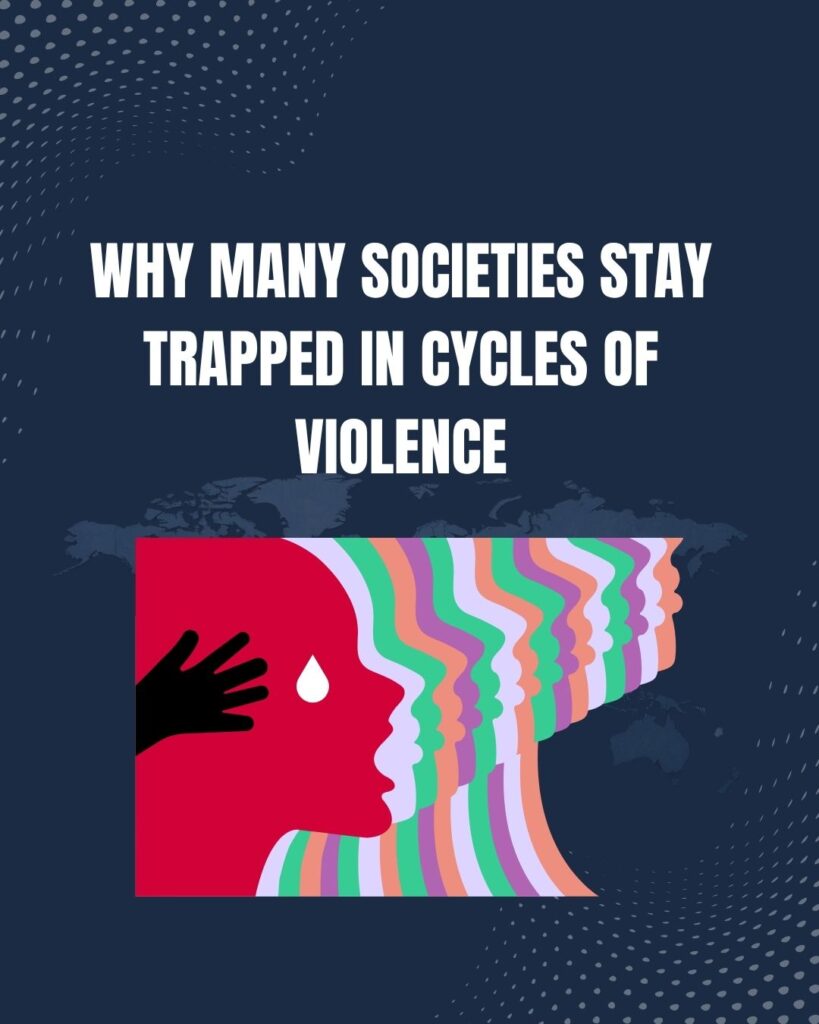
Why Many Societies Stay Trapped in Cycles of Violence
Violence does not usually continue just because people are “angry.”
It continues because the conditions that produce it are never truly dealt with.
That is why many societies do not just experience violence once…
they experience it repeatedly.
Again and again.
In different forms.
At different times.
Sometimes with different actors.
But the same pattern keeps returning.
That is what a cycle of violence looks like.
And if you want to function competently in peace building, you must understand why this happens.
One major reason is that many societies only respond to the outbreak of violence…
but not to the causes of violence.
Once a crisis happens, people react.
There may be arrests, emergency meetings, public statements, temporary interventions, or security presence.
But after the tension reduces…
the deeper issues are often left untouched.
And when root causes remain alive…
violence simply waits for another opportunity.
Another reason is unhealed pain and unresolved grievances.
Where people or groups have experienced injustice, loss, oppression, humiliation, betrayal, or repeated harm, that pain does not just disappear because time passes.
If it is not acknowledged, addressed, or transformed, it can remain alive beneath the surface.
And when pain is left unresolved, it can easily be passed into:
➤ anger
➤ revenge
➤ hostility
➤ distrust
➤ generational bitterness
That is how violence becomes recycled instead of resolved.
Another major reason is weak systems.
When institutions are unjust, corrupt, biased, absent, or ineffective, people lose faith in peaceful processes.
And once people no longer believe that justice, fairness, protection, or accountability can come through systems…
they may begin to look for other ways to respond.
That is dangerous.
Because where systems fail repeatedly, violence often becomes normalized.
Another reason many societies remain trapped is identity-based division.
When people are constantly taught to fear, hate, or blame “the other group,” violence becomes easier to justify.
Because once people stop seeing others as fully human…
it becomes easier to harm them, exclude them, or support harm against them.
That is one of the most dangerous signs of a society in decline.
Another reason is leadership failure.
If leaders continue to exploit division, ignore warning signs, speak irresponsibly, or fail to create fair and stable systems, violence becomes more likely to return.
Because where leadership lacks courage, wisdom, and responsibility…
society becomes more vulnerable.
And then there is normalization.
This one is very dangerous.
Sometimes societies stay trapped in violence because people begin to see instability as “normal.”
They become used to tension.
Used to injustice.
Used to insecurity.
Used to crisis.
And once violence becomes normalized…
urgency disappears.
People adapt to what should never have been accepted.
That is how cycles continue.
So understand this clearly:
Violence is not always sustained by weapons alone.
It is often sustained by:
➤ silence
➤ injustice
➤ fear
➤ bad leadership
➤ weak systems
➤ unresolved pain
➤ and repeated failure to address root causes
That is why peace building is so important.
Because peace building does not only ask:
“How do we stop violence now?”
It also asks:
“What must change so this society does not keep returning to violence?”
That is the real work.
And that is why this field requires depth.
Because if you only respond to visible violence…
you will never break the cycle.
The Role of Dialogue in Preventing Escalation
One of the biggest reasons conflict gets worse is simple:
People stop talking properly.
Or worse…
they are talking, but nobody is truly listening.
That is where escalation often begins.
Because when communication breaks down, misunderstanding grows.
Assumptions grow.
Suspicion grows.
Emotion takes over.
And once emotion takes over without healthy dialogue…
conflict can move from tension to damage very quickly.
That is why dialogue is not a “nice extra.”
Dialogue is a preventive tool.
A serious one.
A strategic one.
And if used properly, it can stop many conflicts from becoming more destructive.
Now understand this clearly:
Dialogue is not the same as argument.
It is not shouting your opinion.
It is not trying to “win.”
It is not attacking the other side until they submit.
Real dialogue is the process of creating space for:
➤ listening
➤ understanding
➤ clarification
➤ perspective sharing
➤ tension reduction
➤ possible common ground
That means dialogue is not weak.
In fact…
it takes maturity to engage in dialogue properly.
Because when people are angry, wounded, suspicious, or defensive, the easiest thing to do is react.
But competent peace work requires something deeper.
It requires the ability to slow down tension before it hardens.
And dialogue helps do that.
When people are given the chance to speak and be heard properly, many dangerous things can be reduced, such as:
➤ misinterpretation
➤ emotional assumptions
➤ fear
➤ hostility
➤ false narratives
➤ dehumanization
This is important because many conflicts escalate not only because of the issue itself…
but because people begin to interpret each other as enemies.
And once that happens, escalation becomes easier.
Dialogue interrupts that process.
It creates an opportunity for people to:
→ hear what they did not know
→ correct what they misunderstood
→ express concerns without immediate attack
→ reduce emotional tension
→ rebuild a small level of trust
Now, let’s be realistic:
Dialogue does not solve everything instantly.
Not every conversation will produce immediate agreement.
Not every conflict ends because people sat down once.
But even when dialogue does not fully solve the issue, it can still do something very important:
It can prevent things from getting worse.
And that matters.
Because in many situations, preventing escalation is already a major success.
As a trainee, you must begin to understand that dialogue is one of the earliest and most valuable tools in peace building.
It helps you respond before conflict turns into:
➤ open hostility
➤ relational breakdown
➤ group polarization
➤ community instability
➤ institutional crisis
➤ violence
So if you want to function competently in this field, you must learn to ask:
➤ Who is not being heard here?
➤ What conversation is being avoided here?
➤ What misunderstanding is fueling this tension?
➤ What space needs to be created for healthy dialogue?
Because many conflicts escalate not because peace was impossible…
but because healthy dialogue came too late.
And in peace building…
late dialogue is often expensive dialogue.
Listening as a Peace Building Tool
Many people think they are good listeners.
But in reality…
they are only waiting for their turn to talk.
And that is one of the reasons conflict keeps getting worse in many relationships, communities, institutions, and societies.
Because when people do not feel heard, tension grows.
Defensiveness grows.
Frustration grows.
And once people feel repeatedly unheard…
peace begins to weaken.
That is why listening is not just a communication skill.
It is a peace building tool.
A serious one.
Because real listening has the power to reduce tension before it becomes deeper conflict.
Now understand this clearly:
Listening is not the same as agreeing.
This is important.
You do not have to support everything someone says before you listen properly.
You do not have to surrender your values.
You do not have to pretend wrong is right.
But you must be able to hear and understand before you respond wisely.
That is what many people fail to do.
Instead, they:
➤ interrupt too quickly
➤ assume too quickly
➤ defend too quickly
➤ judge too quickly
➤ react too quickly
And once that happens, communication becomes war instead of understanding.
A competent peace builder must know how to listen for more than just words.
You must learn to listen for:
➤ pain
➤ fear
➤ frustration
➤ unmet needs
➤ misunderstanding
➤ identity tension
➤ emotional triggers
➤ what is being said and what is being avoided
Because many times, the real issue is not in the first sentence people speak.
It is underneath it.
And if you only listen on the surface…
you will miss the real conflict.
Listening also helps people feel seen and respected.
And that matters deeply in peace work.
Because many conflicts escalate when people feel:
→ dismissed
→ ignored
→ belittled
→ silenced
→ misunderstood
Once people feel that way, they often stop engaging constructively.
They either shut down…
or fight harder.
That is why proper listening can de-escalate tension.
It communicates:
“I may not fully agree yet, but I am willing to understand what is happening here.”
And that alone can lower emotional heat.
Now let’s be honest:
Real listening is not easy.
Especially when:
➤ emotions are high
➤ people are unfair
➤ tension is already deep
➤ the issue is sensitive
➤ your own feelings are involved
But that is exactly why listening is a skill.
And why it must be trained.
Because in peace building, you cannot always control what others will say…
but you can control whether you respond with discipline or reaction.
So as a trainee, you must begin to see listening differently.
Not as weakness.
Not as passivity.
Not as silence without purpose.
But as strategic attention.
A tool that helps you understand before escalating.
A skill that helps you respond with wisdom instead of emotion.
Because many conflicts do not become destructive because nobody spoke…
They become destructive because nobody truly listened.
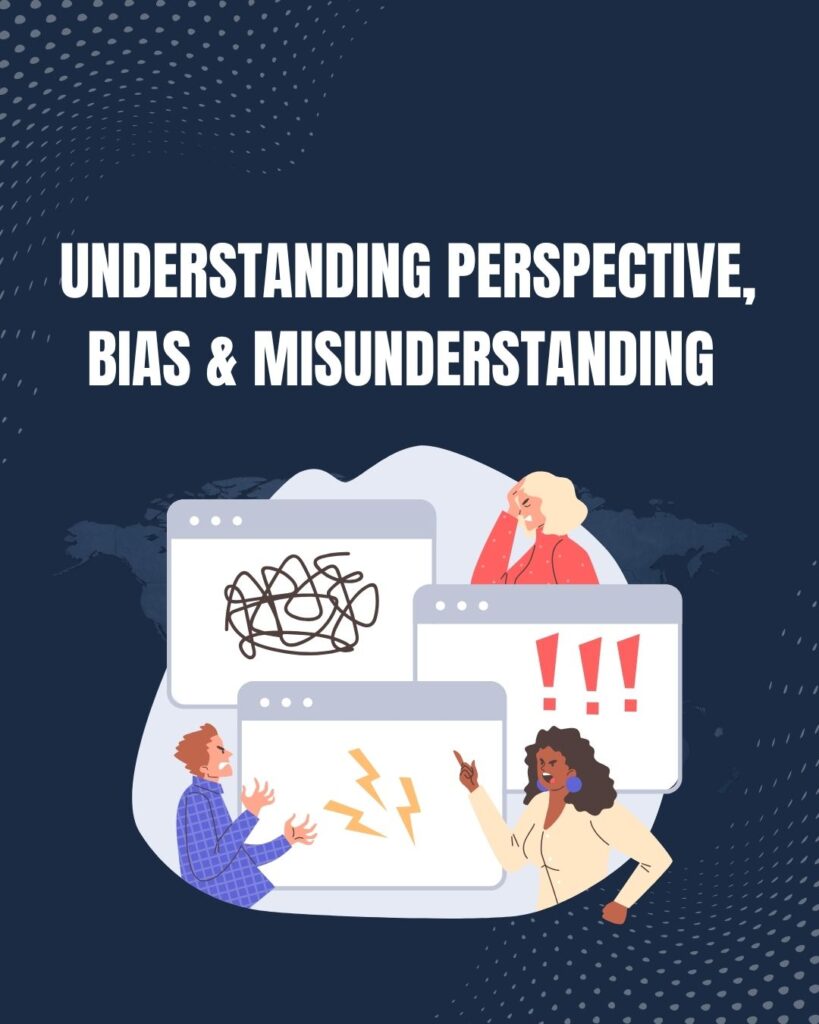
Understanding Perspective, Bias & Misunderstanding
One of the biggest reasons conflict becomes deeper than it should is this:
People assume they are seeing the full truth — when they are only seeing from their own angle.
And once that happens, misunderstanding grows fast.
That is why if you want to function competently in peace building, you must learn to understand three powerful things:
➤ perspective
➤ bias
➤ misunderstanding
Because these three shape how people interpret situations, respond to others, and either create peace or fuel conflict.
Let’s start with perspective.
Perspective is simply the angle from which a person sees an issue.
And no matter how intelligent someone is, nobody sees everything from one angle alone.
People see life through:
➤ their background
➤ culture
➤ pain
➤ beliefs
➤ experiences
➤ fears
➤ environment
➤ identity
That means two people can experience the same event and still interpret it very differently.
Not always because one is lying…
but because they are viewing it through different internal lenses.
This is why peace builders must be careful not to assume:
→ “If I understand it this way, then that must be the only correct interpretation.”
That mindset creates rigidity.
And rigidity creates conflict.
Now let’s talk about bias.
Bias is when your thinking, judgment, or reaction is being influenced in a way that is not fully fair, balanced, or objective.
And here is the truth many people do not like:
Everybody has bias.
Yes — everybody.
Bias can come from:
➤ tribe
➤ religion
➤ politics
➤ class
➤ gender expectations
➤ personal experiences
➤ past hurt
➤ stereotypes
➤ cultural assumptions
Bias becomes dangerous when it starts affecting how you:
➤ judge people
➤ assign blame
➤ interpret behaviour
➤ decide who matters
➤ decide who deserves empathy
Because once bias is left unchecked, it can quietly distort truth and deepen division.
Then comes misunderstanding.
Misunderstanding is one of the fastest ways conflict grows unnecessarily.
Many conflicts are not only caused by evil intent.
Some are caused by:
→ poor interpretation
→ wrong assumptions
→ incomplete information
→ emotional reactions
→ lack of clarification
And once misunderstanding is left uncorrected, people begin to respond to what they think is true — not what is actually true.
That is dangerous.
Because people can become angry, defensive, hostile, or divided over something they never fully understood in the first place.
This is why competent peace work requires mental discipline.
You must learn to pause and ask:
➤ What perspective am I seeing from?
➤ What perspective might I be missing?
➤ Is my bias influencing my interpretation?
➤ Have I fully understood this issue?
➤ Am I reacting to facts or assumptions?
Those are serious peace building questions.
Because if you do not train yourself to think this way, you will keep reacting emotionally to situations you have not properly understood.
And that can make you part of the problem instead of part of the solution.
So understand this clearly:
Perspective affects interpretation.
Bias affects judgment.
Misunderstanding affects reaction.
And if all three are left unchecked…
conflict becomes easier to create and harder to resolve.
That is why serious peace building begins not only with “fixing others”…
but with learning how to think more clearly yourself.
Introduction to Cultural Diplomacy
If you do not understand culture…
you will struggle to understand people.
And if you do not understand people…
you will struggle to build peace, trust, influence, or meaningful global relationships.
That is why cultural diplomacy matters.
And that is why it belongs in this training.
Now let’s simplify it properly.
Cultural diplomacy is the use of culture to build connection, understanding, respect, trust, and cooperation between people, communities, groups, or nations.
In simple terms:
It is about using the things that shape human identity and expression — such as values, traditions, language, beliefs, art, customs, worldview, and social behaviour — as tools for relationship building instead of division.
That is powerful.
Because many conflicts do not begin only from “bad intentions.”
They often begin because people do not understand each other.
They misread each other.
They judge what they have not taken time to understand.
And once cultural misunderstanding enters a space…
offense, distance, suspicion, and tension can grow quickly.
That is why cultural diplomacy is not decoration.
It is not “soft international talk.”
It is a serious relational skill.
A leadership skill.
A peace building skill.
Because in today’s world, people are constantly interacting across:
➤ cultures
➤ countries
➤ ethnic groups
➤ languages
➤ belief systems
➤ social identities
And if these interactions are not handled with maturity and awareness, misunderstanding becomes almost inevitable.
Cultural diplomacy helps you learn how to engage difference without disrespect.
It teaches you how to:
➤ approach people with curiosity instead of arrogance
➤ understand cultural meaning before reacting
➤ communicate across differences more wisely
➤ reduce unnecessary offense
➤ build bridges where misunderstanding could have created division
This matters in many spaces, including:
➤ community leadership
➤ international relations
➤ NGOs and humanitarian work
➤ education
➤ migration and diaspora spaces
➤ diplomacy and advocacy
➤ peace and development work
➤ professional and institutional environments
Now understand this clearly:
Cultural diplomacy is not about pretending all cultures are the same.
They are not.
And it is not about abandoning your own identity.
That is not the point.
The point is to learn how to engage cultural difference with:
➤ respect
➤ intelligence
➤ sensitivity
➤ wisdom
➤ and relational maturity
Because once you lack this skill, you can damage trust without even realizing it.
And in peace building and global development work…
damaged trust can destroy progress very quickly.
So as a trainee, you must begin to understand that culture is not a side issue.
It is often at the center of how people interpret respect, belonging, power, communication, and conflict.
That is why cultural diplomacy is essential.
Because in a diverse and interconnected world…
those who know how to navigate difference wisely will always be more effective than those who only know how to judge it.
What Culture Has to Do with Peace and Development
A lot of people talk about peace and development as if they are only about:
➤ policies
➤ projects
➤ funding
➤ infrastructure
➤ government programs
But if you remove culture from the conversation, your understanding will remain incomplete.
Because culture affects how people think, live, relate, respond, cooperate, and make meaning of the world.
And if you are trying to build peace or drive development without understanding culture…
you are likely to create solutions that fail.
That is how many interventions collapse.
Because not every community sees the world the same way.
Not every society responds to leadership, dialogue, authority, gender roles, justice, conflict, time, communication, family, or progress in the same way.
And that matters deeply.
Let’s start with peace.
Culture influences how people:
➤ interpret respect
➤ handle disagreement
➤ express emotion
➤ resolve conflict
➤ relate across differences
➤ define fairness and belonging
So if cultural values are ignored, misunderstood, or disrespected, tension can rise quickly.
What one group sees as “normal” may feel offensive or threatening to another.
And if nobody understands that, conflict becomes easier.
That is why peace building must always pay attention to culture.
Because many conflicts are not just political or economic.
They are also:
➤ cultural
➤ identity-based
➤ value-driven
➤ socially conditioned
Now let’s talk about development.
Development is not just about building roads, creating jobs, or launching programs.
Real development must make sense to the people it is meant to serve.
And culture shapes what people value, trust, accept, resist, or participate in.
That means if a development plan ignores the local culture, people may:
→ reject it
→ resist it
→ misunderstand it
→ feel excluded from it
And once that happens, even a “good” project can fail.
This is why many development efforts struggle.
Not because the idea was completely wrong…
but because the people behind it did not understand the human and cultural environment they were working in.
Culture also affects:
➤ leadership expectations
➤ community participation
➤ gender roles
➤ communication style
➤ decision-making patterns
➤ trust in institutions
➤ openness to change
So if you want to work effectively in peace building or development, you cannot afford to treat culture like a side topic.
It is central.
Now understand this clearly:
Culture can either support peace and development — or block them.
If cultural values encourage respect, cooperation, inclusion, and shared responsibility, they can strengthen progress.
But if culture is being used to justify exclusion, domination, prejudice, or harmful traditions, then it can also fuel conflict and slow development.
That means your role is not just to “celebrate culture.”
Your role is to understand culture critically and responsibly.
You must learn to ask:
➤ What cultural values are shaping this issue?
➤ What cultural assumptions are affecting this conflict?
➤ What cultural realities must be understood before intervention?
➤ What part of this culture supports peace and progress?
➤ What part may be reinforcing harm or division?
These are serious questions.
Because if you ignore culture…
you may end up trying to build peace in a way people cannot receive.
Or trying to drive development in a way people cannot sustain.
And that is how good intentions fail.
So yes — culture has everything to do with peace and development.
Because in the real world…
people do not live inside policies.
They live inside cultures.
Why Cultural Ignorance Creates Tension
One of the fastest ways to create unnecessary tension is simple:
Misunderstand what matters to people.
And culture is one of the biggest areas where this happens.
Many people enter spaces, relationships, institutions, communities, or international environments assuming that the way they think, speak, behave, interpret respect, or relate is automatically the “normal” way.
That mindset is dangerous.
Because once you assume your own cultural lens is the standard for everybody else…
you will begin to misread people very quickly.
That is where tension often begins.
Cultural ignorance does not always look like open hatred.
Sometimes it looks like:
➤ careless assumptions
➤ insensitive comments
➤ disrespect without awareness
➤ mockery
➤ dismissal
➤ poor interpretation
➤ arrogance
➤ lack of curiosity
And even when the person says:
“I didn’t mean anything by it”
The damage may already have been done.
Because intent does not always cancel impact.
That is important.
When you are culturally ignorant, you may wrongly interpret:
➤ someone’s communication style
➤ their body language
➤ their silence
➤ their dress
➤ their values
➤ their emotional expression
➤ their way of showing respect
➤ their social behaviour
And once you misinterpret these things, you may begin to judge people unfairly.
That is how misunderstanding turns into tension.
For example:
What one culture sees as confidence, another may see as disrespect.
What one culture sees as politeness, another may see as coldness.
What one culture sees as openness, another may see as inappropriate.
So if you do not understand cultural difference, you may keep reacting to people based on wrong assumptions.
That creates unnecessary friction.
Cultural ignorance also creates tension because it can make people feel:
→ unseen
→ disrespected
→ stereotyped
→ excluded
→ misunderstood
→ looked down on
And once people begin to feel that way, trust starts to weaken.
That matters deeply in peace building, leadership, diplomacy, development work, and even everyday human interaction.
Because once trust is damaged, cooperation becomes harder.
Another serious danger is that cultural ignorance can reinforce bias and prejudice.
When people do not understand a culture, they often replace understanding with:
➤ stereotypes
➤ generalizations
➤ fear
➤ ridicule
➤ false narratives
And once that happens, division becomes easier.
So as a trainee, you must understand this clearly:
Not every tension is caused by bad intention.
Sometimes tension is caused by bad understanding.
And if you want to function competently in peace building or global engagement, you must learn to approach difference with:
➤ humility
➤ curiosity
➤ respect
➤ emotional discipline
➤ willingness to learn before judging
Because in this field, cultural ignorance is not a small weakness.
It can become a serious professional and relational liability.
That is why cultural awareness matters.
Because many tensions are not born from evil…
They are born from people who never learned how to engage difference wisely.
How Respect for Difference Can Reduce Conflict
Let’s be clear about something:
Difference is not the problem.
Difference is normal.
People will always be different in:
➤ culture
➤ religion
➤ tribe
➤ language
➤ beliefs
➤ values
➤ personality
➤ worldview
The real problem is not difference.
The problem is how people respond to difference.
When difference is met with:
→ arrogance
→ judgment
→ fear
→ superiority
→ dismissal
Conflict becomes more likely.
But when difference is met with:
→ respect
→ understanding
→ discipline
→ maturity
Conflict becomes easier to manage — and in many cases, prevented.
That is the power of respecting difference.
Respect for difference does not mean you must agree with everyone.
It does not mean you abandon your values.
It does not mean you accept everything without question.
That is not the point.
The point is this:
You can disagree without disrespect.
And that alone can reduce a lot of unnecessary tension.
Because many conflicts are not only about the issue itself…
They are about how people feel they are being treated in the process.
When people feel disrespected, they become defensive.
When they feel dismissed, they resist.
When they feel attacked, they respond with more aggression.
But when people feel respected, even in disagreement, they are more likely to:
➤ listen
➤ engage
➤ explain themselves calmly
➤ remain open to dialogue
➤ reduce hostility
That changes the entire direction of a situation.
Respect for difference also helps to reduce misinterpretation.
When you approach people with respect, you are more likely to:
➤ ask before assuming
➤ clarify before reacting
➤ understand before judging
And that alone prevents many conflicts from growing unnecessarily.
It also helps to build trust.
And trust is one of the strongest stabilizers in any environment.
When trust exists, people are less likely to escalate quickly.
They are more willing to give each other the benefit of the doubt.
They are more willing to resolve issues constructively.
Another important point is this:
Respect for difference helps prevent dehumanization.
Once people stop seeing others as worthy of respect, it becomes easier to:
→ insult
→ exclude
→ discriminate
→ harm
→ justify unfair treatment
But when respect is maintained, even in disagreement, there are boundaries people are less likely to cross.
That is how respect protects stability.
So as a trainee, you must begin to train yourself to ask:
➤ Am I reacting to difference or understanding it?
➤ Am I judging too quickly?
➤ Am I creating unnecessary tension through my response?
➤ Am I communicating respect even when I disagree?
Because in real life…
you will not always be able to remove difference.
But you can learn how to respond to it in a way that reduces conflict instead of increasing it.
And that is a serious peace building skill.
Because many conflicts are not caused by difference itself…
They are caused by the absence of respect for it.
Introduction to Global Development
A lot of people hear the words global development and immediately think of:
➤ foreign aid
➤ big international organizations
➤ donations
➤ government projects
➤ poverty reduction campaigns
Yes — those things can be part of it.
But global development is much bigger than that.
And if you want to understand this field properly, you must move beyond shallow definitions.
Global development is about improving the systems, conditions, opportunities, and quality of life that affect people and societies across the world.
In simple terms:
It is about how societies grow, improve, function better, and create better outcomes for human beings.
That includes things like:
➤ health
➤ education
➤ economy
➤ governance
➤ equality
➤ infrastructure
➤ social systems
➤ environment
➤ justice
➤ access and opportunity
So global development is not just about “helping poor people.”
That mindset is too narrow — and sometimes even disrespectful.
Global development is really about understanding:
➤ why some societies progress while others struggle
➤ what systems help people thrive
➤ what blocks stability and growth
➤ how policy, leadership, peace, culture, and institutions affect human progress
That is why this topic matters in this training.
Because peace, culture, and development are deeply connected.
You cannot build sustainable development where there is constant instability.
And you cannot create long-term peace where there is deep poverty, exclusion, weak systems, or structural injustice.
They affect each other.
That means if you want to contribute meaningfully in this field, you must learn to see development as more than “projects.”
You must see it as systems work.
Global development asks serious questions like:
➤ Why are some communities left behind?
➤ Why do some systems keep failing?
➤ Why do some interventions work while others collapse?
➤ What creates sustainable progress?
➤ What makes development fair, inclusive, and lasting?
Those are not small questions.
And that is why this field requires depth.
Global development also teaches you something important:
Good intentions are not enough.
A lot of people want to “help.”
But if help is not informed, strategic, culturally aware, and system-conscious, it can fail — or even create more problems.
That is why competence matters.
Because real development work requires:
➤ critical thinking
➤ context awareness
➤ people understanding
➤ systems understanding
➤ long-term thinking
➤ responsible intervention
So as a trainee, you must begin to understand that global development is not a “big international grammar.”
It is a real field that affects everyday life.
It affects whether people have access to:
→ healthcare
→ safety
→ jobs
→ education
→ dignity
→ opportunity
→ stable systems
That means this is not abstract.
This is human.
And if you want to function well in this field, you must begin to train your mind to think beyond surface problems and start understanding the bigger structures behind them.
Because in the real world…
development is not just about giving people things.
It is about helping build the conditions that allow people and societies to function, grow, and thrive sustainably.
Day 1 Reflection, Wrap-Up & Learning Check
Before we close for today, let’s be honest:
If all you did today was read posts and move on, then you have missed the point.
Because this training is not designed for passive participation.
It is designed to build competence.
And competence only begins when you stop asking:
“What did I read today?”
…and start asking:
“What did I actually understand, and how will it affect the way I think, speak, and respond?”
That is what reflection is for.
Today, you were introduced to the deeper meaning of peace building, cultural diplomacy, and global development.
You have seen that peace is not just about silence.
Conflict is not just about violence.
Culture is not just tradition.
And development is not just aid or projects.
You have also seen that many of the problems we see in society are not random.
They are connected to:
➤ misunderstanding
➤ exclusion
➤ poor leadership
➤ injustice
➤ cultural ignorance
➤ weak systems
➤ unresolved conflict
That means if you truly understood today’s session, your thinking should already be shifting.
You should now be beginning to understand that peace work is not shallow work.
It requires:
➤ awareness
➤ maturity
➤ critical thinking
➤ discipline
➤ responsibility
➤ and the willingness to see beyond the surface
That is the real beginning of competence.
So before you move on, ask yourself honestly:
➤ What challenged my thinking today?
➤ What did I previously misunderstand about peace or conflict?
➤ What part of today’s session opened my eyes the most?
➤ Where have I personally seen these issues play out in real life?
➤ What kind of person will I need to become to function effectively in this field?
These are not just “nice questions.”
They are the kind of questions that help transform knowledge into understanding.
And understanding into capacity.
So as we wrap up Day 1, this is your reminder:
Do not go through this training casually.
Engage it seriously.
Think deeply.
Observe society differently.
Listen more carefully.
And begin to train your mind to see the world through a more mature, informed, and solution-driven lens.
Because by the end of this program, the goal is not for you to simply say:
“I attended.”
The goal is for you to be able to say:
“I now understand more clearly, think more deeply, and I am becoming more competent in this field.”
That is how real learning begins.

Welcome Back & Recap of Level 1
Welcome back.
Now let’s be clear from the start:
Level 2 is not a repetition of Level 1.
This is where your thinking must begin to go deeper.
Because in Level 1, you were introduced to the foundation.
You were exposed to the meaning of peace building, the nature of conflict, the role of culture, and the connection between peace, diplomacy, and development.
But now…
we move from awareness into sharper analysis.
Because it is not enough to say:
“I understand peace.”
You must also begin to ask:
➤ Can I identify what is really driving conflict?
➤ Can I understand tension beyond what is visible?
➤ Can I think more intelligently when people, identity, culture, and power begin to clash?
That is where this level begins.
So before we move forward, let us quickly ground ourselves in what Level 1 really taught you.
Level 1 showed you that:
➤ conflict is not only violence
➤ division often begins beneath the surface
➤ peace building is a serious leadership and social responsibility skill
➤ unresolved conflict has real human consequences
➤ culture shapes peace, misunderstanding, and development
➤ ignorance, bias, and disrespect can quietly create tension
➤ dialogue, listening, and respect are not weak — they are strategic
If you truly understood Level 1, then one thing should already be changing in you:
You should no longer be looking at conflict in a shallow way.
You should now be learning to look beneath behaviour, beneath tension, beneath disagreement, and beneath visible crisis.
Because serious peace work is not just about reacting to what people are doing.
It is about understanding:
what is driving it.
And that is exactly what Level 2 is going to sharpen.
This level will push you to think more critically about:
➤ how conflict forms
➤ how identity and perception shape tension
➤ how culture can either reduce or worsen misunderstanding
➤ how diplomatic thinking helps prevent unnecessary escalation
➤ and how to begin analyzing situations with more maturity and less emotional reaction
So as you continue tonight, do not switch into passive mode.
Stay mentally present.
Stay reflective.
Stay sharp.
Because if Level 1 opened your eyes…
Level 2 must begin to sharpen your mind.
How to Identify the Early Warning Signs of Conflict
One of the biggest mistakes people make is waiting until conflict becomes obvious before they take it seriously.
That is poor judgment.
Because by the time conflict becomes loud, public, aggressive, or destructive…
it has usually been developing for a while.
That is why one of the most important peace building skills you must develop is this:
Learn to detect conflict early.
Because early detection gives you a chance to respond before damage multiplies.
Now understand this clearly:
Conflict rarely begins with chaos.
It often begins with signals.
Small changes.
Small patterns.
Small shifts in behaviour, tone, interaction, trust, and atmosphere.
And if you are not observant, you will miss them.
One major early warning sign is communication breakdown.
This is often where things begin to go wrong.
Watch for things like:
➤ people avoiding honest conversation
➤ increased misunderstanding
➤ defensive tone
➤ repeated arguments
➤ poor listening
➤ people talking at each other instead of with each other
Once communication starts breaking down, tension is often already forming underneath.
Another major warning sign is growing mistrust.
This is very serious.
When people begin to:
→ question each other’s motives
→ become suspicious
→ withdraw cooperation
→ interpret actions negatively
Then conflict may already be taking root.
Because once trust begins to weaken, even normal interactions can start feeling threatening.
Another warning sign is emotional tension.
Sometimes conflict shows up before words do.
You may notice:
➤ coldness
➤ resentment
➤ irritability
➤ passive aggression
➤ hostility beneath politeness
➤ visible discomfort around certain people or topics
That emotional atmosphere matters.
Because not all conflict begins with shouting.
Sometimes it begins with unresolved emotional strain.
Another warning sign is grouping and division.
This is when people begin to separate into camps.
For example:
→ “our side” and “their side”
→ silent alliances
→ exclusion
→ cliques
→ tribal or identity-based alignment
Once this begins, conflict can quickly become more collective and harder to control.
Another major sign is repeated complaints or unresolved grievances.
If people keep raising concerns, frustrations, or feelings of unfairness and those issues are being ignored…
that is dangerous.
Because what is ignored today may become crisis tomorrow.
People do not remain calm forever when they feel consistently unheard.
You should also watch for changes in behaviour.
Sometimes conflict reveals itself through what people stop doing.
For example:
➤ reduced participation
➤ silence from previously engaged people
➤ avoidance
➤ refusal to collaborate
➤ withdrawal from meetings, spaces, or dialogue
That is important.
Because silence is not always peace.
Sometimes silence is tension with no safe outlet.
Now here is the key lesson:
Early warning signs are often subtle.
That means if you want to function competently in this field, you must become more observant.
You must learn to ask:
➤ What is changing here?
➤ What tension is forming beneath the surface?
➤ Who is becoming withdrawn, defensive, or hostile?
➤ What issue is repeatedly being ignored?
➤ What atmosphere is developing in this environment?
Because if you cannot identify warning signs early…
you will keep arriving late to preventable problems.
And in peace building, late response is often costly response.
That is why early awareness is not optional.
It is part of professional competence.
Visible vs Hidden Conflict in Communities and Institutions
One of the reasons many people fail to handle conflict well is because they only pay attention to what they can see.
That is dangerous.
Because not all conflict is visible.
In fact, some of the most damaging conflicts are the ones that stay hidden for too long.
That means if you want to function competently in peace building, leadership, or institutional environments, you must learn to recognize the difference between:
➤ visible conflict
➤ and hidden conflict
Because both are real.
And both can cause serious damage.
Let’s start with visible conflict.
Visible conflict is conflict that is easier to notice.
It is out in the open.
People can usually see or hear it.
Examples include:
➤ open arguments
➤ public disagreement
➤ protests
➤ hostility
➤ obvious division
➤ direct confrontation
➤ disciplinary issues
➤ group clashes
➤ visible tension in meetings or communities
Visible conflict is easier to identify because it shows itself clearly.
People know something is wrong.
The problem is that many people only begin to care once conflict becomes visible.
That is already late.
Now let’s talk about hidden conflict.
This is where many serious problems live.
Hidden conflict is conflict that exists beneath the surface, even when everything looks calm.
And that is why it is dangerous.
Because people may assume peace is present…
when in reality, tension is quietly growing.
Hidden conflict can look like:
➤ silence
➤ avoidance
➤ resentment
➤ passive aggression
➤ emotional withdrawal
➤ distrust
➤ gossip
➤ silent resistance
➤ unresolved bitterness
➤ fear of speaking up
This kind of conflict may not create noise immediately…
but it can still weaken relationships, trust, teamwork, leadership, and social stability over time.
In communities, hidden conflict may exist between:
→ ethnic groups
→ religious groups
→ youth and elders
→ neighbours
→ local leaders and residents
People may still greet each other…
but deep tension may still be there.
In institutions, hidden conflict may exist between:
→ management and staff
→ departments
→ leaders and followers
→ insiders and excluded groups
→ colleagues who no longer trust each other
Everything may still “look professional” on the outside…
but the environment may already be unhealthy underneath.
Now here is the key danger:
Hidden conflict often becomes visible conflict if it is ignored for too long.
That is how many breakdowns happen.
People say:
“We didn’t know it had become this serious.”
But in truth…
the signs were there.
They were just not taken seriously.
That is why competent peace work requires more than reacting to obvious problems.
It requires reading atmosphere, patterns, relationships, and silence.
You must learn to ask:
➤ What is being said openly here?
➤ What is being avoided here?
➤ What tension is present even if nobody is naming it?
➤ What silence may actually be unhealthy?
➤ What calmness may be misleading?
These are serious analytical questions.
Because in real life…
not every peaceful-looking environment is actually peaceful.
Sometimes it is just quietly fractured.
And if you only know how to respond to visible conflict…
you will keep missing the hidden tensions that eventually become crisis.
Conflict Triggers vs Conflict Drivers
If you want to understand conflict properly, you must stop looking only at what happened last.
Because in many situations, the thing that sparked the conflict is not the same thing that was sustaining the conflict underneath.
And if you confuse those two, your analysis will be weak.
That is why you must understand the difference between:
➤ conflict triggers
➤ and conflict drivers
This is a very important peace building skill.
Because once you can separate the two, you will begin to analyze conflict more intelligently.
Let’s start with conflict triggers.
A trigger is the event, action, statement, decision, or incident that sets off visible tension or open conflict.
It is the thing that appears to “start” the problem.
Examples of triggers may include:
➤ an offensive comment
➤ a political statement
➤ a leadership decision
➤ an accusation
➤ a social media post
➤ a public incident
➤ a cultural insult
➤ a rumor
➤ a disrespectful action
Triggers are important because they often activate conflict.
They are the match.
They are the spark.
They are what suddenly brings tension into the open.
But now here is the key truth:
The trigger is not always the real cause.
And this is where many people get it wrong.
Because once the trigger happens, people focus all their energy on that one visible event…
while ignoring the deeper things that made the conflict possible in the first place.
That deeper layer is what we call conflict drivers.
Conflict drivers are the underlying conditions, patterns, and unresolved issues that keep tension alive and make conflict easier to ignite.
Drivers are deeper.
They usually exist before the trigger and often remain after the trigger.
Examples of conflict drivers include:
➤ injustice
➤ exclusion
➤ mistrust
➤ inequality
➤ historical grievances
➤ identity tension
➤ weak leadership
➤ poor communication culture
➤ abuse of power
➤ unaddressed resentment
So if triggers are the spark, then drivers are the fuel.
And this is very important:
Without fuel, a spark may die quickly.
But where fuel already exists, one small spark can cause serious damage.
That is how many conflicts work.
For example:
A single statement may trigger a crisis…
but what is really driving the conflict may be years of exclusion, unresolved bitterness, or group tension.
That means if you only deal with the trigger, you may calm things temporarily…
but the conflict can easily return.
Because the deeper fuel is still there.
That is why competent peace builders must always ask two different questions:
➤ What triggered this conflict?
➤ What has been driving this conflict underneath?
Both matter.
But they are not the same.
And if you fail to separate them, you may apply shallow solutions to deep problems.
So as a trainee, begin to train your mind to stop reacting only to the “latest incident.”
Instead, ask:
➤ What happened immediately before this escalated?
➤ What deeper tension already existed before that happened?
➤ What made this environment so combustible?
➤ Why did this issue create such a strong reaction?
Because in real peace work…
what explodes conflict is not always what built conflict.
And if you do not understand that difference…
you will keep treating sparks while leaving fuel untouched.
Understanding Tension Before It Becomes Crisis
One of the clearest signs of maturity in peace building is this:
You learn to recognize tension before it becomes crisis.
Because crisis rarely appears without warning.
Most crises do not come from nowhere.
They usually grow from tension that was:
➤ ignored
➤ misunderstood
➤ normalized
➤ dismissed
➤ or left unresolved for too long
That is why if you want to function competently in this field, you must train yourself not to wait for disaster before you start paying attention.
You must learn to read early tension.
Because once tension is understood early, there is still room for prevention.
Now understand this clearly:
Tension is not always loud.
Sometimes tension is subtle.
Sometimes it hides behind:
→ politeness
→ silence
→ distance
→ sarcasm
→ emotional coldness
→ low trust
→ avoidance
→ growing discomfort
And many people miss these signs because they are waiting for open argument, public conflict, or visible hostility.
That is poor observation.
Because by the time conflict becomes obvious…
the opportunity for easier prevention may already be shrinking.
Tension often shows up as something not sitting right in an environment.
You may notice:
➤ people becoming more reactive
➤ cooperation becoming weaker
➤ small issues causing strong emotional responses
➤ certain topics becoming sensitive
➤ communication becoming strained
➤ trust becoming fragile
➤ relationships becoming less safe or less open
These things matter.
Because tension is often the emotional and relational pressure that builds before visible breakdown.
And if that pressure is not understood or relieved properly, it can eventually turn into:
➤ confrontation
➤ division
➤ hostility
➤ withdrawal
➤ instability
➤ or full crisis
Another important truth is this:
Tension is often a signal that something deeper is unresolved.
It may point to:
➤ unmet needs
➤ exclusion
➤ fear
➤ misunderstanding
➤ injustice
➤ identity sensitivity
➤ leadership failure
➤ unresolved history
So tension should not always be dismissed as “people just being difficult.”
That is shallow thinking.
A serious peace builder learns to ask:
“What is this tension trying to tell us?”
That is a powerful question.
Because tension is often a warning sign.
A signal that the environment is becoming unstable.
A sign that people are carrying more pressure than they are expressing openly.
And if you ignore that long enough…
crisis becomes easier.
So as a trainee, you must begin to sharpen your awareness.
You must learn to observe not just events…
but atmosphere.
Not just what people say…
but how environments are shifting.
Ask yourself:
➤ What is changing in this space?
➤ Where is discomfort growing?
➤ What issue keeps creating emotional strain?
➤ Who is becoming more reactive, distant, or guarded?
➤ What unresolved pressure is building here?
Because if you can learn to understand tension early…
you can often intervene before things break down.
And that is one of the most valuable competencies in peace building.
Because in this field…
those who understand tension early are often the ones who help prevent crisis later.
Mapping Conflict Actors and Stakeholders
One major mistake people make when analyzing conflict is this:
They focus only on the people who are making the most noise.
That is shallow analysis.
Because in real conflict situations, the people you can see clearly are not always the only people shaping what is happening.
That is why one important peace building skill is learning how to map conflict actors and stakeholders properly.
In simple terms:
This means identifying who is involved, who is affected, who has influence, and who matters in the conflict environment.
Because if you do not understand who is part of the situation, your response will likely be incomplete.
Now understand this clearly:
Not everybody in a conflict plays the same role.
Some people are directly involved.
Some are indirectly involved.
Some are being affected quietly.
Some are influencing things from behind the scenes.
And if you fail to identify these different actors, your understanding will remain weak.
Let’s break it down simply.
Conflict actors are the individuals, groups, institutions, or bodies that are directly involved in the conflict or actively shaping it.
These may include:
➤ opposing individuals
➤ community groups
➤ leaders
➤ institutions
➤ political actors
➤ religious actors
➤ youth groups
➤ security bodies
➤ media voices
➤ decision-makers
These are the people or structures playing visible or active roles in what is happening.
Then you have stakeholders.
Stakeholders are people or groups who may not be directly “fighting,” but who are still connected to the conflict because they are affected by it, have influence over it, or have a role in its outcome.
Stakeholders may include:
➤ families
➤ residents
➤ staff members
➤ community elders
➤ women’s groups
➤ students
➤ local institutions
➤ NGOs
➤ traditional authorities
➤ service users or vulnerable groups
So understand this clearly:
Not every stakeholder is a direct conflict actor.
But they may still be very important to understanding and resolving the situation.
Now here is where competence matters:
When mapping actors and stakeholders, you must not just ask:
“Who is involved?”
You must also ask:
➤ Who has power here?
➤ Who has influence here?
➤ Who is being harmed here?
➤ Who is being ignored here?
➤ Who is benefiting from this conflict?
➤ Who wants resolution?
➤ Who may be resisting peace?
➤ Who is silent but important?
These are serious analytical questions.
Because sometimes the loudest people are not the most powerful people.
And sometimes the most affected people are not the most visible people.
That is why conflict mapping requires depth.
It helps you avoid simplistic thinking.
It helps you see the conflict as a system of relationships, interests, power, pressure, and impact — not just as “two sides arguing.”
This is very important in communities, institutions, diplomacy, development work, leadership spaces, and social interventions.
Because if you fail to identify the right actors and stakeholders:
➤ you may exclude key voices
➤ misunderstand the power dynamics
➤ ignore vulnerable groups
➤ misread who is influencing the situation
➤ and apply weak solutions
So as a trainee, begin to discipline your mind to analyze conflict more structurally.
Not emotionally.
Not casually.
But intelligently.
Because in peace building…
you cannot solve what you have not properly mapped.
And you cannot map conflict well if you only pay attention to the most obvious people in the room.
Understanding Interests, Needs & Positions in Conflict
One of the reasons many conflicts remain unresolved is because people keep arguing at the surface level.
They keep fighting over what is being said…
without understanding what is actually driving the disagreement underneath.
That is why one of the most important conflict analysis skills you must learn is how to separate:
➤ positions
➤ interests
➤ and needs
Because these three are not the same.
And if you confuse them, your understanding of conflict will remain shallow.
Let’s start with positions.
A position is what a person or group is openly saying they want.
It is the visible demand.
The stated stance.
The outward argument.
Examples of positions may sound like:
→ “We want this land.”
→ “We refuse to work with them.”
→ “That person must step down.”
→ “This policy must be reversed.”
→ “We are not accepting this decision.”
Positions are what people usually argue about openly.
And this is where many people stop their analysis.
That is a mistake.
Because if you only listen to positions, you may think the conflict is just about the demand itself.
But underneath positions are usually interests.
Interests are the reasons behind the position.
They explain why the person or group wants what they are demanding.
Interests may include things like:
➤ influence
➤ security
➤ recognition
➤ fairness
➤ access
➤ belonging
➤ opportunity
➤ control
➤ dignity
So for example, someone may say:
“We want this decision reversed.”
That is the position.
But underneath, their real interest may be:
“We feel excluded and we want fair involvement.”
That is deeper.
Now beneath interests, there are often needs.
Needs are even more fundamental.
These are the deeper human or structural requirements that people often cannot function well without.
Needs may include:
➤ safety
➤ identity
➤ respect
➤ justice
➤ belonging
➤ survival
➤ autonomy
➤ dignity
➤ stability
This is very important.
Because in many conflicts, what people are fighting over on the surface is not the deepest issue.
They may be arguing over a position…
but underneath, they are trying to protect a need.
That is why competent peace builders do not stop at what people are demanding.
They ask deeper questions like:
➤ What are they really trying to protect?
➤ What fear is sitting underneath this position?
➤ What interest is driving this demand?
➤ What deeper need is not being met?
These are serious peace building questions.
Because if you only respond to positions, conflict often stays stuck.
People keep defending their side.
Keep repeating demands.
Keep resisting one another.
But once you begin to understand the underlying interests and needs, you often gain a better chance of finding:
➤ common ground
➤ deeper understanding
➤ more workable solutions
➤ less emotionally reactive responses
That is where analysis becomes useful.
So understand this clearly:
Positions are what people say they want.
Interests are why they want it.
Needs are what may be deeply driving the whole issue underneath.
And if you want to function competently in peace building, mediation, leadership, diplomacy, or conflict analysis…
you must learn to listen beneath the argument — not just to the argument itself.
Because many conflicts do not remain difficult because solutions are impossible…
They remain difficult because people keep fighting at the wrong level.
The Role of History in Present-Day Division
One of the biggest mistakes people make when analyzing conflict is this:
They look only at what is happening today…
and ignore what has been happening for years.
That is shallow thinking.
Because many present-day divisions are not new.
They are continuations.
They are the result of histories that were never properly understood, addressed, or resolved.
That is why if you want to function competently in peace building, you must learn to ask:
“What happened before now?”
Because history matters.
History shapes:
➤ perception
➤ identity
➤ trust
➤ fear
➤ relationships
➤ narratives
➤ and reactions
People do not respond to situations based on the present alone.
They respond based on what they remember, inherited, or were taught.
That means two groups can experience the same current situation…
but react very differently because of their historical experiences.
This is where many conflicts become complicated.
Because sometimes, what looks like a small issue today is connected to:
➤ past injustice
➤ past violence
➤ past exclusion
➤ broken agreements
➤ betrayal
➤ oppression
➤ long-standing grievances
And when those things are not addressed, they do not disappear.
They remain.
Sometimes quietly.
Sometimes emotionally.
Sometimes passed down across generations.
That is how history continues to influence the present.
Another important point is this:
History shapes narratives.
Every group tends to carry its own version of what happened in the past.
And these narratives influence how people see:
➤ themselves
➤ others
➤ justice
➤ blame
➤ entitlement
➤ victimhood
➤ power
The problem is that these narratives are not always balanced.
They may be:
➤ incomplete
➤ biased
➤ emotionally driven
➤ politically influenced
And when different groups hold different historical narratives, misunderstanding and tension can increase.
Because each side may feel:
→ “We are the victims”
→ “They are the problem”
That is how division is sustained.
History also affects trust.
If people or groups have experienced repeated harm, betrayal, or unfair treatment in the past, they may struggle to trust even when current situations appear calm.
That is important.
Because what looks like “overreaction” today may actually be historical memory responding to present signals.
That means if you ignore history, you may misinterpret behaviour.
You may think people are being difficult…
when they are actually reacting from deep-rooted experience.
So as a trainee, you must begin to discipline your thinking.
Do not analyze conflict only from the present moment.
Learn to ask:
➤ What history exists behind this issue?
➤ What past events are shaping current reactions?
➤ What grievances have not been resolved?
➤ What narratives are influencing perception here?
➤ What trust has been broken over time?
These are serious questions.
Because in many real-life situations…
people are not just reacting to what is happening now.
They are reacting to what has been happening for a long time.
So understand this clearly:
If history is ignored, conflict is often misunderstood.
And if conflict is misunderstood…
solutions will be weak.
That is why serious peace building requires historical awareness.
Because you cannot fully understand today’s division…
without understanding yesterday’s experience
Identity, Tribe, Ethnicity, Religion & Political Tension
One of the most sensitive and powerful realities in conflict work is this:
People do not only fight over issues.
Sometimes, they fight over identity.
And once conflict becomes tied to identity, it often becomes deeper, more emotional, and more dangerous.
Because identity is personal.
Identity is how people see:
➤ who they are
➤ where they belong
➤ what they value
➤ what they feel loyal to
➤ what they feel must be protected
That is why identity-based tension is never something to treat casually.
Now let’s break this down properly.
Identity can be connected to things like:
➤ tribe
➤ ethnicity
➤ religion
➤ political affiliation
➤ nationality
➤ language
➤ regional belonging
➤ cultural background
These things are not automatically bad.
In fact, they often give people:
→ belonging
→ pride
→ community
→ meaning
→ social connection
That part is important.
The problem begins when identity is no longer just about belonging…
and starts becoming a basis for:
➤ superiority
➤ exclusion
➤ suspicion
➤ hatred
➤ discrimination
➤ fear
➤ competition
➤ hostility
That is when identity becomes combustible.
And once identity becomes politicized or weaponized, conflict can spread very quickly.
Let’s talk about tribe and ethnicity.
These are powerful parts of identity in many societies.
People often feel deeply connected to their tribe or ethnic group.
But tension grows when people begin to think:
→ “Our people must always come first”
→ “Their group cannot be trusted”
→ “They are taking what belongs to us”
Once that mindset grows, division becomes easier.
Now let’s look at religion.
Religion can be a source of meaning, morality, community, and peace.
But when religion becomes mixed with intolerance, fear, superiority, manipulation, or political agenda, it can also become a source of deep tension.
Because once people begin to believe that others are not just “different” but somehow less acceptable, less worthy, or more dangerous, conflict becomes easier to justify.
Now let’s talk about political tension.
Politics is supposed to help societies organize power, governance, and decision-making.
But in many environments, politics becomes tied to identity, tribe, religion, region, and emotion.
And once politics becomes identity-driven instead of principle-driven, tension can become explosive.
People stop evaluating ideas.
They begin defending “their side” at all costs.
That is dangerous.
Because once loyalty becomes stronger than truth, fairness, or national interest…
division deepens.
Now understand this clearly:
Identity itself is not the enemy.
The problem is not that people have identity.
The problem is when identity is used to:
➤ divide
➤ dominate
➤ exclude
➤ dehumanize
➤ manipulate
➤ mobilize hostility
That is where peace building becomes essential.
Because in identity-sensitive environments, one careless word, one unfair action, one political decision, or one inflammatory narrative can trigger deep tension very quickly.
So as a trainee, you must begin to develop maturity in how you understand identity.
You must learn to ask:
➤ What identity issues are shaping this tension?
➤ What fears are connected to belonging here?
➤ What narratives are fueling division?
➤ What political or cultural forces are exploiting identity?
➤ What kind of language or behaviour could worsen this situation?
These are serious questions.
Because if you do not understand identity-related tension properly…
you may misread the conflict completely.
And if you mishandle identity-sensitive issues…
you can inflame what should have been carefully managed.
That is why this topic matters.
Because in real peace work…
some of the deepest conflicts are not only about resources or decisions.
They are about who people believe they are — and who they believe is against them.
Stereotypes, Prejudice & Their Impact on Social Stability
One of the most dangerous things that can happen in any society is when people stop seeing others as individual human beings…
and start seeing them only through labels, assumptions, and bias.
That is where stereotypes and prejudice become dangerous.
Because once people are no longer being judged based on truth, character, or reality…
social stability begins to weaken.
Let’s start with stereotypes.
A stereotype is a fixed and oversimplified belief about a group of people.
It is when people assume:
→ “People from that tribe are like this”
→ “People from that religion always behave like that”
→ “That kind of person cannot be trusted”
→ “People from that region are always difficult”
That is stereotyping.
And the problem with stereotypes is this:
They reduce real human beings into shallow assumptions.
They remove complexity.
They remove fairness.
They remove understanding.
Now let’s talk about prejudice.
Prejudice goes deeper.
Prejudice is when someone develops a negative attitude, emotional bias, or unfair judgment toward a person or group before truly understanding them.
That means prejudice is not just what people think.
It is also what they begin to feel and carry toward others.
It can show up as:
➤ suspicion
➤ dislike
➤ avoidance
➤ contempt
➤ fear
➤ exclusion
➤ hostility
And once prejudice becomes normalized, it can start influencing:
➤ behaviour
➤ decisions
➤ treatment
➤ policies
➤ opportunities
➤ access
➤ social relationships
That is where the danger increases.
Because stereotypes and prejudice do not just affect individuals.
They affect systems and society.
They can quietly damage social stability by creating:
➤ mistrust
➤ division
➤ exclusion
➤ discrimination
➤ resentment
➤ identity-based tension
➤ social fragmentation
And once these things begin to grow, communities become weaker.
Because social stability depends on people being able to coexist, trust, participate, and relate with a reasonable level of fairness and safety.
But where stereotypes and prejudice dominate…
that stability begins to crack.
Another major danger is this:
Stereotypes and prejudice make conflict easier to justify.
Because once people are repeatedly taught to see others as “less trustworthy,” “less deserving,” “less intelligent,” “more dangerous,” or “naturally problematic,” it becomes easier for society to tolerate:
→ unfair treatment
→ discrimination
→ exclusion
→ dehumanization
→ even violence
That is how serious damage begins.
And many times, this does not even start with open hatred.
It starts with “small” things people treat casually.
Jokes.
Comments.
Labels.
Nicknames.
Social assumptions.
Repeated narratives.
And when those things go unchallenged, they begin to shape how society thinks.
That is why this topic is not minor.
It is serious peace building work.
So as a trainee, you must begin to ask yourself:
➤ What stereotypes are shaping this environment?
➤ What prejudice may be influencing behaviour or judgment here?
➤ What assumptions are being normalized?
➤ Who is being unfairly labeled or reduced?
➤ How might this be affecting trust, inclusion, and stability?
Because if you do not learn to recognize stereotypes and prejudice early…
you may underestimate how much damage they are already doing.
And in peace building…
what is repeatedly normalized often becomes socially dangerous.
That is why competent peace work requires you to challenge false assumptions before they harden into division.
Cultural Misunderstanding as a Trigger for Conflict
One of the most overlooked causes of conflict is this:
People often offend, judge, or react to what they do not understand.
And culture is one of the biggest places where this happens.
That is why cultural misunderstanding can become a very powerful trigger for conflict.
Not always the deepest root cause…
but often the thing that sets tension off.
Because once people misread each other culturally, problems can escalate very quickly.
Now understand this clearly:
Culture affects how people understand:
➤ respect
➤ communication
➤ authority
➤ greetings
➤ gender roles
➤ emotional expression
➤ time
➤ personal space
➤ disagreement
➤ silence
➤ body language
➤ social expectations
That means people from different backgrounds can interpret the same behaviour in very different ways.
And if there is no awareness, no curiosity, and no emotional discipline…
misunderstanding becomes easy.
For example:
What one person sees as confidence, another may interpret as arrogance.
What one person sees as respect, another may interpret as distance.
What one person sees as honesty, another may interpret as rudeness.
What one person sees as normal humour, another may experience as insult.
That is how tension begins.
And many times, nobody initially intended conflict.
That is important.
Because not all conflict starts from evil intent.
Sometimes it starts from:
➤ poor interpretation
➤ cultural ignorance
➤ assumptions
➤ insensitivity
➤ lack of exposure
➤ failure to ask before reacting
But once people feel:
→ insulted
→ disrespected
→ mocked
→ judged
→ misunderstood
Then emotion enters the situation.
And once emotion enters without understanding…
conflict can escalate fast.
Cultural misunderstanding is especially dangerous in places where people from different backgrounds must interact closely, such as:
➤ workplaces
➤ schools
➤ institutions
➤ multicultural communities
➤ diplomatic spaces
➤ international environments
➤ migration and diaspora settings
➤ peace and development work
Because in these environments, people are constantly interpreting each other.
And if those interpretations are wrong, trust can weaken very quickly.
Another serious problem is that cultural misunderstanding can easily feed into:
➤ stereotypes
➤ prejudice
➤ exclusion
➤ identity tension
➤ group-based hostility
That is why it must never be treated lightly.
So as a trainee, you must understand this:
A competent peace builder does not rush to judge what feels unfamiliar.
They slow down and ask:
➤ What may be culturally shaping this behaviour?
➤ Am I reacting from understanding or assumption?
➤ What may this mean in the other person’s context?
➤ Is this really disrespect — or is it difference I have not understood yet?
Those are serious questions.
Because many conflicts are not triggered because peace was impossible…
They are triggered because people lacked the maturity to understand difference before reacting to it.
And in peace building…
that kind of avoidable conflict is costly.
Cultural Intelligence as a Professional Skill
One thing you must understand very early is this:
In today’s world, technical knowledge alone is no longer enough.
You can be educated.
You can be experienced.
You can even be highly skilled in your field.
But if you do not know how to interact wisely across cultural differences…
you can still fail badly in professional spaces.
That is why cultural intelligence is now a serious professional skill.
Not a luxury.
Not a side topic.
A real competency.
Now let’s simplify it properly.
Cultural intelligence is the ability to understand, adapt, and respond wisely when dealing with people from different cultural backgrounds.
In simple terms:
It means you do not enter diverse spaces with a narrow mind, rigid assumptions, or careless behaviour.
You know how to:
➤ observe carefully
➤ interpret wisely
➤ communicate respectfully
➤ adjust appropriately
➤ and engage difference without creating unnecessary tension
That is powerful.
Because many professionals are not failing because they lack knowledge.
They are failing because they keep misreading people, mishandling difference, or carrying bias into environments that require maturity.
And in today’s world, cultural intelligence matters in almost every serious professional space, including:
➤ healthcare
➤ education
➤ hospitality
➤ diplomacy
➤ international business
➤ development work
➤ migration services
➤ NGOs
➤ leadership
➤ customer service
➤ public engagement
That means this is not just “international grammar.”
This is real workplace and leadership competence.
Without cultural intelligence, professionals often create avoidable problems such as:
➤ communication breakdown
➤ poor trust
➤ offense
➤ misunderstanding
➤ poor team relationships
➤ weak collaboration
➤ damaged credibility
➤ unnecessary conflict
And many times, they do not even realize they are the problem.
That is why this skill matters so much.
Now understand this clearly:
Cultural intelligence is not pretending all cultures are the same.
They are not.
And it is not about abandoning your own values.
It is about learning how to function effectively and respectfully without assuming your own way is the only valid way.
That is maturity.
A culturally intelligent professional learns to ask:
➤ How is respect expressed in this environment?
➤ How do people communicate here?
➤ What assumptions might I be carrying?
➤ What cultural difference do I need to understand before reacting?
➤ How do I remain professional without becoming culturally insensitive?
Those are serious professional questions.
Because in real life…
people are not just responding to what you know.
They are also responding to:
➤ how you behave
➤ how you communicate
➤ how safe you make them feel
➤ how respectfully you engage difference
That means your competence is not just in your certificate.
It is also in your cultural behaviour.
So as a trainee, you must begin to see cultural intelligence for what it really is:
A professional advantage.
A leadership advantage.
A peace building advantage.
Because in a world filled with difference…
those who know how to navigate people wisely will always be more effective than those who only know their job on paper.
What Diplomacy Really Means in Practice
Many people hear the word diplomacy and think of:
➤ politicians
➤ ambassadors
➤ international meetings
➤ formal speeches
But let’s correct that immediately:
Diplomacy is not only for governments.
Diplomacy is a practical everyday skill.
It is the ability to manage communication, relationships, and tension in a way that reduces conflict and builds understanding.
In simple terms:
Diplomacy is how you handle people — especially when things are sensitive.
And if you lack this skill, you will create unnecessary problems even in simple situations.
Now understand this clearly:
Diplomacy is not about being fake.
It is not about avoiding truth.
It is not about weakness.
It is about:
➤ how you say things
➤ when you say things
➤ what tone you use
➤ how aware you are of the environment
➤ how you manage reactions
➤ how you balance honesty with respect
That is real diplomacy.
Because in real life, many conflicts do not happen because truth was spoken…
They happen because truth was spoken carelessly.
That is important.
A diplomatic person understands that:
You can be right and still be wrong in how you communicate it.
That is where many people fail.
Now let’s bring this into practice.
Diplomacy shows up in everyday situations like:
➤ giving feedback without insulting
➤ disagreeing without disrespect
➤ correcting someone without embarrassing them
➤ addressing issues without escalating tension
➤ managing difficult conversations calmly
➤ speaking honestly without creating hostility
That is real-world diplomacy.
A person without diplomacy may:
→ speak harshly
→ react emotionally
→ embarrass others
→ escalate small issues
→ damage relationships unnecessarily
But a diplomatic person knows how to:
→ stay composed
→ choose words carefully
→ understand timing
→ read the environment
→ manage emotions
→ reduce tension while still addressing issues
Now understand this:
Diplomacy is not about avoiding conflict completely.
Some issues must be addressed.
Some truths must be spoken.
Some boundaries must be set.
But diplomacy helps you do it in a way that does not create avoidable damage.
That is the difference.
So as a trainee, you must begin to train yourself to ask:
➤ Am I speaking to solve the problem or to win the moment?
➤ Am I aware of how my tone is affecting this situation?
➤ Am I creating clarity or creating tension?
➤ Is there a more constructive way to say this?
➤ What outcome do I actually want from this conversation?
These are practical diplomacy questions.
Because in peace building, leadership, cultural engagement, and professional environments…
how you communicate is often just as important as what you are saying.
So understand this clearly:
Diplomacy is not reserved for official positions.
It is a daily competence.
A skill that affects:
➤ your relationships
➤ your influence
➤ your credibility
➤ your effectiveness
➤ and your ability to manage tension
Because in real life…
those who lack diplomacy create problems.
But those who understand diplomacy…
manage people and situations more effectively.
Formal vs Informal Diplomacy
When people hear the word diplomacy, they often imagine only official meetings, government representatives, and international negotiations.
That is only one part of the picture.
Because diplomacy operates in two major forms:
➤ formal diplomacy
➤ informal diplomacy
And if you want to function competently in this field, you must understand both.
Because in real life…
not all influence happens in official rooms.
Let’s start with formal diplomacy.
Formal diplomacy refers to structured, official, and recognized interactions between authorized representatives.
This usually involves:
➤ governments
➤ ambassadors
➤ international organizations
➤ official delegations
➤ policy-level discussions
It operates through:
➤ official meetings
➤ treaties
➤ agreements
➤ negotiations
➤ diplomatic channels
➤ formal communication protocols
Formal diplomacy is often:
→ structured
→ documented
→ regulated
→ position-based
→ authority-driven
So in simple terms:
Formal diplomacy is diplomacy with official authority and recognized structure.
Now let’s look at informal diplomacy.
This is where many people underestimate the power of influence.
Informal diplomacy refers to everyday, non-official interactions that still shape relationships, perception, and outcomes.
This includes:
➤ community engagement
➤ interpersonal communication
➤ cultural exchange
➤ dialogue between groups
➤ mediation by respected individuals
➤ social influence
➤ grassroots peace efforts
➤ everyday conversations that reduce tension
Informal diplomacy is often:
→ flexible
→ relational
→ influence-driven
→ less structured
→ more human-centered
And here is the key truth:
Informal diplomacy often shapes what formal diplomacy later confirms.
Because before agreements are signed…
trust must be built.
Before negotiations succeed…
relationships must be managed.
Before policies are accepted…
people must feel understood.
And many of those things happen outside official rooms.
Now understand this clearly:
You do not need a title to practice diplomacy.
Formal diplomacy may require position.
But informal diplomacy requires skill.
That means in your daily life, you are already operating in informal diplomacy when you:
➤ manage tension between people
➤ communicate across differences
➤ handle sensitive conversations
➤ build understanding between groups
➤ prevent escalation through dialogue
➤ influence how people relate and respond
That is real.
And that is powerful.
So as a trainee, you must not limit your thinking to “government-level diplomacy.”
You must begin to see that:
➤ formal diplomacy works at the institutional and international level
➤ informal diplomacy works at the human and relational level
And both are necessary.
Because without formal diplomacy, structure is weak.
But without informal diplomacy…
trust is weak.
And without trust, even the best agreements can fail.
So understand this clearly:
Formal diplomacy manages agreements.
Informal diplomacy manages relationships.
And if you want to be effective in this field…
you must learn how to function in both — even if you never hold an official title.
The Language of Diplomacy and Respectful Engagement
One of the fastest ways to create tension is not what you say…
but how you say it.
Because language carries more than words.
It carries:
➤ tone
➤ intention
➤ attitude
➤ respect
➤ or disrespect
That is why in peace building, leadership, and diplomacy…
language is not casual.
It is strategic.
Now understand this clearly:
Diplomatic language is not about sounding “big” or “formal.”
It is about choosing words in a way that:
➤ reduces tension
➤ preserves dignity
➤ encourages dialogue
➤ avoids unnecessary offense
➤ keeps communication open
That is the goal.
Because once your language becomes careless, aggressive, dismissive, or insulting…
people stop listening to your message and start reacting to your tone.
That is how communication breaks down.
Let’s be practical.
A non-diplomatic approach may sound like:
→ “You are wrong.”
→ “That makes no sense.”
→ “You people always do this.”
→ “That is a stupid idea.”
Statements like this do not just express disagreement.
They attack.
And once people feel attacked, they become defensive.
Now the conversation is no longer about solving a problem…
it becomes about protecting ego.
That is where conflict grows.
A diplomatic approach does something different.
It still communicates clearly, but with awareness and control.
For example:
→ “I see your point, but I have a different perspective.”
→ “Can we look at this from another angle?”
→ “I may be misunderstanding, but this is how I’m seeing it.”
→ “Let’s explore a solution that works for both sides.”
Notice the difference.
The message is still being communicated.
But the tone allows space for engagement instead of resistance.
That is diplomacy in action.
Now understand this:
Respectful engagement is not weakness.
It does not mean you avoid difficult conversations.
It means you handle them with discipline.
Because in real life, you will need to:
➤ disagree
➤ correct
➤ challenge
➤ question
➤ set boundaries
But the difference between escalation and resolution often lies in:
your language.
Respectful engagement also means you are mindful of:
➤ how others may interpret your words
➤ cultural differences in communication
➤ emotional state of the environment
➤ power dynamics in the conversation
➤ timing and context
That is maturity.
Because what may sound normal to you may sound offensive to someone else.
That is why awareness matters.
So as a trainee, begin to train your communication intentionally.
Ask yourself:
➤ Am I speaking to build understanding or to prove a point?
➤ Is my tone reducing tension or increasing it?
➤ Am I leaving space for dialogue or shutting it down?
➤ How might this sound from the other person’s perspective?
➤ What outcome do I want from this conversation?
These are practical diplomacy questions.
Because in peace building, leadership, and global engagement…
language is a tool.
And like any tool, it can either:
→ build
→ or damage
So understand this clearly:
The way you communicate can either open doors or close them.
And in this field…
those who master respectful, diplomatic language are often more effective than those who simply “speak their mind” without control.
Negotiation Basics for Peace and Stability
Many people hear the word negotiation and immediately think of business deals, money, contracts, or bargaining.
But negotiation is much bigger than that.
In peace building, negotiation is a very important skill because it helps people, groups, or sides move from rigid tension toward possible understanding, adjustment, or workable agreement.
In simple terms:
Negotiation is the process of trying to move conflict, disagreement, or competing interests toward a more stable outcome.
That is why it matters.
Because in real life, peace is not always created by force.
Many times, peace is created because people were able to engage difficult issues without everything collapsing.
That is where negotiation comes in.
Now understand this clearly:
Negotiation is not weakness.
It is not surrender.
It is not “begging for peace.”
And it is not simply “giving people what they want.”
Real negotiation is about:
➤ understanding the issue properly
➤ understanding what each side cares about
➤ reducing unnecessary rigidity
➤ exploring what is possible
➤ preventing avoidable escalation
➤ protecting stability where possible
That is why it is such a useful peace skill.
Now let’s simplify the basics.
The first thing in negotiation is this:
You must understand the issue beyond emotion.
If people enter negotiation only with anger, pride, ego, or blame…
they will struggle to move forward.
That is why a negotiator must learn to slow things down and ask:
➤ What is the real issue here?
➤ What is each side actually trying to protect?
➤ What is making this situation difficult?
That is where serious negotiation begins.
The second thing is this:
You must understand interests — not just positions.
This is critical.
Because many people keep repeating what they want…
without explaining why it matters to them.
And if you only focus on positions, negotiation becomes a battle of demands.
But once interests are understood, more space often opens for possible solutions.
The third thing is this:
Tone and approach matter.
Even if the issue is serious, the way people enter the conversation can either make progress easier or harder.
If the atmosphere is full of:
➤ insult
➤ accusation
➤ humiliation
➤ emotional aggression
Then negotiation becomes difficult.
But if the environment allows:
➤ clarity
➤ respect
➤ listening
➤ structure
➤ controlled expression
Then stability becomes more possible.
Another important principle is this:
Not every negotiation ends with full agreement.
And that is okay.
Sometimes the immediate goal is not total resolution.
Sometimes the goal is:
➤ reducing hostility
➤ creating temporary understanding
➤ preventing escalation
➤ opening a door for further dialogue
➤ keeping the environment stable
That still matters.
Because in peace work, preventing things from becoming worse is already valuable.
Now as a trainee, you must understand that negotiation requires discipline.
You must learn how to:
➤ stay calm under pressure
➤ think beyond emotion
➤ listen beneath demands
➤ communicate carefully
➤ identify possible areas of movement
➤ avoid turning every disagreement into a battle
Because if you cannot negotiate well…
you may keep turning manageable tension into avoidable conflict.
So understand this clearly:
Negotiation is not just about getting outcomes.
It is also about preserving relationships, reducing damage, and protecting stability where possible.
And in peace building…
that is a serious skill.
How to Communicate Across Difference
One of the clearest signs of maturity is not how well you communicate with people who are like you…
It is how well you communicate with people who are different from you.
Because it is easy to communicate where there is similarity.
The real test comes when there is difference in:
➤ culture
➤ religion
➤ tribe
➤ worldview
➤ personality
➤ values
➤ communication style
➤ political opinion
➤ life experience
That is where many people fail.
And that is where unnecessary tension often begins.
So if you want to function competently in peace building, leadership, diplomacy, or global environments, you must learn how to communicate across difference.
Now understand this clearly:
Communicating across difference does not mean pretending everybody thinks the same.
They do not.
And it does not mean you must agree with everyone.
That is not the point.
The goal is to learn how to engage people who are different from you without creating avoidable conflict.
That is a serious skill.
The first thing you must do is this:
Drop the assumption that your own way is automatically the normal or superior way.
That mindset creates problems quickly.
Because once you enter interactions believing:
→ “My way is the right way”
→ “Their difference is the problem”
Then you are already communicating from arrogance instead of understanding.
And arrogance destroys trust.
The second thing is this:
Learn to listen before reacting.
This is critical.
When people are different from you, there will be things you may not immediately understand.
That is normal.
But instead of rushing to judge, mock, dismiss, or react…
pause.
Listen.
Observe.
Clarify.
Ask if necessary.
Because many conflicts grow simply because people reacted to what they never took time to understand.
Another important principle is this:
Use language that leaves room for engagement.
That means avoid communication that sounds like attack, superiority, or dismissal.
Instead of speaking in ways that shut people down, speak in ways that keep the conversation open.
This includes things like:
➤ asking instead of assuming
➤ clarifying instead of accusing
➤ disagreeing without disrespect
➤ speaking with control instead of emotional force
That matters.
You must also learn to respect difference in communication style.
Not everybody speaks, reacts, expresses emotion, or shows respect the same way.
Some people are direct.
Some are more reserved.
Some are expressive.
Some are careful and quiet.
If you are not culturally and socially aware, you may misread these differences and create unnecessary tension.
That is why awareness matters.
Another major principle is this:
Do not let discomfort become disrespect.
Sometimes difference will make you uncomfortable.
That does not automatically mean something is wrong.
It may simply mean you are encountering a different way of being.
And if you are not mature, you may turn that discomfort into:
➤ judgment
➤ sarcasm
➤ prejudice
➤ avoidance
➤ conflict
That is poor discipline.
So as a trainee, you must begin to train yourself to ask:
➤ Am I trying to understand or just defend my own view?
➤ Am I reacting to difference with maturity or insecurity?
➤ Am I speaking in a way that builds trust or weakens it?
➤ Have I made assumptions I need to challenge?
➤ Am I communicating with respect even where there is disagreement?
These are serious peace building questions.
Because in real life…
you will not always be surrounded by people who think, speak, or live like you.
And if you do not know how to communicate across difference…
you will keep creating tension where understanding was possible.
That is why this skill matters.
Because in peace work…
the ability to engage difference wisely is part of real competence.
Trust Building Across Divided Groups
One of the hardest things to rebuild after division is trust.
And once trust is damaged between groups, everything becomes more difficult.
Communication becomes harder.
Cooperation becomes weaker.
Suspicion becomes stronger.
And even small issues can begin to feel threatening.
That is why trust building is such a serious part of peace work.
Because without trust, even the best dialogue, policies, or agreements may remain fragile.
Now understand this clearly:
Trust does not return just because people are told to “move on.”
That is shallow.
Trust is not rebuilt through slogans, pressure, or forced appearances of unity.
It is rebuilt through consistent experiences of safety, fairness, respect, and reliability over time.
That is what many people fail to understand.
When groups are divided, the problem is usually deeper than one disagreement.
There may already be:
➤ hurt
➤ fear
➤ suspicion
➤ historical pain
➤ broken promises
➤ stereotypes
➤ betrayal
➤ exclusion
➤ identity-based tension
That means trust building must be approached seriously.
Not casually.
The first thing you must understand is this:
Trust grows where people begin to feel less threatened.
If people still feel unsafe, unheard, disrespected, or constantly judged, trust will struggle to grow.
That means one of the first goals in divided environments is to reduce unnecessary threat and defensiveness.
This often starts with:
➤ respectful communication
➤ controlled language
➤ reduced hostility
➤ creating safer spaces for interaction
➤ avoiding humiliating or inflammatory behaviour
That matters.
The second thing is this:
Trust is built through consistency.
People do not trust words alone.
They trust what is repeated.
That means if groups are trying to rebuild trust, they must begin to see repeated evidence of:
➤ fairness
➤ honesty
➤ accountability
➤ respect
➤ reliability
➤ good faith
Because if people keep hearing peaceful language but still experiencing harmful behaviour…
trust will not grow.
The third thing is this:
Trust often grows through meaningful contact.
This is important.
Many divided groups carry assumptions about each other because they have not had enough healthy, structured, respectful engagement.
So when opportunities are created for groups to:
➤ interact safely
➤ hear each other
➤ understand each other’s concerns
➤ humanize each other
➤ cooperate on shared issues
Trust can begin to slowly rebuild.
Not always instantly.
But gradually.
Another important truth is this:
Trust building requires patience.
And this is where many people get frustrated.
Because where there has been serious division, mistrust may have taken years to form.
So it may not disappear in one meeting, one apology, or one event.
That does not mean trust building is failing.
It means it must be sustained.
So as a trainee, you must begin to understand that trust building is not emotional wishful thinking.
It is strategic work.
It requires you to ask:
➤ What has damaged trust here?
➤ What fear exists between these groups?
➤ What behaviour keeps reinforcing division?
➤ What would make this environment feel safer?
➤ What kind of repeated positive engagement is needed?
These are serious peace building questions.
Because in real conflict environments…
division survives where mistrust survives.
And if trust is never intentionally rebuilt…
peace will remain weak, even if conflict appears to reduce on the surface.
Media, Rumours & Misinformation in Conflict Escalation
One of the fastest ways conflict escalates today is not always through weapons, direct confrontation, or physical force.
Sometimes…
it escalates through information.
Or more accurately:
bad information.
That is why if you want to function competently in peace building, you must understand the dangerous role of:
➤ media
➤ rumours
➤ and misinformation
Because in many conflicts, these things do not just “report” tension…
they can actively worsen it.
Let’s start with rumours.
Rumours are unverified claims, stories, or assumptions that spread from person to person.
And the dangerous thing about rumours is this:
People often react to them before they confirm them.
That is where damage begins.
A rumour can create:
➤ fear
➤ panic
➤ suspicion
➤ anger
➤ hostility
➤ retaliation
And once a rumour enters an already tense environment, it can spread like fire.
Especially if it touches sensitive issues like:
➤ tribe
➤ religion
➤ politics
➤ violence
➤ identity
➤ leadership
➤ injustice
That is why rumours are not small.
In conflict-sensitive environments, rumours can become triggers.
Now let’s talk about misinformation.
Misinformation is false, inaccurate, or misleading information that people spread — sometimes without even realizing it is wrong.
This can include:
➤ fake stories
➤ distorted facts
➤ edited videos
➤ false accusations
➤ misleading headlines
➤ manipulated narratives
➤ incomplete information presented as truth
And once misinformation spreads, people begin reacting emotionally to what is not even fully true.
That is dangerous.
Because once people believe false or distorted information, they may begin to:
→ hate
→ blame
→ fear
→ attack
→ withdraw
→ escalate unnecessarily
That is how instability grows.
Now let’s talk about media.
Media itself is not automatically bad.
In fact, media can play a very important positive role.
It can help with:
➤ awareness
➤ education
➤ truth-telling
➤ accountability
➤ public information
➤ peace messaging
But media can also become dangerous when it is used irresponsibly.
For example, when media becomes:
➤ sensational
➤ biased
➤ inflammatory
➤ divisive
➤ careless with facts
➤ emotionally manipulative
Then instead of calming society…
it can heat society up.
And in today’s world, this problem is even more serious because information spreads extremely fast through:
➤ social media
➤ blogs
➤ WhatsApp
➤ online videos
➤ comment sections
➤ community gossip networks
That means false information can now escalate conflict within minutes.
That is why this topic is serious.
Because many conflicts are no longer driven only by what people directly experience.
They are also driven by what people are:
➤ told
➤ shown
➤ forwarded
➤ manipulated into believing
So as a trainee, you must develop discipline around information.
You must learn to ask:
➤ Is this verified?
➤ Who is spreading this?
➤ What emotion is this information trying to provoke?
➤ Could this message worsen tension?
➤ Am I reacting to fact or to manipulation?
These are critical peace building questions.
Because if people lack information discipline, they can become tools of escalation without even realizing it.
So understand this clearly:
Conflict is not only escalated by actions.
It is also escalated by narratives.
By rumours.
By misinformation.
By careless communication.
And if you do not learn to handle information responsibly…
you may help spread the very instability you claim to care about.
That is why responsible information handling is part of real peace competence.
Level 2 Reflection, Wrap-Up & Learning Check
As we close level 2, let’s be honest:
If your understanding of conflict is still shallow, emotional, and surface-level…
then you are not yet ready to function competently in this field.
Because today was designed to push you beyond basic awareness.
Today was about helping you begin to analyze conflict more intelligently.
Not just react to it.
Not just talk about peace emotionally.
But begin to think like someone who can actually understand what is happening underneath tension.
And that is a major shift.
Today, you were exposed to deeper concepts that serious peace workers must understand, such as:
➤ early warning signs of conflict
➤ visible vs hidden conflict
➤ conflict triggers vs deeper conflict drivers
➤ tension before crisis
➤ mapping actors and stakeholders
➤ understanding interests, needs, and positions
➤ the role of history in present-day division
➤ identity, tribe, religion, and political tension
➤ stereotypes, prejudice, and cultural misunderstanding
➤ diplomacy, negotiation, trust building, and communication across difference
➤ the dangerous role of rumours, media, and misinformation
That is not small.
If you truly followed today’s session, then one thing should now be clearer to you:
Conflict is rarely simple.
And anyone who analyzes conflict casually will often misunderstand it badly.
That is why competence in this field requires you to stop thinking in shallow terms like:
→ “Who is right?”
→ “Who started it?”
→ “Who is the bad side?”
And start asking deeper questions like:
➤ What is really driving this?
➤ What tension existed before this incident?
➤ What identities, fears, interests, or historical issues are shaping this?
➤ What is visible — and what is hidden?
➤ What could escalate this further if not handled wisely?
That is the kind of thinking this level is trying to build in you.
So before you move on, take this reflection seriously.
Ask yourself honestly:
➤ What part of today’s teaching challenged how I normally view conflict?
➤ Which concept gave me a deeper understanding of how conflict really works?
➤ Have I personally misjudged conflict in the past by only focusing on the surface?
➤ What do I now understand better about tension, identity, culture, and escalation?
➤ If I entered a tense environment today, would I now observe it differently than before?
These are not just reflection questions.
They are part of your competency development.
Because peace building is not just about collecting ideas.
It is about changing how you:
➤ observe
➤ interpret
➤ think
➤ respond
➤ and engage complex situations
So as you close Day 2, do not just say:
“I attended today’s class.”
Ask yourself:
“Did today make me more analytical, more disciplined, and more competent than I was before?”
Because that is the real point.
And if today did that…
then your training is working.

Welcome Back & Recap of Level 2
Welcome back.
Now we move into a more serious stage of this training.
Because Level 3 is where understanding must begin to turn into strategy.
Up until now, you have been building awareness and analytical depth.
You have learned how conflict forms, how tension grows, how identity, culture, history, misinformation, and misunderstanding shape instability, and why shallow thinking leads to poor peace work.
That foundation is important.
But now the question becomes:
What do you actually do with that understanding?
Because peace building is not just about knowing what conflict is.
It is about learning how to respond intelligently, lead responsibly, stabilize environments, and reduce the likelihood of breakdown.
That is where this level begins.
So before we go forward, let us quickly ground ourselves in what Level 2 really gave you.
Level 2 helped you understand that:
➤ conflict has warning signs before it becomes crisis
➤ visible conflict is not the only conflict that matters
➤ what triggers conflict is often different from what drives it
➤ tension must be understood before it escalates
➤ conflict involves multiple actors, interests, and stakeholders
➤ identity, tribe, religion, politics, and history can strongly shape division
➤ stereotypes, prejudice, rumours, and misinformation can destabilize environments
➤ diplomacy, negotiation, communication, and trust building are not optional — they are strategic tools
If you truly followed Level 2, then one major shift should have happened in you:
You should now be less emotionally reactive and more analytically aware.
That matters.
Because a person who cannot analyze conflict properly will struggle to intervene wisely.
And a person who cannot think clearly under tension cannot build stability.
That is why Level 3 is important.
This level is about moving beyond:
“I understand the problem.”
…into:
“How do I help create stability, reduce tension, and lead peace more intentionally?”
That means from this point, your thinking must become more practical, more strategic, and more responsibility-driven.
Because peace work is not only about insight.
It is also about action with wisdom.
So as we continue, stay mentally switched on.
Because if Level 2 sharpened your ability to read conflict…
Level 3 must begin to sharpen your ability to respond to it.
What Effective Peace Building Looks Like in Real Life
Many people like the idea of peace building.
They like the language.
They like the sound of it.
They like saying things like:
→ “We need peace”
→ “Let there be unity”
→ “We should all come together”
But let’s be honest:
That is not enough.
Because real peace building is not just talk.
It is not motivational language.
It is not empty public messaging.
Effective peace building is practical.
It shows itself in real actions, real systems, real relationships, and real responses that actually reduce tension and strengthen stability.
That is what you must understand.
Now let’s make this very clear:
Effective peace building is not measured by how peaceful people sound.
It is measured by whether environments are actually becoming:
➤ safer
➤ calmer
➤ more stable
➤ more inclusive
➤ more just
➤ more able to handle tension without breaking down
That is what real peace work looks like.
In real life, effective peace building often looks like:
➤ identifying tension early before it escalates
➤ creating spaces for dialogue before hostility hardens
➤ reducing harmful misunderstanding
➤ rebuilding trust between divided people or groups
➤ addressing grievances before they become explosive
➤ strengthening fairness and accountability
➤ helping communities respond to tension without panic or violence
➤ improving leadership and communication in unstable environments
That is real peace work.
Not theory.
Not slogans.
Not performance.
Another important thing you must understand is this:
Effective peace building is often quiet work.
It is not always dramatic.
It may not always trend online.
It may not always come with applause.
Sometimes it looks like:
→ a harmful misunderstanding being corrected before it becomes conflict
→ a tense conversation being handled with maturity
→ a divided group beginning to communicate again
→ a community issue being resolved before it becomes crisis
→ trust being slowly rebuilt where suspicion once dominated
That is peace building too.
And in many cases, that kind of quiet work prevents bigger damage.
Now understand this clearly:
Effective peace building does not ignore hard realities.
It does not pretend everything is fine.
It does not cover injustice with “let’s just be peaceful.”
That is false peace.
Real peace building must be willing to face:
➤ tension
➤ pain
➤ division
➤ injustice
➤ mistrust
➤ difficult truths
But it faces them with the goal of restoration, stability, and long-term prevention — not more destruction.
That is the difference.
Another sign of effective peace building is this:
It builds capacity, not dependency.
In other words, real peace work should help people and communities become more able to:
➤ handle tension better
➤ communicate better
➤ think more responsibly
➤ reduce escalation
➤ solve problems more constructively
➤ build healthier systems over time
That is sustainable peace work.
So as a trainee, you must begin to stop thinking of peace building as “nice words.”
Start seeing it for what it really is:
A serious practical discipline.
A leadership discipline.
A community discipline.
A systems discipline.
A human discipline.
Because in real life…
effective peace building is not what sounds good in a speech.
It is what actually helps prevent breakdown and strengthen stability where people live, work, lead, and relate.*
Principles of Sustainable Peace Building
One of the biggest mistakes people make is thinking peace building is just about stopping a problem for now.
That is too shallow.
Because if peace only lasts for a short time and then everything breaks down again…
that is not sustainable peace.
That is temporary calm.
And temporary calm is not enough.
That is why every future peace builder must understand this clearly:
Real peace building is not only about reducing conflict today.
It is about helping create conditions that can protect peace over time.
That is what makes peace sustainable.
Now let’s break down the core principles properly.
- Peace Must Go Beyond Surface Calm
A place can be quiet and still be unhealthy.
A community can look calm and still be full of:
➤ resentment
➤ fear
➤ exclusion
➤ injustice
➤ silent hostility
That means sustainable peace is not just about “no visible fighting.”
It is about whether the environment is becoming more:
➤ safe
➤ fair
➤ stable
➤ respectful
➤ resilient
That is deeper peace.
- Root Causes Must Be Addressed
You cannot build sustainable peace if you only keep reacting to symptoms.
If the real drivers of conflict remain untouched, peace will remain weak.
That means sustainable peace building must pay attention to things like:
➤ injustice
➤ exclusion
➤ inequality
➤ mistrust
➤ weak leadership
➤ harmful narratives
➤ identity-based tension
➤ unresolved grievances
Because if the deeper problem remains alive…
conflict can return at any time.
- Peace Must Be Built with People, Not Just for People
One major reason many interventions fail is because people try to “impose peace” on communities or groups without real inclusion.
That does not last.
Sustainable peace must involve people meaningfully.
People are more likely to protect what they feel part of.
That means peace building should create space for:
➤ participation
➤ ownership
➤ dialogue
➤ local voice
➤ community responsibility
Because peace that people do not feel connected to often remains fragile.
- Trust Must Be Rebuilt Intentionally
Without trust, peace remains weak.
Even if visible conflict reduces, mistrust can keep environments unstable underneath.
That is why sustainable peace building must help strengthen:
➤ trust
➤ credibility
➤ consistency
➤ fairness
➤ relational safety
Because where mistrust remains deep…
peace can collapse easily.
- Peace Requires Justice and Fairness
This is critical.
You cannot build lasting peace by asking people to stay quiet while serious unfairness continues.
That is not peace.
That is suppressed tension.
Sustainable peace must pay attention to whether people feel:
➤ heard
➤ respected
➤ included
➤ treated fairly
➤ protected from abuse or exclusion
Because where injustice is left untouched, instability often remains alive.
- Peace Must Be Maintained, Not Assumed
Another mistake people make is thinking peace can be “achieved once and for all.”
That is unrealistic.
Peace must be protected, reinforced, and maintained.
That means sustainable peace building also requires:
➤ early warning awareness
➤ healthy communication
➤ leadership responsibility
➤ ongoing trust work
➤ conflict prevention
➤ responsiveness to tension
Because if peace is neglected, old problems can return.
- Peace Must Build Capacity
Sustainable peace is not just about solving one conflict.
It is also about helping people, communities, and institutions become better able to:
➤ manage tension
➤ communicate across difference
➤ reduce escalation
➤ respond wisely under pressure
➤ prevent avoidable breakdown
That is long-term peace competence.
Now understand this clearly:
Peace becomes sustainable when it is deeper than emotion, stronger than temporary agreement, and supported by healthier relationships, systems, and behaviour over time.
That is the real goal.
So as a future peace builder, you must stop thinking only in terms of:
“How do we calm this down now?”
You must also begin thinking:
➤ What must change for peace to last here?
➤ What keeps making this environment unstable?
➤ What needs to be strengthened so conflict does not keep returning?
➤ What kind of peace are we really building — surface peace or sustainable peace?
Because in real peace work…
if peace cannot survive pressure, then it was never strong enough yet.
Community-Based Peace Building Approaches
One of the biggest mistakes people make in peace work is trying to solve community problems from the outside without truly understanding the people inside.
That approach rarely lasts.
Because peace is not something you can “drop” into a community.
Peace must grow within it.
That is why community-based peace building is so important.
It focuses on working with people, not just on people.
Now understand this clearly:
Communities are not empty spaces.
They already have:
➤ relationships
➤ leaders
➤ structures
➤ values
➤ tensions
➤ history
➤ influence systems
If you ignore these realities, your intervention may look good on paper…
but fail in real life.
That is why community-based approaches are powerful.
They recognize that local people are not just beneficiaries.
They are:
➤ participants
➤ stakeholders
➤ influencers
➤ protectors of peace
➤ and part of the solution
Now let’s break down what effective community-based peace building looks like.
- Local Engagement and Participation
Peace cannot be sustainable if people feel excluded from it.
Community-based peace building creates space for:
➤ community members to speak
➤ different groups to be heard
➤ concerns to be expressed safely
➤ ideas to come from within the community
Because when people are involved, they are more likely to support and protect the outcome.
- Working with Existing Structures
Every community already has systems of influence.
These may include:
➤ traditional leaders
➤ religious leaders
➤ youth leaders
➤ women’s groups
➤ local associations
➤ informal influencers
A competent future peace builder does not ignore these.
They work with them.
Because these structures already carry trust and influence.
And if used properly, they can help stabilize environments more effectively.
- Dialogue at the Community Level
Community-based peace work creates safe spaces for dialogue.
Not forced conversations.
Not aggressive debates.
But structured, respectful engagement where people can:
➤ express concerns
➤ clarify misunderstandings
➤ reduce tension
➤ rebuild communication
Because many conflicts grow simply because people stopped talking properly.
- Addressing Local Realities
Peace building must be relevant to the actual issues people are facing.
Not abstract ideas.
Not imported solutions that do not fit the context.
Community-based approaches focus on real issues such as:
➤ land disputes
➤ youth frustration
➤ leadership tension
➤ cultural misunderstanding
➤ inequality
➤ resource conflict
➤ identity-based division
Because if you ignore real problems, peace will remain weak.
- Building Local Capacity
Sustainable peace is not about solving one issue and leaving.
It is about helping communities become better at handling tension themselves.
That means strengthening:
➤ communication skills
➤ conflict resolution skills
➤ leadership responsibility
➤ awareness of early warning signs
➤ cooperation across groups
Because communities that can manage tension internally are more stable over time.
- Trust Building Within the Community
Many communities experiencing conflict already have:
➤ mistrust
➤ suspicion
➤ division
➤ broken relationships
Community-based peace building must intentionally create opportunities to:
➤ rebuild relationships
➤ humanize different groups
➤ reduce fear
➤ create shared experiences
Because without trust, peace efforts remain fragile.
- Long-Term Presence and Consistency
One-off interventions rarely create lasting peace.
Community-based peace work requires:
➤ consistency
➤ follow-up
➤ presence
➤ continued engagement
Because trust and stability take time to rebuild.
Now understand this clearly:
Community-based peace building is not about control.
It is about collaboration.
It is about respecting the fact that people understand their own realities better than outsiders.
And it is about helping communities move from:
→ division to dialogue
→ mistrust to cooperation
→ tension to stability
So as a future peace builder, you must begin to ask:
➤ Who are the real influencers in this community?
➤ What structures already exist here?
➤ What tensions are specific to this environment?
➤ How can people be involved, not sidelined?
➤ What will make this peace effort meaningful locally?
Because in real life…
peace that is built with the community is stronger than peace that is imposed on the community.
Rebuilding Trust After Conflict
One of the hardest things to restore after conflict is trust.
Because once people have been hurt, betrayed, threatened, excluded, or deeply disappointed…
they do not just “go back to normal” because someone says:
“Let’s move on.”
It does not work like that.
Trust is fragile.
And once broken, it must be rebuilt carefully, intentionally, and consistently.
That is why every future peace builder must understand this:
Conflict may end before trust returns.
And if trust is not rebuilt properly, the environment may remain unstable even when things look calm on the surface.
Now understand this clearly:
Rebuilding trust is not about forcing people to feel safe again overnight.
It is about helping create conditions where trust can slowly begin to grow again.
That means peace building after conflict must be patient and realistic.
Because people may still be carrying:
➤ fear
➤ pain
➤ resentment
➤ disappointment
➤ suspicion
➤ emotional distance
➤ broken confidence
And all of that affects trust.
So how is trust rebuilt?
- Acknowledge the Damage Honestly
Trust cannot grow where harm is being denied, minimized, or ignored.
If people have been hurt, they must not be treated like “they are just being difficult.”
A healthy peace process must create room for reality to be acknowledged.
Because pretending nothing happened does not heal anything.
It only deepens frustration.
- Create Emotional and Relational Safety
People do not rebuild trust where they still feel unsafe.
That means one of the first things needed is a more stable environment where people feel less threatened, less attacked, and less likely to be harmed again.
This often starts with:
➤ calmer communication
➤ reduced hostility
➤ more respectful engagement
➤ less inflammatory behaviour
➤ safer interaction spaces
Because trust grows poorly in environments that still feel dangerous.
- Rebuild Through Consistent Behaviour
This is very important.
Trust does not return because of words alone.
It returns when people begin to see repeated evidence that things are becoming different.
That means trust is rebuilt through:
➤ consistency
➤ reliability
➤ honesty
➤ accountability
➤ fairness
➤ respectful behaviour over time
People watch what is repeated.
And repeated behaviour shapes whether trust can grow again.
- Avoid Pressure and Forced Unity
This is where many people make mistakes.
They rush people.
They pressure them.
They try to create “peaceful appearance” too quickly.
That often backfires.
Because trust cannot be forced.
And fake unity is not the same as real restoration.
Sometimes people need time, structure, and gradual safe engagement — not emotional pressure.
- Encourage Meaningful Human Contact
When safe and appropriate, trust often begins to rebuild through respectful and meaningful interaction.
This may involve opportunities for people to:
➤ hear each other
➤ understand each other better
➤ reduce assumptions
➤ reconnect humanly
➤ cooperate in small ways again
That matters.
Because mistrust often grows in emotional and relational distance.
And trust often begins to regrow through safe, repeated human engagement.
- Repair Must Include Fairness
This is critical.
Trust cannot grow where people still feel there is no justice, no fairness, and no accountability.
That means rebuilding trust may also require attention to:
➤ truth
➤ fairness
➤ inclusion
➤ responsible leadership
➤ repair of harmful behaviour where possible
Because where unfairness continues…
trust remains weak.
Now understand this clearly:
Rebuilding trust is not quick work.
It is slow work.
Delicate work.
But it is necessary work.
Because without trust:
➤ peace remains shallow
➤ relationships remain fragile
➤ cooperation remains weak
➤ tension can return easily
So as a future peace builder, you must learn to ask:
➤ What exactly damaged trust here?
➤ What fear is still alive here?
➤ What behaviour must change before trust can grow again?
➤ What would help people feel safer in this environment?
➤ What kind of consistency is needed now?
Because in real peace work…
you do not rebuild trust by demanding it.
You rebuild it by helping create the kind of environment where people slowly feel they can risk trusting again.*
The Role of Justice in Lasting Peace
One of the biggest mistakes people make in peace work is trying to build peace without taking justice seriously.
That does not last.
Because if people are being told to “be peaceful” while deep unfairness, abuse, exclusion, oppression, or harm continues…
that is not lasting peace.
That is suppressed tension.
And suppressed tension eventually becomes dangerous.
That is why every future peace builder must understand this clearly:
Peace and justice are deeply connected.
You cannot build strong, lasting peace where people consistently feel:
➤ unheard
➤ cheated
➤ silenced
➤ oppressed
➤ excluded
➤ unprotected
➤ unfairly treated
Because where injustice remains alive, instability remains possible.
Now understand this carefully:
Justice does not only mean punishment or courtroom decisions.
Justice is broader than that.
In peace building, justice also involves whether people feel there is:
➤ fairness
➤ accountability
➤ dignity
➤ protection
➤ equal worth
➤ responsible leadership
➤ access to what is rightfully due
That matters deeply.
Because conflict often grows where people believe:
→ “What happened to us does not matter.”
→ “Nobody is accountable.”
→ “This system only works for some people.”
→ “We are expected to stay quiet while wrong continues.”
And once people begin to believe that, trust in peace becomes weak.
That is dangerous.
Because people are far less likely to invest in peace if they believe peace only means:
“Stay calm while injustice continues.”
That kind of peace is not stable.
It is fragile.
Now let’s be practical.
The role of justice in lasting peace includes things like:
➤ addressing serious grievances
➤ promoting fairness in systems and decisions
➤ reducing exclusion
➤ holding harmful behaviour accountable
➤ ensuring people are not repeatedly denied dignity or voice
➤ creating environments where rights and responsibilities are taken seriously
That is peace-building justice.
Now understand something very important:
Justice must also be handled wisely.
Because justice is not the same as revenge.
This is where many people get confused.
Justice seeks:
➤ fairness
➤ truth
➤ accountability
➤ repair where possible
➤ responsible response
But revenge seeks:
➤ emotional retaliation
➤ humiliation
➤ destruction
➤ “making them suffer”
Those are not the same.
And if justice is confused with revenge, peace becomes harder.
That is why peace builders must approach justice with maturity.
Not emotional chaos.
Another important truth is this:
Without justice, peace remains shallow.
People may stop fighting openly…
but deep resentment, mistrust, and pain may still remain underneath.
And if those things remain unresolved, conflict can return.
That is why justice helps strengthen peace.
Because it tells people:
➤ harm matters
➤ fairness matters
➤ dignity matters
➤ accountability matters
➤ people matter
That creates a stronger foundation for long-term stability.
So as a future peace builder, you must begin to ask:
➤ What injustice is affecting this environment?
➤ What unfairness is feeding instability here?
➤ Who feels unprotected or unheard?
➤ What kind of accountability is missing?
➤ What must be addressed if peace is going to last?
These are serious peace building questions.
Because in real life…
lasting peace is not built by silence alone.
It is built when people begin to feel that stability is not just calm…
but also fair.
Reconciliation vs Silence: Knowing the Difference
One of the most dangerous mistakes people make after conflict is confusing silence with healing.
And if you do not understand the difference, you can wrongly assume peace has returned…
when in reality, the environment is only quiet on the surface.
That is why every future peace builder must understand this clearly:
Silence is not automatically reconciliation.
And just because people are no longer arguing openly does not mean the conflict has truly been resolved.
That is a very important distinction.
Let’s start with silence.
Silence after conflict can happen for many reasons.
People may become silent because they are:
➤ tired
➤ afraid
➤ discouraged
➤ emotionally withdrawn
➤ avoiding more pain
➤ no longer feeling safe enough to speak
That means silence may sometimes look calm…
but underneath, there may still be:
➤ resentment
➤ mistrust
➤ fear
➤ bitterness
➤ emotional distance
➤ unresolved hurt
And if that silence is misread as peace, the real problem remains untouched.
That is dangerous.
Because what is unresolved does not always disappear.
Sometimes it simply goes quiet until another trigger brings it back.
That is why silence can be deceptive.
Now let’s talk about reconciliation.
Reconciliation is deeper.
Reconciliation is not pretending the conflict never happened.
And it is not forcing people to suddenly “act normal.”
Real reconciliation is a process of helping people or groups move from damage toward repair, from division toward restored possibility, and from hostility toward healthier relationship or coexistence.
That is much deeper than silence.
Reconciliation often involves things like:
➤ honest acknowledgment
➤ emotional maturity
➤ truth-telling where appropriate
➤ rebuilding trust
➤ reducing hostility
➤ restoring dignity
➤ creating room for renewed relationship or coexistence
That is real work.
Now understand this carefully:
Reconciliation does not always mean people become best friends again.
That is not always realistic.
Sometimes reconciliation simply means:
➤ people can engage more safely
➤ tension has reduced meaningfully
➤ trust is beginning to rebuild
➤ coexistence has become more possible
➤ harmful cycles are no longer controlling the relationship
That still matters.
Because reconciliation is about repair and restored possibility, not perfection.
Now here is the key difference:
Silence avoids the issue.
Reconciliation engages the issue with the goal of healing and stability.
That is the difference.
Silence says:
→ “Let’s not talk about it.”
→ “Just leave it.”
→ “Act like nothing happened.”
Reconciliation says:
→ “Something happened, and if peace is going to be real, it must be handled properly.”
That is maturity.
So as a future peace builder, you must never rush to celebrate “calm” without asking deeper questions like:
➤ Are people truly healing here or just avoiding?
➤ Has trust improved, or are people simply withdrawn?
➤ Is this peace, or just fear-driven silence?
➤ Has the issue been addressed meaningfully, or only buried?
➤ Is there real movement toward repair?
These are serious peace building questions.
Because in real conflict environments…
silence can hide instability.
But reconciliation, when done properly, can help build real restoration.
And if you do not know the difference…
you may mistake quiet damage for genuine peace.
Healing Divided Communities
When a community has gone through conflict, division, betrayal, fear, or deep mistrust, the damage does not disappear just because the noise has reduced.
The wounds often remain.
And if those wounds are ignored, the community may continue looking “normal” on the outside…
while still being deeply fractured underneath.
That is why healing divided communities is a serious part of peace building.
Because peace is not only about reducing visible conflict.
It is also about helping communities recover from what conflict did to them.
Now understand this clearly:
A divided community is not only dealing with disagreement.
It may also be dealing with:
➤ broken trust
➤ fear
➤ pain
➤ silence
➤ bitterness
➤ exclusion
➤ trauma
➤ damaged relationships
➤ identity-based suspicion
That means healing must go deeper than simply saying:
“Let us all unite.”
That is not enough.
Healing must be approached carefully, honestly, and intentionally.
The first thing you must understand is this:
Healing starts with acknowledging that damage exists.
A community cannot heal if people are being pressured to act like nothing happened.
If there has been harm, people need space for that reality to be recognized.
Because denied pain does not disappear.
It often becomes deeper.
The second thing is this:
Healing requires emotional and relational safety.
People cannot begin healing where they still feel unsafe, unheard, or constantly threatened.
That means part of community healing involves creating conditions where people can begin to feel:
➤ less afraid
➤ less defensive
➤ less isolated
➤ more seen
➤ more respected
➤ more human again
That matters deeply.
The third thing is this:
Healing often requires rebuilding human connection.
Conflict divides people.
It creates distance.
It hardens perceptions.
It makes people see each other through fear, labels, or pain.
So healing often requires intentional opportunities for people to:
➤ reconnect safely
➤ hear one another
➤ reduce false assumptions
➤ rebuild understanding
➤ recover a sense of shared humanity
That does not happen overnight.
But it matters.
Another important truth is this:
Healing is not only emotional — it is also social.
Communities need more than emotional encouragement.
They also need healthier structures, fairer engagement, and more stable systems.
Because if the same injustice, exclusion, bad leadership, or harmful behaviour continues…
healing becomes weak.
That means healing divided communities may also involve attention to:
➤ fairness
➤ inclusion
➤ trust rebuilding
➤ accountability
➤ community participation
➤ better leadership and communication
Because communities do not heal well in unhealthy systems.
Another major principle is this:
Healing takes time.
And this is where many people become impatient.
They want communities to “move on” too quickly.
But where there has been real damage, healing is usually gradual.
And that is okay.
Because forced healing is not real healing.
Real healing grows through:
➤ time
➤ safety
➤ consistency
➤ truth
➤ respectful engagement
➤ repeated positive experience
So as a future peace builder, you must begin to understand that healing a divided community is not about “making everybody smile.”
It is about helping move the community from:
→ fear to safer coexistence
→ bitterness to reduced hostility
→ division to renewed connection
→ instability to stronger social trust
That is serious work.
And it requires maturity.
So ask yourself:
➤ What damage is still living underneath this community?
➤ What fear is still shaping how people relate?
➤ What would make this environment feel safer again?
➤ What relationships need repair?
➤ What systems or behaviours are blocking healing?
Because in real peace work…
communities do not heal simply because conflict stopped.
They heal when the deeper damage begins to be addressed with wisdom, patience, and intentional care.*
Mediation as a Peace Building Tool
One of the most practical tools in peace building is mediation.
Because not every conflict needs force.
Not every tension needs punishment.
And not every disagreement should be left to keep growing on its own.
Sometimes what is needed is a structured, calm, and responsible process that helps people move from conflict toward clarity, understanding, or possible resolution.
That is where mediation comes in.
Now let’s simplify it properly.
Mediation is a process where a neutral or trusted third party helps people or groups in conflict communicate more constructively and work toward a better outcome.
In simple terms:
A mediator helps create order where there is tension.
Not by taking over the conflict.
Not by forcing peace.
But by helping the people involved engage the issue more safely and more productively.
That is powerful.
Because many conflicts stay stuck not only because the issue is impossible…
but because the people involved no longer know how to talk, listen, or move forward properly.
That is where mediation becomes useful.
Now understand this clearly:
A mediator is not there to “pick sides.”
This is very important.
A mediator is not supposed to become:
➤ the judge
➤ the attacker
➤ the emotional supporter of one side
➤ the person who humiliates one party to satisfy the other
That is not mediation.
A proper mediator helps create a process where:
➤ both sides can be heard
➤ tension can reduce
➤ misunderstandings can be clarified
➤ deeper issues can be surfaced
➤ possible movement can begin
That is the role.
Now let’s be realistic.
Mediation does not always produce perfect agreement.
And that is okay.
Sometimes the goal of mediation is not full resolution immediately.
Sometimes the goal is:
➤ reducing hostility
➤ restoring communication
➤ creating safer engagement
➤ preventing escalation
➤ helping people understand the issue more clearly
➤ opening the door for future progress
That still matters.
Because in peace work, movement toward stability is often valuable even before full resolution happens.
A good mediator must have certain core qualities.
They must be able to:
➤ stay calm under pressure
➤ listen well
➤ manage emotions in the room
➤ remain fair and balanced
➤ reduce inflammatory communication
➤ help people focus on the issue instead of personal attack
➤ maintain structure and control without becoming oppressive
That is serious skill.
Because mediation is not just “bringing people together.”
It is facilitating conflict responsibly.
And that requires maturity.
Mediation is especially useful in places like:
➤ communities
➤ families
➤ workplaces
➤ institutions
➤ schools
➤ leadership disputes
➤ group tensions
➤ intergroup misunderstandings
Because many of these conflicts become worse simply because nobody helped structure the conversation properly.
So as a future peace builder, you must begin to understand mediation as more than “settling quarrels.”
It is a strategic peace tool.
A conflict de-escalation tool.
A communication restoration tool.
A relationship protection tool.
And when done well, it can prevent avoidable breakdown.
So ask yourself:
➤ What kind of conflict might benefit from mediation?
➤ What would a fair mediation process require here?
➤ Who would be trusted enough to help facilitate it?
➤ What emotions or communication barriers would need to be managed?
➤ Is this conflict still at a stage where structured dialogue can help?
Because in real peace work…
many conflicts become destructive not because mediation was impossible…
…but because nobody stepped in early enough to help guide the process wisely.
Basic Negotiation for Community and Institutional Peace
One thing every future peace builder must understand is this:
In real life, people, groups, communities, and institutions will not always want the same thing.
There will be:
➤ competing interests
➤ different expectations
➤ disagreements
➤ power struggles
➤ resistance
➤ tension around decisions and outcomes
That is normal.
The real issue is not whether disagreement exists.
The real issue is:
Can people move through disagreement without everything becoming unstable?
That is where negotiation becomes important.
Now let’s simplify it properly.
Negotiation is the process of helping people or groups with different interests engage each other in a way that creates possible movement, understanding, adjustment, or workable agreement.
In simple terms:
It is how people try to move from rigid conflict toward more manageable outcomes.
That is why negotiation matters in both communities and institutions.
Because many tensions do not need to become crisis.
Sometimes what is needed is a structured way to:
➤ clarify concerns
➤ reduce rigidity
➤ understand interests
➤ explore options
➤ protect relationships and stability where possible
That is negotiation.
Now understand this clearly:
Negotiation is not weakness.
And it is not “giving in.”
A lot of people misunderstand this.
Negotiation is not about surrendering your values, abandoning fairness, or letting harmful behaviour continue.
It is about managing difference wisely so that unnecessary damage is reduced.
That is maturity.
In community settings, negotiation may be needed around things like:
➤ land disputes
➤ leadership disagreements
➤ group tension
➤ resource sharing
➤ community decisions
➤ local misunderstandings
In institutional settings, negotiation may be needed around:
➤ staff-management tension
➤ role disputes
➤ policy disagreements
➤ workplace conflict
➤ communication breakdown
➤ power imbalance and dissatisfaction
That means negotiation is not abstract.
It is highly practical.
Now let’s look at the basics.
- Understand the Issue Properly
Before negotiation can work, the issue must be understood clearly.
That means a future peace builder must ask:
➤ What is the actual disagreement?
➤ What is making this issue difficult?
➤ What is each side reacting to?
Because if the issue is misunderstood, the negotiation will be weak.
- Focus on Interests, Not Just Demands
This is very important.
People often come into conflict repeating their demands loudly.
But beneath those demands are usually interests.
And if you only negotiate around positions, people stay rigid.
That is why effective negotiation tries to understand:
➤ why this matters
➤ what each side is trying to protect
➤ what deeper concern is driving resistance
That is where more useful movement begins.
- Control the Tone and Atmosphere
Even if the issue is difficult, the atmosphere must not be allowed to become destructive.
If the environment is full of:
➤ insult
➤ humiliation
➤ emotional aggression
➤ blame without control
Then progress becomes difficult.
That is why negotiation requires:
➤ structure
➤ calmness
➤ respectful communication
➤ emotional discipline
Because if the atmosphere breaks down, the process often breaks down too.
- Look for Possible Areas of Movement
Negotiation is not only about what people refuse.
It is also about where there may still be room for movement.
That means asking:
➤ What is flexible here?
➤ What matters most to each side?
➤ Where might there still be possible compromise or adjustment?
That is practical negotiation thinking.
- Protect Stability While Working Through Tension
Not every negotiation produces full agreement immediately.
And that is okay.
Sometimes the goal is simply to:
➤ reduce escalation
➤ keep communication open
➤ prevent breakdown
➤ maintain some level of stability while issues are still being worked through
That still matters.
Now understand this clearly:
Basic negotiation is not about “winning.”
It is about reducing damage, improving communication, and increasing the possibility of a more stable outcome.
That is why it is such a valuable peace building tool.
So as a future peace builder, you must begin to ask:
➤ What is each side really trying to protect?
➤ What is making this issue difficult to move?
➤ What kind of process would reduce tension here?
➤ What can be preserved while the disagreement is being worked through?
➤ How do we stop this issue from becoming more destructive than it needs to be?
Because in real peace work…
many conflicts become worse not because agreement was impossible…
…but because nobody knew how to negotiate the tension wisely.